

惯性聚合 高效追踪和阅读你感兴趣的博客、新闻、科技资讯
阅读原文 在惯性聚合中打开

推荐订阅源

人人都是产品经理
人人都是产品经理
有赞技术团队
有赞技术团队
L
LangChain Blog
C
Check Point Blog
博客园 - 【当耐特】
OSCHINA 社区最新新闻
OSCHINA 社区最新新闻
V
V2EX
Cyber Security Advisories - MS-ISAC
GbyAI
GbyAI
美团技术团队
博客园 - 司徒正美
Google DeepMind News
WordPress大学
WordPress大学
aimingoo的专栏
aimingoo的专栏
S
SegmentFault 最新的问题
A
About on SuperTechFans
Blog — PlanetScale
Blog — PlanetScale
Hugging Face - Blog
Hugging Face - Blog
博客园 - 叶小钗
腾讯CDC
B
Blog
G
Google Developers Blog
The Cloudflare Blog
P
Proofpoint News Feed

Coco Feng - South China Morning Post

Shein clears Hong Kong IPO hurdle as valuation halves to below US$50b: sources Chinese state-owned firms set up chip funds for long-term innovation Breaking | Shein receives approval for Hong Kong IPO from Chinese regulators Game-changer? Why China is finally letting its AI firms buy the Nvidia H200 Why Alibaba shares just scored their strongest gains in Hong Kong this year China records most new unicorn start-ups in 5 years as AI and robotics boom Final insurance frontier: Hong Kong sees opening in mainland China’s space boom How a Chinese physical AI start-up’s new paradigm bypasses US road maps Dishing the dirt: official media alleges smear tactics in delivery battle Zhipu AI market cap tops HK$1 trillion after GLM-5.2 release Chinese AI improves forecasts as Hong Kong braces for super typhoons Alibaba and JD.com targeted in smear campaign ahead of shopping festival Who pays when rockets explode? China rushes to insure SpaceX’s rivals Microsoft cuts hundreds of mainland cloud jobs, as China, US tighten data laws Huawei chips refine DeepSeek model in leap for China’s AI self-reliance Part boat, part plane, part sci-fi: China debuts consumer watercraft China just beat Nvidia on a global robotics ranking. Is a new tech war brewing? Want to save the planet? Stop being so polite to AI chatbots Alibaba elevates tech chief Wu Zeming to elite committee amid AI push Mainland Chinese locked out of Computex Taipei amid cross-strait tensions ‘Arms race’: why investors can’t let go of robotic hand developers in China Kuaishou beats estimates as Kling AI video tool’s revenue jumps 300% Huawei’s workaround for US chip curbs faces hurdles on road to self-reliance China told the solar industry to cut capacity. Firms built new factories anyway China unveils first humanoid robot for household chores, ready as early as 2027 China’s Moonshot AI moves to unwind offshore structure in IPO pursuit: sources Trump, Xi weigh AI ‘guard rails’ as Nvidia chip exports hang in the balance Alibaba shares surge 7% in Hong Kong as firm accelerates pivot to AI Why are Chinese stock markets hitting record highs ahead of Trump’s visit? Nvidia’s Jensen Huang joins Trump’s trip to China at last minute
How prolonged Iran war could disrupt Asia tech from chipm...
Coco Feng · 2026-04-14 · via Coco Feng - South China Morning Post

Asia’s technology industry is bracing for longer and deeper disruptions from the Middle East turmoil as analysts warn that prolonged hostilities could throttle semiconductor production and the buildout of artificial intelligence data centres.

The Strait of Hormuz, which carries about a quarter of global seaborne crude oil trade and 20 per cent of liquefied natural gas (LNG) shipments, remained effectively closed after US President Donald Trump said he would block the channel following the collapse of peace talks with Iran.

Markets responded negatively. South Korea’s benchmark Kospi index closed nearly 1 per cent lower on Monday, while shares of Samsung Electronics, the world’s largest memory chipmaker, dropped 2.4 per cent. Taiwan Semiconductor Manufacturing Company, the biggest contract chipmaker, slipped 0.5 per cent.

Crude oil bounced back to above US$100 per barrel, while the Japan/Korea Marker – the spot price for LNG delivered in Northeast Asia – approached US$20 per million British thermal units. Although lower than late March, it was still among the highest levels since 2023.

Unlike Europe, where “the primary transmission mechanism runs through natural gas”, the Asia-Pacific region’s exposure was concentrated in “crude oil and refined petroleum products, feeding directly into manufacturing input costs, transport and trade financing”, according to a report by BMI, a unit of Fitch Solutions.
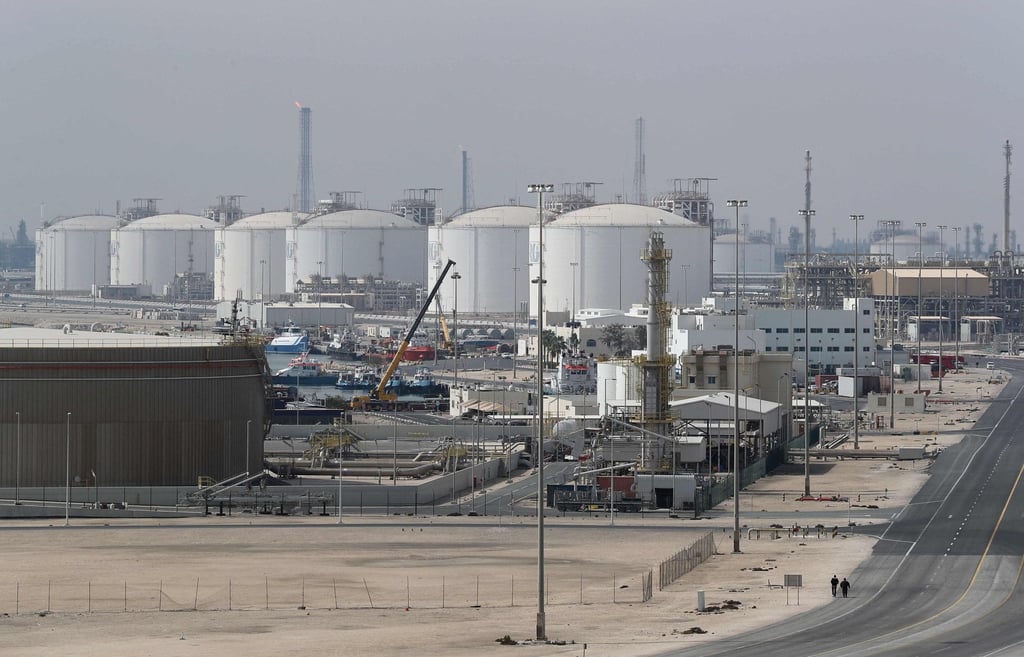
The Ras Laffan complex in Qatar before the attacks in March. Photo: AFP

The Ras Laffan complex in Qatar before the attacks in March. Photo: AFP

South Korea, Taiwan and Singapore rely on Qatari LNG for between 15 and 35 per cent of their total gas supply, and Singapore generates around 90 per cent of its electricity from natural gas. However, Qatar’s Ras Laffan complex, responsible for roughly a third of global supply, was struck by Iran in March, with Qatar’s energy minister Saad Sherida al-Kaabi telling Reuters last month that repairs could take three to five years.