



惯性聚合 高效追踪和阅读你感兴趣的博客、新闻、科技资讯
阅读原文 在惯性聚合中打开

推荐订阅源

Jina AI
Jina AI
Recent Announcements
钛媒体:引领未来商业与生活新知
钛媒体:引领未来商业与生活新知
月光博客
月光博客
A
About on SuperTechFans
Vercel News
Vercel News
博客园 - 【当耐特】
爱范儿
爱范儿
Blog — PlanetScale
Blog — PlanetScale
阮一峰的网络日志
阮一峰的网络日志
V
V2EX
D
Docker
博客园 - 叶小钗
The Cloudflare Blog
freeCodeCamp Programming Tutorials: Python, JavaScript, Git & More
H
Help Net Security
I
InfoQ
博客园 - 三生石上(FineUI控件)
博客园 - Franky
Microsoft Azure Blog
The GitHub Blog
The GitHub Blog
大猫的无限游戏
大猫的无限游戏
MongoDB | Blog
MongoDB | Blog
奇客Solidot–传递最新科技情报
奇客Solidot–传递最新科技情报

Compliance Solutions for Websites, Apps and Organizations | iubenda

AI can build your website. It can't manage your consent. | iubenda Browser signals and machine-readable consent: what they are and what the EU’s Digital Omnibus could change California Consumer Privacy Act (CCPA): Complete Guide How to increase your cookie banner opt-in rates: 5 mistakes to fix today | iubenda DPO Newsletter: Global Data Protection & Privacy News (issue #153) Why your consent management setup is a marketing performance question Everything you need to know about GDPR The redesigned cookie banner and configurator What nobody tells you about handing over the company you built European marketers are betting on retention. Privacy could be the edge they’re not using yet. The 5 best alternatives to Didomi in 2026: Pros, cons, pricing, and comparison Looking back on 15 years: what iubenda's founder would tell his 2011 self | iubenda The best cookie policy generator in 2026 DPO Newsletter: Global Data Protection & Privacy News (issue #152) | iubenda What publishers should expect from the EU’s Digital Omnibus proposal Uncertainty is the biggest blocker to AI adoption in marketing | iubenda Everything AI app builders need to know about vibecoding and privacy compliance | iubenda Introducing 1-Click Embedding for Google Tag Manager The Essential Small Business Terms and Conditions Template: What You Need to Know Terms of Use Template | iubenda IAB Europe Raises Concerns Over GDPR Procedural Regulation Draft Report | iubenda Learn from HelloFresh's Costly Mistake: Ensure Compliance with iubenda | iubenda Understanding the Spanish DPA Guide on Audience Measurement Cookies | iubenda The Austrian Data Protection Authority's FAQs on Cookies and Privacy | iubenda DPO Newsletter: Global Data Protection & Privacy News (issue #127) | iubenda Microsoft Ensuring European Data Stays Within the EU Cloud Boundary | iubenda Businesses Beware: ICO’s Record £14.3m in Fines for Data Misuse in 2023 Understanding the Risks and Responsibilities of Model-as-a-Service Companies in AI Development Facebook's New “Link History” Feature: A Blend of Convenience and Surveillance? | iubenda OpenAI’s Strategic Move in the EU: Aligning with Data Privacy Regulations
TCF v 2.2 Initial Layer (Banner) Requirements | iubenda
Alice Perseval · 2023-10-24 · via Compliance Solutions for Websites, Apps and Organizations | iubenda

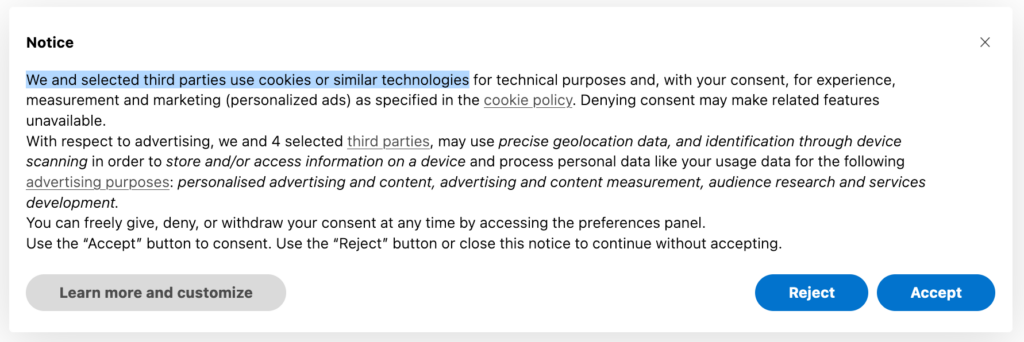
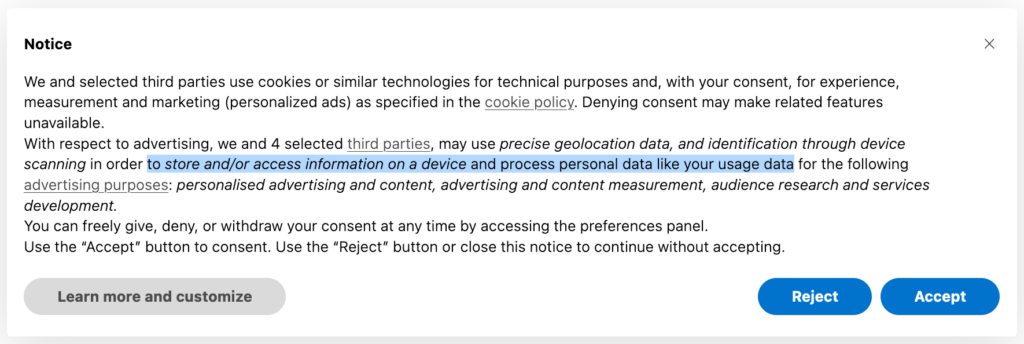
According to the TCF v 2.2 Policies, the Initial Layer of the Framework UI (the cookie banner) MUST include the following elements:

Element #1

  • Information about the fact that information is stored on and/or accessed from the user’s device (e.g. use of cookies, device identifiers, or other device data)
  • Information about the fact that personal data is processed, and the nature of the personal data processed (e.g. unique identifiers, browsing data)
Element #2

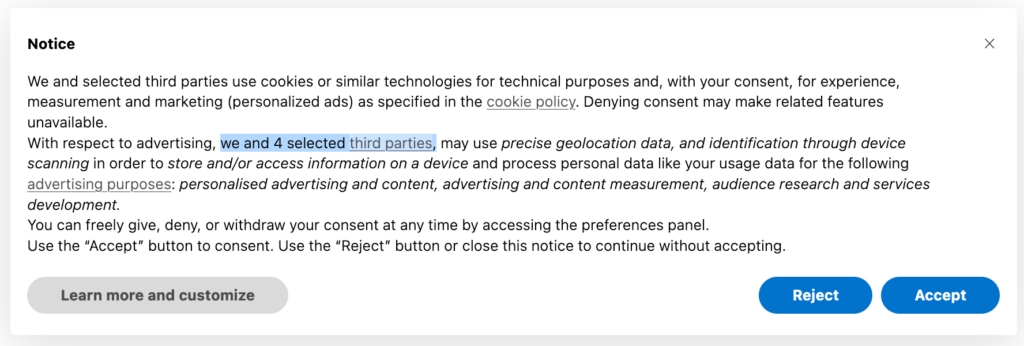
  • 🆕 The total number of vendors AND a link to the complete list

Remember to restrict the number of vendors you work with, since an inappropriately large number of vendors may affect the ability of users to make informed decisions and may increase legal risks for both publishers and vendors.

To do so we strongly recommend using our Privacy and Cookie Policy Generator as the 🎖️ Preferred Method for selecting relevant vendors and in order for the Privacy and Cookie Controls Solution to automatically update accordingly.

💡 You can use the %{total_number_of_ads_vendors} shortcode in order to show the count of the vendors included in your Privacy and Cookie Policy or in the CS parameter value (if you choose to manually insert them).

🚨 Without a selection, the Privacy Controls and Cookie Solution will display all TCF vendors, potentially breaching TCF policies.
Element #3

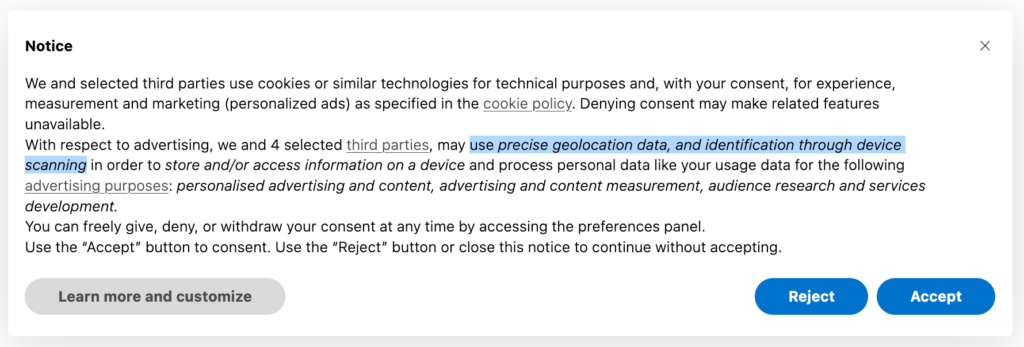
  • List of Special features (using at least the standardized names and/or Stack names provided by IAB)
Element #4

  • List of Purposes (using at least the standardized names and/or stack names provided by IAB)

Publishers are free to choose which TCF purposes to prompt, therefore they will be required to list only those purposes actually pursued. By default, the standard text uses the 🆕 stack 42 (that includes all purposes from 2 to 11).

💡 Remember there is a new purpose 11 under TCF v 2.2 that was not present in TCF v 2.1.
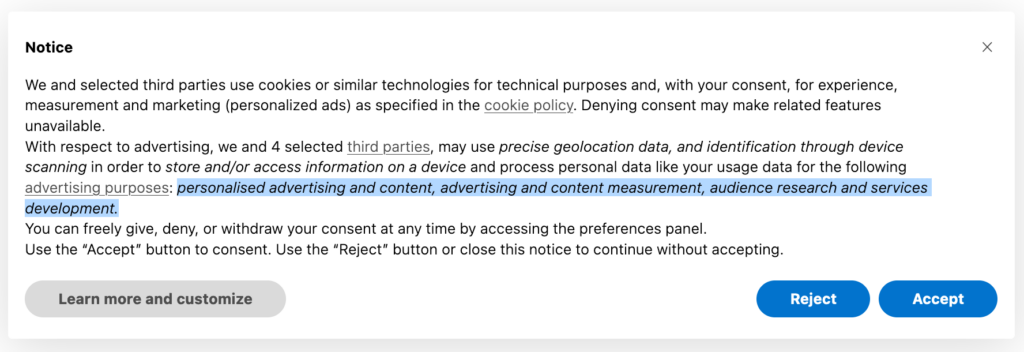
Element #5

  • Information about the fact that the user can withdraw their consent at any time, and how to resurface the Framework UI in order to do so

🚨 Remember to display the Privacy widget or a custom link on every page of your website to allow your users to easily access and edit their preferences.
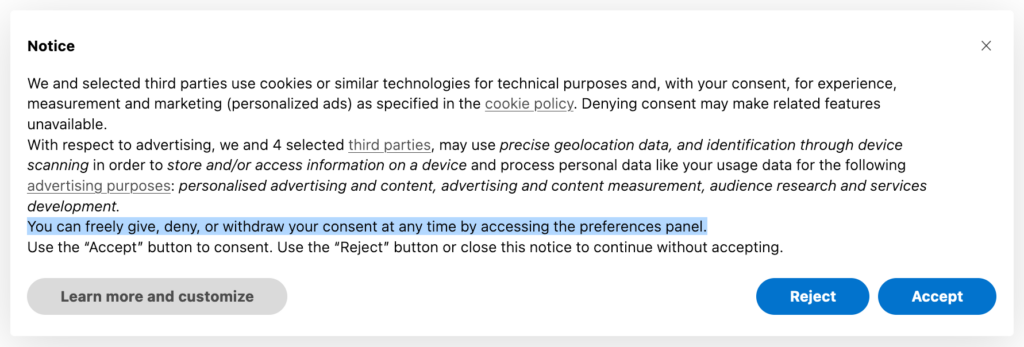
Element #6

  • A call to action for the user to express their consent (for example “Accept”, “Okay”, “Approve”, etc.) and one to customise their choices (for example “Advanced Settings”, “Customise Choices”, etc.)

🚨 Calls to action in a Framework UI must not be invisible, illegible, or appear disabled. While calls to action do not need to be identical, to ensure they are clearly visible, they must have matching text treatment (font, font size, font style) and, for the text of each, a minimum contrast ratio of 5 to 1.
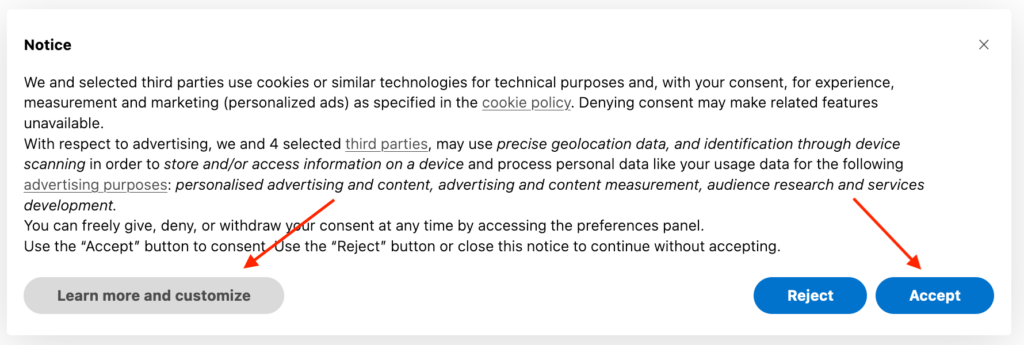
Note

According to the TCF v 2.2 Policies, all the required elements must be made visible to the user in the UI prior to the user being able to give his or her consent. In other words, they must be immediately visible and consequently, the banner text cannot be partially hidden due to scrolling bars.