






Scorpions are the natural world’s original metalheads. Research from the Smithsonian’s National Museum of Natural History shows that these arachnids add metals like zinc and iron to their stingers and pincers to make them stronger and sharper.
In this study, 18 species were analyzed to determine how zinc, manganese, and iron are distributed within their built-in weapons, such as stingers and pincers.
“Scorpions are incredible hunters, and while we knew that metals strengthen the weapons in some species’ arsenals, we don’t know if all scorpions’ weapons contain metal, and if so, whether this metal enrichment relates to how they hunt,” said Sam Campbell, a graduate student fellow at the National Museum of Natural History.
“We decided to use microanalytical techniques to unravel where and how these metals are distributed in the scorpions’ weapons to offer a clue as to how and why metal enrichment has been carried through the scorpion family tree,” Campbell added.
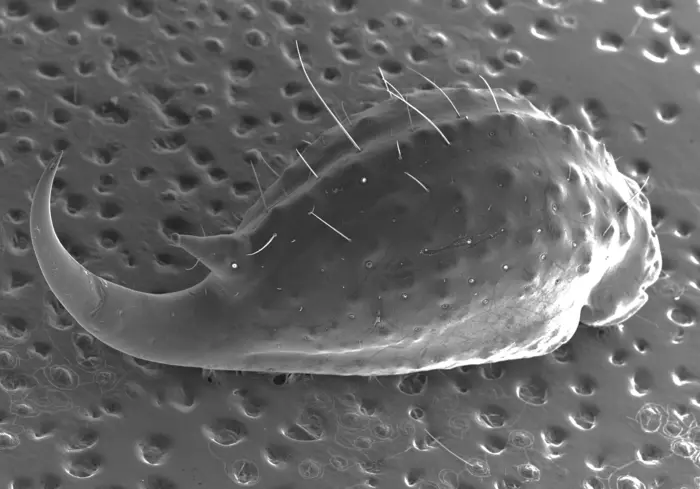
Like their spider and tick cousins, scorpions are eight-legged arachnids. They hunt by snagging insects with their pincers and quickly arching their tails to deliver a venomous sting from the telson.
Scorpions use a specialized weapon system that balances crushing pincers and venomous stingers according to their specific hunting styles and defensive needs.
While some species rely on massive claws to overpower prey, others use aggressive stinging, leading researchers to believe that these behavioral patterns are directly reflected in how metals are distributed to support each weapon.
Tools such as advanced electron microscopy and X-ray analysis helped identify the specific areas that require metal reinforcement to withstand the most pressure.
Surprisingly, it was found that stingers use a distinct layering of zinc at the tip, followed by manganese, while pincers are reinforced with zinc and iron specifically along their cutting edges.
“The microscopic-scale methods we used allowed us to identify individual transition metals in extremely high detail, showing us how nature skillfully engineered these metals in the scorpion’s weapons,” said Edward Vicenzi, research scientist at the Museum Conservation Institute and a co-author on the study.
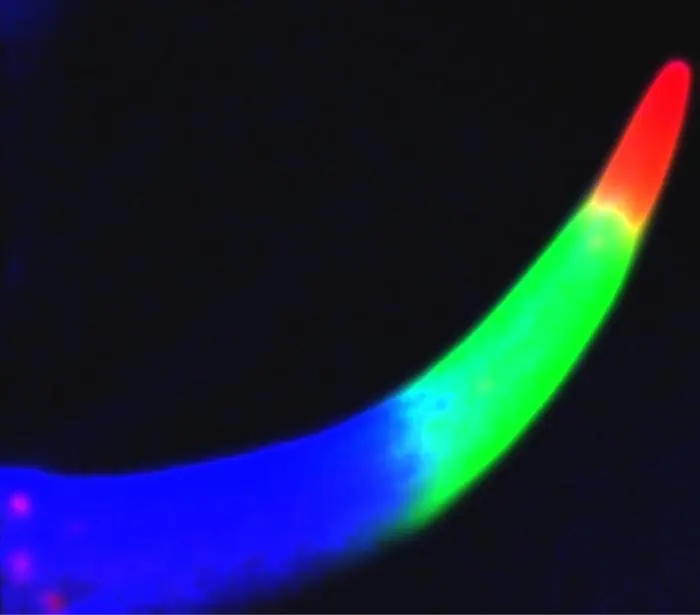
The study’s most surprising twist involves the role of iron.
Contrary to expectations, researchers found that iron is more prevalent in long, slender pincers than in thick, crushing ones. Slender claws are prone to snapping. Hence, iron likely provides the structural integrity needed to hold struggling prey long enough for the venom to take effect.
This discovery shows a clear evolutionary link between a species’ hunting behavior and its specific metal recipe.
Using the Smithsonian’s vast collections and advanced microanalytical techniques, the team has created a blueprint for studying metal enrichment across the broader tree of life.
This research offers a new lens through which to view the evolution of arthropods — like spiders, ants, and bees — and how they have adapted their biology to survive as both predators and prey.
The findings were published in the Journal of the Royal Society Interface on April 28.

Get the latest in engineering, tech, space & science - delivered daily to your inbox.
Mrigakshi is a science journalist who enjoys writing about space exploration, biology, and technological innovations. Her work has been featured in well-known publications including Nature India, Supercluster, The Weather Channel and Astronomy magazine. If you have pitches in mind, please do not hesitate to email her.
此内容由惯性聚合(RSS阅读器)自动聚合整理,仅供阅读参考。 原文来自 — 版权归原作者所有。