




Brandon Patterson hasn’t moved his fingers in nine years due to a spinal cord injury. But recently, he felt them twitch.
There was no physical movement, of course. Patterson, 41, has been paralyzed from the chest down since a Jeep rollover accident in 2017 severed his connection to the world below his shoulders.
Recently, he participated in a pioneering clinical study at the University of Colorado Health and the University of Colorado Anschutz Medical Campus, and was implanted with Brain-Computer Interface (BCI) technology.
CBS News stated that the key innovation in Patterson’s surgery is the strategic relocation of the brain-computer interface. Typically, standard BCI implants target the primary motor cortex to trigger basic muscle movements, but this procedure tapped into a higher-functioning cortex. Reportedly, it is the world’s first higher-cortex brain implant for a paralyzed patient.
The technology focuses on the brain’s centers for intent, planning, and decision-making by tapping into these specialized regions. This allows the computer to interpret what the patient wants to do rather than just which muscle to move.
Interestingly, it could lead to more intuitive control of external devices and a deeper understanding of how thoughts become actions.
“This surgery is an important step forward not only for this patient but for neuroscience as a whole,” said Daniel Kramer, MD, assistant professor of neuroscience at the CU Anschutz School of Medicine and a neurosurgeon at UCHealth.
“While most BCI procedures focus only on purely motor regions, implanting this device in higher‑level brain areas will offer new insights into how the human brain works during everyday thinking and movement,” Kramer added.
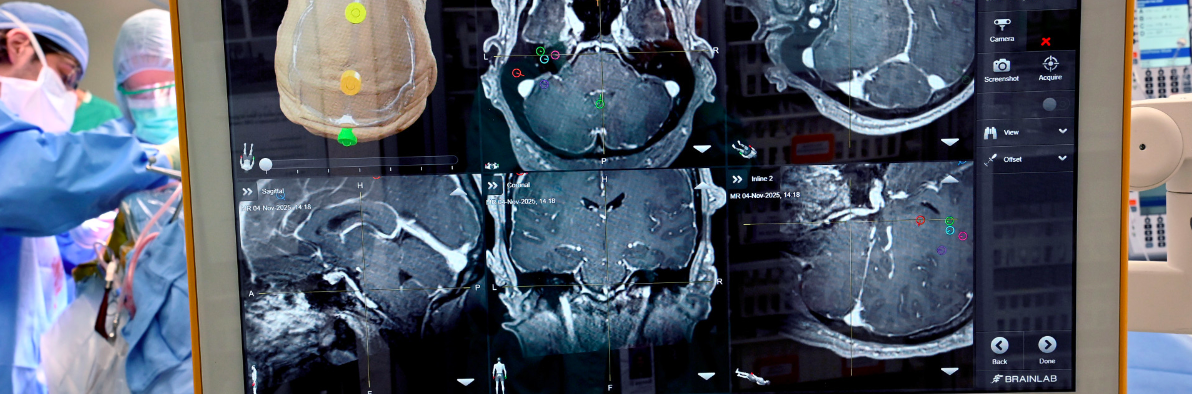
A decade after this paralyzing accident, Patterson is regaining independence through this BCI that bridges the gap between thought and action. The device functions as a neural translator, recording electrical signals from his brain and operating external devices such as computers and robotic limbs.
Beyond movement, the system uniquely uses sensory stimulation to reconnect Patterson with his physical self, aiming to restore the sensation of touch in his hands for the first time in 10 years.
Shortly after the procedure, Patterson reportedly achieved several neural milestones. Most notably experiencing “phantom” sensory feedback, in which he felt his fingers move despite his physical paralysis.
He is currently undergoing rigorous motor training to translate thought into digital action — such as navigating a computer cursor — while mentally rehearsing complex physical tasks.
It is an advance in bidirectional learning, a symbiotic process where computers decode Patterson’s neural patterns. And at the same time, the brain trains to generate the specific signals required to command external machines.
The device will stay with the patient for years, giving doctors a rare, long-term view of the brain’s daily inner workings — from complex decision-making to its response to stimulation.
This long-term study tracks how the brain manages high-level tasks such as decision-making, planning, and rule learning. Overall, it could offer a rare glimpse into how these signals evolve over time.
Moreover, this multi-institutional collaboration between UCHealth, CU Anschutz, Caltech, and USC seeks to restore autonomy to individuals battling spinal cord injuries, ALS, and other motor-nerve diseases.
As the research targets high-level cortical regions rather than just basic motor functions, the implications extend far beyond physical movement.
The analyses of these complex neural pathways and the data could eventually unlock therapies for cognitive and emotional conditions, including dementia, mood disorders, and various impairments in cognitive control.

Get the latest in engineering, tech, space & science - delivered daily to your inbox.
Mrigakshi is a science journalist who enjoys writing about space exploration, biology, and technological innovations. Her work has been featured in well-known publications including Nature India, Supercluster, The Weather Channel and Astronomy magazine. If you have pitches in mind, please do not hesitate to email her.
此内容由惯性聚合(RSS阅读器)自动聚合整理,仅供阅读参考。 原文来自 — 版权归原作者所有。