








Footballing physiques have changed a great deal over the decades, but when Chelsea meet Manchester City on Saturday there’s one outline we’ll all recognise. While the average shape has got leaner and more toned, this body has stayed comfortable in its old-school proportions. A modest waist gives on to surprisingly wide hips. Arms that have never lifted weights remain a little skinny for the frame. And yet none of this has been a hindrance in the modern game: every year, the FA Cup trophy still ends up on the winning team.
This is one of sport’s most iconic pieces of silverware, wreathed with more than 150 years of hopes, dreams and drama. It’s a far more emotive sight than the cartoonishly crowned Premier League trophy, or even the stylishly minimalist Champions League trophy. And this makes it even more extraordinary to remember that the object itself is still not out of its tween years. This weekend it will make its 13th Cup final appearance.
The FA Cup reflects not just the way sporting heritage evolves, but also the mystique with which we imbue it. The item that will be lifted at Wembley is the trophy’s fifth incarnation; nor does it look anything like the original, which was stolen out of the Birmingham shop window where it was on display in 1895. An identical copy replaced it the following year (you can see it on display at the National Football Museum), but that was only in operation for as long as it took the FA to realise they didn’t own the design, and anyone could recreate it.
In 1909, Manchester United won the tournament for the first time and commissioned a celebratory replica. By the following year, the FA had unveiled a new-look trophy, which made it all the way to the 1990s before it too was taken out of circulation. Its replacement – FA Cup No 4 – had a particularly rough time of it (dropped from a Chelsea team bus, falling off a plinth in Portsmouth). But its brief life was a commentary on football’s exponential growth: where the trophy used to be locked safely in a cabinet between finals, now it was almost perpetually on tour.
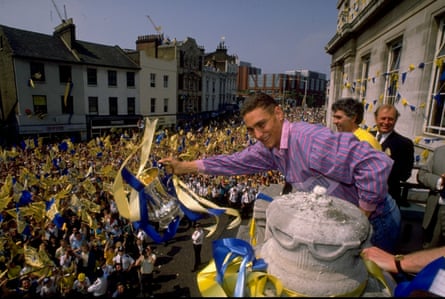
Hence the current version, created in 2014 by silversmiths Thomas Lyte to withstand an increasingly active life. While travelling and handling causes wear and tear the restoration processes can contribute just as much to wear and tear, as hammering and polishing will remove metal, making it thinner and more fragile. Today’s trophy was designed in a thicker gauge of silver than the last ones and at 6.3kg, is also a fair bit weightier.
That’s not a problem, because only a chosen few will ever lift it. There’s one superstition that’s pretty common across sports’ major trophies – you don’t touch them til you’ve won them. It doesn’t matter if you’re a megawatt pop star (Rihanna, 2014) or an over-rated internet chef (Salt Bae, 2022), the wider football fandom will not find it adorable that you lifted the Fifa World Cup. There are some things that celebrity shouldn’t buy.
The Stanley Cup, the outlandishly large 19th-century punch bowl presented to NHL champions, seems to wield a particularly strong power in this regard. Not only is there a widespread belief that touching it before you’ve won it dooms your efforts, but there appears to be a trickle-down effect too and some teams won’t even lift the conference trophy they’ve won en route to the final.

But a sporting trophy doesn’t need a long history to achieve an aura. England’s Test series against New Zealand, beginning in June, will be to compete for the Crowe-Thorpe trophy, which was unveiled during England’s 2024-25 tour and is coming to these shores for the first time. It’s an elegant and unique work, crafted from bat-willow its namesakes once used to score centuries for their countries. Carved by Māori artist David Ngawati, the trophy has the status of a taonga, or treasure, which means it must be treated with reverence. Certain tikanga (protocols) must be observed as a result, like appointing kaitiaki (guardians) for its care, or speaking a blessing over it during its journey.
Few other cricketing prizes can match that level of sacredness. The Ashes urn was probably nothing more than a cosmetics container sitting around in a ladies’ dressing room before the fateful day it was presented to England’s captain Ivo Bligh. Its origins are a cute joke between two people who would go on to get married. So while it may have come to symbolise the white heat of cricket’s oldest and fiercest rivalry, you could argue it’s also a love token between two nations that have never really got over each other.
On the only occasions when the urn has travelled from Lord’s to visit its Australian cousins, the tiny terracotta pot has been met with the kind of reception you’d expect for a holy relic. People who never thought they’d encounter the Ashes in person have broken down in tears at the sight. One former curator vividly remembers the hushed moment in Tasmania as a mohawked man knelt down before it and said a prayer.
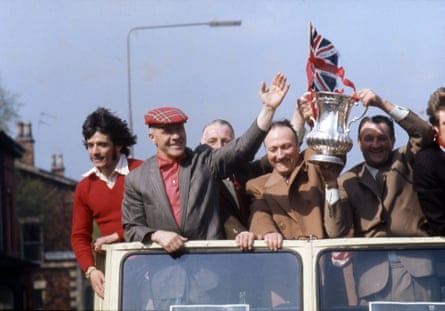
The Ashes urn is so inaccessible that it famously can’t even be handled by the teams that win it, who have to make do with a dummy version (and the large Waterford crystal replica that functions as the series trophy). And yet its fragility has only added to its significance. Sometimes conservation best practice and the spirit of the game turn out to be one and the same thing.
So don the white gloves, and cherish the symbolism. The fact that most of us will never get to touch the FA Cup is, after all, what makes it so special. Even the fifth time around.
-
Do you have an opinion on the issues raised in this article? If you would like to submit a response of up to 300 words by email to be considered for publication in our letters section, please click here.