


惯性聚合 高效追踪和阅读你感兴趣的博客、新闻、科技资讯
阅读原文 在惯性聚合中打开

推荐订阅源

Stack Overflow Blog
Stack Overflow Blog
WordPress大学
WordPress大学
罗磊的独立博客
S
Secure Thoughts
Schneier on Security
博客园 - Franky
www.infosecurity-magazine.com
Exploit-DB.com RSS Feed
爱范儿
爱范儿
cs.CV updates on arXiv.org
Hacker News: Ask HN
Hacker News: Ask HN
PCI Perspectives
PCI Perspectives
Google DeepMind News
S
Security Affairs
SecWiki News
SecWiki News
博客园 - 聂微东
Security Archives - TechRepublic
Google Online Security Blog
H
Heimdal Security Blog
S
Security @ Cisco Blogs
Engineering at Meta
Engineering at Meta
C
CXSECURITY Database RSS Feed - CXSecurity.com
Cloudbric
Cloudbric
Threat Intelligence Blog | Flashpoint
V
Visual Studio Blog
P
Proofpoint News Feed
Project Zero
Project Zero
T
Threat Research - Cisco Blogs
Webroot Blog
Webroot Blog
Blog — PlanetScale
Blog — PlanetScale
K
KPMG report finds enterprise disconnect between AI and its ROI | CIO
W
WeLiveSecurity
Last Week in AI
Last Week in AI
月光博客
月光博客
Microsoft Azure Blog
M
MIT News - Artificial intelligence
有赞技术团队
有赞技术团队
S
Securelist
GbyAI
GbyAI
Application and Cybersecurity Blog
C
CERT Recently Published Vulnerability Notes
Recent Commits to openclaw:main
Cyberwarzone
Cyberwarzone
B
Blog RSS Feed
P
Palo Alto Networks Blog
H
Hacker News: Front Page
D
Docker
雷峰网
雷峰网
Latest news
Latest news
Microsoft Security Blog

The Guardian

Rory McIlroy surges into six-shot Masters lead with stunning second-round flourish ‘That’ll be the end’: actor Sam Neill joins fight to stop controversial goldmine near his New Zealand vineyard Roberto De Zerbi targets ‘Ange-ball’ revival to save Spurs from relegation Bath hit back to reach semi-final after stunning Northampton in 11-try epic Secret Garden to Outcome: the week in rave reviews Zebras, wealth and power: Hungary’s election tests Orbán’s grip on power ‘TikTok effect’ brings sellout crowds and younger fans to Grand National meeting The war over Omagh’s gold: the £21bn mine plan tearing a community apart Britain’s shadow workforce is paid as little as 65p an hour. Who cares for the carers? From You, Me & Tuscany to Euphoria: your complete entertainment guide to the week ahead Six great reads: the man who let snakes bite him, masked heavy metal and the brutal reality for foreign students in the UK American Classic review – I defy you not to fall in love with Kevin Kline and Laura Linney’s tender comedy Cuba’s doctors were a lifeline for the world. Now the Caribbean is shamefully complicit in the US drive to expel them An environmental disaster in Moldova has Russia’s fingerprints all over it RMIT drops misconduct case against student who accused university of being ‘complicit in Gaza genocide’ Ichiro Suzuki statue unveiling goes awry as bronze bat snaps during ceremony Survivors of Epstein’s abuse accuse Melania Trump of ‘shifting burden’ on to victims European football: Real Madrid held at home by Girona to extend winless run Arne Slot insists he is ‘aligned’ with Liverpool board and fans as squad is rebuilt Kamala Harris ‘thinking about’ running for president again in 2028 JD Vance warns Iran against trying to ‘play’ the US in peace talks West Ham double up twice to thrash Wolves and put Spurs in relegation zone Trump administration releases new renderings of so-called ‘Arc de Trump’ Crispin Odey drops £79m libel claim against FT over sexual misconduct allegations Bafta apologises for events surrounding John Davidson’s Tourette’s outburst Cocktail of the week: Bar Shrimp’s la rosita – recipe New drug may extend survival in aggressive ovarian cancer, trial shows One dead and 27 injured after bus with British passengers crashes in Canary Islands Pope adds to Smith’s mass of Surrey runs with England woes a world away OpenAI CEO Sam Altman’s home targeted with molotov cocktail Reform UK local election candidate was twice disciplined by Tories over ‘racist comments’ Remaining in Nato is in best interests of US, says Keir Starmer Prince Harry sued for defamation by charity he co-founded Anthropic’s new AI tool has implications for us all – whether we can use it or not Concerns raised about motorbike tourist trail after death of British teenager in Vietnam The Guardian view on Trump’s civilisational threats: the words that fuel war must be condemned The Guardian view on dystopias for our times: the American nightmare Doctors’ leader claims new reduced pay offer killed chances of ending strikes in England Netanyahu-ism has achieved nothing for Israelis – and come at a monstrously high price Deborah Levy: ‘CS Lewis’s White Witch terrified me – but I wanted to meet her’ How I Shop with Michelle Ogundehin: ‘We grownups have enough stuff already’ Trump’s war and Melania’s Epstein statement, with US editor Betsy Reed – The Latest We have to stop killer motorists on Britain’s roads UK starts crackdown on EU citizens’ post-Brexit rights Londoners aren’t unfriendly – but don’t compare us to New Yorkers The religious right and the perversion of faith Artemis II images reignite moon mission memories Orbán and Magyar trade accusations in last days of Hungary election campaign Reckonwrong: How Long Has It Been? review | Safi Bugel's experimental album of the month Martin Rowson on Middle East peace talks – cartoon Masters magic, the Grand National and Premier League drama – follow with us Fears of UK and EU flight cancellations as airports warn of jet fuel shortages Reform’s petulance over slavery reparations shows it just doesn’t grasp Britain’s place in the modern world Peers vote to ban pornography depicting sex acts between stepfamily members Starbucks’s retail arm gets £13.7m tax credit even as sales increase Flyby review – interstellar musical is a voyage of epic strangeness Grand National preview: Jagwar can deny Irish cohort in Aintree classic Week in wildlife: an ostrich on the lam, a tortoise crossing a road and surfing seals Anger as swifts’ nesting holes in Derbyshire rail viaduct ‘blocked up’ Peter Mandelson faces fixed-penalty notice for urinating in public ‘There’s no shortage of terrifying technology’: how AI became TV drama’s new go-to villain ‘Fresher than anything in a shop’: the best recipe boxes and meal kits for time-poor foodies, tested Who was Hilma? Af Klint exhibition to highlight exclusion of women from abstract art Critics assemble! Here’s my list of the greatest superhero movies of all time US inflation soars in March as war on Iran drives economy into uncertainty Amazon to finally launch Leo satellite internet in ‘mid-2026’, says CEO Grand National 2026: horse-by-horse guide to all the runners Pete Hegseth’s holy war: the militant Christian theology animating the US attack on Iran Add to playlist: the beautifully dazed, countrified indie-rock of Tracey Nelson and the week’s best new tracks Not just about Gaza: the Muslim voters turning from Labour to the Greens ‘I’m worried there’s too much of me,’ says a birch: inside the interspecies council giving nature a voice Why is anyone surprised by the US and Israel’s latest war? It’s only what the world allowed them to do in Gaza Tori Amos review – fans hang on every note of this dramatic deep dive into her back catalogue Coachella 2026: Justin Bieber launches a major comeback in the desert Super Mario what?! The seven best obscure Mario games ‘An abomination’: the Lancashire town kicking up a stink over reopened landfill Pillion to Roofman: the seven best films to watch on TV this week Holly Humberstone: Cruel World review – Taylor Swift fave trades gothic melancholy for pop glow-up Thrash review – cursed shark thriller sinks like a stone on Netflix Gulf states rethink security in light of US-Israel war on Iran Go Gentle by Maria Semple review – a joyfully clever New York romcom Welcome to Y’all Street: bullish Dallas aims to steal New York’s financial crown Margo’s Got Money Troubles to Beef: the seven best shows to stream this week I baulked at the idea of ‘friction-maxxing’. But there’s more to it than meets the eye Reich: The Sextets album review – Colin Currie celebrates the minimalist master’s joy of six Benjamina Ebuehi’s sweet and salty chocolate chip cookies recipe Experience: my house was taken over by 70,000 bees Malcolm in the Middle: Life’s Still Unfair review – the TV magic they’ve created here is absolutely miraculous Lava bursts forth as Hawaii’s Kilauea volcano erupts Sonos review: Are these the best portable speakers that money can buy? I tested to find out Buy bread in the evening, hit the sales on a Tuesday: retail workers’ top tips to cut your shopping bill The best water flossers in the UK, tested for that dentist-clean feeling Where to start with: Muriel Spark You be the judge: should my girlfriend stop mixing gold and silver jewellery? The best carry-on luggage in the UK, tested on an assault course How games capture the awe and terror of cosmic isolation I never text back – and it’s ruining my relationships The pet I’ll never forget: Beau, the labrador who saved my life Life Is Strange: Reunion review – a decade-long story comes to an impassioned close Why is gaming becoming so expensive? The answer is found in AI
Hope is contagious and science is king: 10 big lessons on ending the fossil fuel era
Jonathan Wat · 2026-05-01 · via The Guardian

After a landmark climate meeting in Santa Marta, Colombia, where nearly 60 countries gathered to work out how to end the production and use of planet-heating fossil fuels, what have we learned?


  1. 1. Liberation lifts the spirits

    The single most important thing to come from the first Transitioning Away from Fossil Fuels conference, in Santa Marta, has been a change of mood. Whereas the UN’s annual climate summits, or Cops, can often feel stuck and frustrating, with countries circling the same topics without resolution, nearly every delegate in Colombia felt liberated.

    “The mood here in Santa Marta is euphoric,” said Tzeporah Berman, the founder and chair of the fossil fuel non-proliferation treaty initiative. “After years stuck in endless debates about whether to phase out fossil fuels, finally we are focusing on the how. We are no longer fighting for recognition of the problem, but creating solutions. It’s like watching a dam break – all that pent-up experience, knowledge and passion suddenly flowing into concrete ways to phase out dirty fuels. The hope is contagious.”


  2. 2. Science has to come first

    In a world of climate denial and misinformation, Santa Marta was a shining example of science-led decision making. Hundreds of experts, academics and scientists inspired and informed the launch of three major initiatives on the energy transition.

    It reminded many participants of an earlier, more enlightened age of global climate negotiations, which would always start with an update of the latest science. Over the years, however, oil-producing countries such as Saudi Arabia have vetoed or watered down UN science warnings, while introducing controversial solutions, including offsets and carbon capture and storage, that have been promoted by the petroleum industry as an excuse to continue expanding production. At Santa Marta, delegates called these “false solutions” and focused on the core of the problem: eliminating fossil fuels.
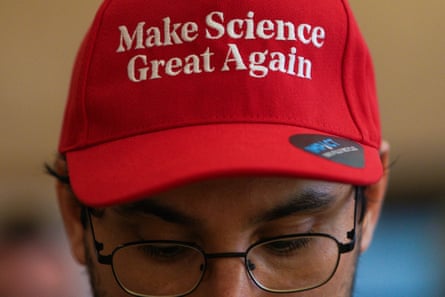
    An attender wearing a Make Science Great Again cap during the conference.
    An attender wearing a Make Science Great Again cap during the conference. Photograph: Iván Valencia/AP

  3. 3. Producers must be in the spotlight

    Climate activists have long argued the Cop process has been crippled by a focus almost solely on the demand side of the problem. The responsibility of emission cuts was dumped on to consumers, while oil, gas and coal companies were given free rein to ramp up production and profits. At Santa Marta, the balance was shifted back to the supply side. Some speakers said the majority of the world’s emissions, which continue to break records almost every year, were released by the drilling, processing and transportation of fossil fuels.

    Rather than condemning petrostates, this was treated as an unhealthy dependency and ways were examined to break the pattern of addiction.


  4. 4. Global south debt must be tackled

    The urgent need to address the debt crisis was one of the clearest messages to emerge from Santa Marta. Many countries in the global south that want to invest in renewables are unable to do so because they spend a huge proportion of their foreign exchange earnings on high interest repayments and imports of fossil fuels.

    Banks and bond markets provide low-interest loans to fossil fuel industries – most of which are based in wealthy nations – without accounting for the associated risks of climate instability and stranded assets. Many participants at Santa Marta said this showed an energy transition had to come with changes to the global financial architecture, as well as the redirection of government subsidies away from the petroleum industry and towards renewables and debt reduction.
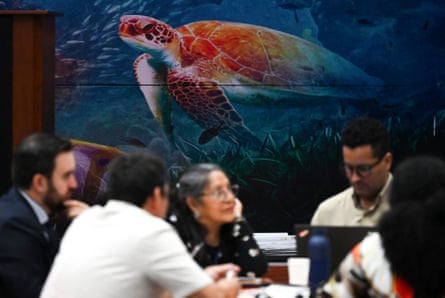
    Delegates in a meeting at the conference in front of a colourful mural of a sea turtle
    Delegates at the conference. Photograph: Raúl Arboleda/AFP/Getty Images

  5. 5. Not everyone agrees on everything

    There were few open disagreements among the “coalition of the willing” assembled at Santa Marta, but there are differences of opinion on how to achieve the desired end of a fossil-fuel-free society. The Colombian hosts set no guidelines on what, if any, legal framework should be adopted.

    One longstanding proposal is for a new fossil fuel non-proliferation treaty, which would be modelled along the lines of human rights treaties and the international land mine treaty. But this is anathema to some countries, who argue that the world already has global climate agreements and just needs to put them into action.

    There are also a confusing number of existing pacts and pledges, reflecting the complexity of shifting the global economy to a low-carbon footing and the desire of some countries to stamp their identity on projects they are funding. The danger is that, instead of working harmoniously together, nations could splinter into smaller groups.


  6. 6. Roadmaps need a destination and a deadline

    One word that came up time and again was roadmap, or in other words, a clear plan for transitioning away from fossil fuels. One global roadmap will not be enough. Every country will need its own, and there are two key requirements: the destination, which should be a full phase-out of fossil fuels; and a timetable, because with global temperatures continuing to break records, time is fast running out.
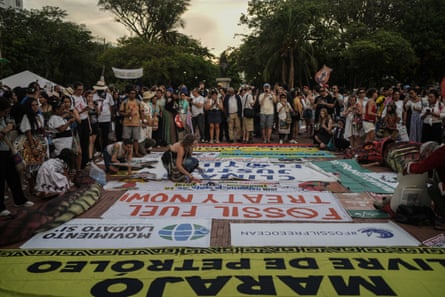
    Dozens of activists gathered around various banners spread out on the ground, one of which reads: ‘Fossil fuel treaty now!’
    Activists gathering for a demonstration on Monday during the conference. Photograph: Iván Valencia/AP

  7. 7. Governments must be free to govern

    Investor-state dispute settlement is a legal mechanism contained in many trade agreements, which allows companies and financiers to sue governments in secret tribunals for their policies. It has been used by fossil fuel companies to sue governments that resolved to reduce dependency on coal, oil or gas, or enacted measures boosting renewables: companies have demanded and, in at least $100bn worth of cases, received compensation for loss of earnings.

    Climate activists, experts, and many developing countries want an end to ISDS, which they say is a serious legal and financial obstacle to a cleaner world.


  8. 8. Critical minerals will be critical

    If the world is to transition away from fossil fuels, there must be a new renewable energy economy to transition to. That will require the construction of billions of wind turbines, solar panels, electric vehicles and batteries. All of this requires components made of critical minerals – metals such as copper, cobalt, nickel and harder-to-get materials such as gallium, germanium and niobium.

    Mining for some of these has resulted in horrific human rights abuses and despoliation of natural landscapes. Activists in Santa Marta raised concerns over the plight of workers and Indigenous people, and the need for proper regulations and a clean, fair transition for local communities.


  9. 9. Indigenous rights must be respected

    Indigenous peoples protect the vast majority of the world’s remaining terrestrial carbon sinks and areas of biodiversity, but have long struggled to secure a seat on the top table of UN climate negotiations. At Santa Marta, for the first time, Indigenous representatives drew up their proposals in an autonomous debating space and participated in the high-level segments.
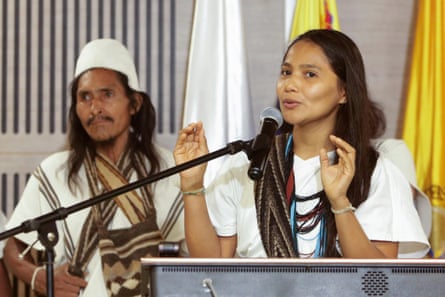
    Ati Gundiwa, a member of the Arhuaco indigenous community of the Sierra Nevada de Santa Marta, speaking at the conference opening.
    Ati Gundiwa, a member of the Arhuaco Indigenous community of the Sierra Nevada de Santa Marta, speaking at the conference opening. Photograph: Ricardo Maldonado Rozo/EPA

    It did not satisfy everyone, but it gave leaders an opportunity to tell ministers directly that they needed to pay more heed to Indigenous knowledge, the protection of Indigenous rights and the importance of nature in the transition. “Our territories are fundamental to maintaining life on this planet. Where our rights are respected, nature is protected,” said Oswaldo Muca Castizo, the general coordinator of the Organization of Indigenous Peoples of the Colombian Amazon.


  10. 10. Tuvalu is the next step

    Translating the feel-good vibe of Santa Marta into concrete proposals will be the task of the next conference, which is expected to take place in Tuvalu, co-hosted by Ireland, in early 2027.