




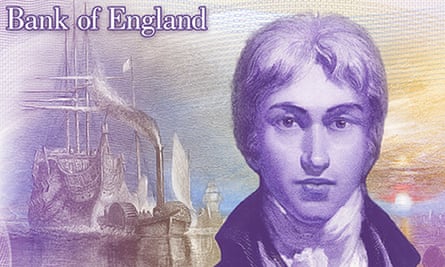
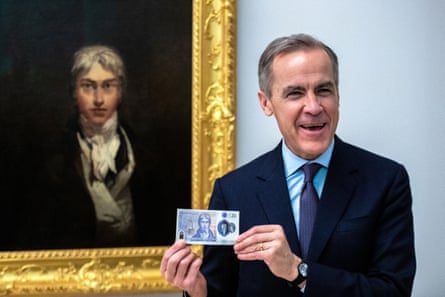
In 2020, Tate Britain hosted the launch of a new £20 banknote bearing representations of The Fighting Temeraire by JMW Turner and the artist’s most famous self-portrait. Now a leading expert has said the latter work, part of the Tate collection, is not by Turner at all.
Dr James Hamilton, who has published books on Turner and staged exhibitions at museums and galleries nationwide, said that while the painting does depict the English Romantic painter, it is likely to be the work of his contemporary, John Opie.
Hamilton told the Guardian he started researching the portrait because “there’s nothing else like it in Turner’s work”. He said he “allowed its title to pass without comment” in his 1997 book, Turner – A Life, and even used it on the book’s cover, but had “failed to think hard enough about it”.
He now believes the portrait was misattributed after being included among nearly 300 oil paintings and 30,000 sketches and watercolours in the Turner Bequest following the artist’s death in 1851.
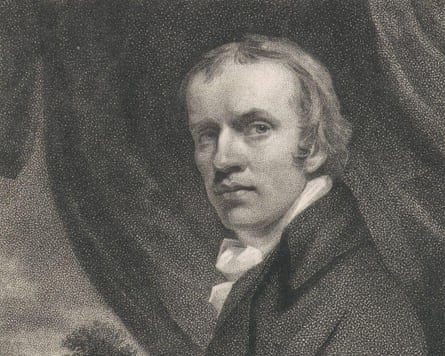
Hamilton said: “Turner’s relations challenged the will and, after a long, tortuous court case, the judge said the family can have the money and the nation gets the pictures – not only the ones that he wanted the nation to have, but everything by his hand in his studio … There were many pictures hanging in disarray in Turner’s house in Queen Anne Street.
“They had no way of knowing who the portrait might be by if it wasn’t by Turner and of course it was too good to lose. So it was lumped in with the rest. But it was never, even on early lists, a ‘self-portrait’. It was always a ‘portrait of Turner’. Gradually, over the years, it became an assumption that it was by him.”
The painting, dated c1799 when Turner was 24, was created by a master portrait painter with “brilliant dexterity”, Hamilton added.
He concluded that stylistic evidence points to Opie, who depicted his sitters in a similar “light emerging dramatically from dark”.
Among numerous examples of Opie’s work, Hamilton singled out a portrait of an unidentified young man in the San Diego Museum of Art. “This has a similar full-face directness as the Turner portrait – sparkly eyes, energetic shadow-play and a curious interest in untidy hair,” he said. “Indeed, the two portraits are immediately comparable.”

He noted that Opie painted numerous artists, including David Wilkie and Thomas Girtin, and that at least four of those portraits ended up with the sitters’ families. Opie is known to have admired Turner’s talent, and Hamilton suggested he may have given Turner’s portrait to its sitter as it then had “little or no commercial value to its creator”.
Writing in the spring issue of Turner Society News, which publishes his research this week, Hamilton calls on the Tate to reattribute the work to Opie. “Turner would not have appeared on the £20 note if there had not been so extraordinarily striking a portrait as this,” he argues. ‘So, if indeed he did, we should be grateful to Opie for taking Turner on as a sitter.”
Dr Pieter van der Merwe, the chair of the Turner Society, said that Hamilton had made “a good case for it not being a self-portrait, both on documentary grounds and from a lack of anything similar in his work, and a plausible but only speculative one for Opie”.
He added that he was “not aware of anyone tackling this so thoroughly before”, but expected the Tate not to change its attribution, “since there is also the legal point that the Turner Bequest only comprises work by him … If positively proved to be by anyone else, it might – at least in theory – become a ‘restitution’ issue”.
Turner stipulated in his will that his artworks should be housed together in a dedicated gallery. The fact they are split between the National Gallery and Tate Britain has long been criticised by Turner’s descendants and others.
Dr Selby Whittingham, a leading Turner scholar and former curator of Manchester Art Gallery is one such critic, who also remains convinced the portrait is correctly attributed. “I don’t think it’s by Opie. Its light tonality is characteristic of Turner’s work,” he said.
Hamilton said: “Nothing would please me more than for the Tate to show us that this is a self-portrait … But they haven’t … Don’t tell us, show us.”
A Tate spokesperson said: “As the home of the Turner Bequest, we always welcome new ideas about Turner’s life and new interpretations of his work. We look forward to exploring James Hamilton’s research further.”