惯性聚合 高效追踪和阅读你感兴趣的博客、新闻、科技资讯
阅读原文 在惯性聚合中打开

推荐订阅源

博客园 - 三生石上(FineUI控件)
D
Docker
GbyAI
GbyAI
宝玉的分享
宝玉的分享
Jina AI
Jina AI
钛媒体:引领未来商业与生活新知
钛媒体:引领未来商业与生活新知
Vercel News
Vercel News
博客园_首页
Recent Announcements
Cyber Security Advisories - MS-ISAC
Hugging Face - Blog
Hugging Face - Blog
腾讯CDC
S
SegmentFault 最新的问题
Microsoft Security Blog
酷 壳 – CoolShell
酷 壳 – CoolShell
美团技术团队
V
V2EX
WordPress大学
WordPress大学
奇客Solidot–传递最新科技情报
奇客Solidot–传递最新科技情报
V
Visual Studio Blog
IT之家
IT之家
Apple Machine Learning Research
T
Tailwind CSS Blog
让小产品的独立变现更简单 - ezindie.com

PYMNTS.com

Crypto Payments Are Back. Will Merchants Actually Care This Time? Labor Department Proposes Unified Joint Employer Standard B2B’s New Battlefield Is Everything Before the Button Amazon Targets the GLP-1 Gap Big Pharma Left Open LendingClub Signals Expanded Capabilities With Happen Bank Rebrand Congress Moves to Give FinTechs Direct Fed Payment Access Microsoft Tests Mythos to Identify and Mitigate Vulnerabilities United Airlines Hikes Fares as Fuel Costs Surge OpenAI Images 2.0 Is a Real Leap With a Real Price Tag Morgan Stanley Says Gaming Could Score $22 Billion With AI FTC Shuts Down Alleged Healthcare Fraud Scheme Sam’s Club Offers eCommerce Shoppers Hour-or-Less Deliveries FinTechs Cut Staff as AI and Margins Redefine Growth JPMorganChase Extends Critical Industries Investment Program to Continental Europe OpenAI Lands $75 Million Investment From Robinhood Ventures House Bill Would Reduce Small Lenders’ Reporting Requirements Coinbase Lists tGBP to Expand Locally-Denominated Stablecoin Access BNY Names New Head for Payments/Trade Client Platform KnowBe4 Automates Global Cash Flow Via Flywire Partnership Treasury Calls for Programmable Financial Enforcement Across Crypto DeepSeek Seeks $20 Billion Valuation as Tech Giants Weigh Investment Google Accelerates Agentic AI Shift With New Enterprise Platform OpenAI Begins Briefing Governments on Cybersecurity Capabilities DeFi Security Suffers New Blow With $3 Million Volo Exploit Uninvited Users Access Anthropic’s Mythos AI Model Block and Uber Expand Partnership Across Several Global Markets OpenAI Pledges $1.5 Billion to PE Enterprise AI Project Podcast: Inside the $9 Billion DeFi Hack That’s Shaking Crypto’s Foundations Synchrony CFO Flags Momentum in Spending and Credit Banks Risk Slowing the Emerging Middle Market Firms Driving Growth
Bad Data Can Break Good AI in Payments
PYMNTS · 2026-04-22 · via PYMNTS.com

By  |  April 22, 2026

 | 

PYMNTS eBook, Billtrust

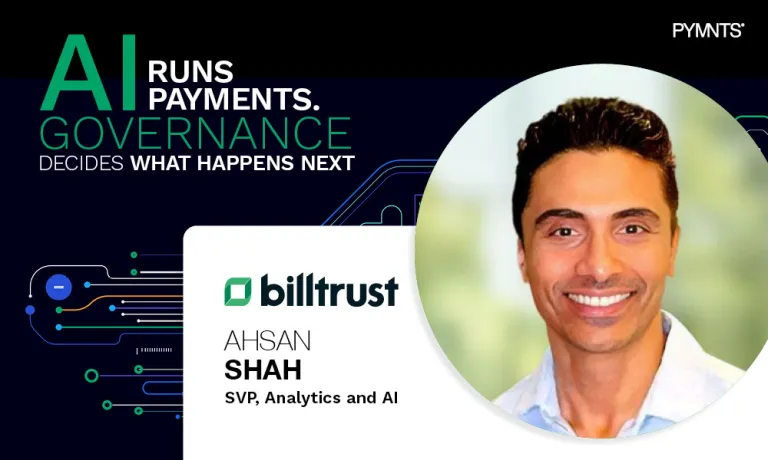
Deploying AI fast without disciplined data governance is a false victory, Billtrust SVP Ahsan Shah writes in a new PYMNTS eBook, “AI Runs Payments. Governance Decides What Happens Next.”

As artificial intelligence becomes core infrastructure across the payments ecosystem, the conversation has shifted. We’re no longer debating whether to use AI. We’re figuring out how to keep it reliable, explainable and trustworthy when the pace of innovation is outpacing the guardrails around it.

For payments companies, governance isn’t abstract. AI influences whether a transaction is flagged as fraud, how credit risk is assessed and how fast suppliers get paid. A misstep doesn’t just create noise; it creates risk at scale.

What I’ve seen, both inside Billtrust and across the industry, is that most AI governance challenges don’t come from the models themselves. They come from the data. Payments data is messy by nature. It moves through ERPs, banks, suppliers, FinTech partners and procurement systems with their own formats and levels of quality. If we don’t solve for consistency, ownership and lineage before we build the model, the best algorithms in the world can’t save us. Governance breaks down at the point where trusted data should exist but doesn’t.

And that leads to the hardest trade-off: speed. Everyone wants to deploy AI quickly because the efficiency gains are real. But going fast without disciplined data governance is a false victory. You end up paying that debt later in rework, model drift or customer friction. At Billtrust, we’ve learned to slow down at the beginning so we can move faster and more confidently later. It’s not a glamorous answer, but it’s the truth.

Advertisement: Scroll to Continue

Another challenge unique to payments is that so much of the data and model performance depends on third parties. It’s not enough for your own house to be in order if your partners don’t meet the same standards. Governance becomes a collective effort: aligned definitions, shared expectations around data quality, visibility into upstream changes and contractual clarity around how data can and cannot be used. You can’t govern in the dark.

Data governance is not an engineering issue — it’s a companywide discipline. Legal, compliance, operations, product and security all have a stake in how AI behaves. Formalizing that collaboration earlier gives you the structure you need to keep pace with innovation without cutting corners.

Looking ahead, I think boards and CEOs need to push past the broad question of whether AI is being used responsibly and ask something far more specific: Can we explain every AI‑driven decision that affects our customers? If you can’t answer that today, regulators, partners, and customers eventually will ask. And the expectation will be high.

AI will continue to reshape payments. Whether it reshapes it responsibly depends on whether governance evolves with the same urgency as the technology itself.

PYMNTS eBook download button