

惯性聚合 高效追踪和阅读你感兴趣的博客、新闻、科技资讯
阅读原文 在惯性聚合中打开

推荐订阅源

J
Java Code Geeks
Last Week in AI
Last Week in AI
T
Tailwind CSS Blog
WordPress大学
WordPress大学
B
Blog RSS Feed
T
The Blog of Author Tim Ferriss
F
Fortinet All Blogs
aimingoo的专栏
aimingoo的专栏
MongoDB | Blog
MongoDB | Blog
博客园 - Franky
C
Check Point Blog
P
Proofpoint News Feed
H
Help Net Security
月光博客
月光博客
博客园_首页
Stack Overflow Blog
Stack Overflow Blog
博客园 - 三生石上(FineUI控件)
Martin Fowler
Martin Fowler
Recent Announcements
人人都是产品经理
人人都是产品经理
U
Unit 42
美团技术团队
I
InfoQ
A
About on SuperTechFans

Futurism

Meta Installing Software on Employee Computers to Track Everything They Do, Feed the Data to AI Chinese Workers Horrified as Bosses Direct Them to Train Their AI Replacements Concern Grows That AI Is Damaging Users’ Cognitive Abilities JPMorganChase Data Center Gets $77 Million Handout to Create Grand Total of One Job Nvidia CEO Loses His Cool at Tough Question CEO of $1.5 Billion AI Startup Accused of Massive Fraud by Justice Department Palantir Issues Ominous Corporate Manifesto Madison Square Garden Reportedly Used Facial Recognition to Stalk Trans Woman For Two Years The Florida Mass Shooter’s Conversations With ChatGPT Are Worse Than You Could Possibly Imagine China Is Starting to Pull Ahead of US in AI Race AI Company Known for Teen Suicides Launches New Feature to Turn Books Into Roleplaying Experiences Democrats Warned Not to Upset Multi-Million Dollar AI Lobbyists, Even Though It’d Be a Slam Dunk With Voters City Council Wrecked in Voter Bloodbath After Allowing New Data Center Mother Reportedly Doesn’t Know Her Son Died Because She’s Been Talking to an AI Version of Him Things You Told ChatGPT or Claude My Have Already Doomed You in Court Millions of Americans Are Talking to AI Instead of Going to the Doctor, and It’s Giving Them Horrendously Flawed Medical Advice There Are Signs of a Massive AI Backlash A Prominent PR Firm Is Running a Fake News Site That’s Plagiarizing Original Journalism at Incredible Scale Fury Erupts as Val Kilmer’s Estate Announces Starring Role in AI Film Made From Beyond the Grave Allbirds Stock Now Crashing as Reality Sets in About Its Delusional AI Pivot NAACP Sues Elon Over His Noxious AI Data Center Top Security Experts Alarmed by Power of Anthropic’s New Hacker AI Teens Alarmed at What AI Is Doing to Their Minds What It Really Means That a Failing Shoe Brand “Pivoted to AI” and Its Stock Soared 700 Percent Starbucks’ Baffling ChatGPT Collab Treats Customers Like Empty, Soulless Venti Cups ChatGPT’s “Honest Reaction” to a “Song” Composed Entirely of Gas-Passing Noises Will Make You Question Whether It’s Honestly Evaluating Your Other Brilliant Ideas AI Is Turning Workplaces Into Hopeless Gridlock Companies Just Learned a Brutal Lesson About Training AI to Do Human Jobs Berklee College of Music Students Furious That It’s Offering an AI “Songwriting” Class Usually, Young People Embrace New Technology. Gen Z’s Attitude Toward AI Should Worry the Entire Tech Industry
Study Finds AI Use Eats Away at Users’ Confidence in Thei...
Joe Wilkins · 2026-04-19 · via Futurism

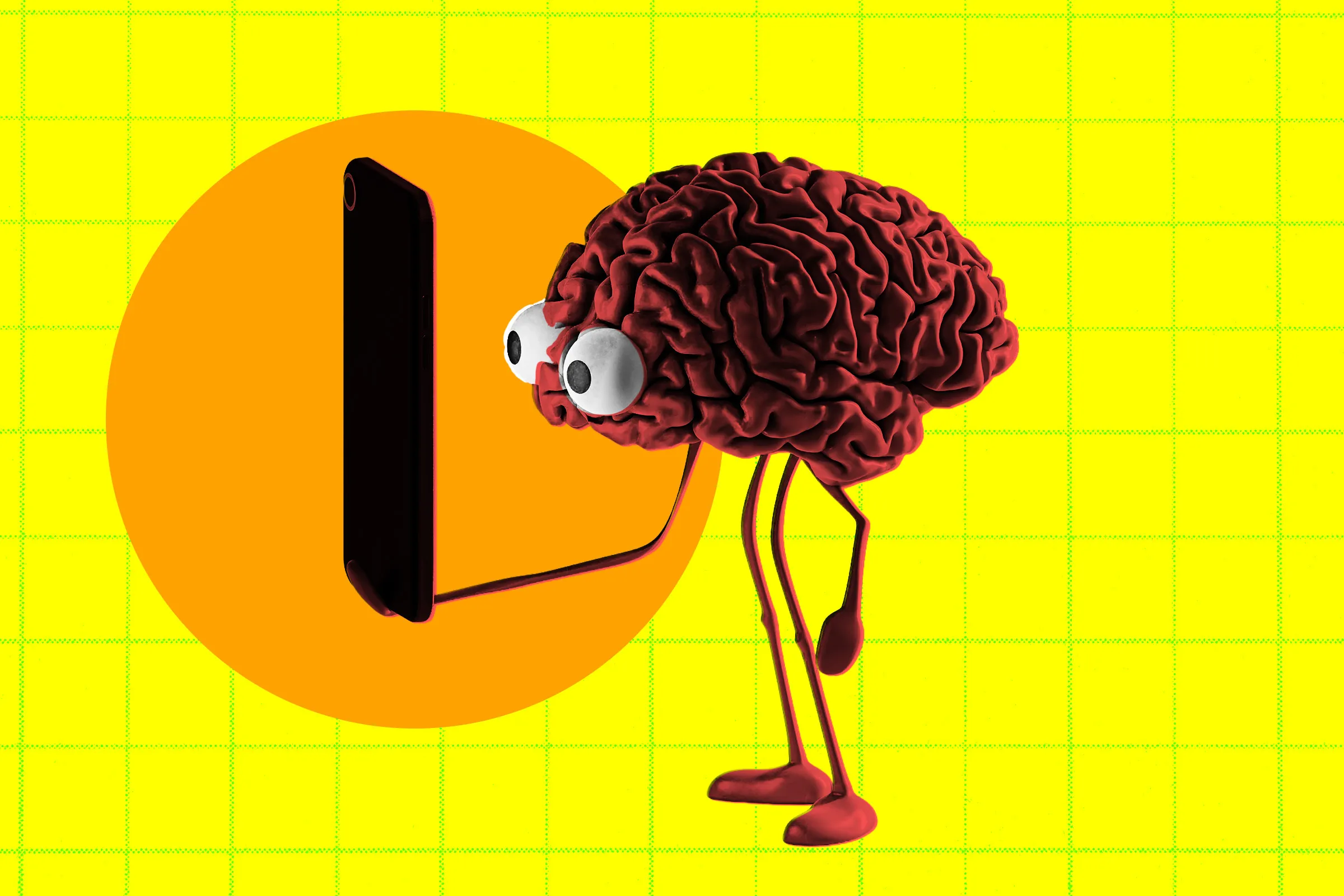
A cartoonish red brain with large, googly eyes and thin, stick-like arms and legs is looking at a smartphone held up in front of it. The background is bright yellow with a grid pattern and an orange circle behind the phone.

Illustration by Tag Hartman-Simkins / Futurism. Source: Getty Images

Sign up to see the future, today

Can’t-miss innovations from the bleeding edge of science and tech

Researchers are growing increasingly suspicious that outsourcing intellectual tasks to AI is causing a range of cognitive deficits. A new study adds a wrinkle worth paying attention to: that use of the bots can eat away at users’ faith in their own abilities, resulting in lower confidence in their own independent reasoning.

The new peer-reviewed study, published in the journal Technology, Mind and Behavior and flagged by TIME, found that those who showed a heavy reliance on AI were more likely to admit chatbots were “thinking” for them — and seem to show decreased confidence in their own ideas.

By the same token, participants who took control over their AI’s output by editing, questioning, or scrapping it showed a greater confidence and sense of ownership over the final output, even though the tools used were the same.

As the study’s author Sarah Baldeo — a PhD candidate in AI and neuroscience at Middlesex University — told TIME, the ultimate cognitive effects “depends on your interaction style.”

“When we look at brain activity contingent on how people choose to use the tool, we can see increases or decreases,” Baldeo said. “It really doesn’t have to do with the tool itself.”

That finding lines up with the “boiling frog study” we covered earlier this week. That yet-to-be-peer-reviewed paper, by researchers at MIT and Carnegie Mellon, claimed to have found the first causal evidence that AI can rapidly degrade users’ intellectual abilities, particularly when we use the tech for “reasoning-intensive” work.

During that study, participants in the experimental group were given AI access to complete a series of equations. The researchers then pulled the plug in the middle of their work, forcing them to continue without it. Those who had been abandoned by their AI chatbots saw rapid declines in reasoning ability, as well as a swift drop in willingness to follow-through and complete the math tasks.

Both studies converge on the same core mechanism: how you use AI is an important factor in determining whether it harms your cognitive ability. Basically, they argue that offloading all of your work to the machine degrades your capacity for independent reasoning, while using AI as a supplement may help to preserve it.

Whether you’re measuring confidence or raw reasoning, both pieces of research seem to pose an important question: are you using AI to help you think, or is AI doing the thinking for you?

More on AI: College Students Losing Ability to Participate in Class Discussions Due to Offloading Their Thinking to AI