

惯性聚合 高效追踪和阅读你感兴趣的博客、新闻、科技资讯
阅读原文 在惯性聚合中打开

推荐订阅源

GbyAI
GbyAI
阮一峰的网络日志
阮一峰的网络日志
G
Google Developers Blog
J
Java Code Geeks
Blog — PlanetScale
Blog — PlanetScale
大猫的无限游戏
大猫的无限游戏
云风的 BLOG
云风的 BLOG
Vercel News
Vercel News
L
LangChain Blog
Hugging Face - Blog
Hugging Face - Blog
T
The Blog of Author Tim Ferriss
让小产品的独立变现更简单 - ezindie.com
Stack Overflow Blog
Stack Overflow Blog
P
Proofpoint News Feed
腾讯CDC
博客园_首页
博客园 - 聂微东
奇客Solidot–传递最新科技情报
奇客Solidot–传递最新科技情报
M
MIT News - Artificial intelligence
WordPress大学
WordPress大学
D
DataBreaches.Net
Microsoft Security Blog
有赞技术团队
有赞技术团队
博客园 - 叶小钗

Futurism

Man Creates Tiny Submarine for His Parakeet to Experience Life Underwater The Effects of AI-Generated Code Tearing Through Corporations Is Actually Kind of Funny Trump Hires Orbital Towing Company to Build Space Interceptors Psychologists Found Something Horrible About the Kind of Men Seeking Trad Wives To Get Swole, Teens Are Pumping Themselves Full of Drugs Meant for Fattening Cows for the Slaughterhouse Foolish Pollsters Are Now Just Asking AI What Voters Would Say in Response to Questions and Publishing It at Face Value OpenAI Says It’s Already Made $100 Million by Stuffing ChatGPT With Ads Man Punished for Breaking Into Moo Deng’s Zoo Enclosure AI Is Causing Healthcare Costs to Surge There’s a Mass Rebellion Against AI in the Workplace People Who Lose Their Job to AI Are in for a World of Pain, Goldman Sachs Report Finds OpenAI Says Not to Worry About UBI, Because It Has Another Idea Police Officer Helplessly Waves Arms at Waymo That Careened Wrong Way Through Whataburger Drive-Thru Someone Just Threw a Molotov Cocktail At Sam Altman’s House New York Times Makes Substantial Changes to Article That Glazed a Sleazy AI Startup: “Our Piece Should Have Included That Information” Space Scientists Wince as Astronauts’ Lives Depend on Artemis 2’s Controversial Heat Shield During Plunge Back to Earth The Moon Astronauts Have Been Working Out With a NASA Rowing Machine in Space First AI Model From Zuckerberg’s Wildly Expensive Superintelligence Lab Flops Compared to Virtually All Rivals Economists Starting to Admit They May Have Been Wrong About AI Never Replacing Human Jobs AI-Powered Drug Marketer Medvi Responds After Allegations About Fake Doctors and Patients As Astronauts Visit the Moon, NASA Insider Says Agency Is in Shambles Behind the Scenes Man Lights 1.2 Million Square Foot Warehouse on Fire for Not Paying Him Enough NASA Scientists Screamed With Delight When They Saw Something Smashing Into the Moon Google Says Showing Polymarket Bets on Google News Was a Mistake Las Vegas Sphere Turns Into Huge Moon to Celebrate NASA Mission The New York Times Says It’s Identified the Creator of Bitcoin We Talked to a Writer Accused of Publishing An AI-Generated Essay in The New York Times Naked Man Bursts Into Tesla Service Center With a Shotgun Student Dies When Hospital Has No ICU Doctors, Calls One on Videochat Who Pronounces Him Dead Remotely, Lawsuit Claims Analysis Finds That Google’s AI Overviews Are Providing Misinformation at a Scale Possibly Unprecedented in the History of Human Civilization
You Are Not Prepared to Learn the Size of Neanderthal Inf...
Sharon Adarl · 2026-04-18 · via Futurism

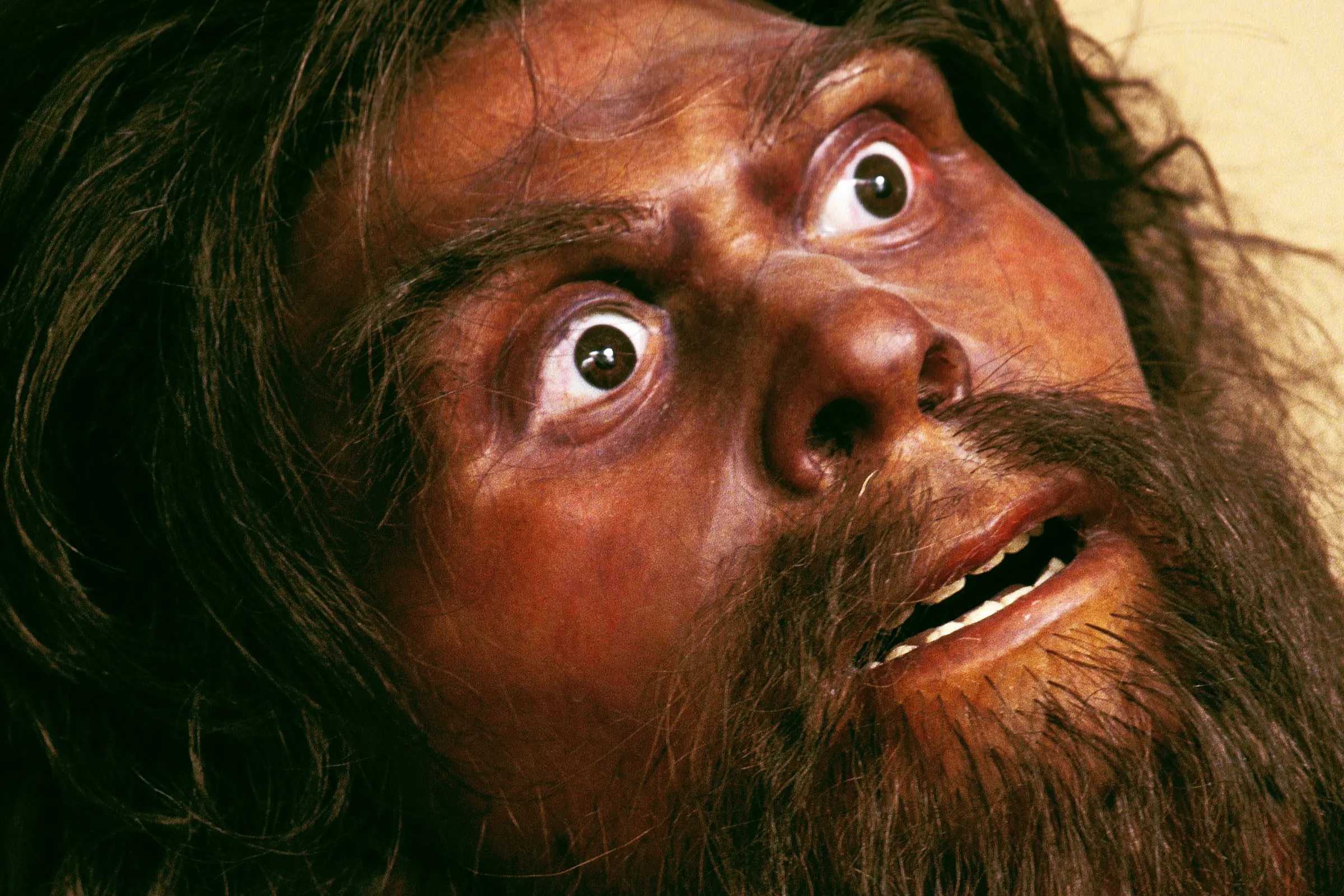
Close-up of a lifelike reconstruction of a prehistoric human face with wide, expressive eyes, a broad nose, and a thick beard and mustache. The skin has a reddish-brown tone, and the hair is long and dark. The expression appears intense or startled.

Raphael Gaillarde / Gamma-Rapho via Getty Images / Futurism

Sign up to see the future, today

Can’t-miss innovations from the bleeding edge of science and tech

Neanderthal babies were apparently bigger — and grew faster — than familiar human tykes.

At least, El Pais reports, that’s the conclusion from a team of scientists based in Israel and Europe who analyzed the remains of a six-month-old Neanderthal ankle biter who was downright colossal, at a comparable size to a one-year-old homo sapien.

That means the babies of Neanderthals, extinct cousins to us contemporary humans, were real life versions of the distinctly sturdy cave baby Bamm-Bamm Rubble from the iconic animated show “The Flintstones”

The scientists noticed that while the skeletal remains of the Neanderthal child, buried in a cave in Northern Israel about 51,000 to 56,000 years ago, sported relatively thick bones and a large skull that made it seem older, the development of its teeth betrayed its younger age, as detailed in a new paper in the journal Current Biology.

“I believe that the histological age of the teeth is more accurate than age measured by the volume of the long bones or the endocranial cavity for estimating such a young age,” Ella Been, Tel Aviv University professor in anatomy and anthropology and the paper’s first author, told El Pais.

Previous research in 2022 also found that Neanderthal kids had more robust bones than that of modern human children; fully mature specimens of Neanderthals are typically stockier and shorter than us human adults.

“When compared with other known Neanderthal infants, the same pattern emerges: faster body and brain growth, suggesting greater energy expenditure,” Been told El Pais. “Understanding this pattern is crucial to understanding who Neanderthals were and how they adapted to their environment.”

The baby Been studied was found in a cave along with about 20 other deceased Neanderthals back in the 1960s, but scientists only started studying the remains in the 1990s. This new paper is the first comprehensive study of the child’s 111 recovered bones, according to El Pais.

This finding not only reveals more information on the development of Neanderthals, who remain mysterious, but it also throws in high relief the differences between them and us; Neanderthals lived in Europe and Asia between 400,000 to 40,000 years ago, back when conditions were harsher than they are today, and hence they went through a process of natural selection that seemingly favored the survival of robust, well-built children that could mature quickly.

Even with these differences, that didn’t stop our ancestors from getting to know each other — because there’s evidence that male Neanderthals and female humans mated and produced offspring. Signs of these intimate relations are scattered throughout our DNA, telling an ancient story of when two hominid species coexisted during prehistory.

More on Neanderthals: Scientists Find Evidence That Humans Made Out With Non-Human Creatures