


惯性聚合 高效追踪和阅读你感兴趣的博客、新闻、科技资讯
阅读原文 在惯性聚合中打开

推荐订阅源

Forbes - Security
Forbes - Security
A
Arctic Wolf
M
MIT News - Artificial intelligence
T
Threat Research - Cisco Blogs
T
The Exploit Database - CXSecurity.com
C
CERT Recently Published Vulnerability Notes
NISL@THU
NISL@THU
L
Lohrmann on Cybersecurity
Martin Fowler
Martin Fowler
A
About on SuperTechFans
P
Palo Alto Networks Blog
Project Zero
Project Zero
The GitHub Blog
The GitHub Blog
WordPress大学
WordPress大学
Blog — PlanetScale
Blog — PlanetScale
博客园_首页
大猫的无限游戏
大猫的无限游戏
Cisco Talos Blog
Cisco Talos Blog
P
Proofpoint News Feed
D
DataBreaches.Net
Cyberwarzone
Cyberwarzone
T
Tor Project blog
IT之家
IT之家
P
Proofpoint News Feed
Help Net Security
Help Net Security
S
Securelist
Threat Intelligence Blog | Flashpoint
C
CXSECURITY Database RSS Feed - CXSecurity.com
Microsoft Azure Blog
V2EX - 技术
V2EX - 技术
K
Kaspersky official blog
Hugging Face - Blog
Hugging Face - Blog
MongoDB | Blog
MongoDB | Blog
B
Blog
N
News and Events Feed by Topic
The Cloudflare Blog
S
Schneier on Security
P
Privacy & Cybersecurity Law Blog
T
The Blog of Author Tim Ferriss
Recorded Future
Recorded Future
Last Week in AI
Last Week in AI
The Last Watchdog
The Last Watchdog
Hacker News - Newest:
Hacker News - Newest: "LLM"
L
LangChain Blog
I
InfoQ
F
Full Disclosure
The Register - Security
阮一峰的网络日志
阮一峰的网络日志
H
Hacker News: Front Page
V
V2EX

stuxnet Archives - Security Affairs

Fast16: Pre-Stuxnet malware that targeted precision engineering software The role of a secret Dutch mole in the US-Israeli Stuxnet attack on Iran Iran hit by a more aggressive and sophisticated Stuxnet version Dragonfly 2.0: the sophisticated attack group is back with destructive purposes Microsoft Attempts To Fix Stuxnet For The Third Time The Stuxnet vulnerability is still one of the most exploited flaws in the wild by hackers The alleged link between the Shadow Brokers data leak and the Stuxnet cyber weapon Malware posing as Siemens PLC application is targeting ICS worldwide SCADA Sssh! Don’t Talk, Filter it Shocking, a German nuclear plant suffered a disruptive cyber attack
A malware was found in Iran petrochemical complexes, but it’s not linked to recent incidents
2016-08-29 · via stuxnet Archives - Security Affairs

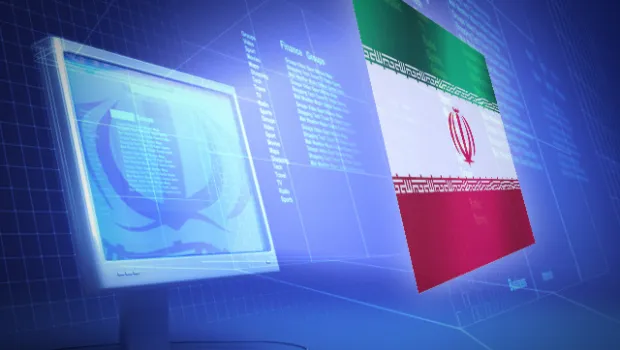
The head of Iran’s civilian defense confirmed that a malware was found in petrochemical complexes, but it hasn’t caused the fires under investigation.

Last week, I reported the news related to a series of fires at Iranian petrochemical plants. The Iran’s Supreme National Cyberspace Council started an investigation to discover if the incidents at oil and petrochemical fires were caused by cyber attacks. Authorities fear that nation state actors may have launched an attack similar to Stuxnet one.

Mr. Abolhassan Firouzabadi, the secretary of Iran’s Supreme National Cyberspace Council, announced that a team of cyber experts will be involved in the investigation to understand if the incidents are linked and if they were caused by cyber attacks.

“Abolhassan Firouzabadi, secretary of Iran’s Supreme National Cyberspace Council, says a team of experts will look at the possibility of cyberattacks as being a cause, Press TV reported on Sunday.

Special teams will be sent to the afflicted sites to study the possibility of cyber systems having a role in the recent fires, he said.” reported the Tehran Times.

Iranian cyber experts have spotted and removed two malware that infected systems at two petrochemical plants. The news was confirmed by a senior military official and reported by Venturebeat.com.

“Iran has detected and removed malicious software from two of its petrochemical complexes, a senior military official said on Saturday, after announcing last week it was investigating whether recent petrochemical fires were caused by cyber attacks.” reported by Venturebeat.com.

The official also added that the malware was not responsible for the incidents occurred at the petrochemical complexes, the experts discovered that it was inactive and not linked to the fires.

“In periodical inspection of petrochemical units, a type of industrial malware was detected and the necessary defensive measures were taken,” Gholamreza Jalali, head of Iran’s civilian defense, said the state news agency IRNA.

“the discovery of this industrial virus is not related to recent fires.”

As declared by the oil minister, the string of fires in petrochemical complexes was caused by the lack of proper safety measures caused by the cut of the budgets operated by the firms in the energy sector.

[adrotate banner=”9″] [adrotate banner=”12″]  

Pierluigi Paganini

(Security Affairs – petrochemical complexes, Iran)

[adrotate banner=”5″]

[adrotate banner=”13″]