






At Cisco, we don’t just sell networking, security, and collaboration technologies, we live them. Our offices around the world serve as proving grounds where we deploy the solutions we bring to market, using them to create better employee experiences while addressing the same operational realities faced by real estate and facilities teams everywhere. What has made the biggest difference for us is the data generated from the connected technologies in our workplaces, giving us the ability to validate assumptions, uncover patterns, and make more informed decisions about how our workplaces operate and evolve.
Between the strain of increased bandwidth and network traffic on legacy systems, the rise of sophisticated security threats, and the global skills shortage, the old way of managing IT in silos simply can’t keep up with how people work today. By unifying our core workplace technologies on a single platform, we’re doing more than just keeping the lights on. We’re building a foundation that protects users and turns our offices into intelligent assets that IT and Real Estate teams can use to drive the operational efficiencies and optimizations needed to fuel better business outcomes.
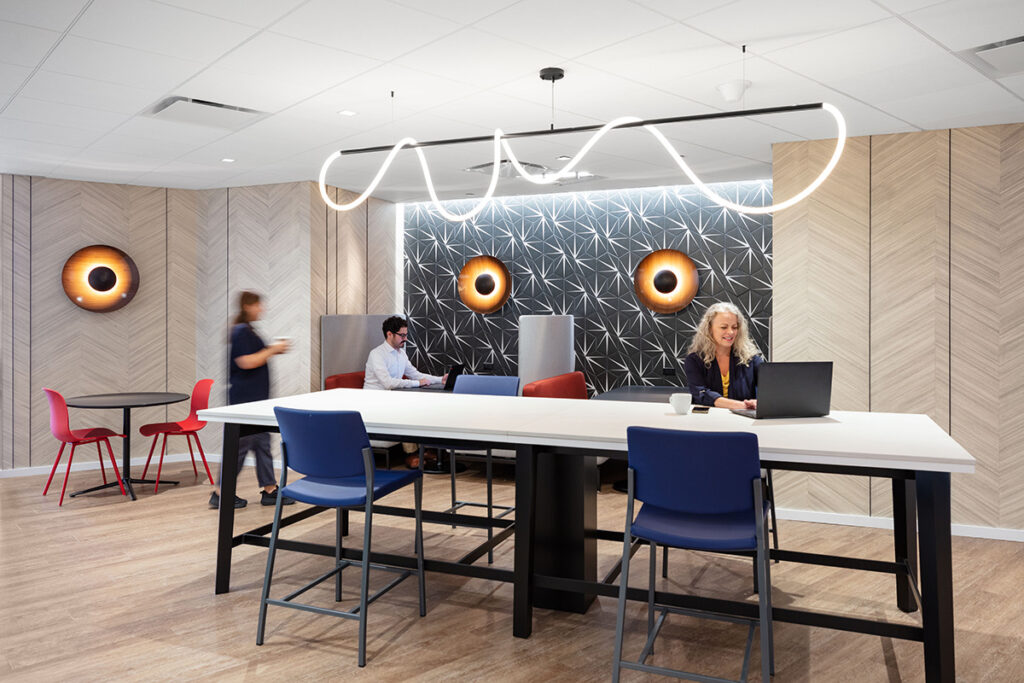
We didn’t arrive here overnight. Six years ago, as hybrid work became the new norm, we made a bold decision with our Penn One office in New York: to rethink workplace architecture by placing technology at the core of both the physical build and the employee experience. Traditionally, technology was an afterthought of the build, retrofitted post construction. At Penn One, we flipped that model; the network became the foundation and the building’s nervous system. It connects smart sensors, automated lighting, HVAC, wayfinding, and collaboration devices, enabling us to build the space and experience around technology, not the other way around.
By leveraging our wireless and camera innovations, Penn One became a unified sensory platform. Our IT stack evolved from simply providing connectivity to gathering thousands of real-time data points per second on how our spaces function. Having all this data at our fingertips has given us the visibility into office use, navigation, and potential anomalies across office temperature or air quality that we didn’t have before. This puts us in a better position to move beyond guesswork and make data-informed decisions to improve our workplace environment. Ultimately, the integration of the technology onto a single platform in the New York office, combined with a significant reduction of space and the adoption of Power over Ethernet (PoE) lighting allowed us to eliminate thousands of pounds of steel and copper wiring, achieve $360K in cost avoidance through the PoE deployment, and reduce energy expenses by 36%. And that is just scratching the surface, as we look to continually evolve the space.
Our Future-proofed Workplace approach integrates secure networking, collaboration devices, smart building technology, and AI-enhanced platforms to create flexible, resilient, and sustainable environments. By connecting PoE solutions, Cisco Wi-Fi access points, cameras, and collaboration devices into a single sensory network via Cisco Spaces, we enable seamless collaboration and productivity for a better onsite experience. This unified data stream has two critical advantages:
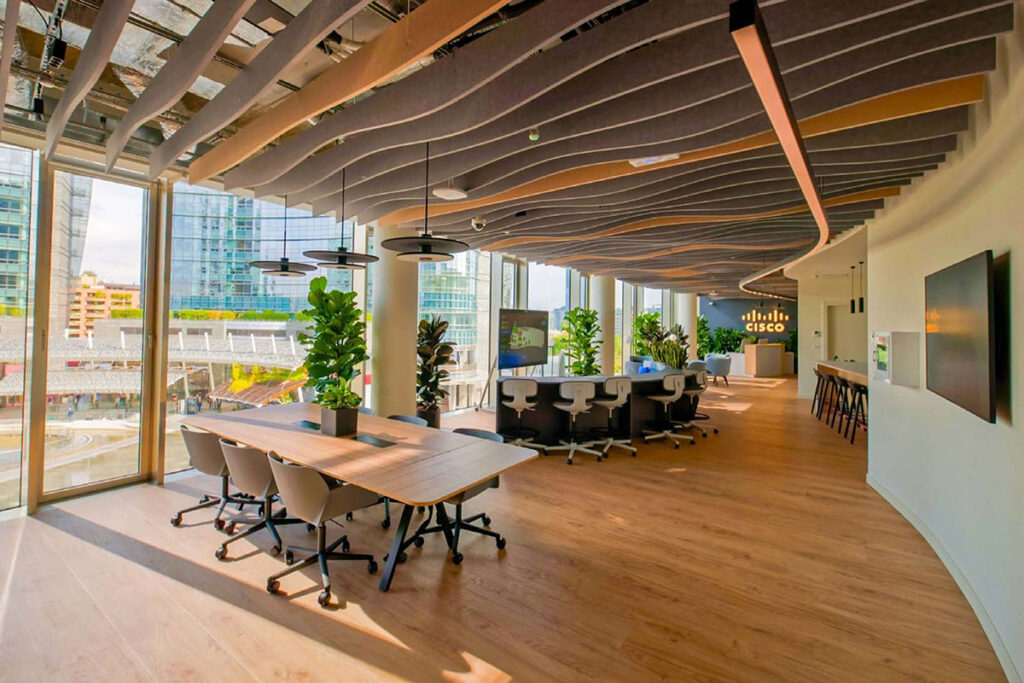
This blueprint has been our North Star, enabling us to scale with speed and intention. Over the past five years, we’ve completed more than 30 capital projects worldwide, treating IT infrastructure as the primary architectural layer and tailoring each location to specific business outcomes. For example:
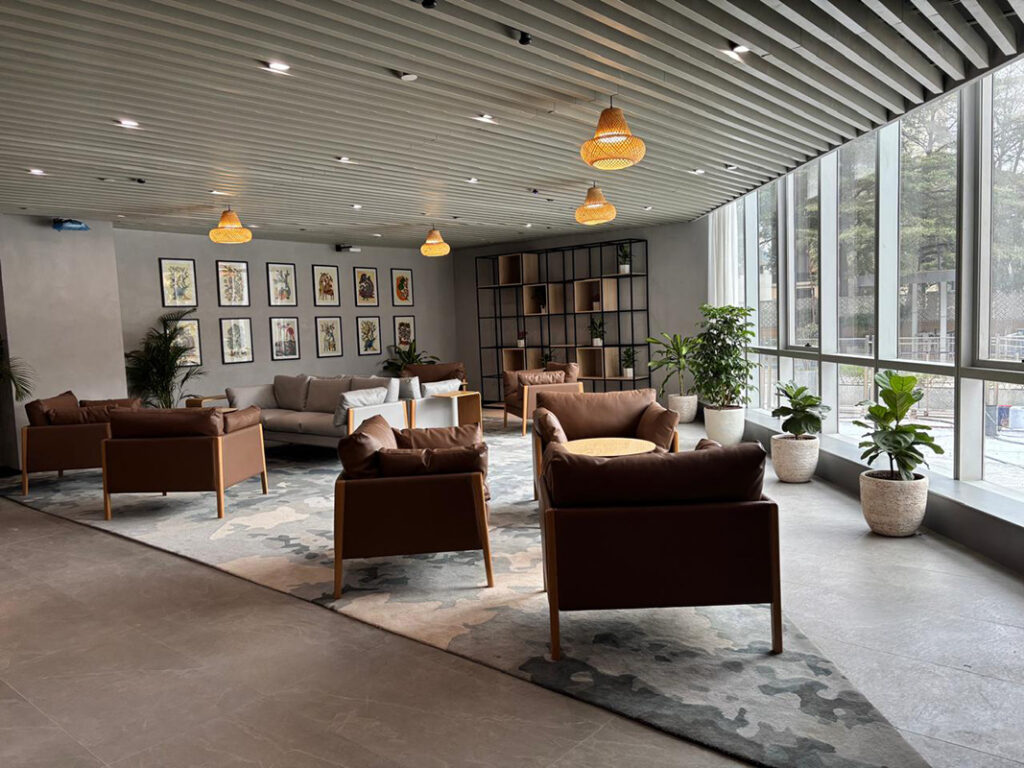
There’s also our legacy site in Bangalore, India which exemplifies our “Campus Refresh” model. More than a technology upgrade, the transition to a single, unified, secure network opened up two critical real estate capabilities around workplace planning and operations that can be extended to other sites:
These local successes aren’t just isolated wins; they represent a fundamental shift in how we manage our global portfolio. By moving from intuition to data-backed decisions, we’ve been able to scale our strategy quickly. The global results of this transformation are clear:
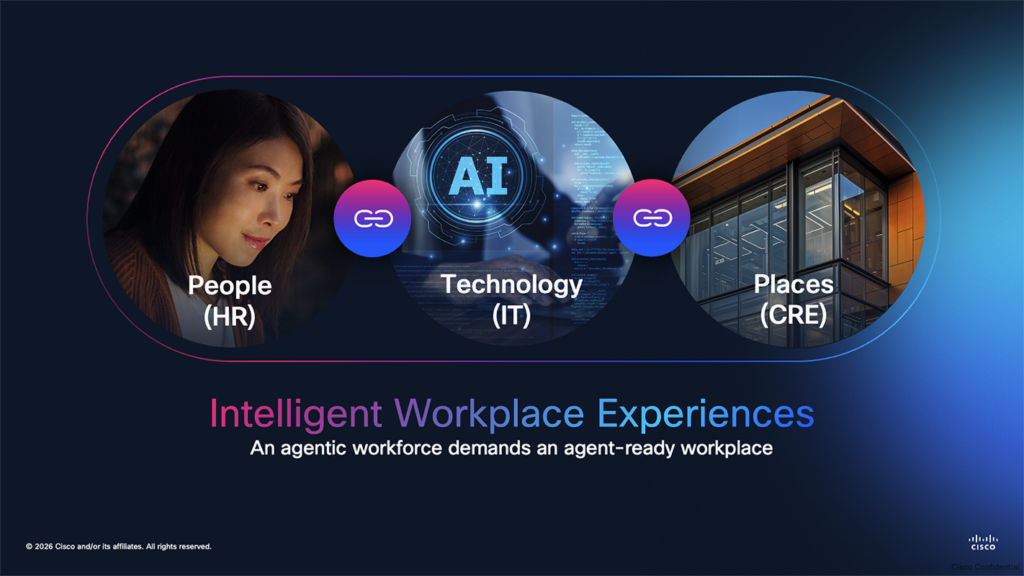 Despite these successes, workplace transformation cannot happen in silos. For too long, Real Estate, HR, and IT operated independently, creating friction in a hybrid world. Our strategy anchors at the intersection of three partners:
Technology enables but leadership is the catalyst. Our most successful offices aren’t those with the most sensors, they’re where leaders are intentional about why they are bringing their teams together. Yes, collaboration, learning, and culture top that list, but it’s more than that. It’s really about accelerating decision making, onboarding faster, facilitating knowledge transfer (both for learning and innovation), and building trust. These are the activities that can benefit from face-to-face time, and with the tech-enabled visibility into how the spaces are used, we can ensure we’re providing enough of the right types of environments that best support these activities.
We don’t have all the answers yet and the truth is, there’s still so much to uncover with all the data we can now access. While we have identified use cases where we can improve efficiencies or reduce costs, we’ve only just begun exploring what’s viable.
The next phase is harnessing it so we can actually operationalize it, and we’re looking to AI and predictive models to support capabilities like forecasting demand and attendance more precisely, and early detection of maintenance irregularities. This will allow us to plan services like catering and janitorial based on near-real-time occupancy rather than static schedules, and deploy maintenance more proactively to avoid infrastructure failures and downtime costs.
We’ve already started this work in our Research Triangle Park campus in North Carolina where we’re piloting AI-driven analytics across building systems to shift from reactive maintenance response. By deploying advanced analytics across our building management system and leveraging AI to analyze data from over 1,300 assets like chillers, air handling units, and ventilation systems, we aimed to identify inefficiencies in real-time and reduce our energy footprint.
An early finding identified more than $185K in annualized savings in just four months by fine-tuning operations such as fan speeds during unoccupied hours, correcting overcooling issues in labs and offices and accelerating work order completion. This is just one example of how we’re testing and optimizing to provide a comprehensive blueprint that eventually can help our customers and support IT leaders in solving their Real Estate and HR teams’ biggest workplace challenges.
Gone are the days where the workplace was the primary place where work got done. Today, it’s a choice that employees will only make if they see the value it delivers for their career and their work. Their expectations are higher, and to meet them, the investments IT leaders make must go beyond merely enabling virtual and hybrid meetings; they must create an environment that actively supports the activities that make coming together worthwhile. When connected and intentional, these investments become the foundation for a more agile, responsive business that can adapt to evolving work practices and meaningful collaboration. By treating the network as a sensory platform and stepping into a strategic partnership role, IT leaders shift workplace management from intuition to insight, unlocking the full potential of a truly intelligent workplace experience that drives measurable business outcomes.
Learn more:
此内容由惯性聚合(RSS阅读器)自动聚合整理,仅供阅读参考。 原文来自 — 版权归原作者所有。