

惯性聚合 高效追踪和阅读你感兴趣的博客、新闻、科技资讯
阅读原文 在惯性聚合中打开

推荐订阅源

J
Java Code Geeks
IT之家
IT之家
爱范儿
爱范儿
让小产品的独立变现更简单 - ezindie.com
博客园_首页
Blog — PlanetScale
Blog — PlanetScale
V
Visual Studio Blog
云风的 BLOG
云风的 BLOG
MyScale Blog
MyScale Blog
阮一峰的网络日志
阮一峰的网络日志
Stack Overflow Blog
Stack Overflow Blog
酷 壳 – CoolShell
酷 壳 – CoolShell
GbyAI
GbyAI
V
V2EX
N
Netflix TechBlog - Medium
Vercel News
Vercel News
freeCodeCamp Programming Tutorials: Python, JavaScript, Git & More
T
The Blog of Author Tim Ferriss
量子位
博客园 - Franky
钛媒体:引领未来商业与生活新知
钛媒体:引领未来商业与生活新知
博客园 - 司徒正美
月光博客
月光博客
F
Fortinet All Blogs

Latest from Tom's Hardware in Cpus

Intel Xeon 6+ ‘Clearwater Forest’ puts 18A in the data center with up to 288 cores, 576 MB of L3 cache — new Xeon 6990E+ is 30% faster per thread than 192-core AMD Epyc 9965, says Intel Intel Xeon 7 ‘Diamond Rapids’ CPUs officially launching in 2027 on Intel 18A-P — next-gen P-core Xeon features PCIe 6.0, 50% higher core counts, and twice the memory bandwidth AMD brings back Ryzen 7 5800X3D, launches Ryzen 7 7700X3D to combat rising component prices — eight-core X3D CPUs arrive under $350 for AM4 or AM5, DDR4 or DDR5 AMD confirms AM5 support through 2029 — Zen 4 and 5 platform will likely see two more generations, at least Nvidia's long-awaited N1/N1X SoC specs leak ahead of Computex launch — N1 to feature up to 20 Arm-based cores, standard N1 equipped with 12- and 10-core configs AMD Ryzen 7 5800X and Nvidia RTX 5060 combo is only $439 — deal includes a free CPU cooler, totaling out to $150… Intel’s new Bartlett Lake flagship loses fight to a four-year-old CPU — Core 9 273PQE has 50% more P-cores… $100 CPU Shootout: Comparing the Ryzen 5 5500, Core i3-14100F, and Core i3-12100F to find the top DDR4 CPU Analyst says Nvidia poised to capture two-thirds of the x86 server CPU market from Intel and AMD with expected $20 billion in revenue — 'Nvidia is already on track' to deliver 4 million Vera CPUs in FY2027 AMD Ryzen AI Max 400 ‘Gorgon Halo’ packs up to 192GB of unified memory — refreshed APU uses Zen 5 and… Ryzen 7 5800X3D AM4 10th Anniversary Edition surfaces online for $310 — return of iconic gaming CPU for budget… Intel CEO Lip-Bu Tan stamps out chip bugs with aggressive new quality standards, says major validation errors can result in termination — 'B0, you keep your job. Anything above that, you are fired' AMD rumored to ready budget-friendly Ryzen 7 7700X3D for suffering gamers — chipmaker lowers clocks and price with… The Core Ultra 7 270K was too good, so Intel scrapped the flagship Core Ultra 9 290K Plus — benchmarks of the 290K prototype find slim 2% faster performance in gaming and applications Intel Core Ultra 5 250K Plus vs AMD Ryzen 5 7600X3D faceoff — Battle for the fastest mid-range gaming CPU AMD reaches 46% of server x86 CPU revenue — Intel still controls 70% of the consumer PC market share AMD expands its Ryzen 9000 PRO lineup with six new SKUs, now featuring 3D V-Cache for the first time — new workstation CPUs have up to 170W TDPs, available with OEMs later this year China's next-gen CPUs and GPUs prepare to challenge last-gen Intel and AMD in 2027 — Loongson 3B6600 and… Arm's $2 billion in AGI CPU sales are still not enough to penetrate 5% of overall market share, analyst reveals — at least $90 million worth of CPUs to be shipped before FY2027 AMD Ryzen 9 9950X3D2 vs Ryzen 9 9950X3D faceoff — How far does dual cache take you? Intel Core Ultra 5 225 review: Arrow Lake’s forgotten CPU needs a price cut AMD to broaden and specialize EPYC CPUs, already working on Zen 7 architecture — increased customization to better… AMD posts record first-quarter results, driven by skyrocketing data center CPU demand — company expects consumer and gaming revenue to decline in Q2 over rising memory and component costs Intel's P-core Core 9 273PQE 'Bartlett Lake' CPU beats 14900K by up to 9% in gaming tests — embedded-only chip is unofficially Intel's fastest gaming CPU (at 720p) New server-focused SPEC CPU 2026 benchmarking suite has results for a Raspberry Pi 5 — updated tools feature more tests and can run a wide range of systems AMD Ryzen AI 5 435G APU breaks cover in early benchmarks — six-core Zen 5 chip goes head-to-head with the Ryzen 5 8600G for budget PC builders AMD Ryzen AI Max+ PRO 495 APU could arrive with 192GB of unified memory — leaked PassMark benchmarks suggest… AMD Ryzen 9 PRO 9965X3D spotted on Passmark — company's first PRO chip with 3D V-Cache also bumps the lineup… Tech teardown specialist delids a Xeon with a blowtorch and hunting knife — wood chopping block makes a worthy… AMD Ryzen 9950X3D tops Amazon best sellers as it falls to all-time low price of $573.99 — 32-core X3D chip is now…
More details emerge about how Intel now earns more revenu...
Anton Shilov · 2026-04-29 · via Latest from Tom's Hardware in Cpus
Intel silicon spin qubit progress
(Image credit: Intel)

One of the highlights of Intel's first-quarter earnings report last week was improved sales of its client and data center processors as a result of improved output and yield, as well as high demand. Last week, industry analyst Ben Bajarin said the company was now selling what would normally be 'scrap' or 'low-expectation' CPUs, which helped boost margins. We followed up with industry veteran Dan Hutcheson for more details, and he notes that some of the company's recent yield gains are less about breakthrough inventions and more about disciplined execution improvements under its new manufacturing leadership.

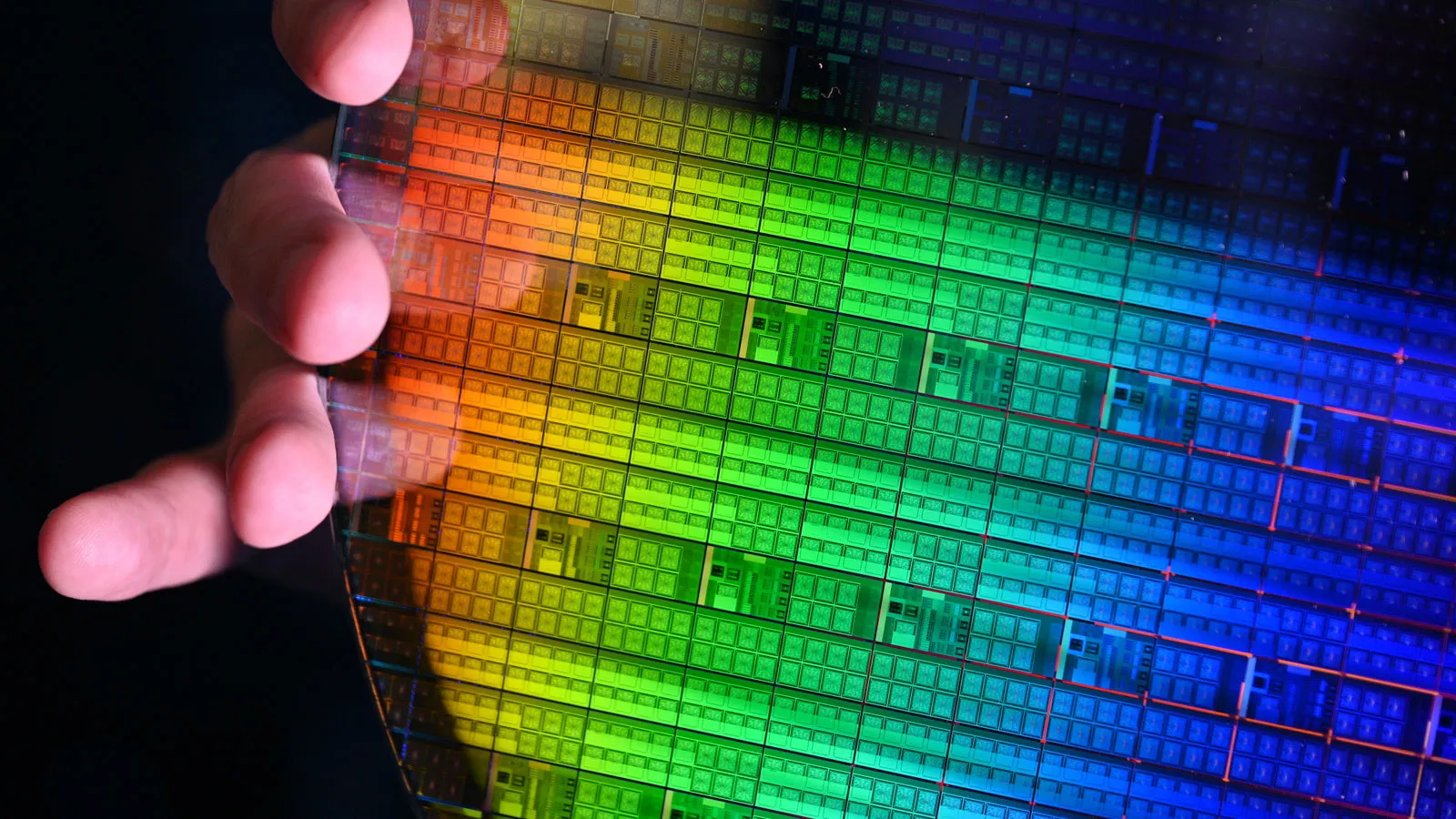
Dan Hutcheson, vice chair of TechInsights, told Tom's Hardware that while techniques like binning and statistical process control (SPC) have been standard practice at Intel for about 40 years, recently — starting from around late 2024 when Naga Chandrasekaran, the current head of Intel Foundry, joined the company — Intel focused on tightening yield distribution across the wafer by reducing edge-related variability.

Specifically, Intel now runs a continuous process improvement (CPI) program after a node enters high-volume manufacturing, so by now it has implemented certain edge-specific process correction methods in a bid to reduce quality variability from the center to the edge of a wafer to get more sellable silicon from a single wafer.

"When it comes to manufacturing, it takes a year or two to make these kind of dramatic changes," Hutcheson told Tom's Hardware. "There’s just nothing new here. Intel has binned lots since the 1980s. Yield distributions are always heteroscedastic from the center to the edge of the wafer. Actually, one of the things Naga Chandrasekaran's yield management efforts have changed is to narrow the spread to the edge of the wafer. Hence, they are getting more revenue-per-wafer for little cost. The beauty of it is that the improvements are node independent."

As a result, Intel can now extract more high-quality dies from a single wafer and, perhaps even more importantly, more sellable dies from a single wafer, which improves output and productivity. Essentially, chips that previously might have been scrapped or too marginal to sell are now binned into lower-tier SKUs and sold because the demand is strong, according to Ben Bajarin, chief executive and principal analyst at Creative Strategies.

"Got some clarity from Intel IR on additional lift to margins," Bajarin wrote in an X post. "Intel got an unexpected margin lift from better yield salvage. Chips that would normally have been lower-value edge-die on the wafer were binned down and still sold into usable SKUs, turning what may have been scrap or low-expectation output into incremental revenue. Customers did not care, just said 'I will take it all.' That is the demand environment we are in for CPUs."

This can be interpreted in different ways, but it is feasible that the yield distribution improvements have made lower-quality chips now viable products, or that the company created even lower-tier SKUs to harvest even more chips.

Get Tom's Hardware's best news and in-depth reviews, straight to your inbox.

More importantly, the aforementioned tightening yield distribution improvements are said to be largely node-independent, which means they benefit multiple process technologies rather than the existing nodes, such as Intel 7/4/3. Indeed, there are many ways to reduce edge-related variability, and many of them are node independent, which means some of the methods developed at Intel should be applicable to 18A (though that isn't confirmed). In fact, one of the comments Intel made during its earnings call is that the yield curve of 18A progresses at a pace that is higher than expected.

"Lip-Bu had a [18A yield] target as we came into this year for the end of this year, and we are probably going to hit that probably the middle of this year," said David Zinsner, chief financial officer of Intel. "So, you know, he has done a very good job working the team to drive a better response there."

Google Preferred Source

Follow Tom's Hardware on Google News, or add us as a preferred source, to get our latest news, analysis, & reviews in your feeds.

Anton Shilov is a contributing writer at Tom’s Hardware. Over the past couple of decades, he has covered everything from CPUs and GPUs to supercomputers and from modern process technologies and latest fab tools to high-tech industry trends.