
The 2026 season opens under the shadow of extreme weather volatility that led to severe damage to the blossoming. Despite rigid demand, the low quantities will skyrocket prices in retail chains.






The mango season for the year 2026 opens this week in the leading growing areas around the Sea of Galilee, the Jordan Valley, and the Valley of Springs under particularly bleak forecasts: The mango sector is characterized this year by an extreme lack of yield, and official estimates speak of a quantity of only about 30% of the existing yield potential in the orchards. This is a complete mirror image of the 2025 season, which was characterized by exceptional yields and very large quantities of fruit, but suffered from severe marketing problems.
The Zemach Avocado packing house of the Zemach corporation will handle the fruit brought by growers from farms around the Sea of Galilee, the Jordan Valley, and the Valley of Springs. According to Moshe (Shiko) Domovitz, CEO of the Zemach Corporation: "The mango season last year was characterized by exceptional yields with very large quantities of fruit. The export markets last year were problematic due to boycotts by some of the retail chains abroad and the imposition of very high tariffs on Brazilian mangoes, which were traditionally marketed to the USA but due to the high tariff were redirected to Europe and 'clogged' the market for us. Another point that was very problematic last year was the inability to send fruit to Gaza, which constitutes an outlet for all the surplus fruit that accumulates in Israel.
"This year, by contrast, we received a mirror image of the 2025 season: The mango season, which is already just around the corner, is characterized by an extreme lack of yield. Estimates speak of a quantity of about 30% of the existing yield potential in the orchards. The markets abroad are waiting for the Israeli mango, Gaza is open for the entry of fruits, and a season with very high prices is expected, and we hope they will succeed in covering the decrease in mango quantities."
As recalled, last year the growers encountered barriers in the export markets due to boycotts by some of the retail chains abroad, alongside high quotas imposed on Brazilian mangoes in the USA. This caused the diversion of Brazilian produce to Europe, thereby "clogging" the market for the Israeli fruit. Another central difficulty last year was the inability to send fruit to the Gaza Strip, which constitutes a critical traditional outlet for absorbing the surplus fruit that accumulates in Israel.
A veteran farmer from Moshav Ramot in the southern Golan Heights describes this bleak reality well: "Last year I picked 96 tons of mangoes, and this year I estimate that I won't have perhaps 20 tons, maybe only 15 tons," he shares painfully.
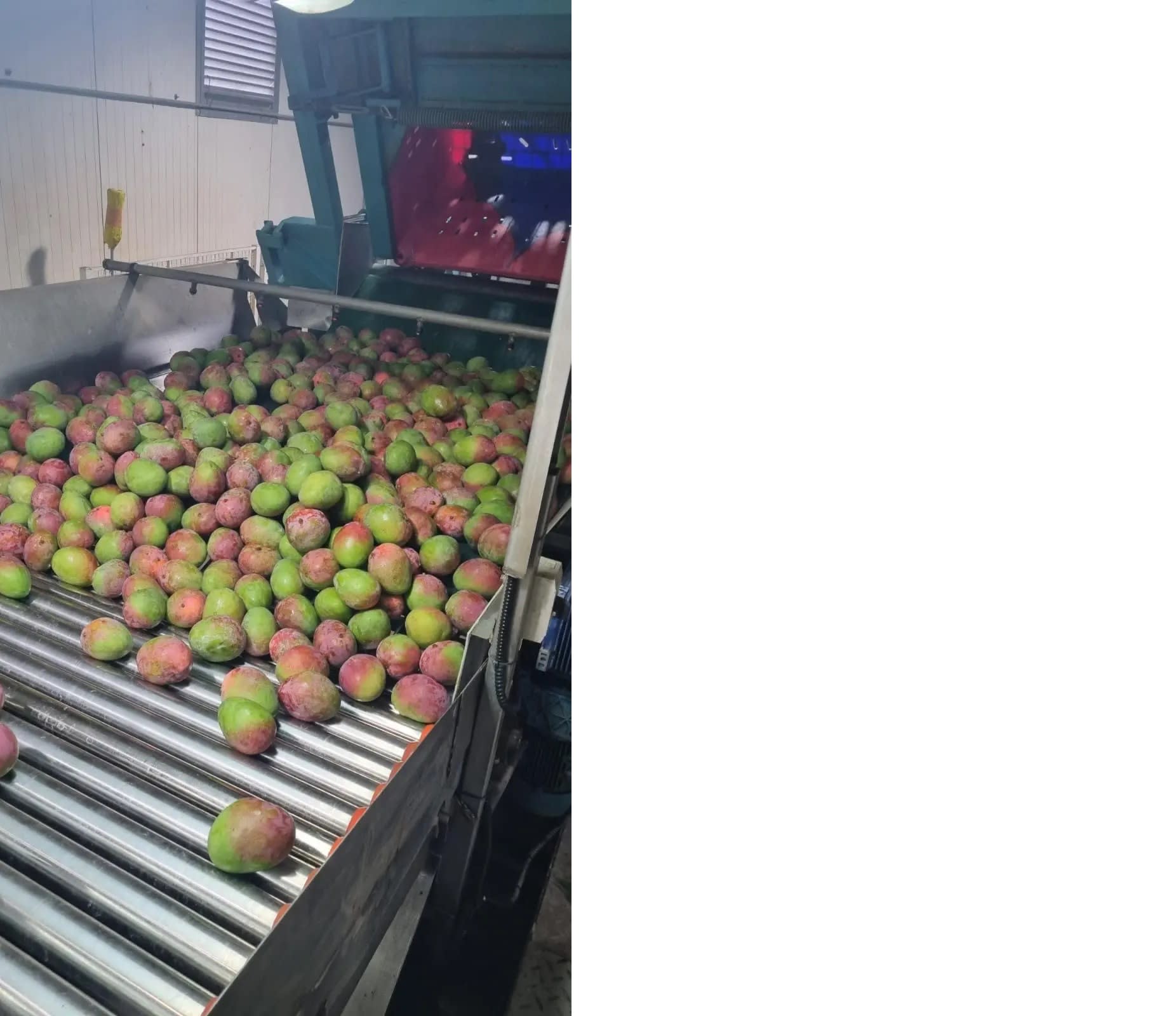
According to him, among some of the neighbors in the Almagor area, the situation is defined as a "total loss" of the yield.
The central reason for the collapse is an exceptional and severe climate volatility that occurred during the spring. "In the bosom of each leaf sits a bud, which in spring is supposed to differentiate into a flower, a leaf, or a branch," the farmer explains the botanical side of the harsh reality. "This year, the moment the buds began to blossom, we experienced extreme waves of heat and cold, alongside large quantities of unseasonal rain and high humidity. This crazy weather simply wiped out the blossoming in most areas surrounding the Sea of Galilee. Many fruits that remained on the trees are actually small fruits that developed without fertilization and are not fit for marketing."
The mango sector in Israel currently spans about 24,000 dunams, yielding about 85,000 tons of fruit in a normal year, with the main cultivation concentrated in the Sea of Galilee area and the Beit She'an Valley, alongside limited areas in the Sharon and the south. The mango produce this year will stand at only about 35,000 tons, and the crisis this year is expected to significantly skyrocket the prices of the beloved fruit in retail chains in Israel and abroad.
While growers cope with the implications of the recent spring, a new study offers a technological solution that might help in the future in dealing with climate damage. Growing mangoes in Israel poses challenges that are not simple, primary among them spring hamsin days in the months of April and May and strong solar radiation, which damage fruit development and can lead to a decrease of up to 40% in yield. A multi-year study designed and conducted by Dr. Navot Galpaz, a researcher at Northern R&D in the MIGAL Research Institute, examined agrotechnical solutions for creating an optimal micro-climate in mango orchards. The study tested the use of shade nets with a density of 30%–40% and found that they significantly reduce air, leaf, and fruit temperatures. As a result, a dramatic reduction was recorded in the dropping of fruitlets after a hamsin and in sunburn damage to the fruit, and a significant increase was achieved in the quantity of quality fruit that reached harvest.
Following the results of the study, the "net house" method, implemented with great success in banana plantations for over two decades, is now making its first steps in the mango sector. In preparation for the current season, Kibbutz Masada in the Jordan Valley established the first "net house" in Israel over a mango orchard, spanning about 50 dunams, hoping to generate stability against weather hazards in the coming years.
此内容由惯性聚合(RSS阅读器)自动聚合整理,仅供阅读参考。 原文来自 — 版权归原作者所有。