


Walk around inside the International Space Station in Street View on Google Maps and Google Earth. Image: Google
Google Maps goes out of this world to mark the 48th anniversary of the first manned mission to the moon.
Space tourists are in for a treat with the news that you can now virtually explore the International Space Station (ISS) in 360 degrees from Google Maps and Google Earth.
The special experience was created by Google to mark the 48th anniversary of when Apollo 11 became the first manned space mission to land on the moon on 20 July 1969.
Google Maps’ Street View of the ISS will provide a 360-degree tour of all 15 modules and two visiting docking vehicles: Elon Musk’s SpaceX Dragon and Orbital Cygnus.
This will be the first Street View collection with annotations, highlighting things such as: where the astronauts work out to stay physically fit, what kind of food they eat, and where they do scientific experiments.
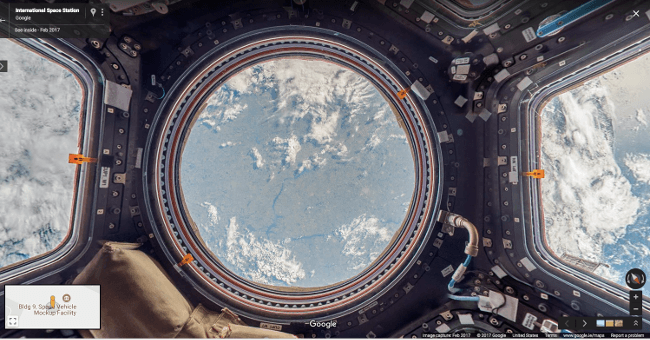
A fine view of Earth. Image: Google Maps
From the Planets page of Google Maps, you’ll be able to click on the image of the ISS and be taken right to the amazing imagery.
Google worked with NASA at the Johnson Space Center in Houston, Texas and Marshall Space Flight Center in Alabama to brainstorm and design the first ever gravity-free Street View collection, using cameras and equipment already on the ISS in a simulated setting.
Thomas Pesquet, astronaut at the European Space Agency, used DSLR cameras to capture the shots, then Google stitched the still photos together to create panoramic imagery of all 15 modules in the ISS, publishing them to Google Maps and Street View.
Street View started out as Larry Page’s far-fetched idea to create a 360-degree map of the world, and it has come a long way, with Google recently celebrating 10 years of beautiful imagery.
Now people can scale mountains, dive into the depths of the ocean, scout out ramen spots and walk through museums in far corners of the world.
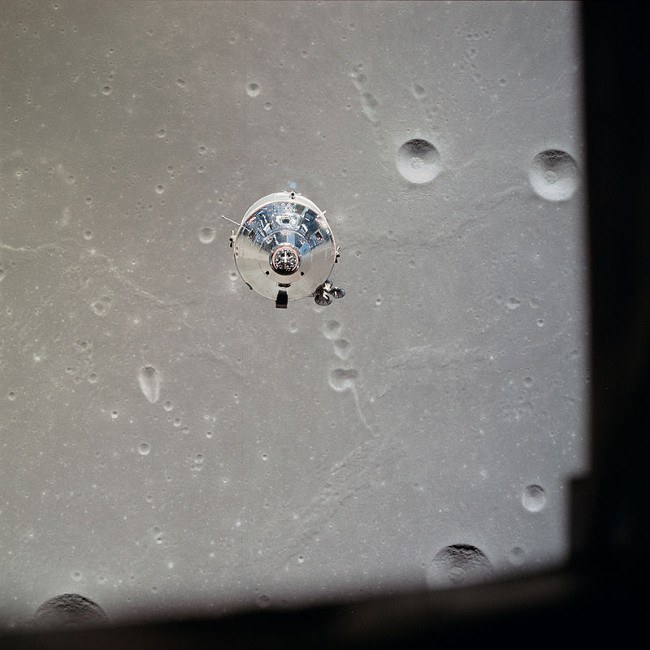
Apollo 11 Command/Service Module Columbia in lunar orbit, photographed from the Lunar Module Eagle. Image: NASA
On 16 July 1969, the Apollo 11 mission was launched by a Saturn V rocket from Kennedy Space Center in Florida.
The spacecraft was crewed by commander Neil Armstrong, command module pilot Michael Collins and lunar module pilot Buzz Aldrin.
On 19 July, Apollo 11 passed behind the moon and fired its service propulsion engine to enter lunar orbit.
The spacecraft orbited its landing site over the Sea of Tranquility 30 times before lunar module Eagle separated from command module Columbia and pirouetted towards the moon on 20 July.
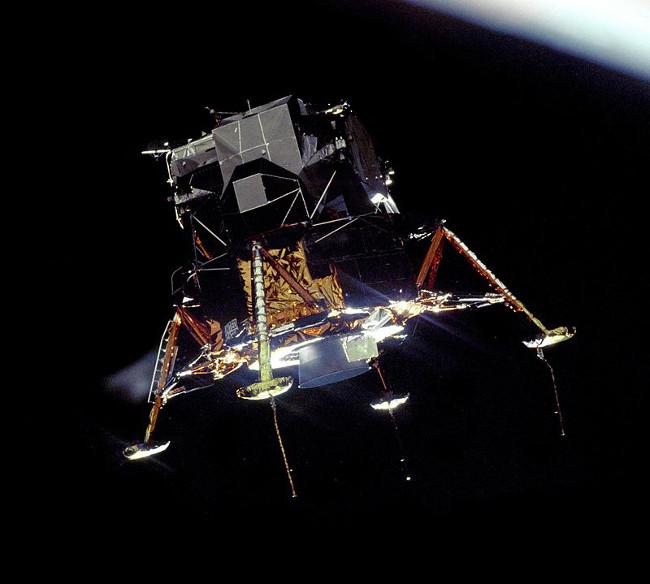
The Eagle in lunar orbit after separating from Columbia. Image: NASA
6,000ft above the surface of the moon, unexpected alarms distracted the crew of Eagle because the software was overloaded with more tasks than it could handle.
Ironically, according to Margaret Hamilton, director of Apollo flight computer programming at MIT, if the warning hadn’t occurred, forcing the computer on Eagle to take recovery action, the landing may not have been a success.
At 8.18pm UTC on Sunday 20 July, with just 25 seconds of fuel left, Armstrong uttered the immortal words: “Houston, Tranquility Base here. The Eagle has landed.”
The next day, Armstrong uttered a few more immortal words when he stepped onto the moon’s surface: “That’s one small step for man, one giant leap for mankind.”
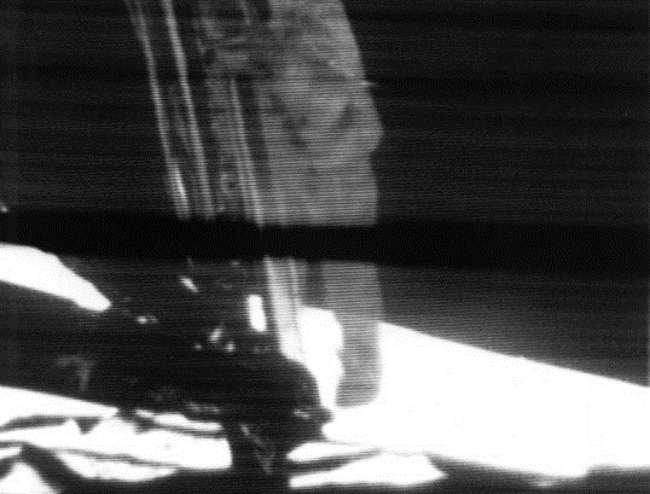
Neil Armstrong sets foot on the moon. Image: NASA
If you want to explore some more awesome Apollo 11-related experiences, check out these amazing 16 rarely seen photos.
You can also check out the Apollo 11 take-off, filmed at 500 frames per second, here.
And don’t forget, Irish tech firm Immersive VR Education has created an amazing VR experience that captures the journey from the perspective of the astronauts.
此内容由惯性聚合(RSS阅读器)自动聚合整理,仅供阅读参考。 原文来自 — 版权归原作者所有。