







Buy now, pay later may have started as a checkout convenience, but for credit union members it is becoming a cash flow tool that could use a better home.
That is the central opportunity outlined in the March 2026 Credit Union Tracker Series, “Pay Later’s Next Chapter: Why Credit Unions Are Rethinking Installment Payments,” a PYMNTS Intelligence report with Velera.
The report finds that installment payments are moving beyond big-ticket retail purchases and into everyday spending, from travel and home services to utilities and medical bills.
As BNPL use grows, so does the complexity of managing it. Members may be spreading repayment plans across merchants, apps and providers, which can make it harder to know what is due, when it is due and how much remains. For credit unions, that creates a practical opening: help members bring those payments into one trusted financial view.
The report points to a shift that is less about novelty and more about coping. Consumers are not simply looking for another button at checkout.
Many are trying to manage timing, income gaps and monthly expenses with tools that feel easier than traditional credit. That makes BNPL a service credit unions can treat as part of financial wellness, rather than only a lending product.
Advertisement: Scroll to Continue
Key Findings:
- 22%: Total value of installment payments among top BNPL providers grew by 22% in 2025, while the number of transactions increased by 12%. That growth shows how quickly installment payments are becoming part of everyday commerce.
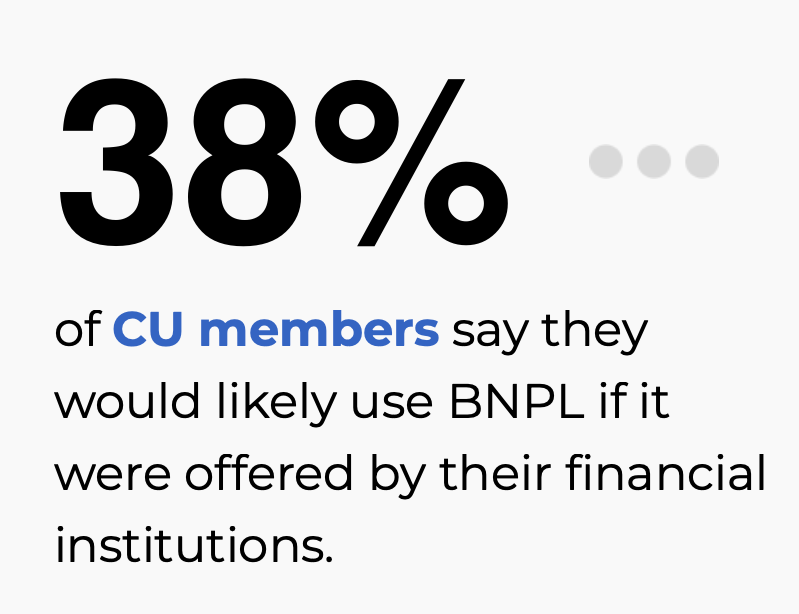
- 38%: Share of credit union members who say they would likely use BNPL if offered by their financial institutions rose to 38%, up from 32% in 2024. The interest is especially strong among younger consumers.
- 49%: Nearly half of credit union members have used BNPL offerings from companies outside their financial institutions. PayPal, Affirm and Klarna are among the providers members use most often.
The coping challenge starts with the structure of BNPL itself. A credit card bill usually arrives on one schedule. BNPL works differently. Each purchase can carry its own repayment date, term and provider. A member using installments for a medical bill, a home repair and a retail purchase may be managing three separate repayment calendars across three different apps.
That fragmentation can turn a budgeting tool into another task. PYMNTS Intelligence found that one-quarter of BNPL users say they are usually or always unsure about their next payment date or how many payments remain. Roughly half struggle with those details at least occasionally. Those figures suggest that the next phase of BNPL adoption may depend less on access and more on organization.
Credit unions can respond in several ways. The first is to keep installment activity inside their own digital channels. A CU-based BNPL program can give members one place to view repayment dates, balances and account activity. That simple change could reduce confusion and help members avoid surprises.
The second strategy is education. Many members may not know their credit union can offer installment options, especially when third-party providers appear directly at merchant checkout. Clear app messaging, statement inserts and staff guidance can close that awareness gap without making the experience feel like a sales pitch.
The third strategy is design. Credit unions can build pay-later programs around transparent terms, reminders and repayment planning. That approach plays to their traditional strength: a member relationship built on guidance and trust.
The upside is not limited to members. When BNPL activity moves through outside providers, credit unions lose visibility into spending and repayment behavior. Bringing those flows in-house can help institutions better understand member needs, tailor support and preserve engagement.
At PYMNTS Intelligence, we work with businesses to uncover insights that fuel intelligent, data-driven discussions on changing customer expectations, a more connected economy and the strategic shifts necessary to achieve outcomes. With rigorous research methodologies and unwavering commitment to objective quality, we offer trusted data to grow your business. As our partner, you’ll have access to our diverse team of PhDs, researchers, data analysts, number crunchers, subject matter veterans and editorial experts.