



惯性聚合 高效追踪和阅读你感兴趣的博客、新闻、科技资讯
阅读原文 在惯性聚合中打开

推荐订阅源

Jina AI
Jina AI
MyScale Blog
MyScale Blog
量子位
月光博客
月光博客
J
Java Code Geeks
A
About on SuperTechFans
H
Hackread – Cybersecurity News, Data Breaches, AI and More
U
Unit 42
WordPress大学
WordPress大学
OSCHINA 社区最新新闻
OSCHINA 社区最新新闻
腾讯CDC
G
Google Developers Blog
博客园 - 【当耐特】
Engineering at Meta
Engineering at Meta
让小产品的独立变现更简单 - ezindie.com
宝玉的分享
宝玉的分享
IT之家
IT之家
N
Netflix TechBlog - Medium
Microsoft Security Blog
博客园 - 叶小钗
B
Blog
Martin Fowler
Martin Fowler
P
Proofpoint News Feed
B
Blog RSS Feed

remy sharp's b:log

Redesign '26 AI for alt text? text-decoration-thickness discrepancies Are We at War with AI Agent “Civilizations”? Before you buy an LTE Pixel Watch (for your teen) I Who Have Never Known Men 16 for Tia The Talented Mr Ripley (Ripley, #1) Dark mode toggles: two states are enough I'm not done using AI On AI Coding and Its Discontents Three Men in a Boat Not All Screen Reader Users Are Blind Progressive Enhancement inside of JavaScript A Firefox-only minimap Human Software Rescued Pokémon Yellow when-do web component 'VPNs are lawful technical tools,' says EU Court in landmark copyright ruling Image to text The Air Raid Book Club The infinite scroll may become endangered if controversial Calif. law passes In defense of polyfills • Lea Verou This was the first commit via an LLM to git Wildcards In CSS AI Content Is Everywhere on Social Media, Especially LinkedIn Web Platform Wishlist on Vale.Rocks querySelector immediate children with :scope Fundamentally Why we moved our Bluesky data to Eurosky
Pokémon Emerald
Remy Sharp · 2026-07-30 · via remy sharp's b:log

Similar to the Pokemon Yellow recently, I had a GBA Emerald Green sent in for repair.

Just 24 hours ago, this was going to be a post on how I had failed to repair it, but in a last minute ditch, I managed to save it.

Loading up the game resulted in nothing, and opening the shell explained why. There was a lot of corrosion around the PCB, but more importantly, two of the legs on the ROM had completely dissolved:
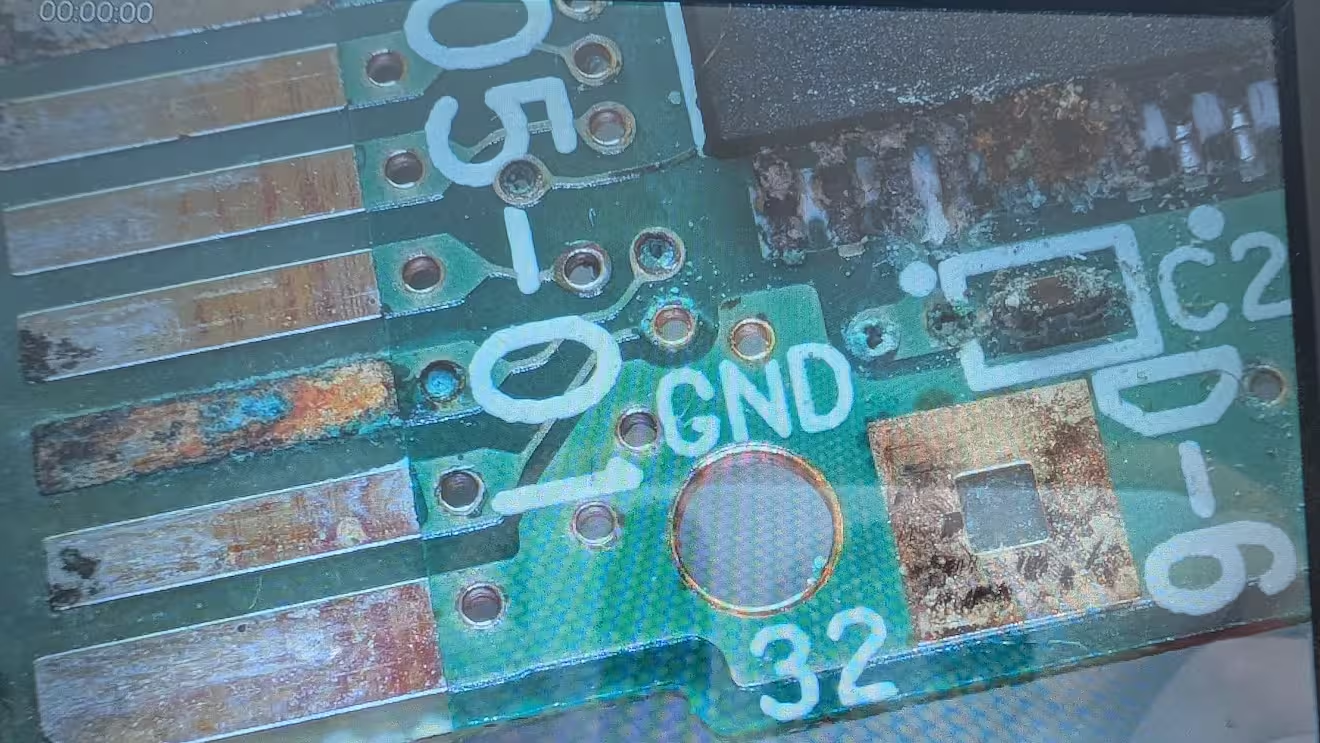
Extreme close-up of a corroded green printed circuit board showing oxidized metal contacts, vias, and labeled solder pads.
It doesn't photograph well, but the crud at the top left is where the chip legs had turned to mush

The first task is to remove the main chips (the ROM and the RAM) and examine and then clean up the damage under the chips. The black around the vias (the holes) aren't a great sign either.
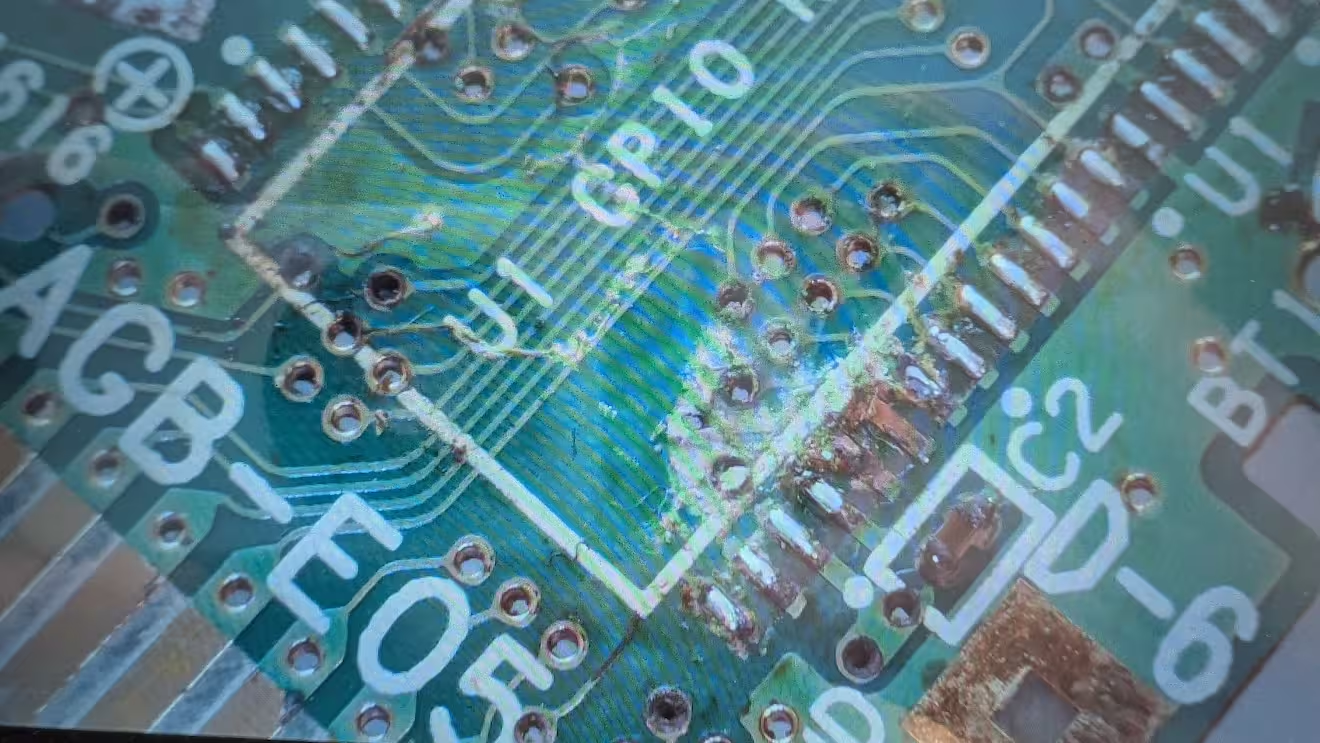
Close-up of a the circuit board showing severe corrosion, damaged traces, and flux residue around small surface-mount component pads and vias.
Initially looked like the pads had been lost too, but thankfully they were under there

Whilst the chips are off, this is a good time to (try to) check the traces for continuity throughout the board.

Once the chips were replaced, I then have to repair the lost legs. To do this, I use a small Dremel-like hand tool that can burr into the epoxy (the black part of the chip that you would handle) until I'm able to expose the internal part of the leg before it was lost.

From there, very carefully, I'm soldering a 30 AWG (hair-thin at 0.1mm) to the inside of the chip to the pad it originally connected to.
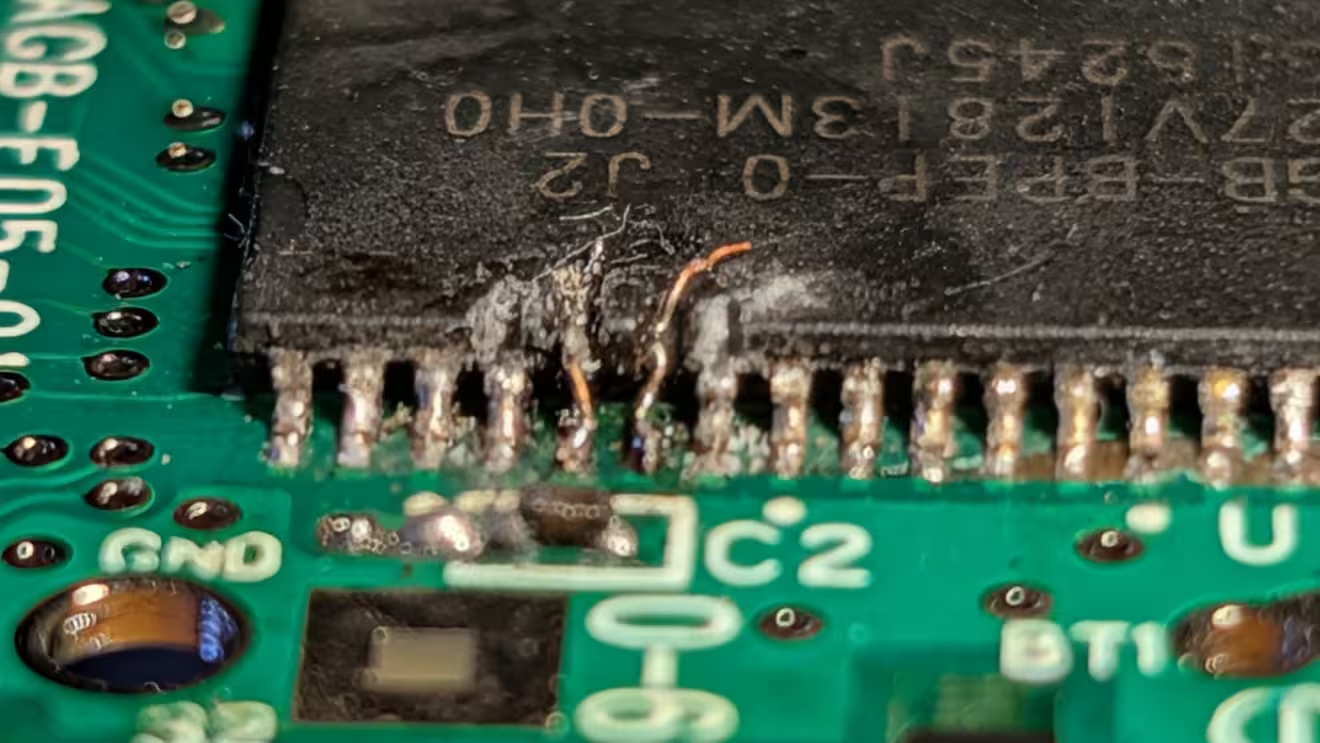
Extreme macro photo of an integrated circuit chip on a circuit board, where thin enamel jumper wires have been soldered directly into scraped-open chip package leads for repair.
Drilling into the epoxy is always nerve wracking stuff

Then using the same 30 AWG jumper wire, I proceeded to jump all the locations that I knew the trace was bad. It ended up a bit of a spaghetti board:
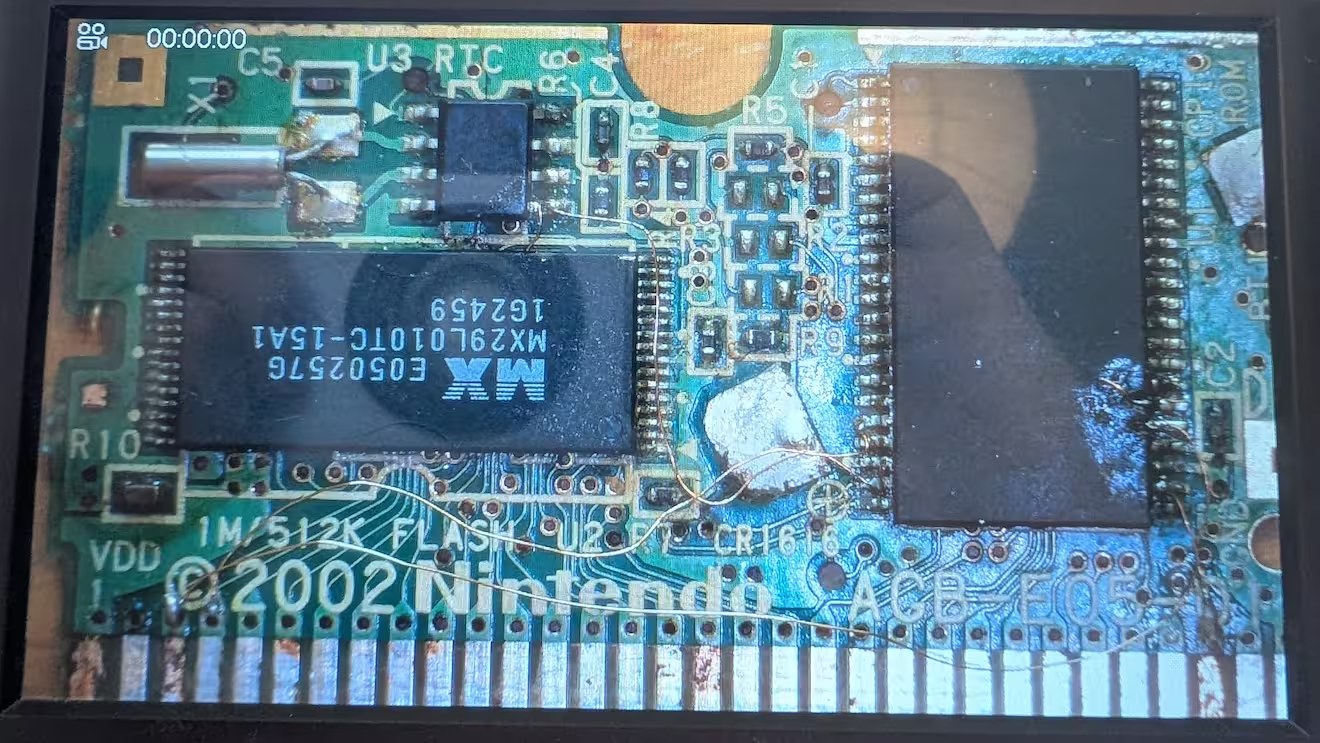
Top-down view of a modified 2002 Nintendo Game Boy Advance cartridge circuit board featuring multiple bodge wires routed across broken traces.
Lots of tiny wires snake across the board

At this point, it was time to test.

And…it wouldn't boot. I debugged a lot more, but decided the PCB itself had suffered too much damage, and managed to order a new bare PCB for £6.50 - which came reasonably quickly.

I then proceeded to move all the components across from the old PCB to the new. The larger components are pretty straightforward, but the passives, such as the resistors and capacitors are harder, especially without a template.

I also decided to use my own new passives for the resistors, and at the time I didn't have any new capacitors, so I carried these across assuming, since I had always considered them to be pretty robust (spoiler: they aren't).
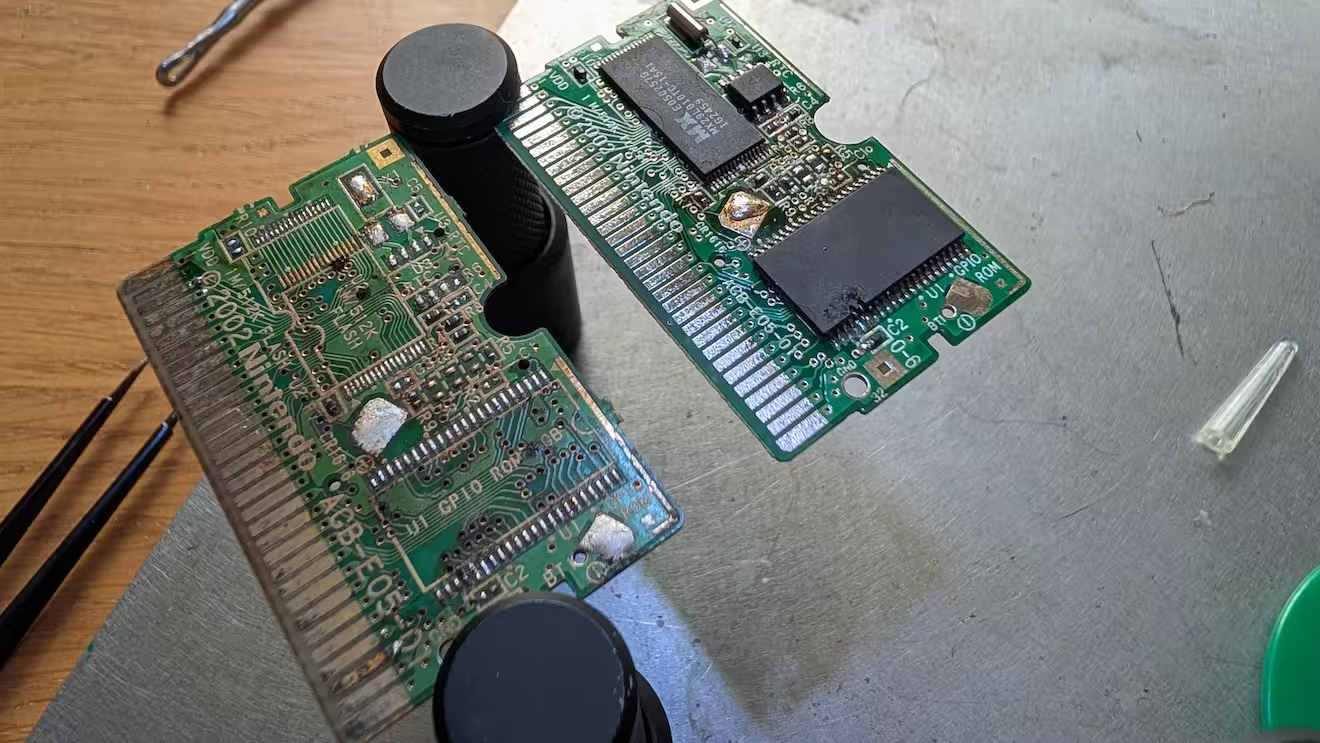
Two Game Boy Advance cartridge circuit boards held in clamps side-by-side on a workbench, one fully harvested down to bare pads and the other populated with the transferred chips and components.
The new PCB definitely got me out of a corner

When I was finally done soldering down all the individual components and checking and re-checking the pads on the chips, I finally tried to boot it up to… another fail.

I was going to email the customer and tell them it was a dead end, when I decided I might splash out on Amazon (booo) for some 0402 SMD capacitors - at least I'd have some more for future.

As it turned out, this was the last of the issues. The caps had somehow gone bad on the original board and replacing them brought the whole cart back to life!
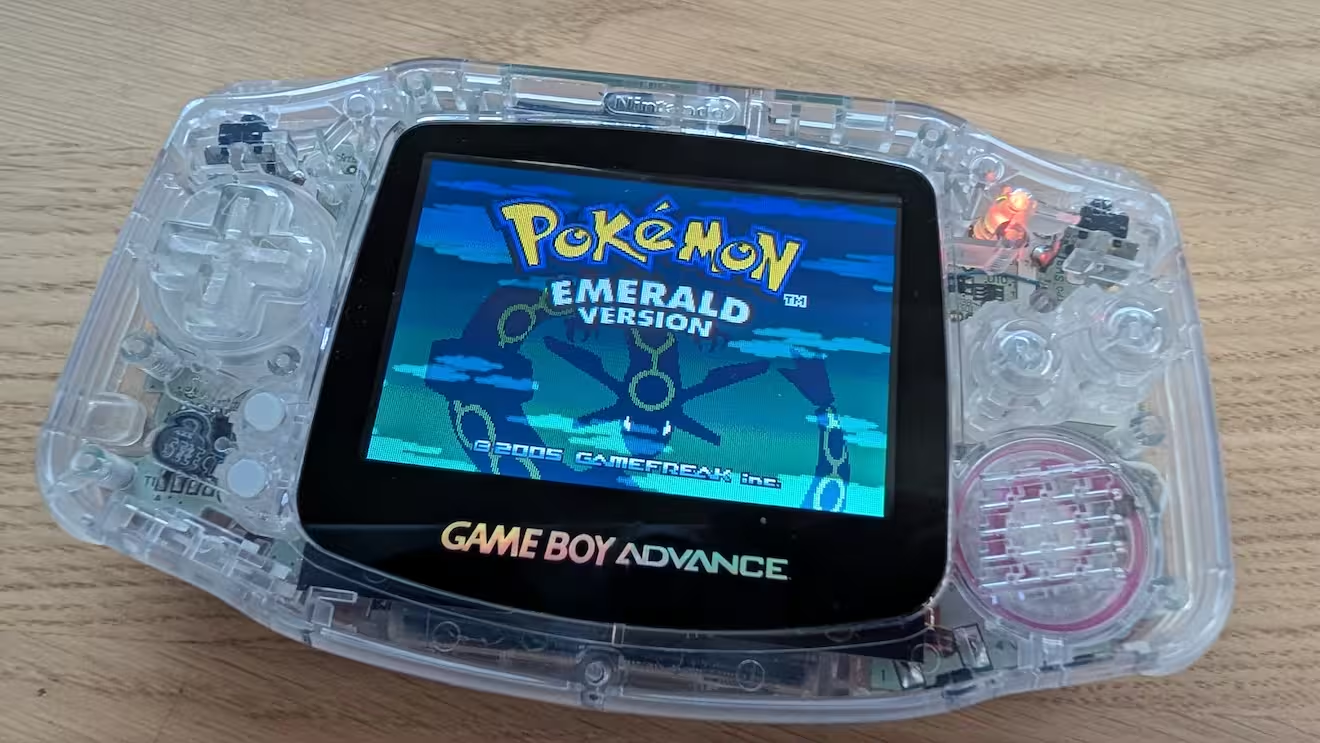
Clear shell Game Boy Advance with a backlit screen displaying the title screen of Pokémon Emerald fully loading
It lives!!!

Another one saved. Quite a challenge, and I know if I were a real electronics shop I would have cut the losses much earlier. But I'm not a real shop, this is a distraction hobby and this one was certainly a challenge!

Fixed at about tif. Edit this post