


惯性聚合 高效追踪和阅读你感兴趣的博客、新闻、科技资讯
阅读原文 在惯性聚合中打开

推荐订阅源

S
Schneier on Security
博客园_首页
量子位
博客园 - 司徒正美
S
SegmentFault 最新的问题
J
Java Code Geeks
小众软件
小众软件
博客园 - 【当耐特】
The Register - Security
让小产品的独立变现更简单 - ezindie.com
Microsoft Azure Blog
G
Google Developers Blog
Blog — PlanetScale
Blog — PlanetScale
T
Tailwind CSS Blog
博客园 - Franky
cs.AI updates on arXiv.org
G
GRAHAM CLULEY
Cyberwarzone
Cyberwarzone
腾讯CDC
Apple Machine Learning Research
V
Visual Studio Blog
钛媒体:引领未来商业与生活新知
钛媒体:引领未来商业与生活新知
The Hacker News
The Hacker News
aimingoo的专栏
aimingoo的专栏
V
Vulnerabilities – Threatpost
P
Palo Alto Networks Blog
Scott Helme
Scott Helme
L
LINUX DO - 热门话题
F
Full Disclosure
D
DataBreaches.Net
Martin Fowler
Martin Fowler
Cisco Talos Blog
Cisco Talos Blog
L
LINUX DO - 最新话题
云风的 BLOG
云风的 BLOG
C
Check Point Blog
T
Threatpost
Google DeepMind News
WordPress大学
WordPress大学
W
WeLiveSecurity
K
KPMG report finds enterprise disconnect between AI and its ROI | CIO
有赞技术团队
有赞技术团队
Hugging Face - Blog
Hugging Face - Blog
freeCodeCamp Programming Tutorials: Python, JavaScript, Git & More
L
Lohrmann on Cybersecurity
Last Week in AI
Last Week in AI
T
Tor Project blog
T
Troy Hunt's Blog
OSCHINA 社区最新新闻
OSCHINA 社区最新新闻
S
Security Affairs
SecWiki News
SecWiki News

Boris Tane

Boris Tane Boris Tane Boris Tane Redirecting to: https://shiptypes.com Redirecting to: https://loggingsucks.com What even are Cloudflare Durable Objects? Unlimited On-Demand Graph Databases with Cloudflare Durable Objects Contextual Retrieval-Augmented Generation (RAG) on Cloudflare Workers One Database Per User with Cloudflare Durable Objects and Drizzle ORM Observing Serverless Applications Observability wide events 101 Lessons from self-hosting ClickHouse Lessons from starting, building, and exiting a devtools startup Craft your own serverless observability platform Observability with ClickHouse Creating an innovation engine with observability v2 Creating an innovation engine with observability v1 Exploring JavaScript Runtimes on AWS Lambda Serverless Transactional Outbox Pattern on AWS
Context engineering is what makes AI magical
Boris Tane · 2025-06-22 · via Boris Tane

Everyone’s busy tweaking prompts, swapping models, chaining tools. Yeah, models are getting better. Tools are getting fancier. But none of that matters if your context sucks.

Here’s the uncomfortable truth: the main thing that really matters when building AI agents is the quality of the context you give the model. Models are so good that most SOTA models can do most things with outstanding quality.

Two products could be doing the exact same thing, but one feels magical and the other feels like a cheap demo. The difference? Context.
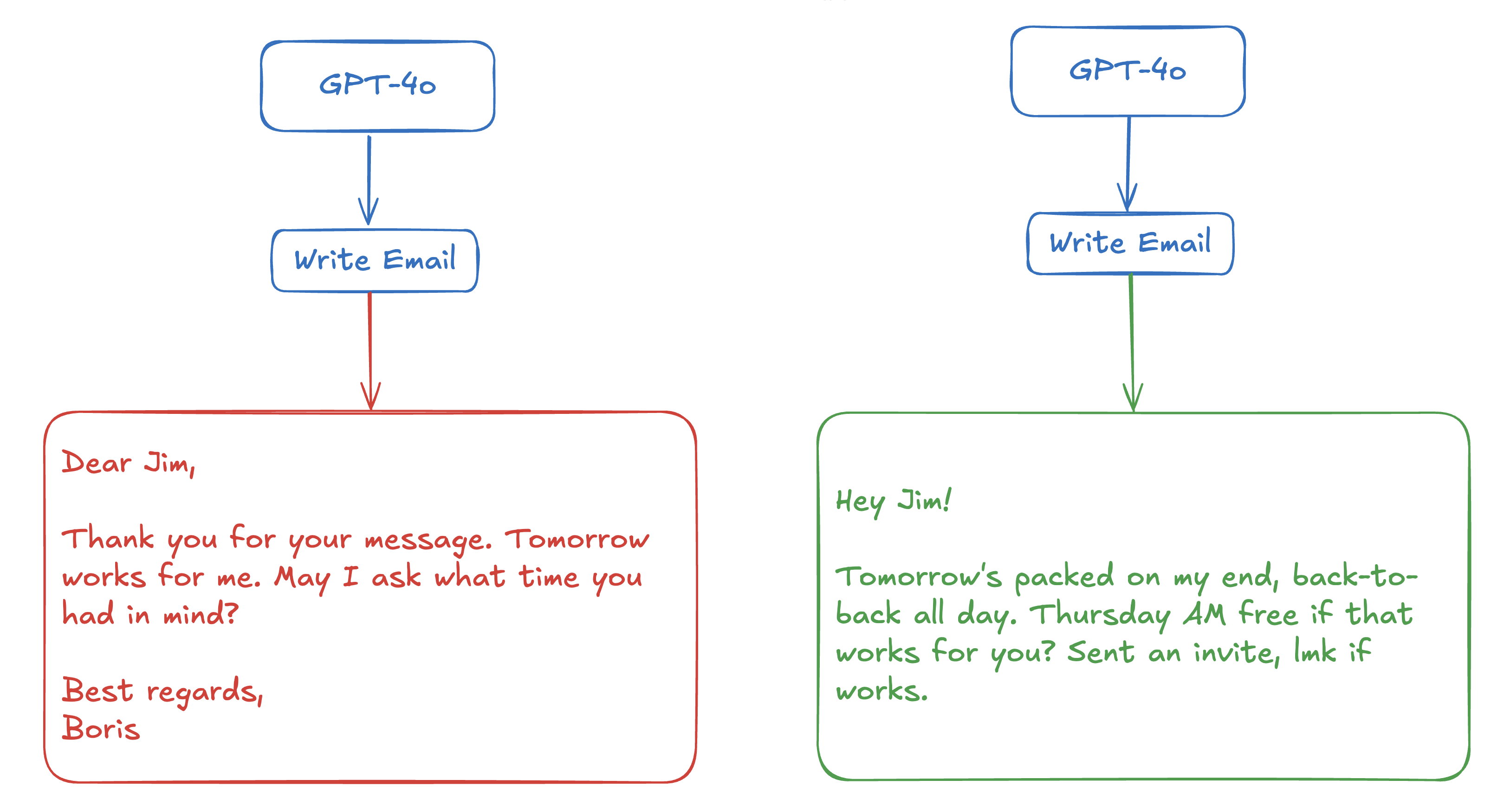
Same model, same task, different outcome

Same model, same task, different outcome


What is context?

Context is everything the model sees before it produces tokens. It includes:

  • the system prompt (what you tell the model it is)
  • the user message (what the user is asking)
  • any external information, tools, or retrieved documents you stuff in before the call
  • implicit context like who the user is, what they’ve done before, what they want right now, etc.

The better this context, the better the model performs. Garbage in, garbage out, still true in 2025.


Context > Model

Models are already better than most of us at most tasks. But most AI tools still underperform, not because the model is bad, but because we’re feeding it a half-baked view of the world.

Let’s look at RAG as an example.
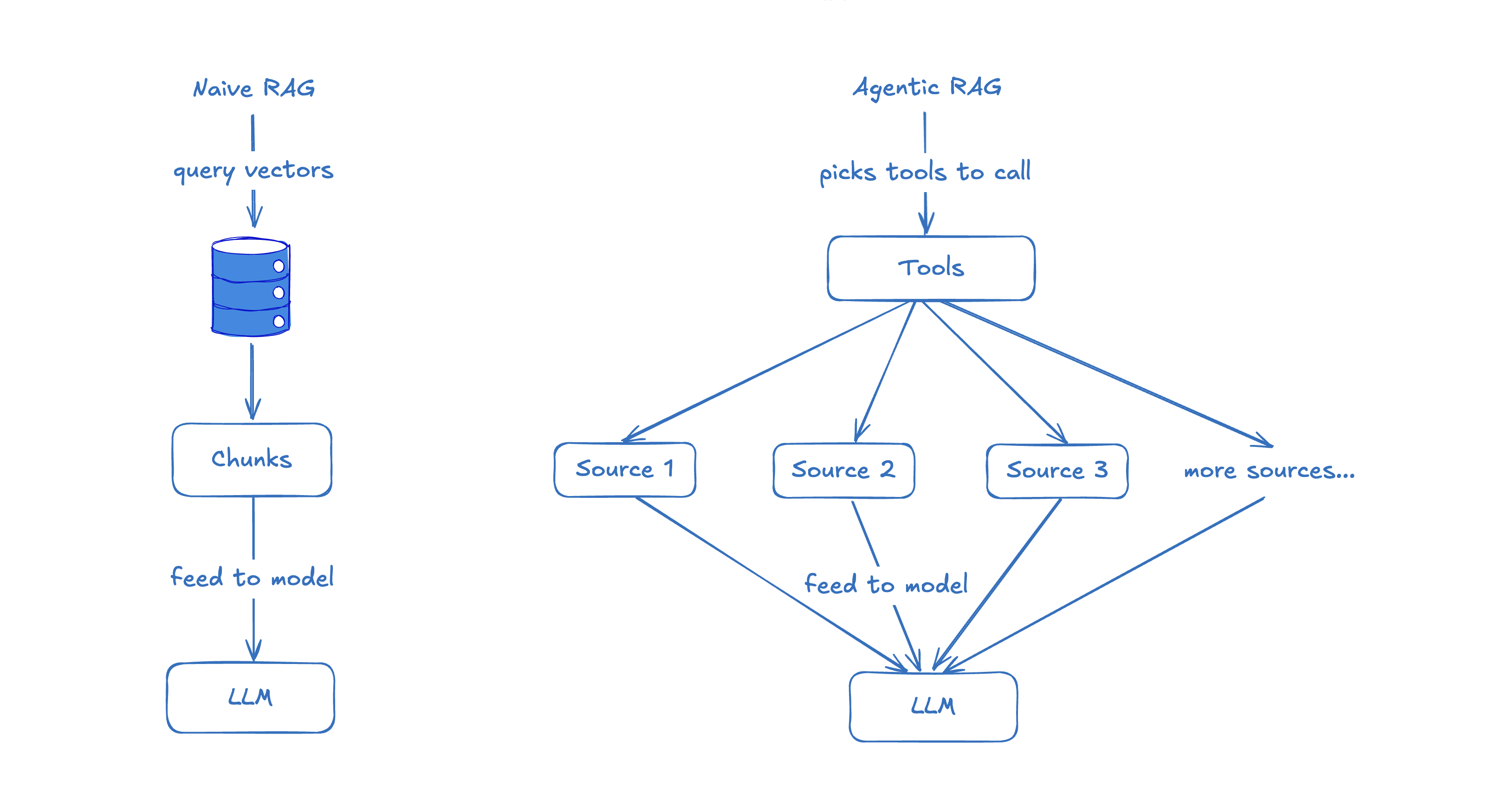
From Naive RAG to Agentic RAG

From Naive RAG to Agentic RAG

Naive RAG just dumps the top 3 chunks into the prompt and hopes for the best. Useful, sometimes. But the moment you move beyond toy examples, this starts to fall apart.

Agentic RAG, builds a contextual snapshot that includes data from multiple sources:

  • the question
  • related documents
  • source structure
  • metadata
  • and critically, the user’s intent and environment

For example, a coding agent shouldn’t just embed source files and search them. It should know:

  • how to find and read any file in your repository
  • which files were changed recently
  • which files are open in your IDE
  • what the LSP says about types and errors
  • even what production logs and metrics say

That’s context. And that’s the difference between “meh” and “wow”.


Email example: the magic of good context

Let’s say you’re a CTO at a startup. You get an email:

Hey Boris, just checking if you’re around for a quick sync tomorrow. Would love to chat through a few ideas from our last call.

A decent AI email tool will reply like:

Dear Jim,

Thank you for your message. Tomorrow works for me. May I ask what time you had in mind?

Best regards, Boris

Who writes emails like this?

A magical agent will do a few things first:

  • check your calendar: you’re in back-to-back calls all day.
  • look at previous emails to this person: you’re friendly, informal.
  • scan recent meeting notes: this person is pitching a joint partnership.
  • pull in your contact list: they’re a senior PM at a partner org.
  • apply your system prompt customisation: “be concise, decisive, warm”

And finally generate and autonomously send an email that actually is helpful:

Hey Jim! Tomorrow’s packed on my end, back-to-back all day. Thursday AM free if that works for you? Sent an invite, lmk if works.

That’s magic. Not because the model is smarter, but because the context is richer.
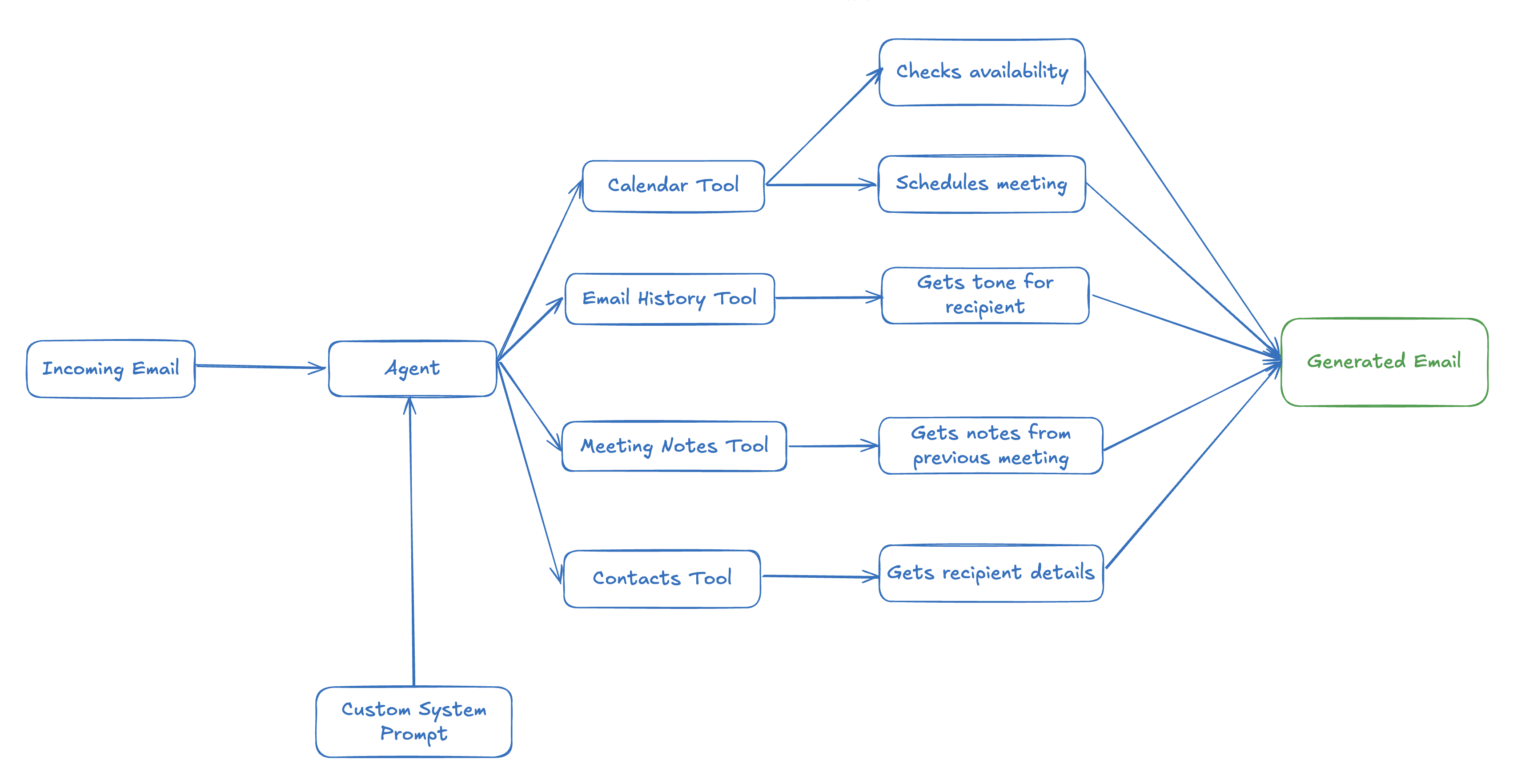
Building context before generating tokens

Building context before generating tokens


Build context like it’s your product

You wouldn’t build a product without thinking deeply about state, user intent, and interaction history. So why treat your AI agent like a stateless chatbot?

Context engineering is the new prompt engineering.

It means:

  • Designing the right structure and format for context
  • Knowing what context actually helps the model perform
  • Building pipelines to fetch, transform and deliver this context at runtime
  • Constantly improving context quality with feedback loops

TL;DR

  • Models are great.
  • But context is king.
  • Context is the difference between a dumb assistant and a superpowered teammate.
  • Build your agents like you build your products: obsess over what they know, when they know it, and how they use it.

If your agent isn’t magical yet, don’t swap the model, fix your context.

I'm also building polylane, because nobody should be on-call in 2026.