


惯性聚合 高效追踪和阅读你感兴趣的博客、新闻、科技资讯
阅读原文 在惯性聚合中打开

推荐订阅源

Microsoft Azure Blog
Engineering at Meta
Engineering at Meta
A
About on SuperTechFans
T
The Blog of Author Tim Ferriss
I
InfoQ
博客园_首页
G
Google Developers Blog
爱范儿
爱范儿
Last Week in AI
Last Week in AI
量子位
阮一峰的网络日志
阮一峰的网络日志
雷峰网
雷峰网
酷 壳 – CoolShell
酷 壳 – CoolShell
Vercel News
Vercel News
Cyber Security Advisories - MS-ISAC
GbyAI
GbyAI
月光博客
月光博客
The GitHub Blog
The GitHub Blog
V
Visual Studio Blog
N
Netflix TechBlog - Medium
freeCodeCamp Programming Tutorials: Python, JavaScript, Git & More
博客园 - 司徒正美
OSCHINA 社区最新新闻
OSCHINA 社区最新新闻
博客园 - 聂微东

DEV Community

Authentication Security Deep Dive: From Brute Force to Salted Hashing (With Java Examples) Why AI Systems Don’t Fail — They Drift Spilling beans for how i learn for exam😁"Reinforcement Learning Cheat Sheet" I Replaced Chrome with Safari for AI Browser Automation. Here's What Broke (and What Finally Worked) How Python Borrows Other People's Work The $40 Architecture: Processing 1 Billion API Requests with 99.99% Uptime Vibe Coding: A Workflow Guide (From Zero to SaaS) Most webhook security guides protect the wrong side. The scary part is delivery. Headless CMS for TanStack Start: Build a Blog with Cosmic EU Age Verification App "Hacked in 2 Minutes" — What Actually Happened Comfy Cloud’s delete function does not actually remove files Running AI Models on GPU Cloud Servers: A Beginner Guide Event-driven media intelligence with AWS Step Functions and Bedrock I scored 500 AI prompts across 8 quality dimensions — here's what broke How to Call Google Gemini API from Next.js (Free Tier, No Backend Needed) The Portal Protocol: Reclaiming Human Connection in the Age of AI How to Fix Your Team's Scattered Knowledge Problem With a Self-Hosted Forum Intro to tc Cloud Functors: A Graph-First Mental Model for the Modern Cloud Designing Multi-Tenant Backends With Both Ownership and Team Access I Built a Neumorphic CSS Library with 77+ Components — Here's What I Learned PostgreSQL Performance Optimization: Why Connection Pooling Is Critical at Scale Cómo construí un SaaS multi-rubro para gestionar expensas en Argentina con FastAPI + Vue 3 🚀 I Built an Ethical Hacking Scanner Tool – Open Source Project I Replaced /usage and /context in Claude Code With a Single Statusline A Pythonic Way to Handle Emails (IMAP/SMTP) with Auto-Discovery and AI-Ready Design I Collected 8.9 Million Polymarket Price Points — Here's What I Found About How Markets Really Move EcoTrack AI — Carbon Footprint Tracker & Dashboard Everyone's Using AI. No One Agrees How. 5 self-hosted ebook managers worth trying in 2026 Building Your First AI Agent with LangChain: From Chatbot to Autonomous Assistant
Run a Local LLM on Android: What RAM Tier You Need and Wh...
EngineeredAI · 2026-04-25 · via DEV Community
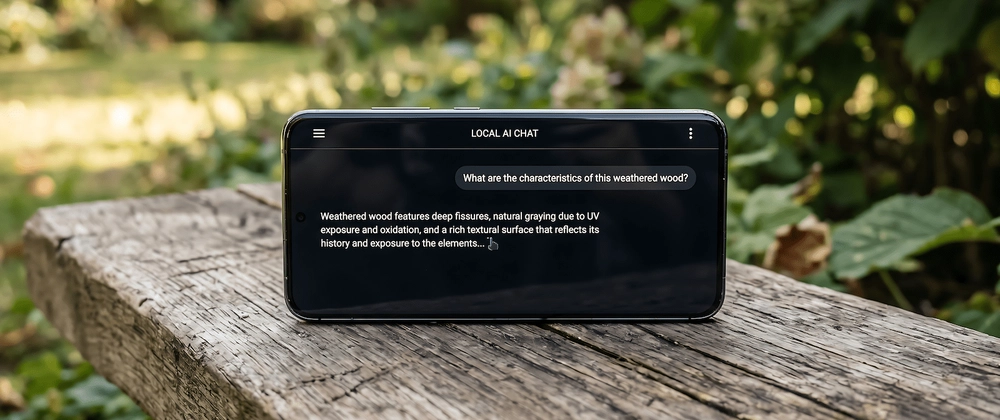
Cover image for Run a Local LLM on Android: What RAM Tier You Need and Which Models Actually Work

EngineeredAI

TLDR: Modern Android flagships can run 7B parameter models locally. Here's the threshold, the app, and the one setting that matters.

The setup I tested:

ROG Phone 7 Ultimate, Snapdragon 8 Gen 2, 16GB RAM. App: Off Grid. Model: Qwen 3 4B, Q4_K_M quantization. Speed: 15–30 tokens per second. Use case: lightweight workflow triggers without touching cloud tokens.

RAM thresholds

6GB — 1B to 3B models. Technically works. Not practically useful for anything beyond autocomplete.
8GB + Snapdragon 8 Gen 2 — 3B to 7B models. This is the useful tier.
12GB+ — Llama 3.2 7B and Qwen 3 4B without thermal throttle issues.

The app

Off Grid handles NPU routing automatically on supported Snapdragon hardware. Supports Qwen 3, Llama 3.2, Gemma 3, Phi-4, and any GGUF you want to import from local storage. First thing to do after install: go to settings, switch KV cache to q4_0. That's it. Biggest single performance gain you'll get.
Google's AI Edge Gallery is the lower-friction entry point if you want to test the concept before committing Gemma 4 on-device, minimal config, works on Android and iOS.

Quantization rule for mobile

Always Q4 or Q5. Full precision is for desktops with VRAM headroom. Q4_K_M gives you the majority of the model's capability at half the memory footprint. The quality delta in everyday use is smaller than the numbers suggest.

What it can't replace

Complex code review, multi-step reasoning across long context, sustained conversation where the model needs to hold a lot of state those still belong on the desktop or cloud. The phone model handles the first step. The pipeline handles the rest.

Full breakdown: https://engineeredai.net/run-local-llm-on-android-phone/