





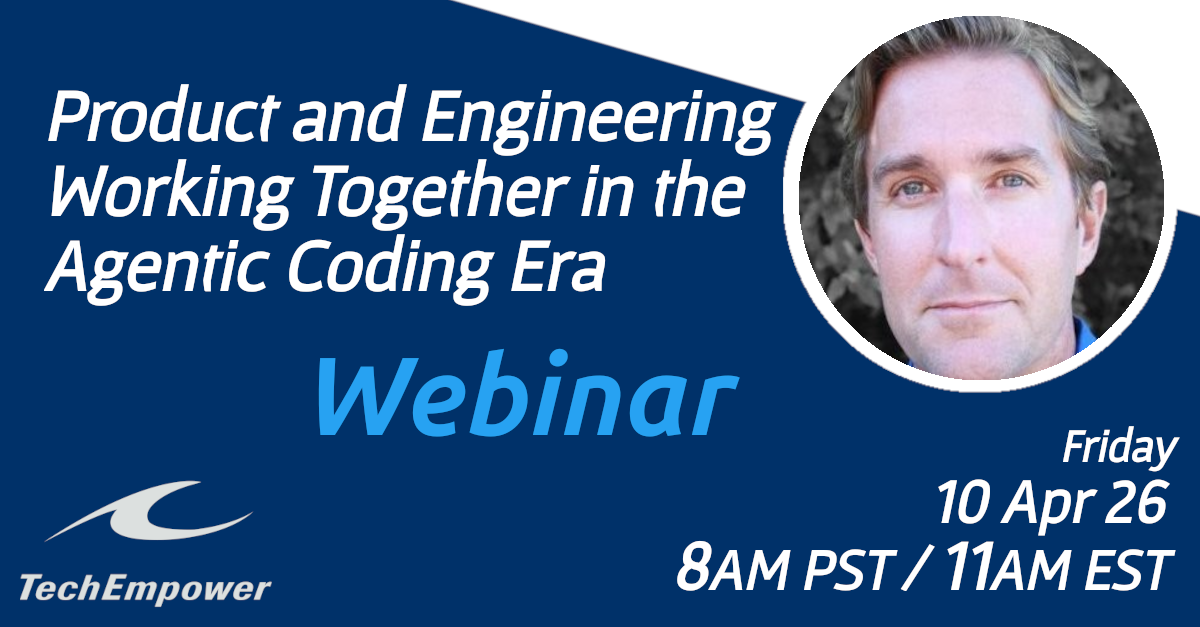
Join us on April 10: Product and Engineering Working Together in the Agentic Coding Era
We’ve assembled four product and engineering leaders to share exactly how they’ve retooled their processes. This virtual mini-conference is designed for CPOs, VPs of Product, CTOs, and Heads of Engineering who want practical, ready-to-apply examples — not theory. Register here
CPOs, VPs of Product, and CTOs are experiencing a common challenge: while agentic coding tools accelerate product development, they also introduce new friction between product and engineering. A product manager (PM) creates a spec that tells engineering what they want built, and then one of two things happens:
One theme for the first half of 2026: product and engineering leaders need to reduce this new friction.
What changed
A PM’s spec has two audiences.
First, people:
Second, agents:
So what do we do?
PMs should use codebase-aware tools before handoff
I would highly recommend that product leaders and product managers try out the new Claude Desktop app, which bundles Claude, Claude Cowork, and Claude Code into a more PM-friendly interface. You can use it for a LOT more product needs than creating specs – see the additional reading below.
To get your PMs onboard, consider using the tool to ask:
“What does the product do today in scenario X?”
If you have Claude Desktop connected to your code, it often can answer those types of questions. It also will provide you the answer to:
“Given this draft spec, what questions do we need to answer before someone starts work?”
This helps PMs clarify ambiguity so you avoid the new friction points.
It’s time to change the default from “PMs don’t have visibility into the repo.” That policy actively works against speed and alignment. By giving the AI tooling access to the code base, PMs are empowered with insight while maintaining the separation of responsibilities with engineering.
Side note: Markdown is quickly becoming the shared format for specs because it’s easy to diff, easy to reuse, and plays nicely with repos and agent workflows. Pick a Markdown editor you like (Obsidian is a good choice) and make it part of the standard toolkit.
PRDs and Tickets => Specs
You may want to start calling PRDs / Tickets or other definitions of what’s to be built “specs” internally, not because PRD is wrong, but because it communicates a shift: the output is meant to be fed into an agentic coding tool w/ more specifics.
The upcoming virtual mini-conference and the additional reading has lots of help on this front, for example – acceptance criteria and edge cases are critical.
AI supports PMs but does not replace their judgment; it should enhance decision-making efficiency. Use AI to accelerate drafting, decomposition, and edge case discovery. But the final tradeoffs, priorities, and product decisions still belong to the PM. And us engineers still get to rely on PM judgment to know what to build.
Engineering still has to engineer
A clear spec does not eliminate engineering responsibilities. Strong teams do two things consistently:
A good spec allows the engineers to focus on the work that actually requires engineering judgment.
Reading list
此内容由惯性聚合(RSS阅读器)自动聚合整理,仅供阅读参考。 原文来自 — 版权归原作者所有。