








Table of contents
This tutorial shows you how to automatically convert HTML files into editable Office formats like DOCX, XLSX, or PPTX using the Nutrient Document Web Services API in Zapier. This is great for transforming structured HTML data into styled reports, spreadsheets, or presentations.
What is Zapier?
Zapier(opens in a new tab) is an automation platform that connects your favorite apps and services with no code required. You can build “Zaps” to automate repetitive tasks by setting up triggers and actions between apps like Google Drive, Slack, Gmail, and more.
In this tutorial, you’ll learn how to use Zapier to automatically convert HTML files into editable Office formats like DOCX, XLSX, or PPTX using Nutrient DWS Processor API.
What is Nutrient DWS Processor API?
Nutrient Document Web Services API is a powerful platform for document automation. With your free account(opens in a new tab), you get 50 credits, which you can use to perform various document operations. Each tool (e.g. conversion, signing, flattening) consumes a different amount of credits depending on complexity.
Nutrient offers more than 30 tools with the ability to:
- Convert images and documents to PDF
- Merge, split, or reorder pages
- Add digital signatures, watermarks, or annotations
- Run OCR, redact, flatten, and more
All you need is an API key from a free account to get started(opens in a new tab). You can chain these tools together in Zapier to build powerful, automated PDF workflows.
What you’ll need
- A Zapier(opens in a new tab) account (a pro plan is necessary for multistep Zaps)
- A Google Drive account
- A public HTML file stored in Google Drive
- A Nutrient Document Web Services API key — sign up here(opens in a new tab)
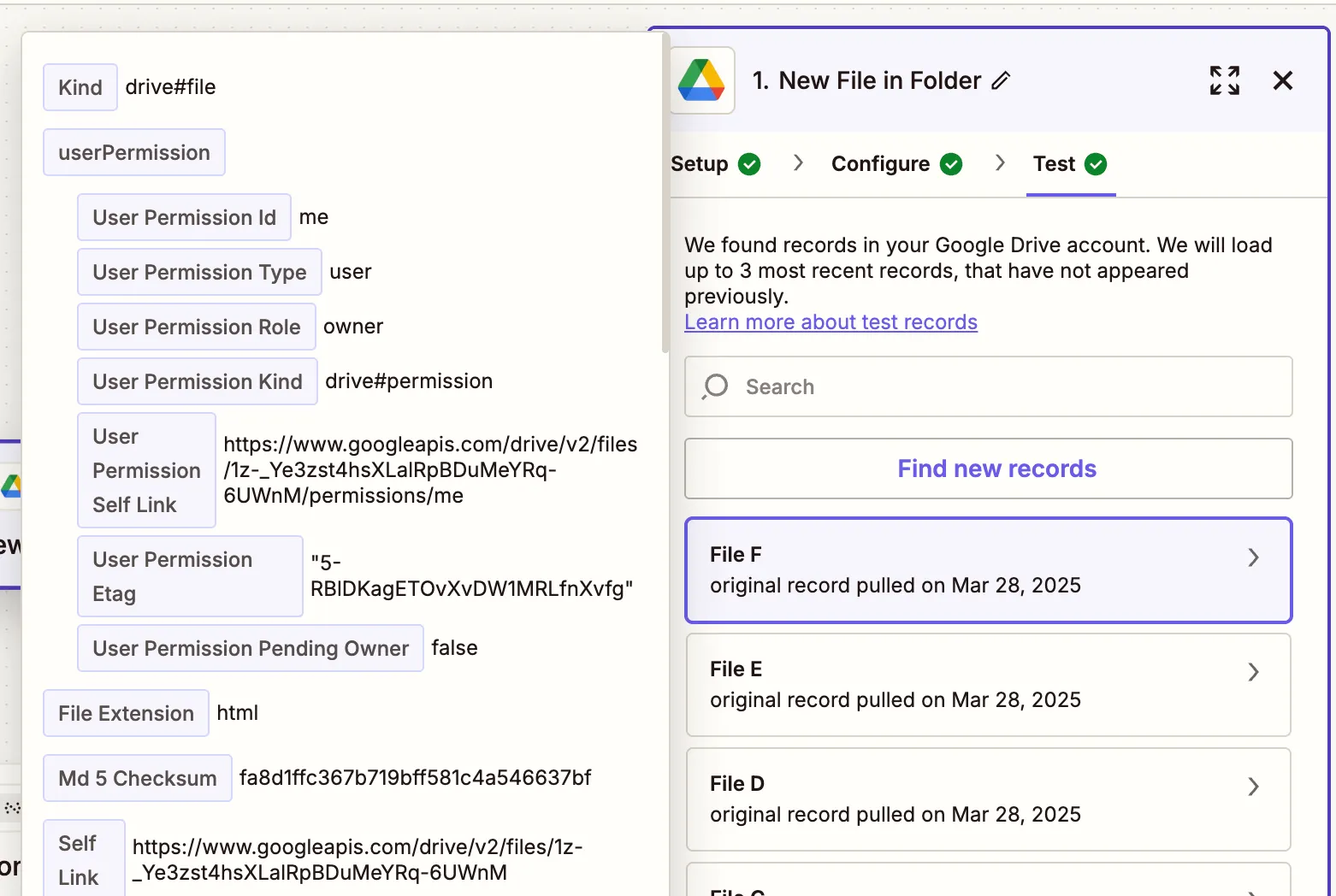
Step 1 — Trigger a new file in a Google Drive folder
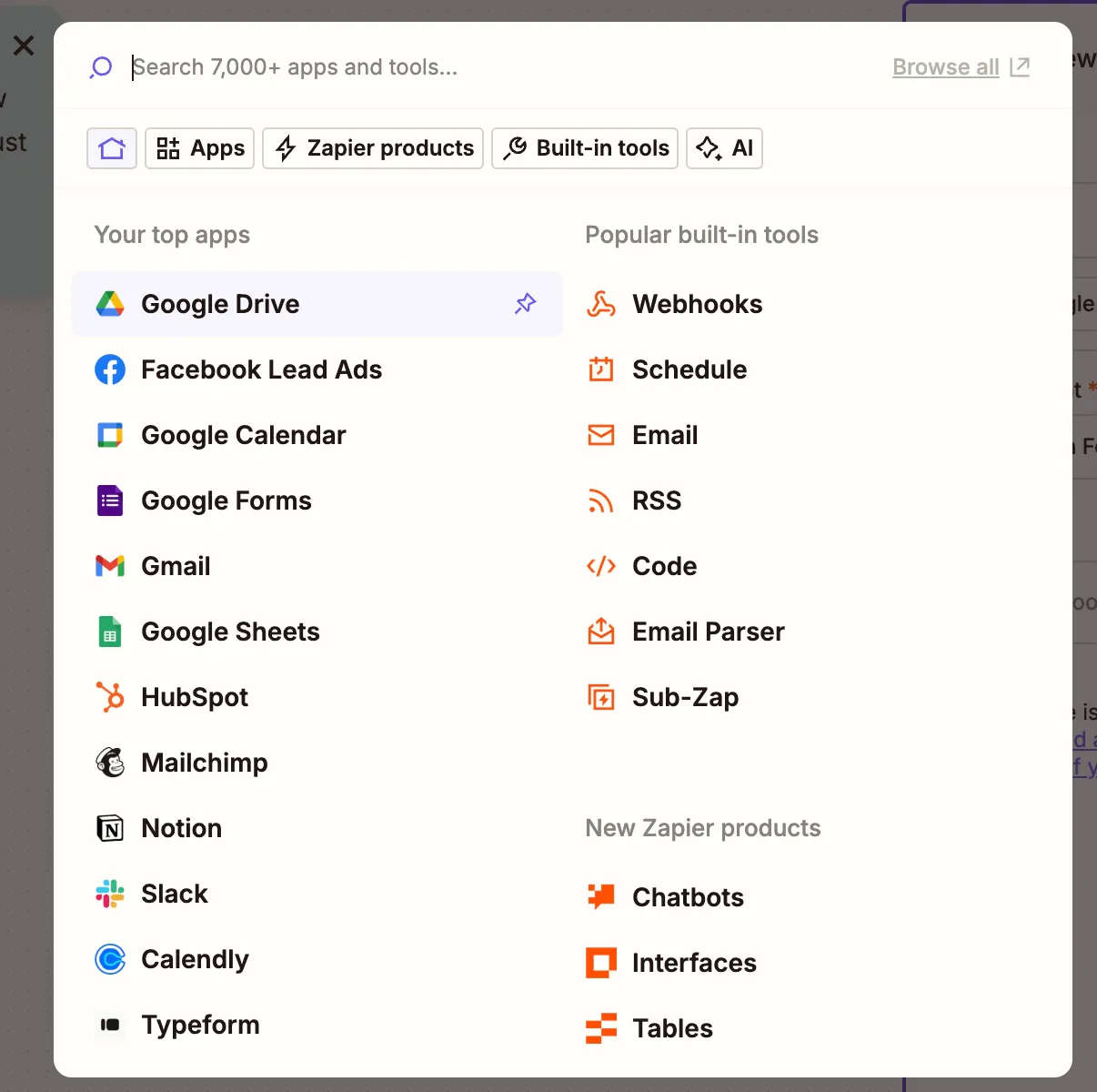
- Select Google Drive as the trigger app.
- Choose the New File in Folder trigger event.
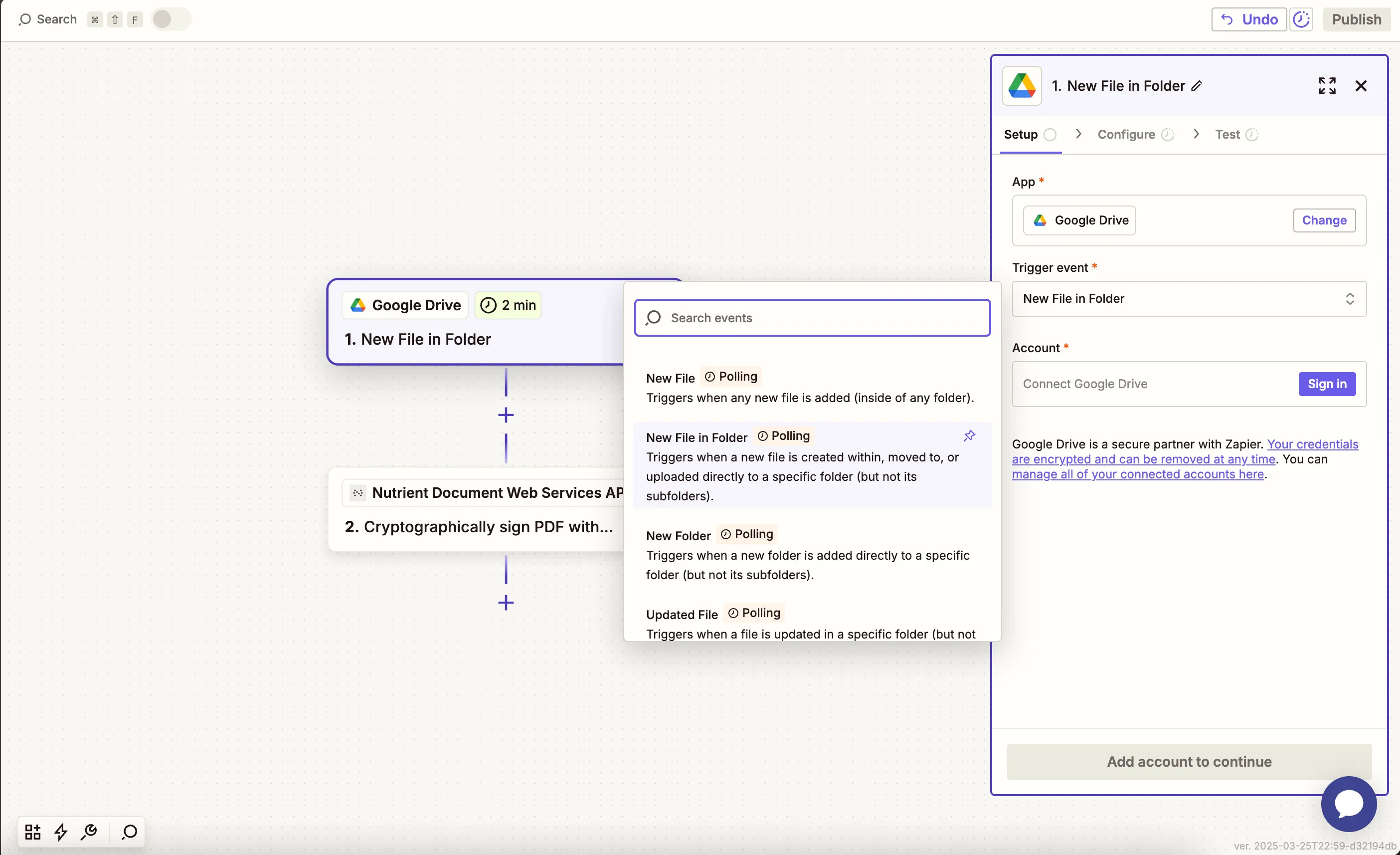
- Connect your Google Drive account.
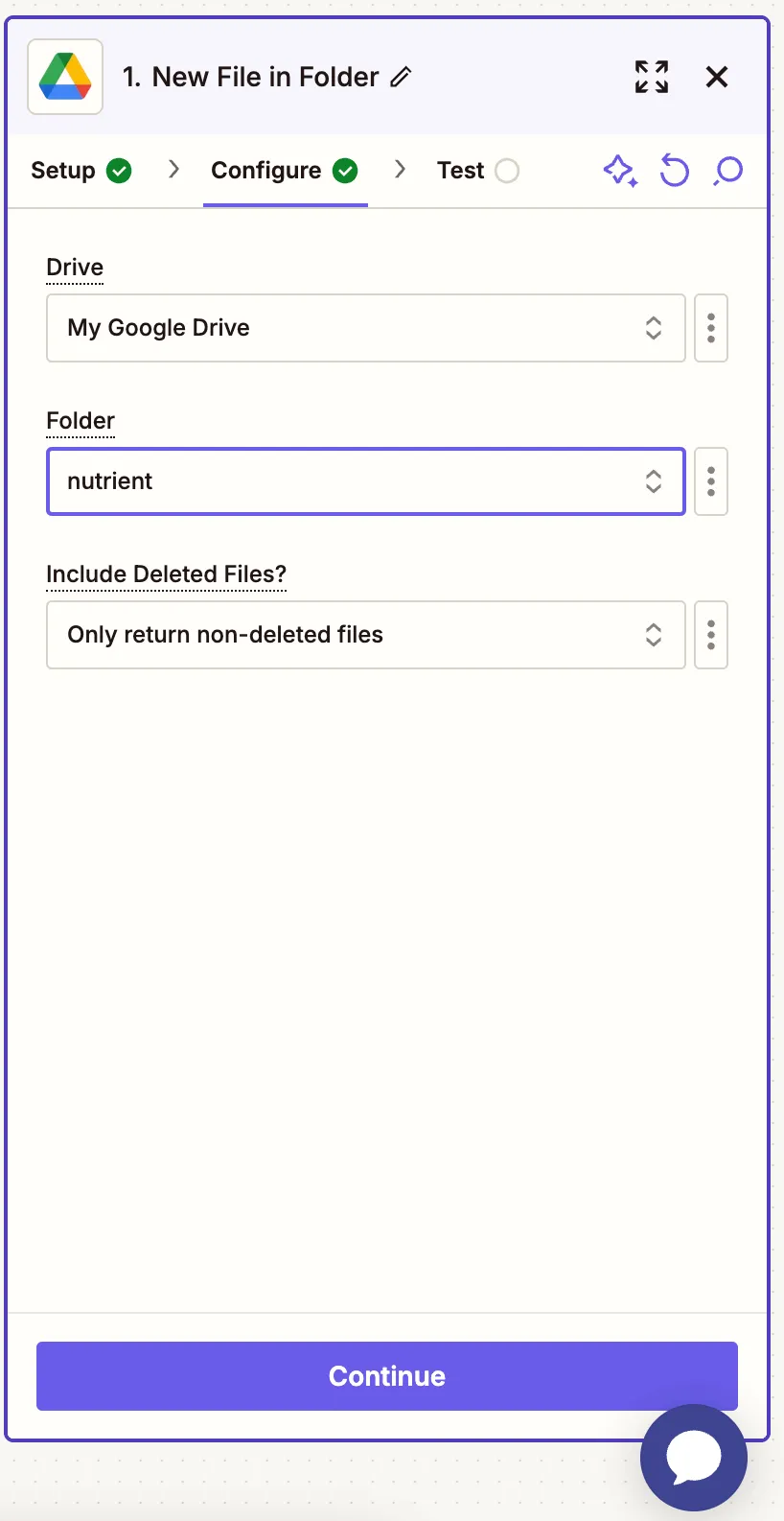
- Choose your drive and a folder where HTML files will be uploaded.
- Test the trigger by uploading a sample HTML file. You can use our sample file(opens in a new tab) for testing this step.
Step 2 — Convert HTML to DOCX/XLSX/PPTX action (Nutrient DWS Processor API)
- Select Nutrient Document Web Services API as the action app.
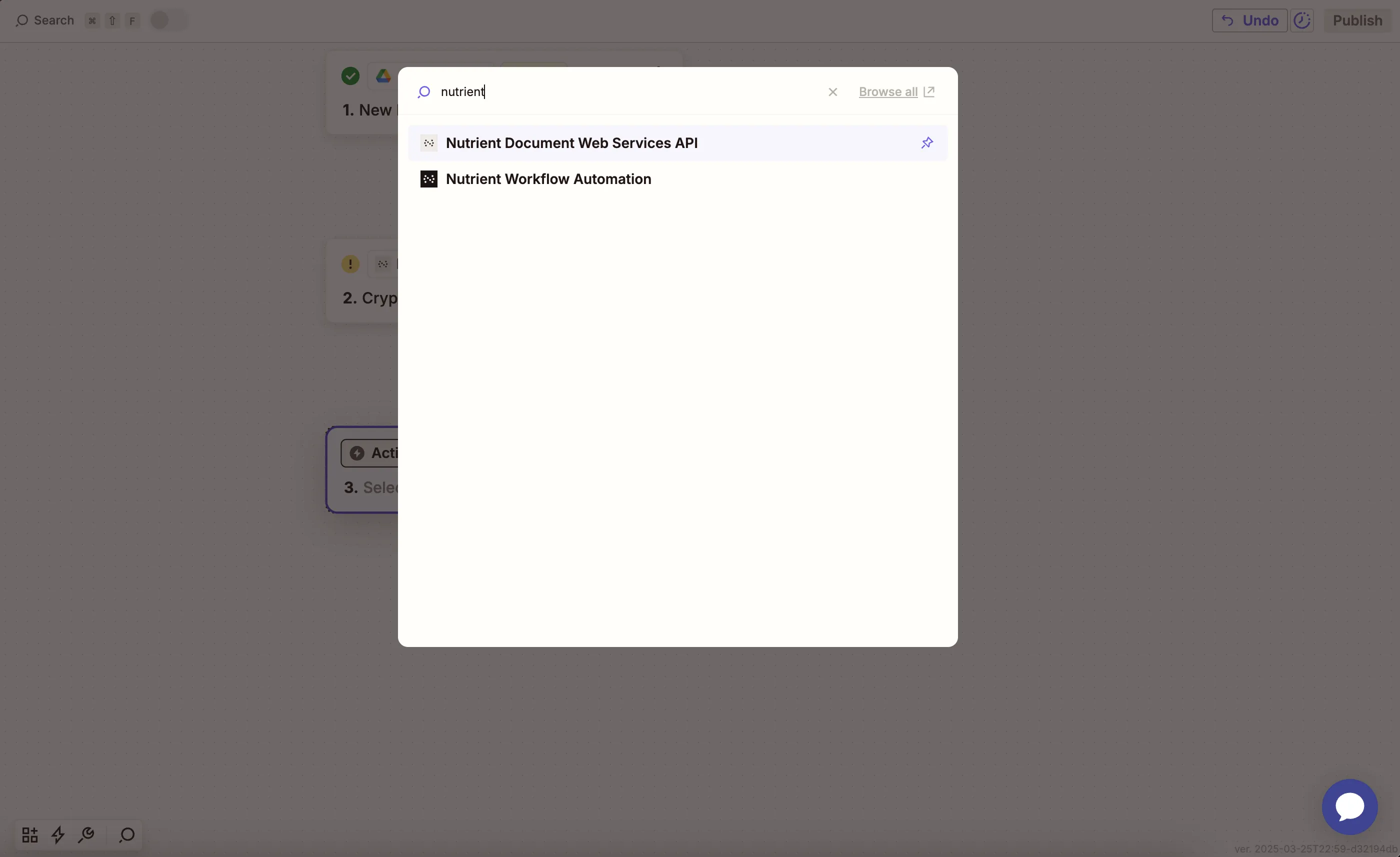
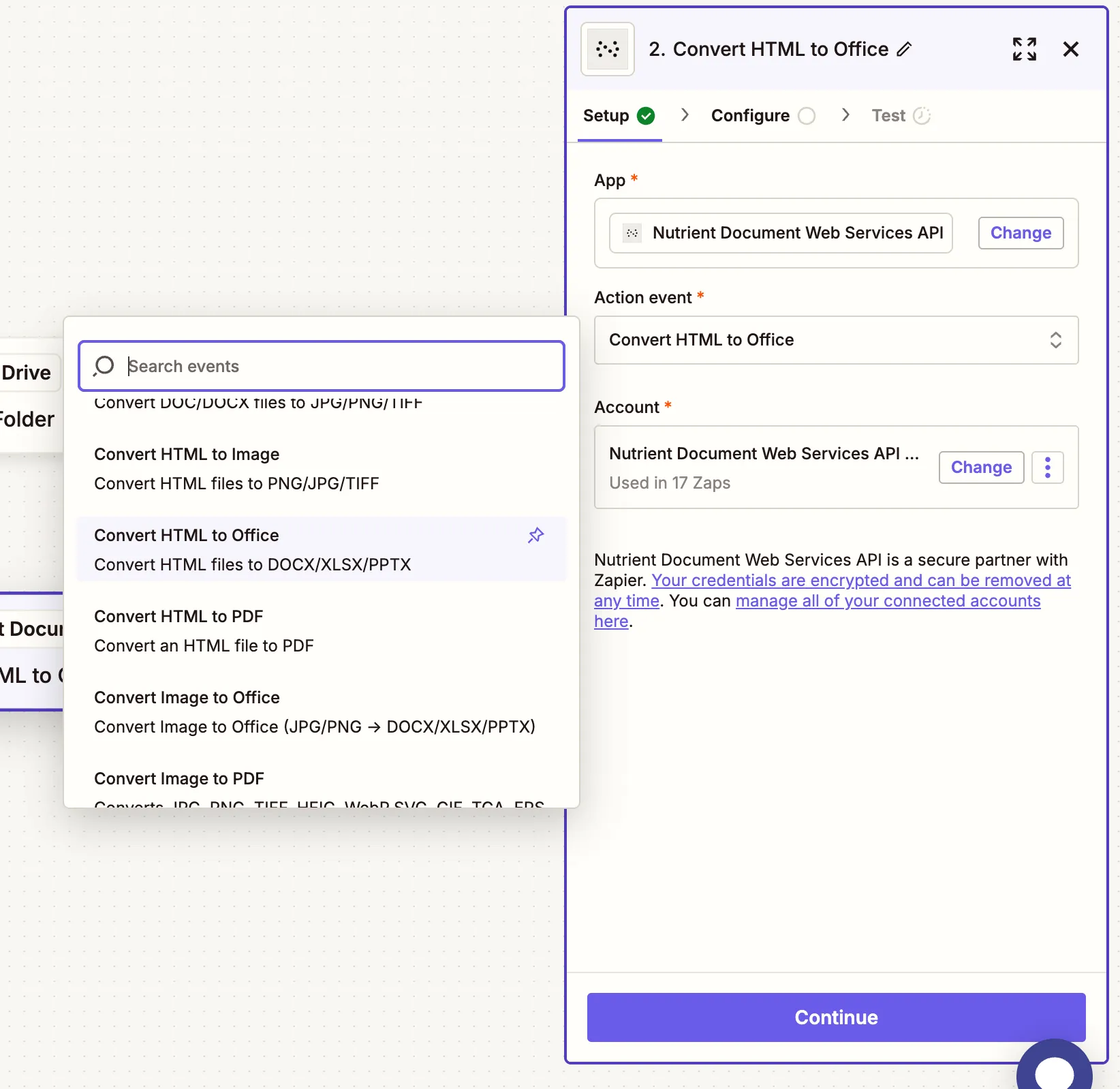
- Choose the Convert HTML to Office action.
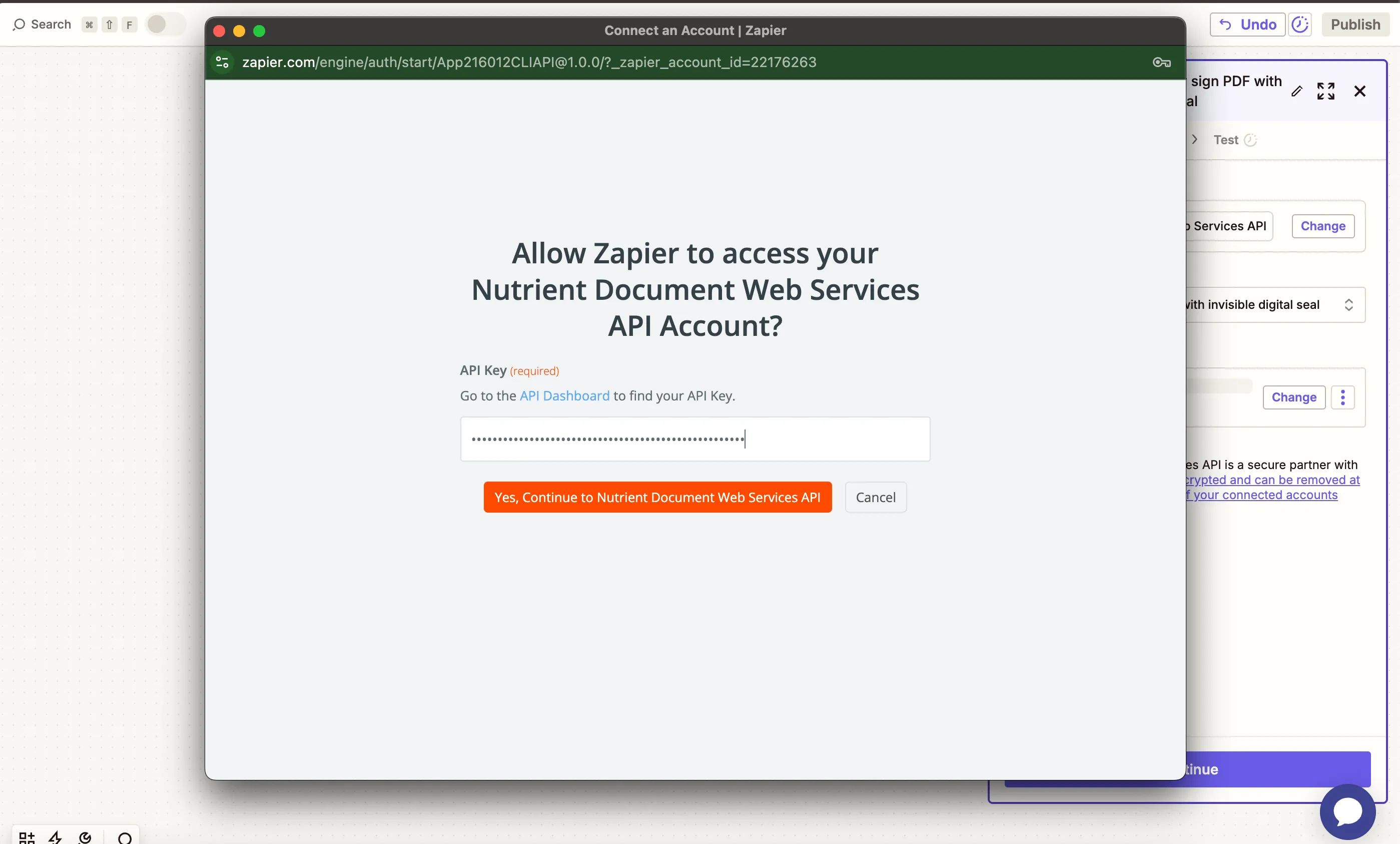
- Connect your Nutrient DWS Processor API account by entering your API key. You can find your API key in the Nutrient dashboard(opens in a new tab).
- Configure the fields:
- HTML file — Use the file output from the Google Drive trigger.
- Output Format — Choose
.docx,.xlsx, or.pptx. - Output File Name — Optional — e.g.
converted-report.docx.
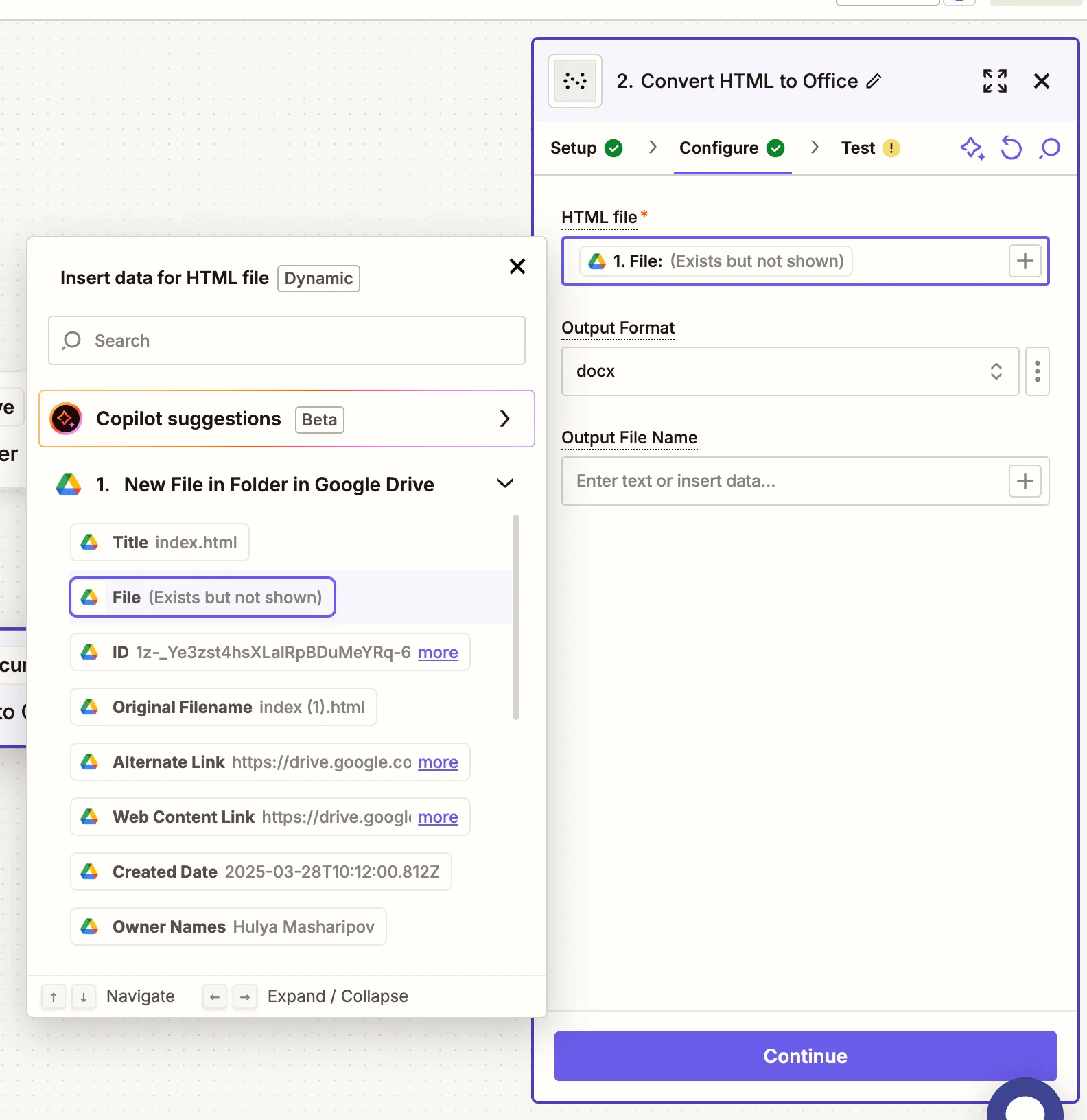
Test the step to confirm the Office file is generated.
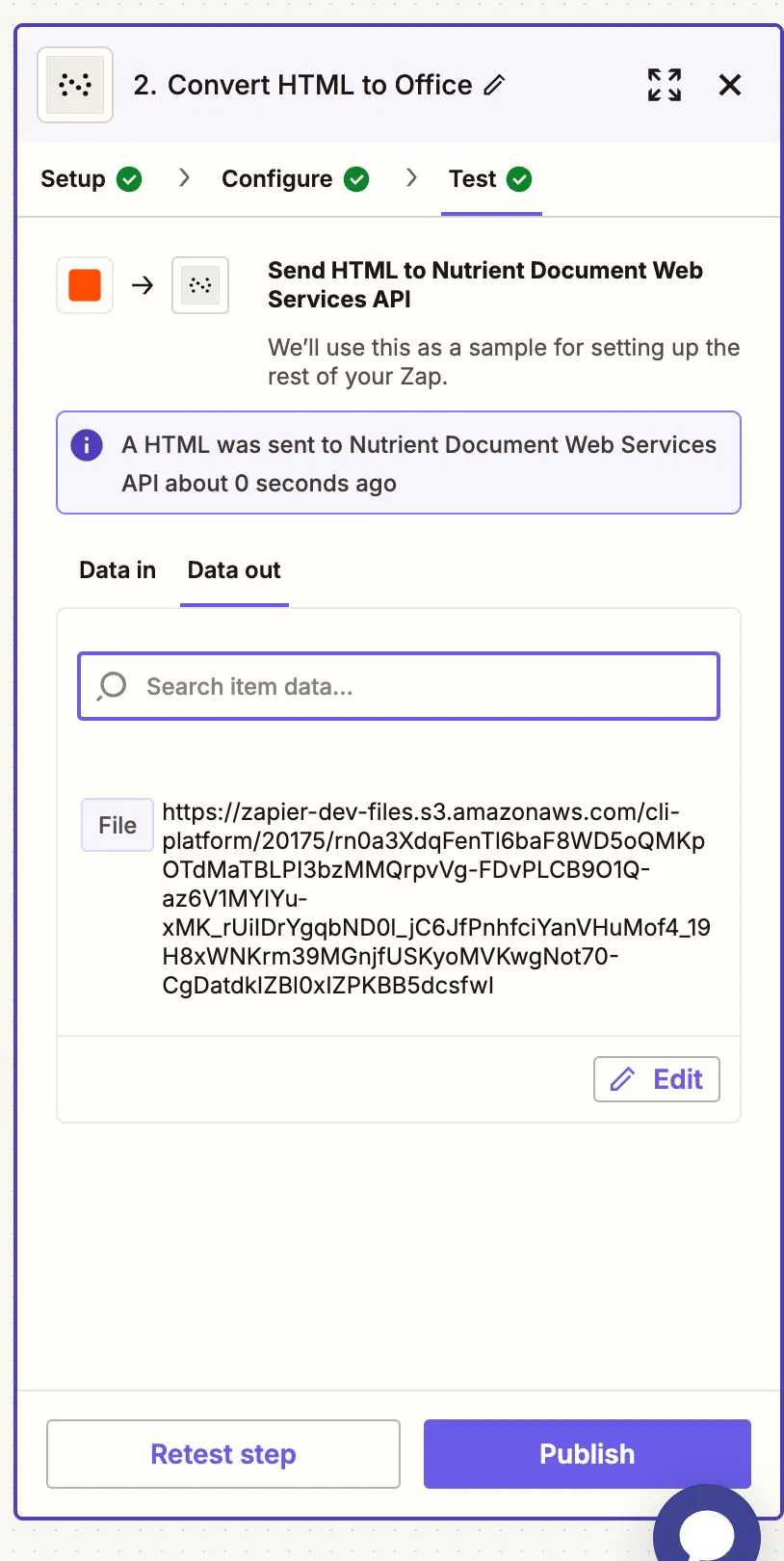
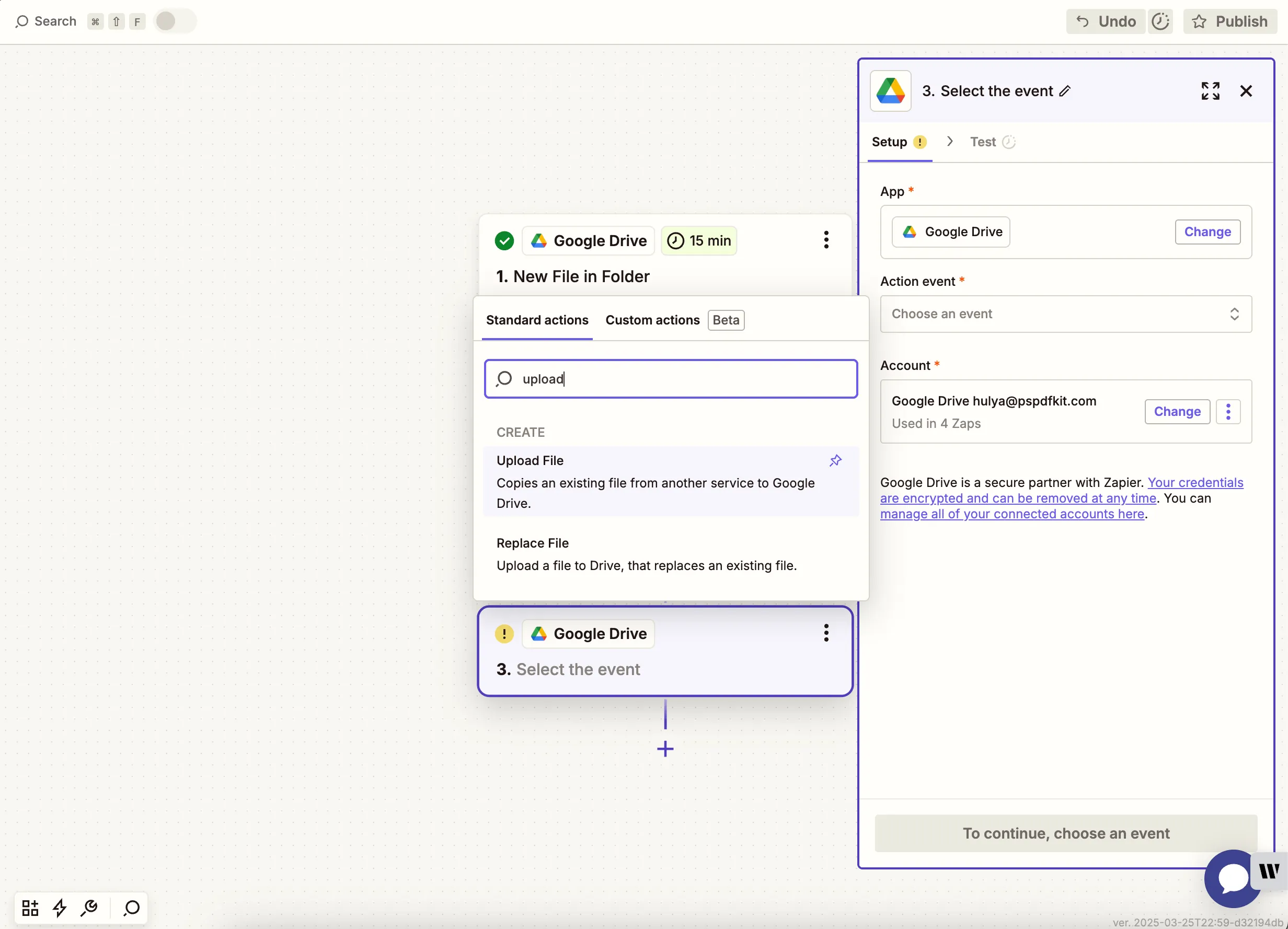
Step 3 — Upload the Office file to Google Drive
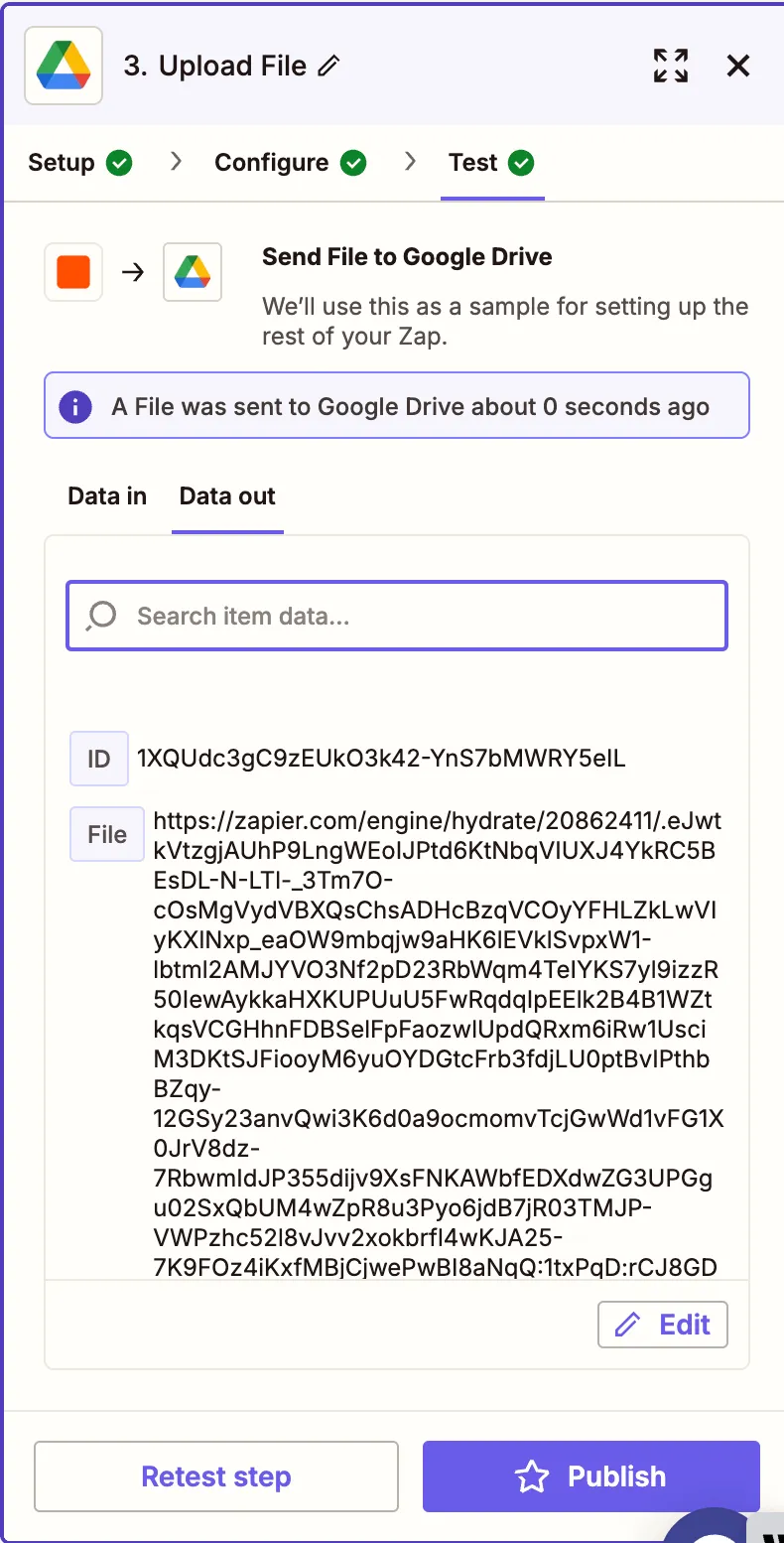
- Now, add another step by selecting Google Drive as the app and Upload File as the action event. Connect your Google Drive account if needed.
- Map the converted output from the Nutrient step and select your output folder.
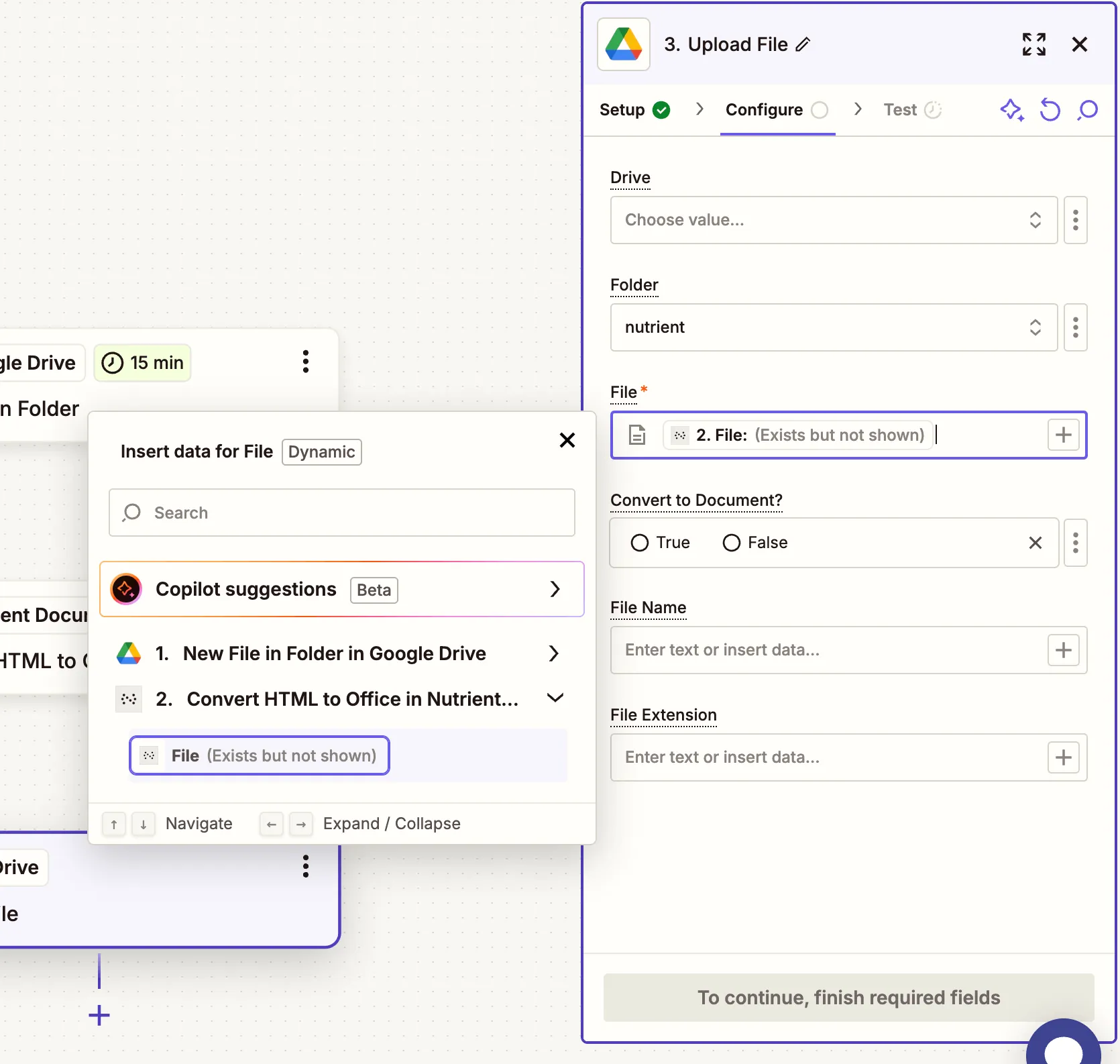
- Test the upload step to confirm the Office file is saved.
Conclusion
You’ve successfully created a Zap that converts HTML files into DOCX, XLSX, or PPTX documents using Nutrient DWS Processor API and Zapier(opens in a new tab). This setup is ideal for creating structured, styled Office files from automated HTML exports. Combine this with other document operations like HTML-to-PDF conversion, Office to PDF conversion, or PDF form filling for complete document automation.