





Google co-hosts inaugural Colorado Impact Hackathon with CU Boulder and the Colorado Energy Office.
General summary
Google hosted a Colorado Impact Hackathon where students teamed up with government experts to solve local energy problems. Students used AI to develop solutions for challenges like electric vehicle adoption and home energy upgrades. The winning team created an online marketplace for EV chargers and Google plans to host another Hackathon next year.
Summaries were generated by Google AI. Generative AI is experimental.
Bullet points
- "Helping students 'hack' real Colorado problems" describes Google's effort to solve local energy issues.
- Google hosted a hackathon where students tackled Colorado's energy challenges with AI solutions.
- Students developed ideas for EV charging, home energy upgrades, and expanding EV access.
- Governor Polis inspired students, emphasizing Colorado's leadership in innovative infrastructure.
- The hackathon fostered collaboration between students, experts, and Google to improve Colorado's future.
Summaries were generated by Google AI. Generative AI is experimental.
Basic explainer
Google had a contest where students tried to solve Colorado's energy problems. The students worked in teams and used new technology to come up with ideas. They presented their ideas to judges, including the Governor. The winners got cool Google prizes and everyone had fun.
Summaries were generated by Google AI. Generative AI is experimental.
Explore other styles:
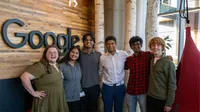
It all started as a question: How can we open Google’s Colorado doors to partners who want to help solve real challenges facing the state?
Googlers across the Boulder office (quickly) volunteered to find out.
On November 5th, Google Boulder hosted the first-ever Colorado Impact Hackathon, bringing over 70 of the state’s brightest business and engineering students together with government experts to “hack” timely and local energy problems.
The campus was buzzing as students from the University of Colorado Boulder arrived to examine four energy challenges put forward by the Colorado Energy Office. These challenges covered climate workforce shortages, electric vehicle adoption, rural electric vehicle charging infrastructure and incentivizing home energy upgrades.
Governor Jared Polis even got in on the fun, inspiring students with direct insight into Colorado’s policy and energy landscape: “Colorado is leading the way with innovation to help build smarter infrastructure and attract more businesses to Colorado. A Hackathon is a great way for technology experts, students and policy experts to come together to collaborate on the best ways to solve pressing issues and help prepare our students and workforce for the jobs of tomorrow.”
The author with Colorado Governor Jared Polis.

Led by Googler guides, ten teams worked to transform the complex problems into tangible solutions — and each used AI in some way to get an edge. They made logos, designed slides, created app ideas, and practiced presentation questions with Gemini to deepen their thinking — and then they took their presentations to the judges.
Googler Brian Morrison and team hack a problem.

The winning pitches showed the power of collaboration:
- First Place: An "Online Marketplace for EV chargers," a clever platform that incentivizes individual hosts to turn their private chargers into a public network, showing how teamwork can build infrastructure from the ground up.
- Second Place: A streamlined holistic app for homeowners to navigate energy upgrades.
- Third Place: A creative business model for expanding EV access.
And of course, the winners walked away with some Google swag. Our first Hackathon left us inspired by how the innovative students, energy experts and our team could come together to imagine a better future for the entire Colorado community. One CU student even said “I’m a senior and this is the best day I’ve had at college so far.”
Hackathon judge Kieran Casey (left) with the winning team and Googler guide Julianne McLay.
Kieran Casey, a Hackathon judge and Google Director, summarized it perfectly: “Bringing this level of student talent, state leadership, and industry expertise together led to what we saw today: creative, practical solutions for Colorado's future.”
Stay tuned for details on next year’s Hackathon in Boulder.
Google Steering Committee for this event included: Brin Enterkin, Gretchen Johnson, John Tribbia, and Jamie Gardner.