





We may receive commissions from some links to products on this page. Promotions are subject to availability and retailer terms.
By
Angelica Leicht
Senior Editor, Managing Your Money
Angelica Leicht is the senior editor for the Managing Your Money section for CBSNews.com, where she writes and edits articles on a range of personal finance topics. Angelica previously held editing roles at The Simple Dollar, Interest, HousingWire and other financial publications.
/ CBS News
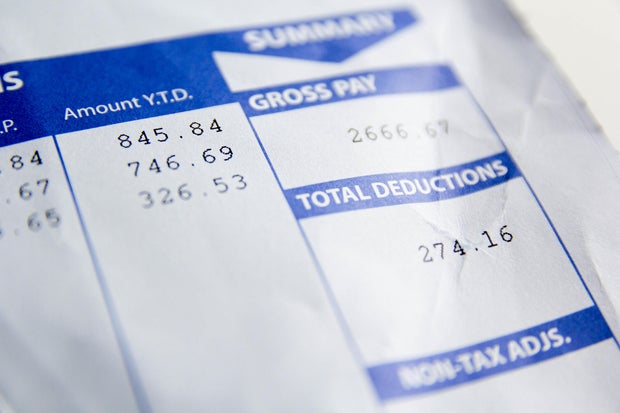
Your paycheck should feel predictable, as it's the foundation of your budget — the number that determines what gets paid, what gets saved and what has to wait. But if you're a borrower who has fallen seriously behind on their debt, there's a chance that your reliable weekly, biweekly or monthly paycheck may suddenly change, and it can do so without a raise or a job switch. If a legal order redirects part of those earnings elsewhere, your paycheck can shrink, quietly but significantly, and in some cases, without much warning.
That scenario, known as wage garnishment, is becoming more common as the financial pressure builds in today's economic landscape. With collective credit card balances sitting at over $1.23 trillion and borrowing costs remaining high despite last year's Fed rate cuts, and with more borrowers becoming seriously delinquent on their debt, lenders are escalating collection efforts — sometimes all the way to court-ordered wage garnishments. For the people on the receiving end, that shift shows up in their take-home pay.
But while garnishment is a potential outcome of delinquent debt, the mechanics of a garnishment — and how much it actually affects a paycheck — aren't always well understood until it happens. So what happens to your paycheck if a percentage of your wages is being garnished? That's what we'll examine below.
Learn how the right debt relief option can help you tackle your debt now.
What does your paycheck look like before and after wage garnishment?
At its core, a wage garnishment is a court-ordered process that requires your employer to withhold a portion of your earnings and send it directly to a creditor. The amount that can be taken is limited by federal law, but even within those limits, the difference in your take-home pay can be significant. Here's how that typically plays out.
Your paycheck before a garnishment
Before any garnishment is in place, your paycheck includes:
- Gross pay (your total earnings before deductions)
- Mandatory deductions (federal and state taxes, Social Security and Medicare)
- Voluntary deductions (health insurance, retirement contributions, etc.)
What's left after those deductions is your disposable income — and that's the number that matters most when a garnishment begins.
Find out which debt relief programs you may qualify for today.
What does your paycheck look like after garnishment?
Under federal law, most creditors can take the lesser of:
- 25% of your disposable earnings, or
- The amount by which your weekly income exceeds 30 times the federal minimum wage
For simplicity, many garnishments end up close to that 25% cap, especially for middle-income earners. However, certain debts — like unpaid taxes, child support or student loans — can result in higher percentages. So what does that look like in practice?
Here's how the numbers play out across different income levels.
Lower income: 10% garnishment
The law protects a portion of lower wages, so the garnishment may be less than 25%. If the protected threshold applies, the actual amount taken could be significantly smaller, preserving a basic level of income for essential needs.
Let's say your gross weekly pay is $600. After taxes and required deductions, your disposable earnings come to $460. A garnishment at 10% of your disposable earnings, which some state courts may order for smaller debts, would withhold $46 per week. Your take-home then drops from $460 to $414. That may be manageable, but it will also be noticeable if your budget is already tight.
Moderate income: 25% garnishment
With gross weekly pay of $1,000 and disposable earnings of $750, a creditor hitting the federal maximum garnishment of 25% would withhold $187.50 from your paycheck each week. Your take-home falls from $750 to $562.50 — a 25% reduction that can strain your ability to pay rent, groceries and utilities simultaneously. At this threshold, many people find themselves unable to cover fixed monthly expenses without making cuts elsewhere.
Higher income, child support order: Garnishment of up to 50% to 65%
For someone earning $2,000 weekly with disposable earnings of $1,500, a child support garnishment — which carries its own, higher federal limits — could reach 50% if supporting another family, or up to 60% if not. At 50%, that's $750 withheld from your check weekly. At 65%, which is applied when payments are more than 12 weeks in arrears, the garnishment climbs to $975 per week, leaving just $525 in take-home pay on a $2,000 gross paycheck.
What you can do if you're facing a wage garnishment
If a portion of your paycheck is being garnished, you're not necessarily out of options. Depending on your situation, you may be able to:
- Negotiate with your creditors to settle the debt or arrange alternative payments, effectively stopping the wage garnishment in place of the other arrangements
- Challenge the garnishment if you find that there are errors or certain exemptions that apply
- Explore the debt relief programs that can reduce the total balance owed
- Consider legal protections, such as bankruptcy, which can temporarily halt garnishments
Whatever route you take, though, make sure you're being proactive. Ultimately, taking action early is your best move, as it can sometimes reduce how long the garnishment lasts and how much of your income is affected over time.
The bottom line
A wage garnishment can transform a paycheck and your finances, turning what was a manageable budget into a strained one almost overnight. While federal limits prevent creditors from taking everything, even a 10% to 25% reduction in disposable income can have a ripple effect across your finances. And, if your wages are garnished for a federal debt, you could lose even more in the process.
Understanding how those numbers work — and what your paycheck might look like under different scenarios — is an important part of preparing for the impact. And if a garnishment is already in motion, exploring your options sooner rather than later could help limit the long-term damage to your financial stability.
Edited by Matt Richardson