







Sana Javeri Kadri, founder and CEO of the spice distribution startup Diaspora Co., didn’t have any grandiose plans of building a multimillion-dollar spice company when she hopped off the BART in 2016 and cringed at the turmeric latte the nearby coffee shop was selling.
Javeri Kadri, who is from Mumbai, was never a big fan herself of the haldi doodh, or turmeric milk, her grandmother made for her as a child—a drink that has been made in India for centuries. But the sight of it in San Francisco was proof of how much this spice had bubbled in popularity owing to its anti-inflammatory health benefits. It was one of the top-trending food searches made on Google that year, and Americans had started adding it to everything—their smoothies, salad dressings, soups, and, to Javeri Kadri’s disdain, their milk. But Javeri Kadri—who had worked on a farm through college and was then at the San Francisco high-end grocer Bi-Rite—knew that if people were going to add it to their milk anyway, it could sure taste quite a lot better.
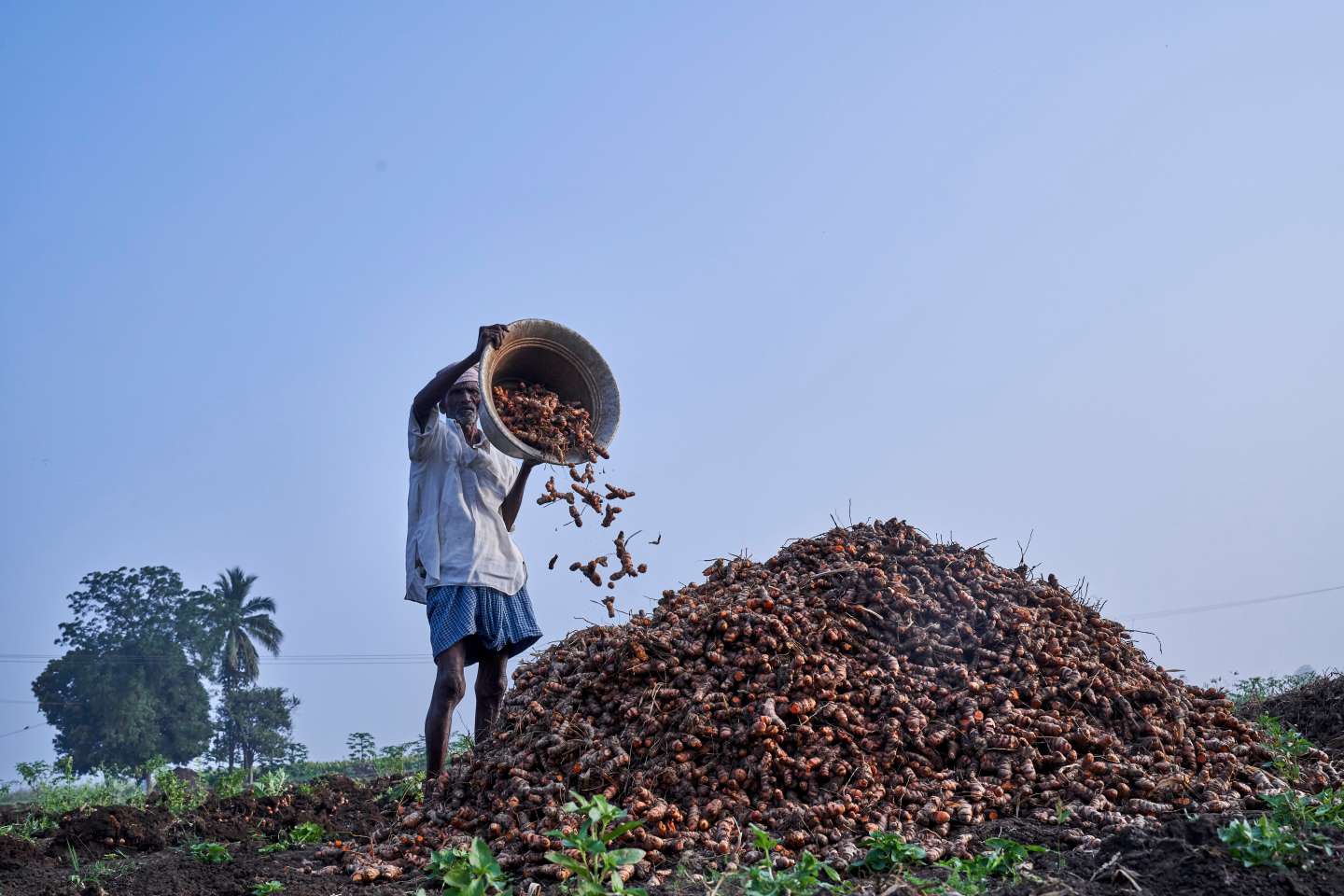
In February 2017, Javeri Kadri decided to get into the spice business. She flew back to India and started cold-calling agricultural institutions until she finally got an introduction to Prabhu Kasaraneni, a fourth-generation turmeric farmer who had taught himself organic farming techniques on YouTube and WhatsApp. It was Javeri Kadri’s first partnership with a multigenerational farmer in India, and the beginning of what would become her startup and obsession, the Diaspora Co. Since Javeri Kadri started Diaspora in 2017, selling only turmeric at first from Kasaraneni’s farm, she has scaled the business to 30 spices from more than 140 farms. She now has retail customers like Amazon, and is on track to hit profitability by the end of 2025. Javeri Kadri says the business is generating “mid-millions” in annual revenue right now.

Courtesy of Diaspora Co.
I reached out to Javeri Kadri this week, because I wanted some answers. It’s summertime, I just bought a new grill, and I have been putting Diaspora Co. spices on every piece of meat and vegetable that I can get my hands on. Diaspora’s Byadgi chili, Jodhana cumin, and Peni Miris cinnamon are staples in my spice drawer. My boyfriend has requested I bring my Diaspora black pepper (yes, black pepper!) to his house when we cook together, because nothing you can buy at the grocery store tastes anything like it.
As Javeri Kadri explains, there’s a reason it all tastes so different. The majority of spices grown around the world are indigenous to South Asia. Seeds can be extracted and transported elsewhere—and have been since Europeans took over the spice trade—but the different soil, temperatures, and weather dramatically change the flavor. If you want the warm, earthy, slightly bitter taste of turmeric in its original form, you need to get it from Javeri Kadri’s homeland. Nutmeg grown in India is fruity, floral, and almost light. In Indonesia, it is more intense, and has a bit of a tobacco flavor, she tells me.
Javeri Kadri learned early on that where you grow spices—and the way you grow them—are critical to the flavors that end up in your spice drawer. It all starts with the farms and, of course, the farmers.
Javeri Kadri grins as she talks about the 140 farmers she now works with—97% of whom had never worked with a distributor before she met them. Like Kasaraneni and his turmeric farm. Or the garlic farm that grows Pahadi pink garlic, a nine hours’ journey up the Himalayan mountains, where there is no electricity half the year because of the deep snow. The first few years of the business, Javeri Kadri was spending four to six months of every year in India—18 of Diaspora Co.’s 23 employees are based there permanently.
Javeri Kadri bootstrapped Diaspora Co. the first five years, and it was profitable. But in year five, she said, she needed to take out a loan to be able to give advances to the farmers, so they could purchase the equipment they needed to grow spices in large quantities, or process them. No bank would give her a line of credit without investors, she said, so she ended up raising a $1 million pre-seed round from a small group of angel investors, then a $1.5 million seed round in 2024 from 75 angel investors including Tyler Malek of Salt & Straw ice cream; Ellen Bennett, who runs Hedley & Bennett; Meena Harris, Kamala Harris’s niece, who runs Phenomenal Ventures; and Ben Jacobsen, who runs Jacobsen Salt Co. She has an advisory board, but has given up no voting rights, and about 35% of the equity in the company has been set aside for the farmers, company advisors, and employees, she says.
Javeri Kadri says she has been careful to raise capital from angels, not institutional investors, as she doesn’t want to be forced into any kind of exit timeline. “With the grocery venture capital world right now, you’re often selling an unprofitable product at scale and hoping that it’ll eventually become profitable. I can’t do that for my farm partners—that’s a very short-term outlook. I want their kids to inherit their family business, and the family business to be thriving. I want our farmers to be happy,” she says.
Courtesy of Diaspora Co.
If she gets to a point where Diaspora can grow more quickly, Javeri Kadri will take VC dollars, she says. But for now, the control she has over how she runs her business—and what she can pay her farmers—is her priority. On average, an Indian farmer earns the equivalent of roughly $2,381 a year in U.S. dollars, according to data from Indeed. Javeri Kadri said that her farm partners earned $26,000 a year, on average, in 2023. “They are earning 10x the natural average, and I think that kind of tells you everything you need to know.”
Javeri Kadri’s passion and excitement are evident as she talks about Diaspora—in her smile and the way she starts talking faster, describing the impact it can have. “I just really see how it feels so frantic and fraught when we first started working with them,” Javeri Kadri says, speaking of the farmers. “And we really moved to a place of ease and trust over the years, which I think is incredible. There’s a belief that, Okay, I can give this business over to my kids and this land to my kids, and that’s a gift, not a burden.”
Javeri Kadri says her business might not be as sexy as startups that have raised more capital. She doesn’t have money for fancy billboard ads or flashy parties. “But it gives us freedom and complete control, and I think, long-term, that’s worth a lot more,” she says.
Correction, July 3, 2025: A previous version of this article didn’t include the full name of Sana Javeri Kadri and misstated the number of employees based out of India.
此内容由惯性聚合(RSS阅读器)自动聚合整理,仅供阅读参考。 原文来自 — 版权归原作者所有。