









Databases are a critical component of many businesses and organizations, storing vast amounts of information and powering important applications. With the rise of big data and the growing demand for faster and more flexible solutions, choosing the right database has become increasingly important. It can greatly impact the success of an organization. This comprehensive guide will help you understand the key differences between SQL and NoSQL databases and provide you with the information you need to make an informed decision on which solution is right for your organization.
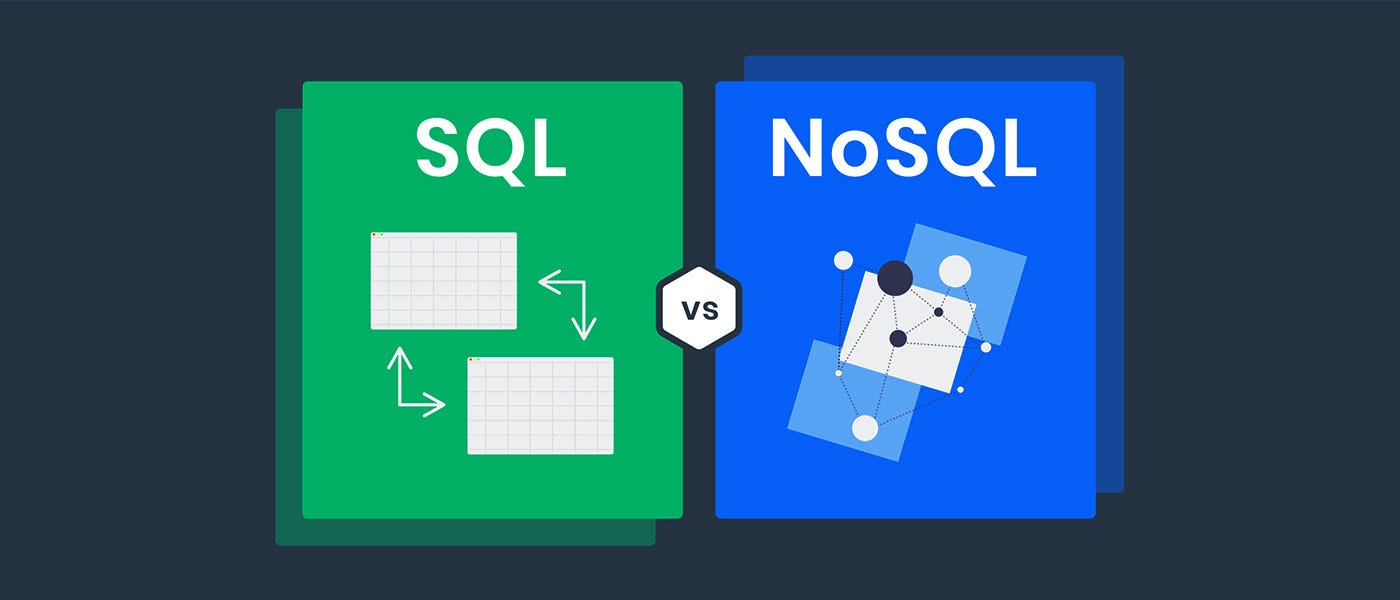
SQL databases:
SQL (Structured Query Language) databases are based on the relational model, where data is organized into tables with well-defined relationships between them. These databases are highly structured and require a predefined schema, making it easy to enforce data integrity and consistency. SQL databases are well suited for applications that require complex relationships between data and transactions and are often used in enterprise-level applications.

Some of the key features of SQL databases include:
- Scalability: SQL databases are highly scalable and can easily handle large amounts of data and users. They can be scaled horizontally by adding more nodes to the database cluster, or vertically by adding more resources to a single node.
- Transactions: SQL databases support transactions, which allow you to ensure the integrity of your data by grouping multiple related changes into a single, atomic unit of work. If any part of the transaction fails, all changes are rolled back, ensuring that your data remains consistent and correct.
- Advanced Query Capabilities: SQL databases provide advanced query capabilities, allowing you to perform complex data analysis and reporting. SQL provides a powerful and flexible query language that allows you to perform complex data analysis, aggregation, and reporting.
- Data Integrity: SQL databases enforce strict data integrity rules, ensuring that the data in your database is accurate, consistent, and up-to-date.
read more about sql database: Understanding the Benefits and Key Use Cases
NoSQL databases:
NoSQL (Not Only SQL) databases are a newer category of databases that have gained popularity in recent years. Unlike SQL databases, NoSQL databases do not have a predefined schema, making them more flexible and easier to scale. NoSQL databases are well suited for applications that require high performance and scalability, and are often used in applications such as social media, e-commerce, and gaming.
Some of the key features of NoSQL databases include:
- Flexibility: NoSQL databases are highly flexible, allowing you to store any type of data in any format. Unlike SQL databases, which require you to define a fixed schema, NoSQL databases allow you to store data in a variety of formats, including key-value pairs, documents, graphs, and columns.
- Scalability: NoSQL databases are designed to be highly scalable, making them well-suited for big data applications. They can easily handle large amounts of data and users and can be scaled horizontally by adding more nodes to the database cluster.
- High Performance: NoSQL databases are designed for high performance, making them well-suited for real-time applications that require fast data retrieval.
- Distributed Architecture: NoSQL databases typically use a distributed architecture, allowing you to store data across multiple nodes for improved reliability and scalability.
When to choose SQL:
SQL databases are a good choice for applications that require complex relationships between data and transactions. They are also a good choice for applications that require advanced query capabilities, as SQL provides a powerful and flexible query language that allows you to perform complex data analysis, aggregation, and reporting. If you have strict data integrity requirements, or if you need to ensure that your data is accurate, consistent, and up-to-date, then an SQL database is a good choice. Additionally, if you need to enforce business rules or constraints, such as unique key constraints, referential integrity, or complex data validation, SQL databases are a good option. Finally, if you have multiple concurrent users who need to access and modify the same data, SQL databases are a good choice as they provide robust concurrency control and transaction management features that help ensure data consistency and prevent data corruption.
About the Author: TS
