


惯性聚合 高效追踪和阅读你感兴趣的博客、新闻、科技资讯
阅读原文 在惯性聚合中打开

推荐订阅源

Recent Announcements
J
Java Code Geeks
雷峰网
雷峰网
Microsoft Security Blog
博客园 - 【当耐特】
腾讯CDC
博客园 - 司徒正美
B
Blog RSS Feed
博客园 - 三生石上(FineUI控件)
I
InfoQ
N
Netflix TechBlog - Medium
L
LangChain Blog
博客园_首页
Cyber Security Advisories - MS-ISAC
T
Tailwind CSS Blog
MyScale Blog
MyScale Blog
美团技术团队
The Cloudflare Blog
爱范儿
爱范儿
Stack Overflow Blog
Stack Overflow Blog
博客园 - 聂微东
H
Help Net Security
Martin Fowler
Martin Fowler
V
Visual Studio Blog

South China Morning Post

Singapore drama sparks Malaysian ire over scam hub depiction Time to act on stalled proposal toughening child abuse penalties, lawmakers say ‘Eager to explore’: Chinese migrants return to Venezuela after Maduro’s capture ‘We have no trust in the other side’: Iran blames US as talks end with no deal Opinion | Why securing Hong Kong’s economic future is a cultural question Hong Kong’s ministerial team spent HK$46.6 million on visits in past 3 years China family creates AI clone to comfort elderly mum after only son dies in crash Canada Olympic star Williams plans on ‘having a ‘blast’ at Hong Kong Sevens Singapore’s robotaxi drive revs up with help from Chinese AV leaders Editorial | Making Hong Kong desirable to overseas students must be a priority All 7 are dentists and hot. The Asian-American family blowing up social media Editorial | Ageing Hong Kong should welcome more open conversations around death My Take | Discovery Bay will never be the same if the restriction on taxi access is lifted Medical intern suspended after complaint over patient data in social media post Fish and vegetarianism major flashpoints in India’s West Bengal election Chinese crystal ‘paves way’ for GPS-free thorium clock navigation SCMP Best Bets: Endued can show his quality at Sha Tin Russia and Ukraine begin 32-hour ceasefire for Orthodox Easter Israeli spy firm Black Cube involved in Cyprus corruption probe ‘A big deal’: military drills show Tokyo’s growing focus on deterring China China targets middlemen in renewed crackdown on ‘hidden’ corruption Hong Kong-born gymnast leading quest to turn Singapore into elite hub Thais celebrate new year despite fuel price shocks delaying travel Harry Bentley tees up two good chances in Smart Golf and Elite Golf at Sha Tin Is this Kenyan rail project a model for Chinese and Western firms in Africa? Unearthing peace: ancient China gravesite reveals significance of broken weapons Meet Queen Elizabeth’s youngest grandchild, James, who was at Easter service Turtle found dead after apparent fall in Hong Kong’s Wong Tai Sin Landlords of 5,557 subdivided homes seek 3-year grace period to fix flats Trump critique pauses UK handover of Chagos Islands to Mauritius
Reflections | Ancient Chinese sleep advice, from bedtimes...
Wee Kek Koon · 2026-05-02 · via South China Morning Post

I was recently diagnosed with severe obstructive sleep apnoea (OSA) after an overnight sleep test at a hospital. I had long known I was a loud snorer, but what finally drove me to seek medical help was persistent daytime exhaustion despite clocking a full eight hours of sleep each night.

The results were alarming. A normal person has five or fewer “events” – when the airway is partially or fully blocked during sleep – an hour. I recorded 63. At one point, I stopped breathing for 77 seconds.

I share this not to be ghoulish, but to encourage anyone with symptoms of sleep deprivation to get tested. Beyond fatigue and poor concentration, untreated OSA raises the risk of stroke, heart disease and dementia. My doctor calls it a “silent killer” and commended me for taking the initiative to address the problem early.

I now sleep with a continuous positive airway pressure (CPAP) machine, which I call my “Darth Vader breather”. It is working wonders for my sleep quality. I no longer snore and I am getting my mojo back.
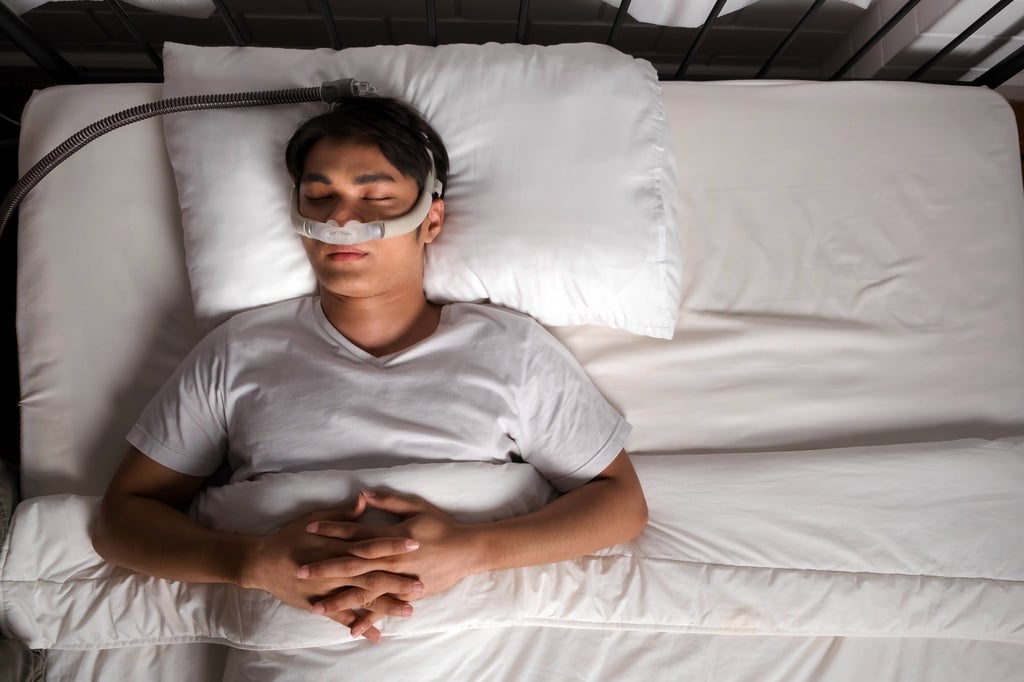
A CPAP machine is a common treatment for obstructive sleep apnoea. Photo: Shutterstock

A CPAP machine is a common treatment for obstructive sleep apnoea. Photo: Shutterstock

For premodern Chinese people, sleep was much more than daily rest. It was a cultivated discipline and a medical necessity. Far from today’s sleep-deprived world, the ancient Chinese developed a philosophy of slumber that regulated everything from bedtime to body position, believing that proper rest governed health and clarity.

The ideal sleep schedule followed nature’s rhythms. The Yellow Emperor’s Inner Canon, a foundational medical text from the pre-Qin era, prescribed seasonal adjustments: shorter nights in spring and summer, and longer rest in autumn and winter. The best time to retire was the hai period (9pm-11pm), known as the “hour of human stillness”, when the body’s energy channels were believed to benefit most from rest.