







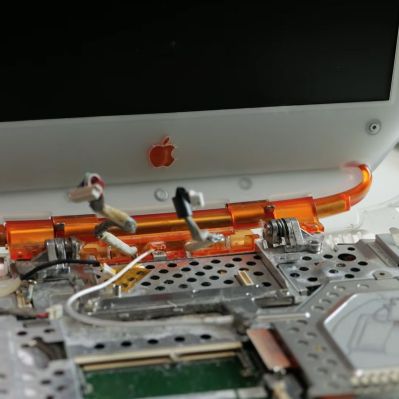
 Before the Apple MacBook there was the Apple iBook, fruity 1999 colors included. These PowerPC-based laptops targeted low-cost PC-compatible laptops much like the iMac did, albeit it the latter with more success. That said, these laptops are said to be a nightmare to repair, so when [This Does Not Compute] got his hands on a shiny first generation, 300 MHz PowerPC powered, tangerine-colored one, he somewhat dreaded trying to fix it.
Aside from some relatively minor cosmetic issues such as typical cracks in the plastic and a missing optical drive door it seemed in good condition. The first issue came on boot, when MacOS 9.0 would throw up an error message about an issue with cache memory. After booting into the OS this cache memory did indeed show up as missing. Next issue was the optical drive doing absolutely nothing and restarting leading to the system locking up and not starting until plugging in the power adapter.
Fortunately the optical drive started working after addressing a software issue, but the power and cache issues were concerning. Cue a long troubleshooting and repair session that involved purchasing a ‘parts unit’ from Japan to merge both into a single iBook with hopefully a working system at the end.
Along the way the reason why people dislike maintaining these systems, as to do something like getting to the hard drive requires removing the entire display. The cause for the first iBook’s problems also seemed to be due to a liquid spill of some type, as on boot there was no chime either, indicating a wider board-level issue. Unfortunately this was left further undiagnosed and the Japanese mainboard used instead. It’d be interesting to see the deeper cause, but most likely the mainboard will be used for components.


