惯性聚合 高效追踪和阅读你感兴趣的博客、新闻、科技资讯
阅读原文 在惯性聚合中打开

推荐订阅源

Google DeepMind News
人人都是产品经理
人人都是产品经理
H
Hacker News: Front Page
Stack Overflow Blog
Stack Overflow Blog
B
Blog
I
InfoQ
GbyAI
GbyAI
T
The Blog of Author Tim Ferriss
F
Fortinet All Blogs
Y
Y Combinator Blog
Cyber Security Advisories - MS-ISAC
月光博客
月光博客
Hugging Face - Blog
Hugging Face - Blog
爱范儿
爱范儿
F
Full Disclosure
Hacker News - Newest:
Hacker News - Newest: "LLM"
Recent Announcements
freeCodeCamp Programming Tutorials: Python, JavaScript, Git & More
Jina AI
Jina AI
T
Tailwind CSS Blog
S
Secure Thoughts
P
Privacy International News Feed
美团技术团队
钛媒体:引领未来商业与生活新知
钛媒体:引领未来商业与生活新知
L
LINUX DO - 最新话题
H
Hackread – Cybersecurity News, Data Breaches, AI and More
C
Cybersecurity and Infrastructure Security Agency CISA
Last Week in AI
Last Week in AI
W
WeLiveSecurity
Google Online Security Blog
P
Privacy & Cybersecurity Law Blog
D
DataBreaches.Net
Engineering at Meta
Engineering at Meta
Know Your Adversary
Know Your Adversary
P
Palo Alto Networks Blog
I
Intezer
Application and Cybersecurity Blog
Project Zero
Project Zero
V2EX - 技术
V2EX - 技术
H
Heimdal Security Blog
博客园 - Franky
阮一峰的网络日志
阮一峰的网络日志
D
Darknet – Hacking Tools, Hacker News & Cyber Security
T
Troy Hunt's Blog
V
Vulnerabilities – Threatpost
H
Help Net Security
Martin Fowler
Martin Fowler
cs.AI updates on arXiv.org
G
GRAHAM CLULEY
博客园 - 【当耐特】

Proxmox Support Forum

[SOLVED] - Github Auth for Mirrors-Kernel Repo? [Automation] Mass migration tool for MS Win11/Server Proxmox GUI hang - not response is it possible to reject or quarantine spam based on conditions I set ? The PVENode task list in PVE9 is partially obscured due to the terminal font being too large. About 100% error reporting due to pveproxy.service hooks Kubernetes overlay networking breaks when upgrading from PVE 9.1 to PVE 9.2.3 Zentraler Speicher No space left on device Combine datastore and direct file archival to tape Kernel panic VFS: Unable to mount root fs on unknown-block (0,0) sobald ein 7.x Kernel verwendet wird. How to migrate disk of a VM from one ZFS to another Windows Server 2025 fails to boot after PVE 9.2 / Linux 7.0 Kernel upgrade Cannot Install Proxmox on T610 Poweredge with H700 PERC card sdn Config. gateway not reachable How to safely change domain/FQDN? Welche Filterquote erreicht ihr? NFS Share status unknown on 2 of 5 nodes Can't connect to PVE9 consoles [solved] Can't connect to PVE9 consoles [solved] [SOLVED] - Use secondary network for PVE commands Created cluster, one node storage gone BUG: proxmox mail gateway FROM = null bypass spam filtering Moving existing PBS from VMWare workstation to PVE cluster Does eBGP SDN fabric support external peering? Bug: PDM 1.1 not recognizing valid license status Proxmox GUI hang - not response PVE crashes unexpectedly Proxmox Backup Server 4.2 released! Advice ceph-osd crashes with kernel 6.17.2-1-pve on Dell system [META] Links on Proxmox Forum Website Hardwarer oder Software RAID Joining a cluster with already created guests VM PDM missing backup jobs from PVE / Log retention Remove VM.Monitor from all users/roles, PVE 9.2 Proxmox Freezing (new instalation) 9.2.2 - Intel 12700T No Web gui and random connection reset by peer [SOLVED] - i40e module for X710 Intel NIC Dutch Proxmox Day 2026 How pools use the space Corosync initiiert Reboot trotz Verfügbarkeit der Systeme Opt-in Linux 7.0 Kernel for Proxmox VE 9 available After PVE 8to9 upgrade, unable to check guest fs freeze status Problem with MegaRAID SAS3508 controller proxmox-kernel-7.0.2-6-pve failing network service Auto sync guest time after rollback of VM snapshot with RAM/state Broadcom BCM57504 (100G) bnxt_en TX timeout and NIC reset on Proxmox 8.1.5 — while BCM57414 (25G) works fine on same host QEMU 11.0 available on pve-test and pve-no-subscription as of now 350 MPM Solventless Lamination Machine for High-Speed Flexible Packaging Making sense of NVMe zfs and SMART errors [SOLVED] - PVE loses network connection after kernel upgrade to proxmox-kernel-7.0.0-3-pve [SOLVED] - Remove or reset cluster configuration. Proxmox 8.4.1 Fresh Install BCM57416 10G Ethernet Adapter Not Recognized PDM 1.1.1 unable to add AD realm with anonymous search [TUTORIAL] - Developer Workstation (Proxmox-VE 9) with cinnamon (LMDE7) SDN zone shows "pending" on peer nodes after node reboot (9.2.x) Cluster not quorate - extending auth key lifetime! Proxmox not rebooting properly (SOLVED) Proxmox 9 Stuck on loading initial ramdisk With new HA-Disarm Feature is there a Documentation for NUT Setup on Clusters? Proxmox 8.3 Installation Issue on ProLiant DL380 Gen9 Cluster networking setup LXC System images unavailable [SOLVED] - Fix: NVIDIA Drivers Failing after upgrade to Proxmox 9.2.2 (Kernel 7.0.2-6-pve) / NovaCore Conflict Install NUT directly on Proxmox VE and control guests from here driver usb for windows 7 System startup error and no network: Failed to start ifupdown2-pre.service - Helper to synchronize boot up for ifupdown. PBS backup space grow up constantly Proxmox Datacenter Manager 1.1 released! IPv4 not available in newly created VM Recommended Setup for Offsite Proxmox Backups? Hetzner Storage Box & Remote PBS Challenges duplicate, please delete this passthrought an USB device "by ID" to CT PDM Installer Freezes at 66% Tried PDM for the first time (version 1.1) - had issues PDM 1.1 automated install Suche Server-Provider für Proxmox connecting sdn to edge firewall SDN, IPAM & DHCP Migrating from read-only file system Ubuntu 26.04 installation fails for unknown reason Status Unbekannt nach Cluster Join Installing Proxmox Backup Server on Mac Mini (Late 2012) kernel 7.0 performance issue with zfs pools PVE becomes unreachable via ethernet but OS is running [SOLVED] - New 9.2 install - can't find 7.0.2-6-pve , not all the time [SOLVED] - Backup and dedupe a VM with LUKS Gibt es mit PVE 2.x ggf. Änderungen bei der RAM-Nutzung, bzw. deren Anzeige bei VMs? I need help for setting up backup solution Way more NAGware, very little functionality, bugs galore Root squashing virtiofsd with --uid-map Intel ixgbe Driver Update Fail Passkey Login (not 2FA) Roblox VM detection - can be overcome? [TUTORIAL] - ZFS-Autosnaptshot inkl. Rollback und Daten direkt recovern (Windows/Linux) How to stop PVE Kernel upgrade [SOLVED] - very long waiting to log in to lxc debian 11 ssh [TUTORIAL] - Configuring Fusion-Io (SanDisk) ioDrive, ioDrive2, ioScale and ioScale2 cards with Proxmox Increase maximum USB devices in vm.conf
Is anyone here actually running kubernetes on their LXC containers?
invalid@exam · 2026-06-28 · via Proxmox Support Forum

I know I've been able to get k3s running on my LXC containers in the past. This was when I just ran a straight up OS and setup LXD myself.

Then I decided to try and be clever, wiped my box, and installed Proxmox in order to, among other things, benefit from the support for LXC containers.

Between the well documented problems with /dev/kmsg (mistakenly marked as resolved in this forum) and other issues involving cgroups, I just want to know if anyone here is actually running kubernetes on their containers? I have a sneaking suspicion everyone just bailed on this approach and just went to the VM side of things. Please prove me wrong :)

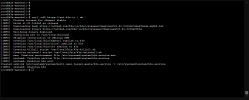
1638181388532.png

In the container:

modprob: FATAL: Module br_netfilter not found in directory /lib/modules/5.13.19-1-pve
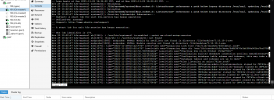
modprob: FATAL: Module overlay not found in directory /lib/modules/5.13.19-1-pve

1638181433009.png

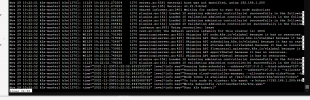
1638181570859.png

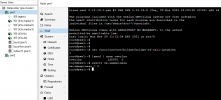
But on my host the overlay module is loaded:

1638181665205.png

Any idea?

I followed the same guide and it works.

My K3s does however throw those errors as well, seems to be false positive.
proxmox 6.4 latest, ubuntu 20.04 lxc, latest k3s stable

Last edited:

Hi,

I’m running a k3s cluster of 3 nodes and 1 master within privileged LXC containers.

All of them are hosted into a Proxmox 7.1 cluster of 3 machines with a complex SDN topology.

So it’s feasible, but really painful when you starts from scratch.

You have allot of tips and tricks to put in place in order to make sure Container-d will work seamlessly, additional modules setup for Kubernetes networking…

My initial setup was the following.

  • Host machine:
    • Debian Bullseyes based (Proxmox VE 7.0)
    • LXC v4.0.9-4
    • Additional Kernel Modules loaded at startup (/etc/modules):

br_netfilter
overlay
aufs
ip_vs
nf_nat
xt_conntrack

  • LXC Guest Machine:
    • Pure Debian Bullseyes
    • LXC extra settings:

lxc.apparmor.profile: unconfined
lxc.cgroup.devices.allow:
lxc.cgroup.devices.deny:
lxc.cap.drop:
lxc.mount.auto: "proc:rw sys:rw cgroup:rw:force"

From my experiences the major drawback using LXC containers for Kubernetes is the fact you will not be able to implement certain persistent storage provider such as :
- OpenEBS
- Kasten
- Longhorn
- Rook
Mostly because it requires to access low level kernel apis and I already spent too much time on tries.

From my side I went to Kadalu which is an open-source encapsulated GlusterFS architecture within Kubernetes.
It’s a young project but quite promising.

So, if you are looking for simplicity, don’t go to LXC, instead use a pre made bundle.
The resource overhead of a full virtualization is negligible.

I tried , it worked (cluster worked) but i recerted to vms.
- too much permissions needed, basically giving full host access to k8s
- issues with snapshotter in combination with zfs backed storage - endlessly eating storage space for no reason
- i was expecting issues with longhorn, as explained above
- too many workarounds needed to get it working. Hard to automate using terraform. I want a seamless experience.

This Thread need an UP because it really doesn't make sense that we are still in 2023 and LXC (The base of the containarization that all the docker garbage is based on) is still not fisable along side Kubernetes.
Also Having proxmox and Ceph is a must not only by the reliability but also because of the architecture that makes it much simpler to manage DataCenter Operations
I know that many here use Proxmox as home lab but i have a cluster working on the Public Health System for Brazil for 6 years non stop.
Joining Kubernetes to this architecture using VMs feels to me like Renting a Train to carry and airplane to delivery a single Mail to a city 5km away. Really cutting the chicken with a chainsaw.

Please if any of you managed to evolve this manner please come to me. I'll appretiate and im sure many brazilian citizens also!

This Thread need an UP because it really doesn't make sense that we are still in 2023 and LXC (The base of the containarization that all the docker garbage is based on) is still not fisable along side Kubernetes.
Also Having proxmox and Ceph is a must not only by the reliability but also because of the architecture that makes it much simpler to manage DataCenter Operations
I know that many here use Proxmox as home lab but i have a cluster working on the Public Health System for Brazil for 6 years non stop.
Joining Kubernetes to this architecture using VMs feels to me like Renting a Train to carry and airplane to delivery a single Mail to a city 5km away. Really cutting the chicken with a chainsaw.

Please if any of you managed to evolve this manner please come to me. I'll appretiate and im sure many brazilian citizens also!

From my point of view LXC is not production ready as host for Kubernetes.

After many years of attempts, finding real business cases then each time allot of issues shows up:
- Security
- Shared Kernel with the Hypervisor
- Automation
- Maintenance
- Upgrade
- Backups / Snapshots
Finally, qemu/KVM is much more suitable from my point of view.

BTW, all my previous infra under LXC have been migrated into KVMs, no more workarounds and clean hypervisors.

You are talking about storage architecture, all depends of your needs, if your plan is to have an hyperconverged infra such as :
a. VM on demand or virtual appliances which doesn't requires high IOPs, it could make sense to use CEPH as backend storage.
We could debate on CEPH, other technologies exists, but of course not implemented by Proxmox by default.
b. Kubernetes cluster(-s) (K3s, K8s, REHL OpenShift/OKD, ...), ZFS as backend storage seems more performant as soon as you choose your own suitable persistent storage provider.

At the end, everyone can say this is the best or that is worst than the other...
It depends all the time about your hardware, network topology, infrastructure, software architecture and of course the budget you have.

If you are not satisfied with a product, help the community or move away.
You have plenty of choices on the market, VMWare ESXi/vSphere, Microsoft Hyper-V/Azure, OpenStack, Citrix, XCP-ng / Xen,...

LXC (The base of the containarization that all the docker garbage is based on) is still not fisable along side Kubernetes.

LXC and Docker containers are two very different things.

Hello, this is a great thread and helped me get k3s running on unprivileged LXC containers with saltstack. I further complicated the install by following the CIS hardening guidelines and HA etcd guides. I am still working on it at the moment.

tabnul's comments about too many permissions and it being difficult and broken are defiantly correct!

I am mostly worried about the security. Containerd and LXC, with a lot of access, seems it would be secure enough. Though it seems most cloud offerings are running on VMs.

What I want to know is if the performance and security of the LXC container with containerd is better than a full VM?

I tried , it worked (cluster worked) but i recerted to vms.
- too much permissions needed, basically giving full host access to k8s
- issues with snapshotter in combination with zfs backed storage - endlessly eating storage space for no reason
- i was expecting issues with longhorn, as explained above
- too many workarounds needed to get it working. Hard to automate using terraform. I want a seamless experience.

P.S. At this point with how painful it is to configure LXC containers, VMs might be better with the worst performance.

Short version of the server config.yaml I am using. I removed the CIS recommended options to keep it short.

YAML:

protect-kernel-defaults: false
kube-apiserver-arg:
  - 'feature-gates=KubeletInUserNamespace=true'
kube-controller-manager-arg:
  - 'feature-gates=KubeletInUserNamespace=true'
kubelet-arg:
  - 'feature-gates=KubeletInUserNamespace=true'
snapshotter: 'fuse-overlayfs'

This Thread need an UP because it really doesn't make sense that we are still in 2023 and LXC (The base of the containarization that all the docker garbage is based on) is still not fisable along side Kubernetes.
Also Having proxmox and Ceph is a must not only by the reliability but also because of the architecture that makes it much simpler to manage DataCenter Operations
I know that many here use Proxmox as home lab but i have a cluster working on the Public Health System for Brazil for 6 years non stop.
Joining Kubernetes to this architecture using VMs feels to me like Renting a Train to carry and airplane to delivery a single Mail to a city 5km away. Really cutting the chicken with a chainsaw.

Please if any of you managed to evolve this manner please come to me. I'll appretiate and im sure many Brazilian citizens also!

I was looking for the same but seems lxc is still far behind to be prepared for supporting Kubernetes. Sad. Anyway, in my case Im using terraform to deploy the vms, working very well and will setup ansible to make the final kubernetes backup. will use ansible as well to apply all the needed CIS benchmarks.

I found this but didn't tested it. Looks promising but have no idea if fisable to production

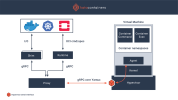
A few months ago, I learned about Kata Containers, and those look to me like a good fit for Proxmox as an option to support application containers but keep them as infrastructure.
Please review their website (https://katacontainers.io/)and check if my consideration is valid. The Kata Container project is part of the Open Infrastructure Foundation (https://openinfra.dev/projects/)
I want to bring the idea here as the initial place, and if it has some traction, I will probably move properly to open a feature request. Also, we can start a new thread if it seems better. I looked on the forum to see if someone mentions Kata Containers anywhere else but found no reference.

kata-explained1@2x.png

A few months ago, I learned about Kata Containers, and those look to me like a good fit for Proxmox as an option to support application containers but keep them as infrastructure.
Please review their website (https://katacontainers.io/)and check if my consideration is valid. The Kata Container project is part of the Open Infrastructure Foundation (https://openinfra.dev/projects/)
I want to bring the idea here as the initial place, and if it has some traction, I will probably move properly to open a feature request. Also, we can start a new thread if it seems better. I looked on the forum to see if someone mentions Kata Containers anywhere else but found no reference.

View attachment 63285

It seems as a nice idea but:

First of all PVE is already well integrated with LXC

It has been a sucessfull implementation and we have TKL support for it

I don't know if the effort is worthit for this huge integration, comprehend that to request a feature in proxmox that supports KATA we have to change the entire architecture of VMs and LXC Containers.

Is a well known project altought to inmature 2017 is only 7 Years as PVE already has 18yr like LXC. I think is a thumbs up but with caution.

It seems as a nice idea but:

First of all PVE is already well integrated with LXC

Not so well, maybe. Also, there was a time when OpenVZ was a thing (that time I did not even touch PVE because LXD was started at the same time I was looking. Sadly both platforms tried to cover both VM & LXC world and it's a mess.

It has been a sucessfull implementation and we have TKL support for it

I don't know if the effort is worthit for this huge integration, comprehend that to request a feature in proxmox that supports KATA we have to change the entire architecture of VMs and LXC Containers.

I don't understand the "effort" argument, but I noticed PVE is more worried about risking touching anything "too novel" until there's no further options (rgmanager comes to mind).

Is a well known project altought to inmature 2017 is only 7 Years as PVE already has 18yr like LXC. I think is a thumbs up but with caution.

Why should it be one or the other?

Well for example, if we compare to OpenShift or OpenStack they are huge projects kind a working on a different approach to the same problem PVE is.

In my point of view some things like Multi Cluster integration and HA between Geo locations can be done with K8S for example, but then everything comes as a performance problem with VMs and etc. Then why to even use PVE? Why not just a Pure K8S batemetal?

BTW if you check the latest feature request in this regard (multi geo location) is something requested 5 to 6 years ago. It has been a long time ago And people are still working in a beta release

This is what was missing to implement K8S with distributed ETCd. The problem is that although docker can run inside an lxc container and k8s can deploy docker pods the performance issues are more a priority now a days. I don't know if have follow the discussions here but many things are being done in rust. This is a Plus for Kata Containers.

So I don't know, as I said before is only my opinion and my point of view and only one point of view.

My intent with this post and replay is to stimulate the discussion in the community for this, Maybe open a new Thread and direct the efforts on listing pros and cons on the KataContainers?

The community is already mature enough to have this type of discussions and approaches. I'm glad you replied you listed some good and straight forward points in defense. Can you open a new thread about it an list pros and cons?

Also are you willing to work on code for this to be made, if this is a decision to the entire PVE community?