






In the latest edition of the Tiobe Index, Python continues to dominate as the most widely used programming language, securing the top spot with a significant market share of 23.28%. This represents an impressive 9.3% increase compared to the same time last year.
The Tiobe Index is a widely regarded indicator of programming language popularity, offering insights into trends that shape the software development landscape. For developers, tech leaders, and organizations, this index provides a snapshot of where the industry is heading.
Key Highlights from the January 2025 Tiobe Index
Here’s how the top 10 programming languages rank this year, along with their respective market shares:
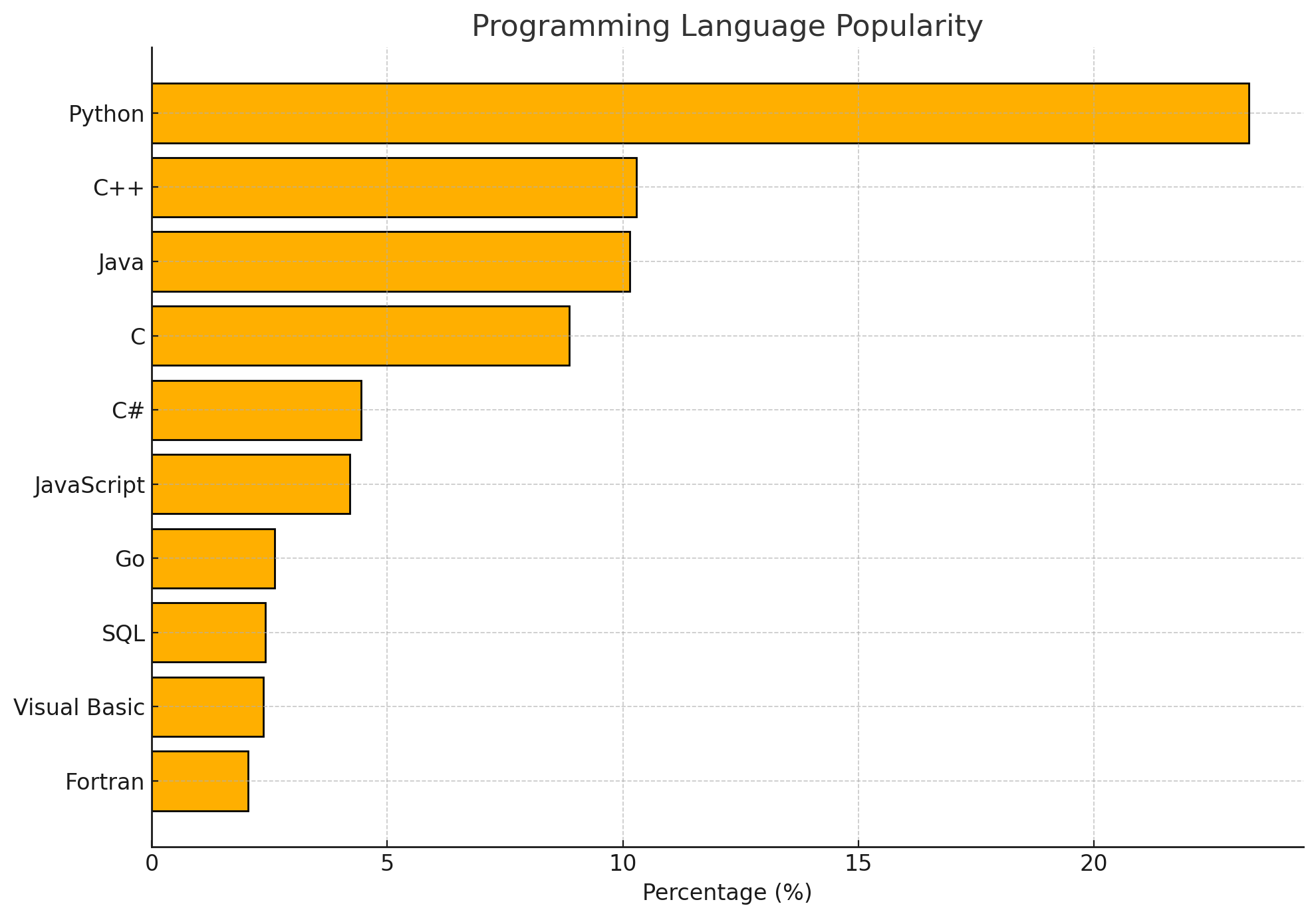
• Python’s Unstoppable Growth: Python’s versatility and simplicity continue to resonate with developers across domains such as data science, machine learning, and web development. Its broad library support and growing community play a key role in its sustained popularity.
• C++ and Java Maintain Strong Positions: Both C++ and Java remain critical for system-level programming and enterprise applications, respectively.
• The Rise of Specialized Languages: Go, often favored for cloud-native and distributed systems, has carved out a niche position, reflecting the increasing demand for microservices architectures.
• SQL’s Enduring Relevance: Despite being older, SQL remains essential in the age of big data and analytics.
Interestingly, while 18 programming languages achieved more than 1% market share, languages like Swift and COBOL narrowly missed this threshold. This suggests that while newer and niche languages gain traction, older, less popular languages still maintain their importance in specific industries.
What Does This Mean for Developers?
Developers should consider honing their skills in Python or C++ to stay competitive. Specialization in languages like Go or SQL might open doors to niche yet lucrative roles in cloud or data-driven domains.
Fortran and Visual Basic’s presence in the top 10 indicates the continued need for maintaining legacy systems, presenting opportunities for those familiar with these languages.
The Tiobe Index for January 2025 highlights the dynamic nature of the programming world. While Python continues its reign, other languages retain their relevance by catering to specific domains and evolving market needs. Whether you’re a seasoned developer or just starting out, keeping an eye on such trends can guide your learning path and career growth.