


惯性聚合 高效追踪和阅读你感兴趣的博客、新闻、科技资讯
阅读原文 在惯性聚合中打开

推荐订阅源

J
Java Code Geeks
钛媒体:引领未来商业与生活新知
钛媒体:引领未来商业与生活新知
H
Hackread – Cybersecurity News, Data Breaches, AI and More
腾讯CDC
F
Fortinet All Blogs
I
InfoQ
Jina AI
Jina AI
有赞技术团队
有赞技术团队
A
About on SuperTechFans
Stack Overflow Blog
Stack Overflow Blog
小众软件
小众软件
Recent Announcements
aimingoo的专栏
aimingoo的专栏
雷峰网
雷峰网
B
Blog RSS Feed
C
Check Point Blog
Y
Y Combinator Blog
博客园 - 聂微东
云风的 BLOG
云风的 BLOG
Cyber Security Advisories - MS-ISAC
Hugging Face - Blog
Hugging Face - Blog
Microsoft Security Blog
Engineering at Meta
Engineering at Meta
G
Google Developers Blog

Jan Miksovsky’s blog

Origami Projector: a Glitch-like app for site editing Map-based trees in Zig How and why I journal Code is more concise than configuration: comparing a sample blog in Web Origami and Eleventy Code is more expressive than configuration: comparing a sample blog in Web Origami and Eleventy Code is more coherent than configuration: comparing a sample blog in Web Origami and Eleventy Code is easier to follow than configuration: comparing a sample blog in Web Origami and Eleventy Who else would use a shared Electron library to create and deploy Netlify sites? 2025 Web Origami year-end report Fixing the under-appreciated JavaScript Map class and using it to construct a build system Creating a simple blog in Python with Origami concepts
Promoting a design and development tool through comics
2026-01-08 · via Jan Miksovsky’s blog

To increase awareness of cool features in Web Origami, I kicked off a weekly comic series with a Mastodon post:
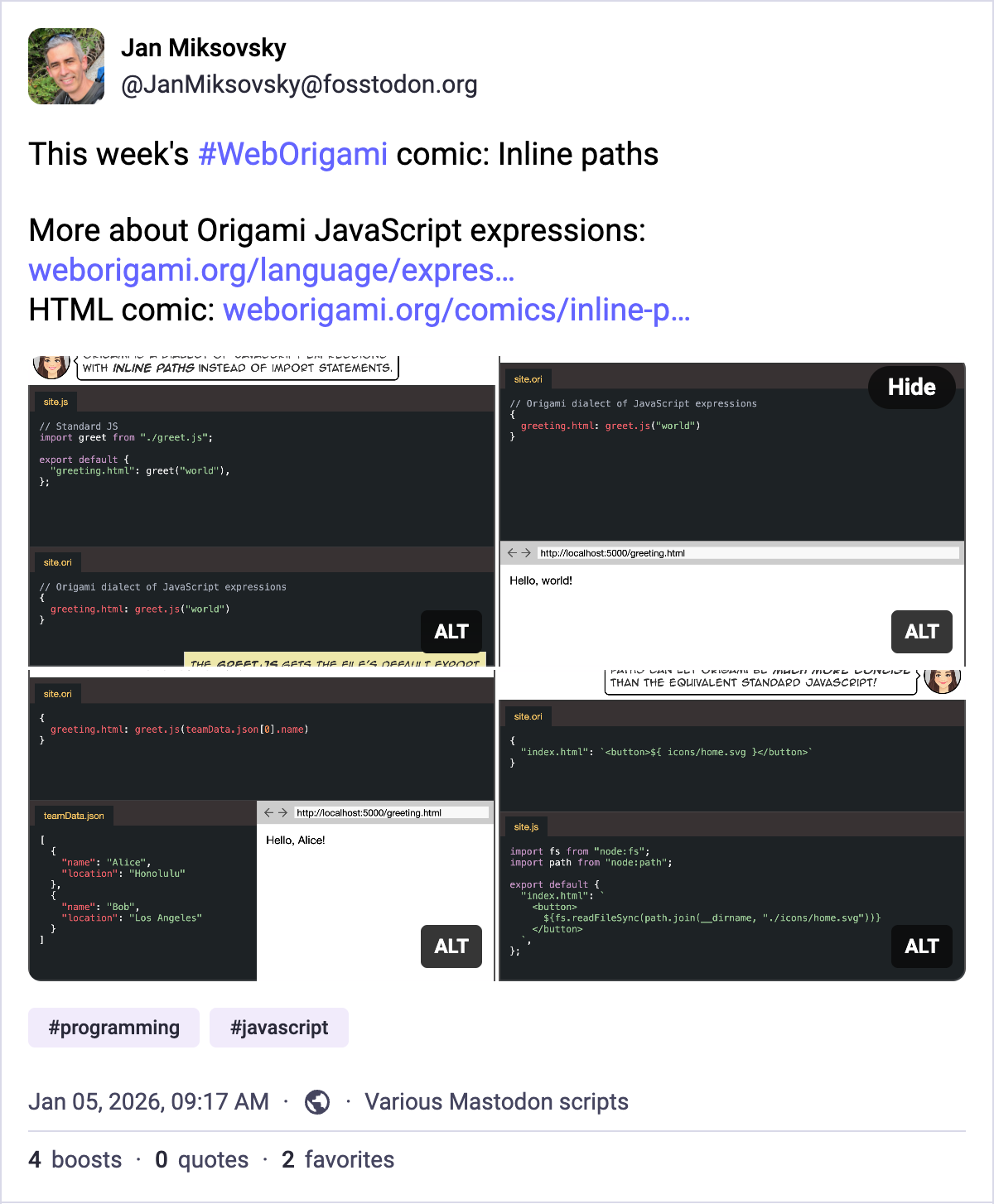
4 comic panels

Each 4-panel comic will deliver a short, standalone story. I thought a 4-panel comic would be a perfect format for Twitter-like sites that allow 4 images per post. The images should add visual interest to a user’s feed, and the user can read the comic right there. Each comic will also be available as regular HTML on the Origami site.

It takes a couple of hours to rough out a little story, come up with code examples, ensure they work, and revise as necessary. I write the comic script in YAML, indicating who is talking, what they’re saying, and what should appear in the panel.

The rest of the process is automated:

  1. It’s easy to compile that YAML script to HTML using Origami itself.
  2. Origami can easily runs the code samples and inlines the results directly into the comic so that the terminal session and browser panels are 100% accurate.
  3. To confirm code continues to work as Origami evolves, I use Origami’s Dev.changes builtin to test the site and flag any changes in code output.
  4. I capture HTML comic panels as PNG images using Origami’s screenshot extension.
  5. I use Origami and JavaScript to upload the images to Mastodon and make a post using additional information from the YAML script.