



by Jordan Fulghum, October 2025
My mom has dementia.
Getting to any kind of formal clinical diagnosis took years. The early tests were slow, vague, and expensive. Some were so subjective that two clinicians could look at the same results and disagree.
I've been working on something that might make that step a little easier - for families, and maybe one day for doctors too. It's called VocalMaze.
VocalMaze can screen for signs of cognitive decline in about 60 seconds. You're shown an image, and you just describe what you see out loud into your device's microphone.
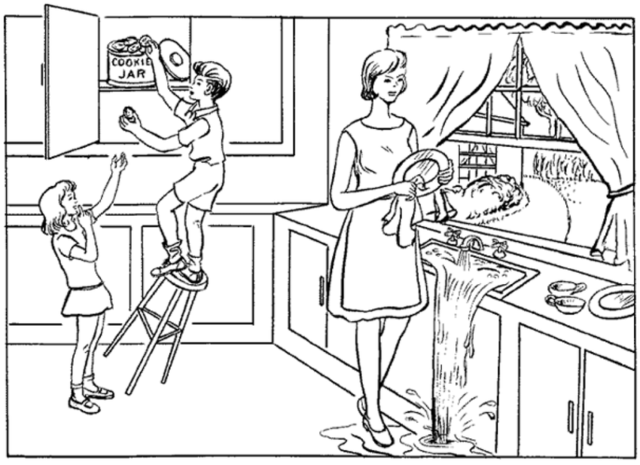
The Cookie Theft picture from the Boston Diagnostic Aphasia Examination, used in dementia screening for decades.
The site transcribes what you say and runs that text through a transformer (AI) model I fine-tuned to predict whether a person's language patterns resemble those seen in dementia. It doesn't analyze sound, tone, or emotion - just language.
That's the most remarkable thing I learned: we don't even need a waveform, or a spectogram, or a vocal embedding, or any audio. VocalMaze throws all of that away and just uses the transcript. In our family's experience, a simple transcript beat every measurement tool the doctors threw at the problem.
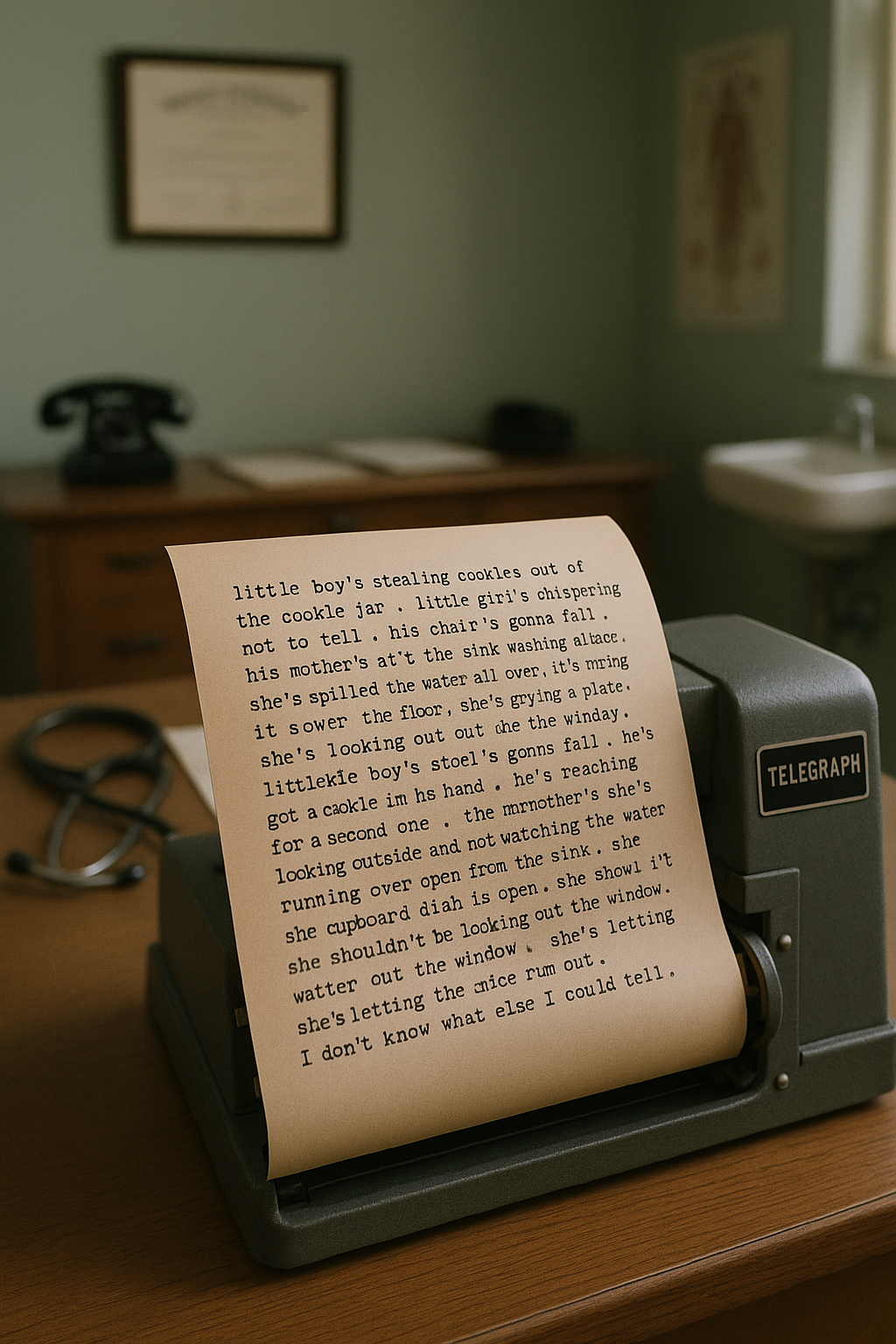
The classifier model only analyzes the transcript, not the audio, to screen for signs of cognitive decline.
The model is a fine-tuned XLNet transformer trained on transcripts from DementiaBank, a public dataset used in clinical research. Each sample is a transcription of a participant describing the image above, and labeled by whether the speaker was cognitively healthy or not.
With even just a small amount of data, the neural network can identify linguistic patterns: people with dementia use fewer nouns, more pronouns, shorter sentences, less temporal structure. The model learns those differences and the structure of thought shows up in the syntax.
VocalMaze provides a statistical screen, not a medical diagnosis. In testing, it's about 82% accurate. In other words, about 8 out of 10 screens will be correct and the others will be false positives or false negatives. That's roughly the same performance as traditional screening methods that take far longer.
VocalMaze doesn't store anything. No accounts, no recordings, no transcripts, no results. There's literally not a database backing it.
The browser uses the microphone API to capture your voice, sends it to a speech-to-text service, the text is analyzed, and then everything disappears. Nothing is kept on my server, because there is no server.
If you want to send the test to someone else - like a parent or spouse - you can do that discreetly. The app emails them a link that simply says "try this short voice test to measure your health." When they complete it, only you get the result. It's private, but not deceptive.
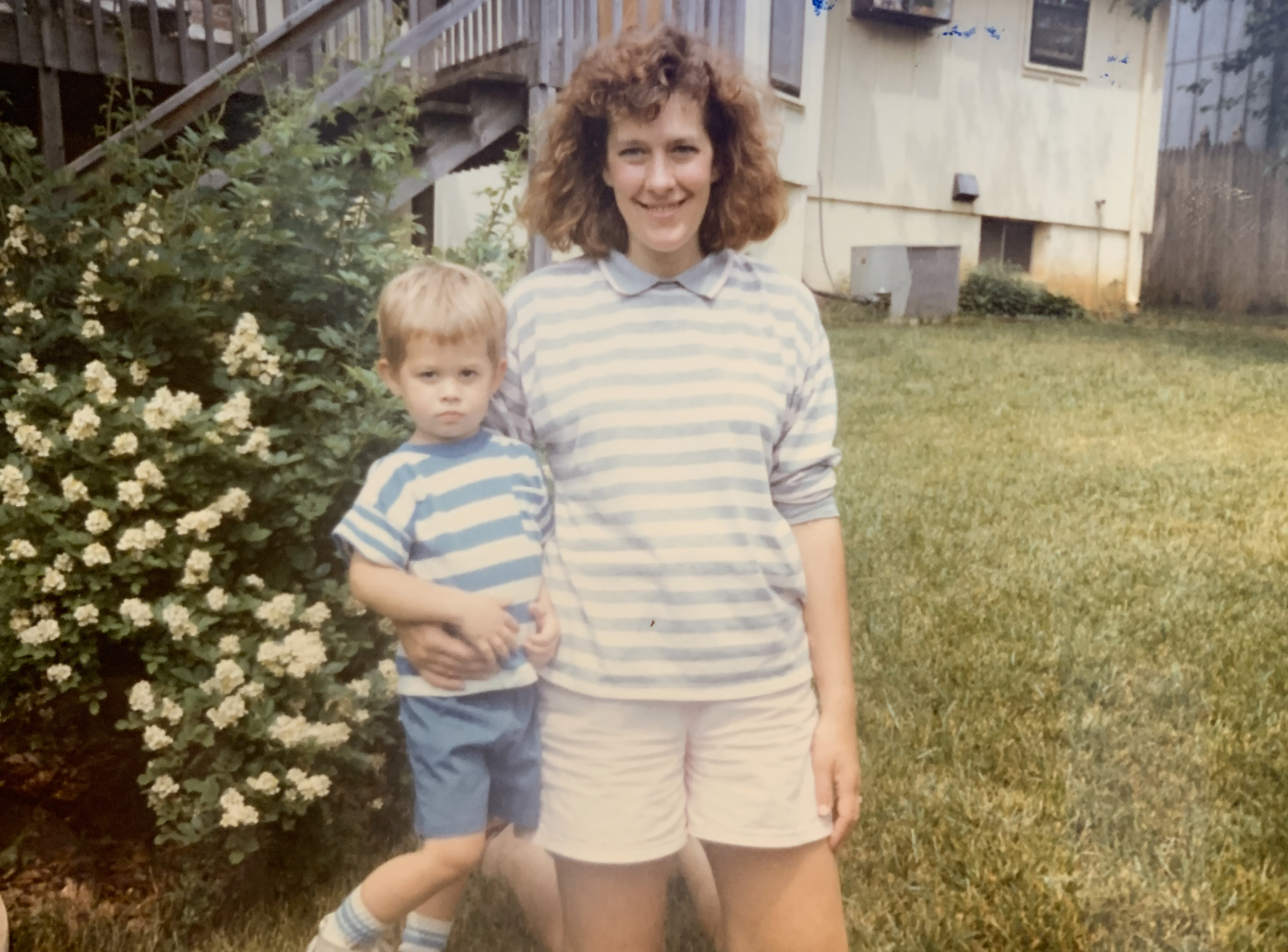
VocalMaze is for families like mine.
I wish this had existed when mom started showing signs. I learned that language can tell us a lot before memory loss becomes visible. We just need to listen.
VocalMaze is free and takes about a minute.
You can try it at vocalmaze.com
Follow me on Twitter for more antics.
此内容由惯性聚合(RSS阅读器)自动聚合整理,仅供阅读参考。 原文来自 — 版权归原作者所有。