










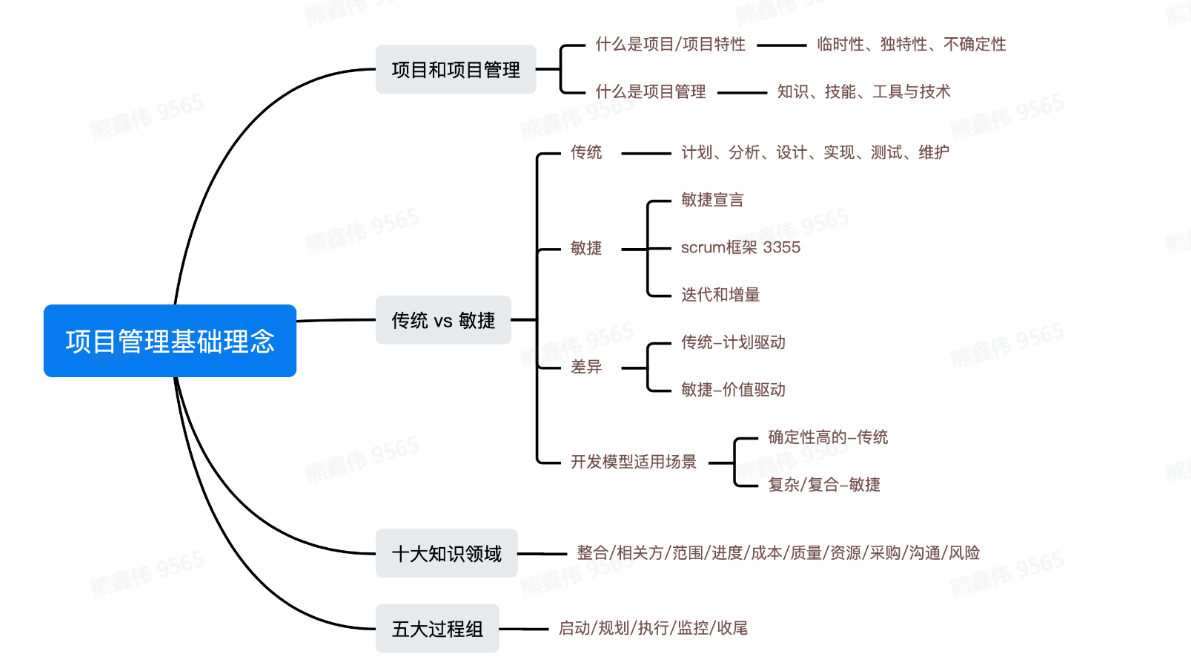
Waterfall Model:
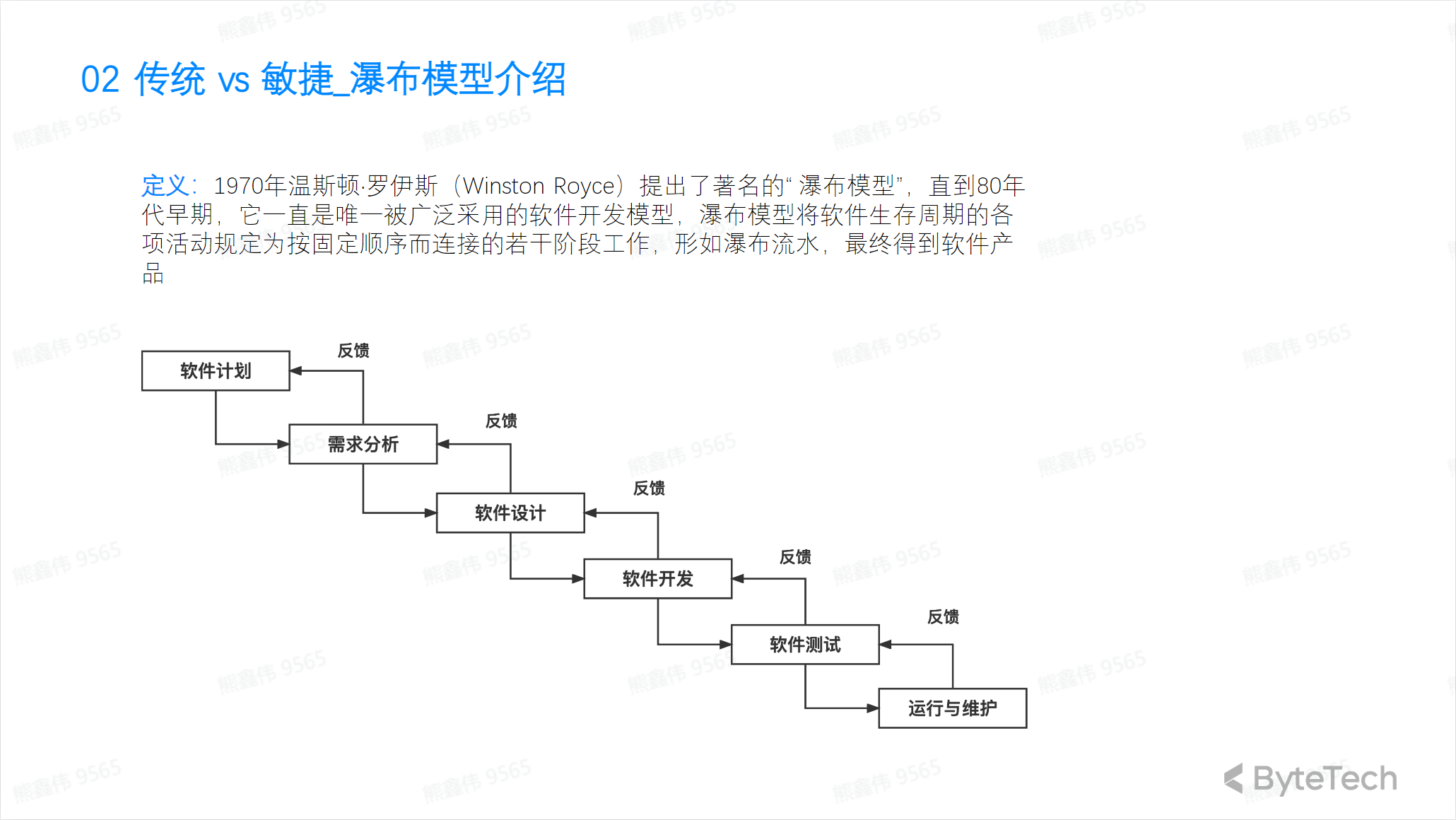
Agile Model:
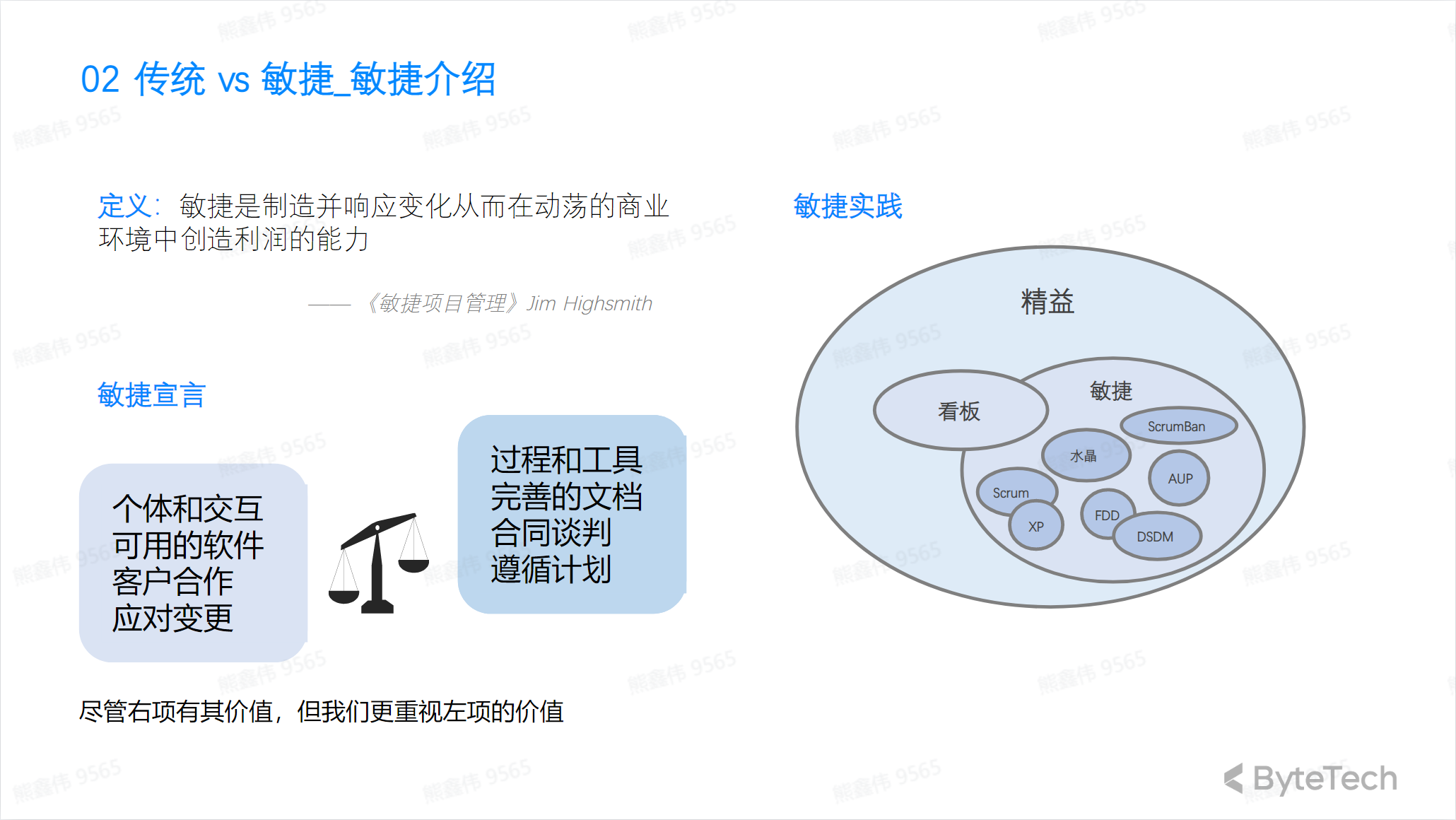
Scrum Framework:
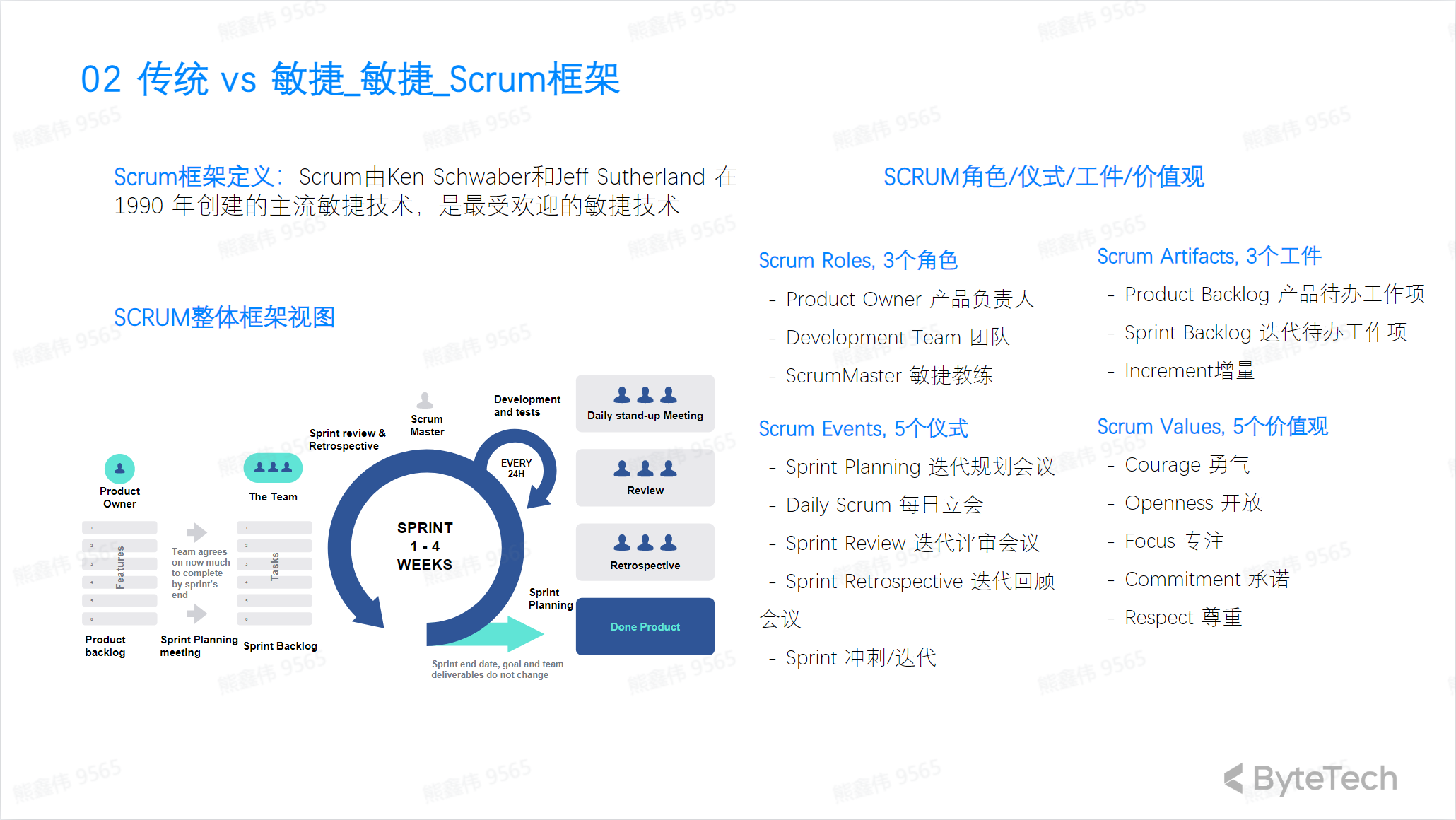
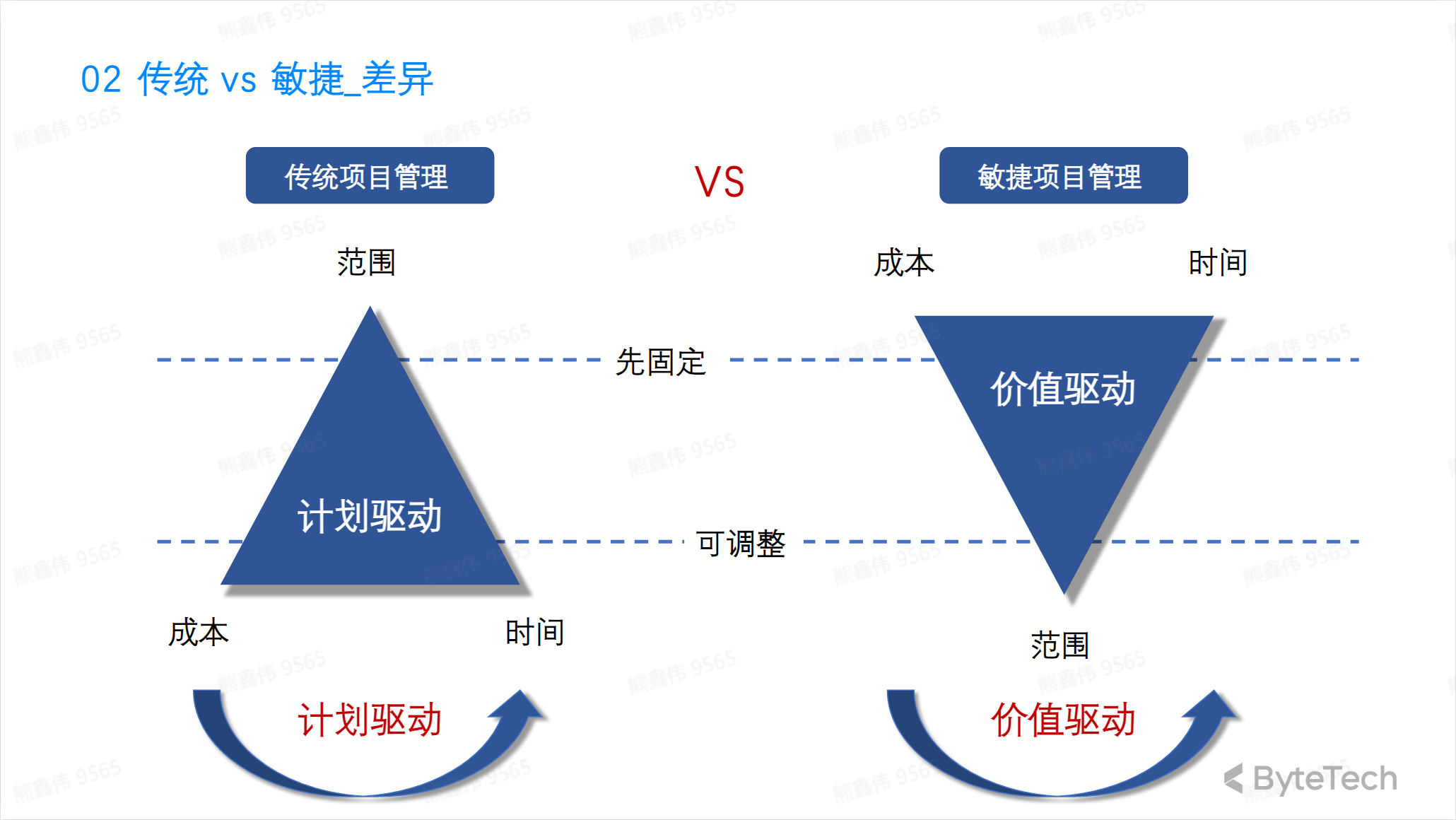
**Traditional project management methods typically follow a linear process, achieving project goals through pre-established planning, supervision, and control. Agile project management methods are more flexible and achieve project goals through iteration and continuous improvement. Agile methods emphasize teamwork, adapting to changes, and delivering value quickly. **
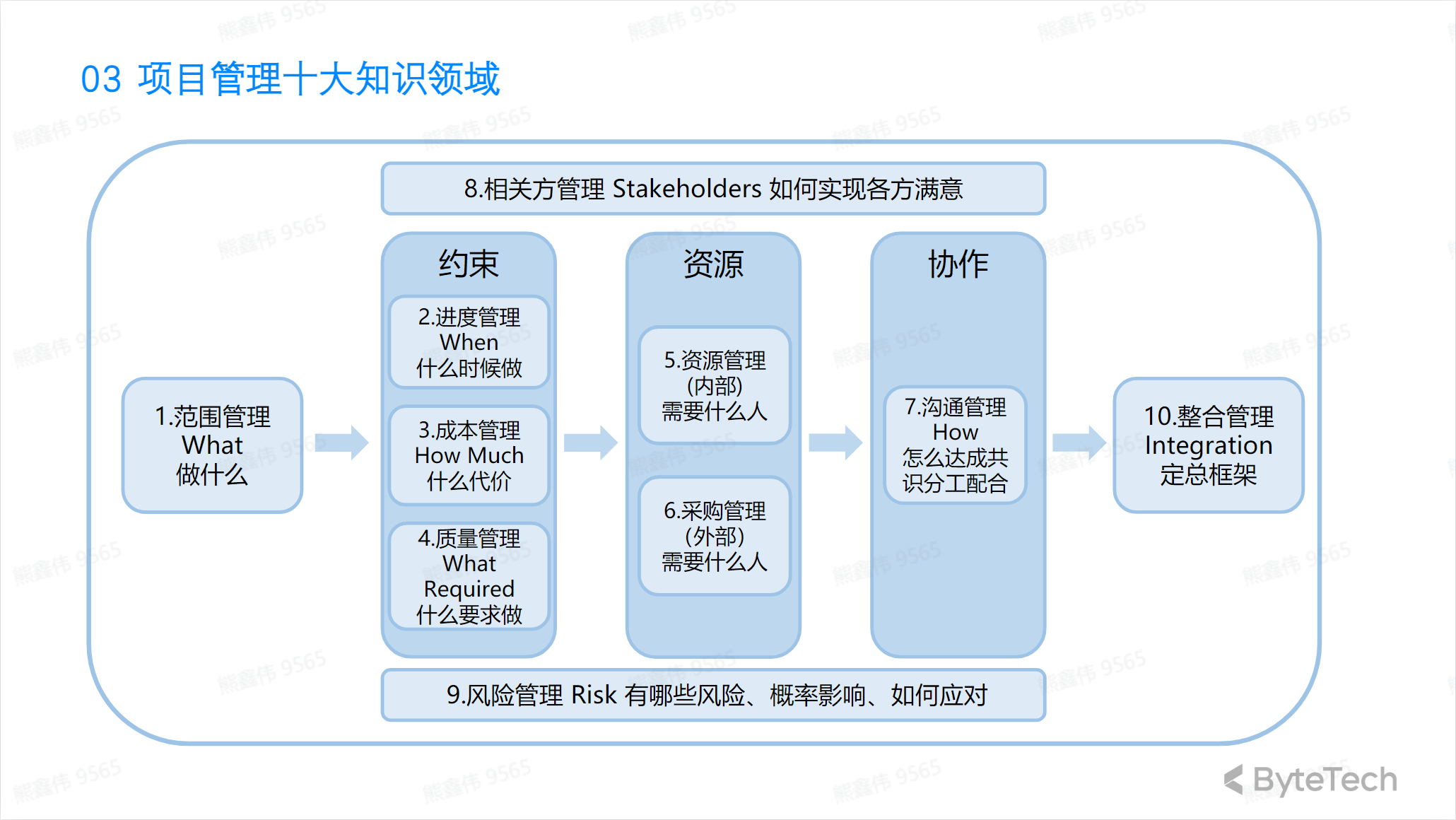
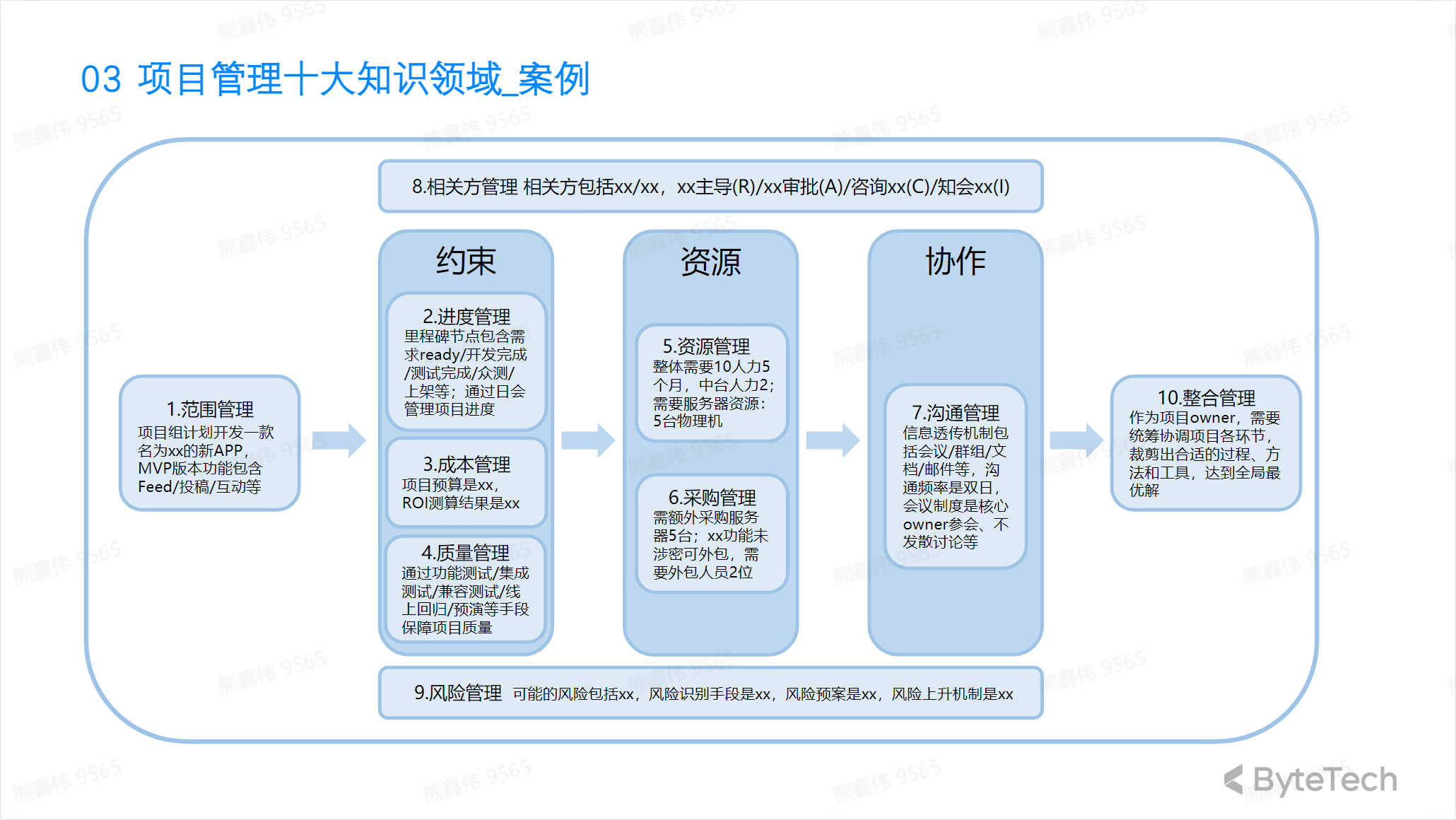
The ten knowledge areas of project management include:
The five process groups of project management are:
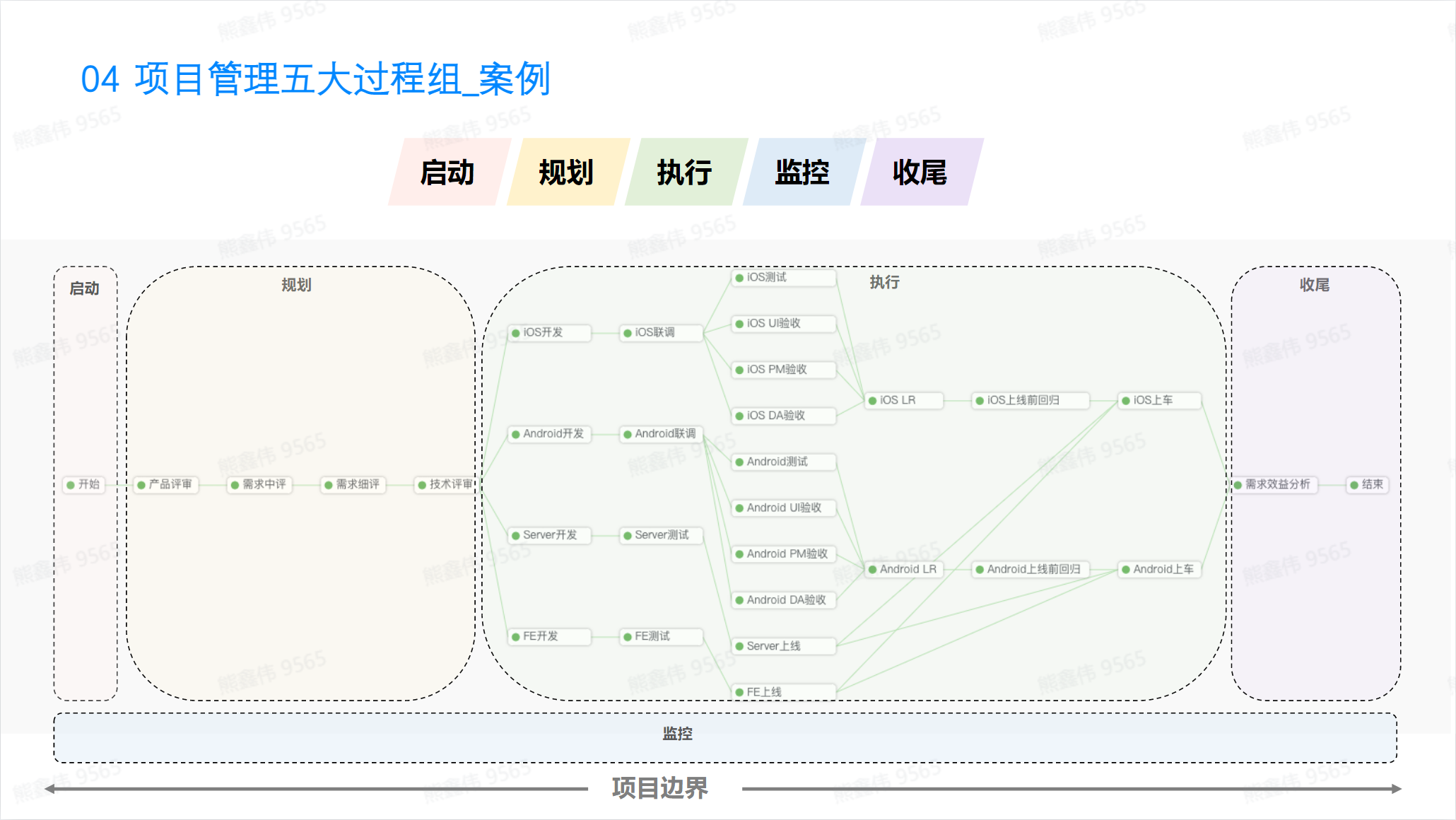
**Monitoring is responsible for the entire life cycle of product projects. **
Above we have seen the five major processes of project management: initiation, planning, execution, monitoring and closing. There is no doubt that the importance of how to start a project efficiently~
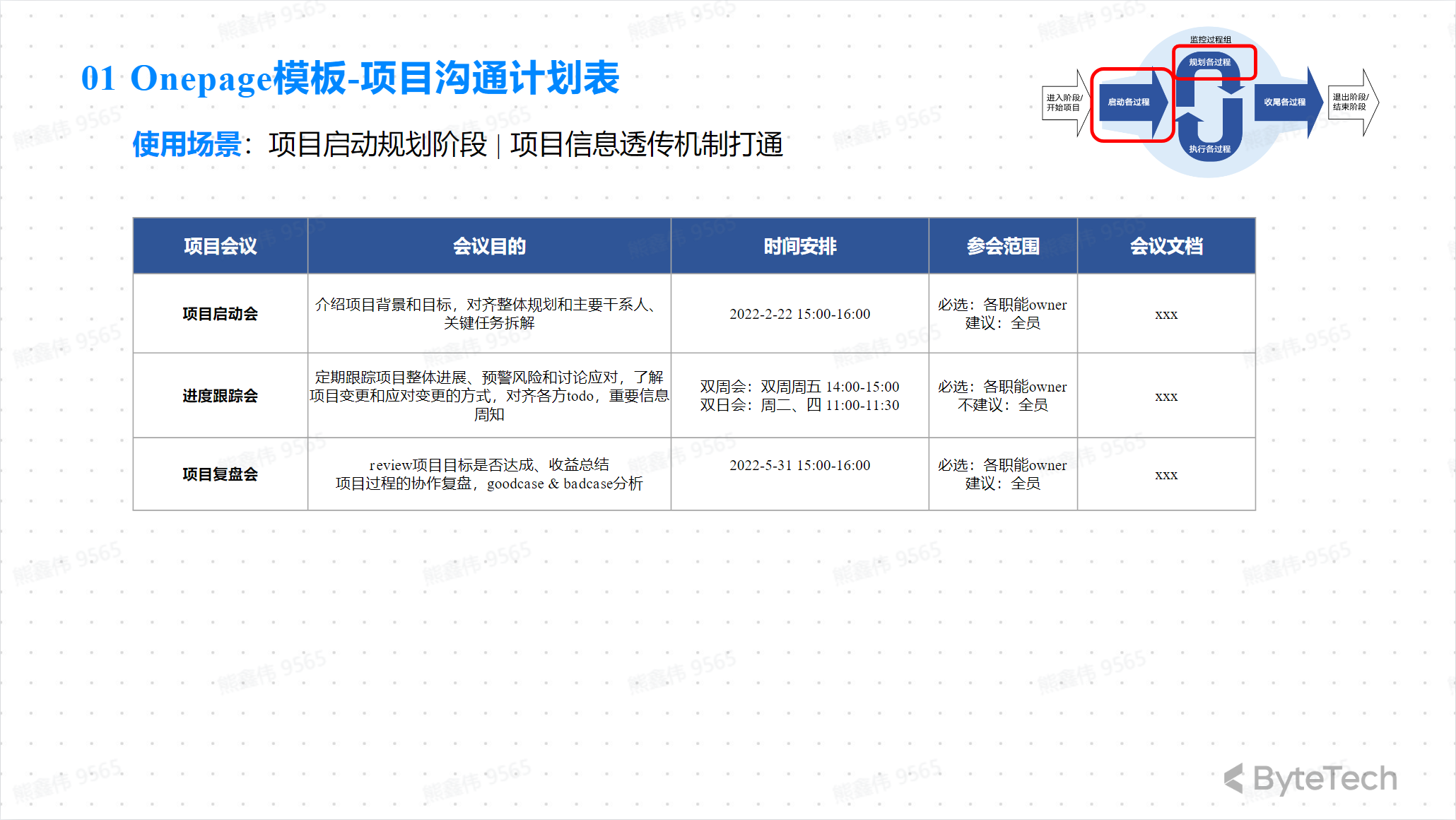
First take a look at a table that runs throughout:
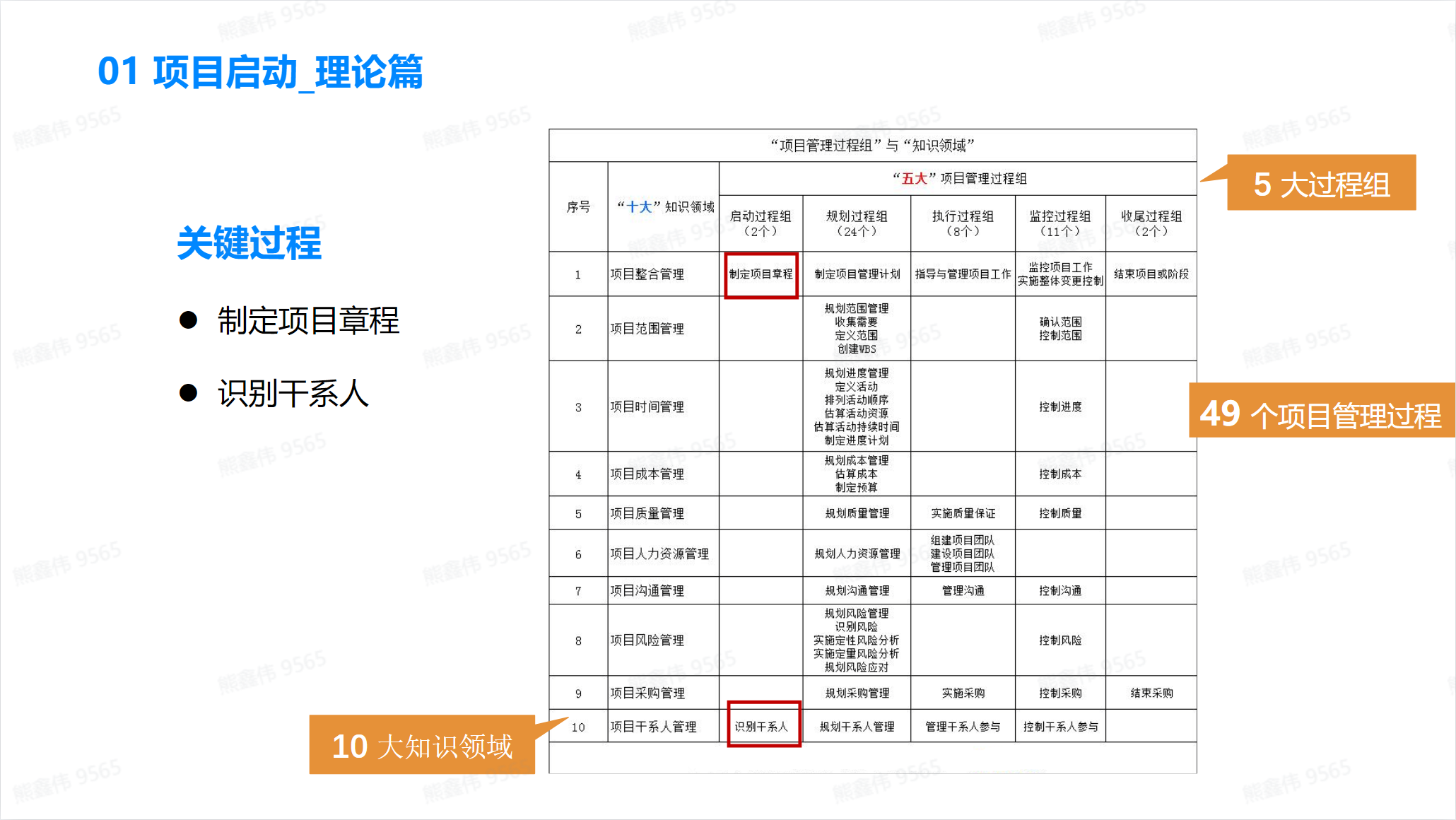
We target two key processes in the startup process:
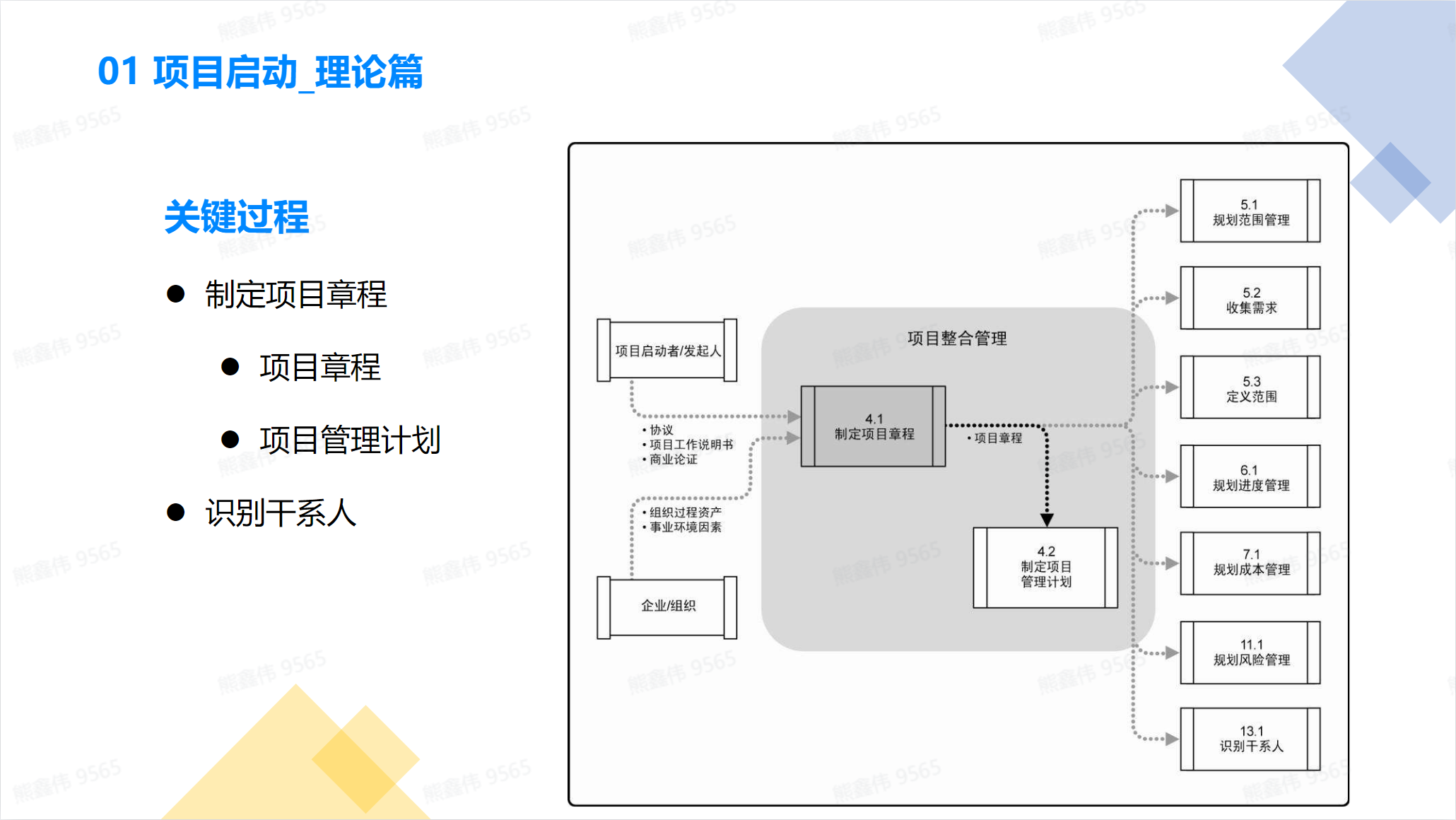
⚠️Things that should be done during the project startup phase include:
Determine project goals: Clarify the purpose, scope and results of the project to ensure that the project is consistent with the strategic goals of the organization.
Form a project team: Determine the members of the project team and establish an appropriate team communication and collaboration structure.
Develop a project charter: Clarify the responsibilities and authorities of the project, and formulate a project charter to ensure orderly operation of the project.
Determine project budget: Develop a project budget based on the scope and objectives of the project, and determine the source of funding for the project.
Determine the project schedule: Develop a project schedule based on the project scope and goals, and determine project milestones.
Assess risks: Assess possible risks in the project and formulate risk response strategies.
Obtain resources: Determine the people, equipment, and materials needed for the project and acquire these resources.
Approval of startup documents: Approval and signing of project startup documents to ensure that the project has formal permission to start.
Communication plan: Develop a project communication plan to ensure that information in the project is effectively transmitted.
Contract management: Manage contracts in the project, including signing contracts, supervising contract performance and ending contracts.
Project management plan: Develop a project management plan to ensure that the project management process is orderly and efficient.
Start project execution: Start project execution according to the project management plan and project charter.
Continuously monitor the progress of the project, make adjustments and controls, and ensure that the project proceeds as planned.
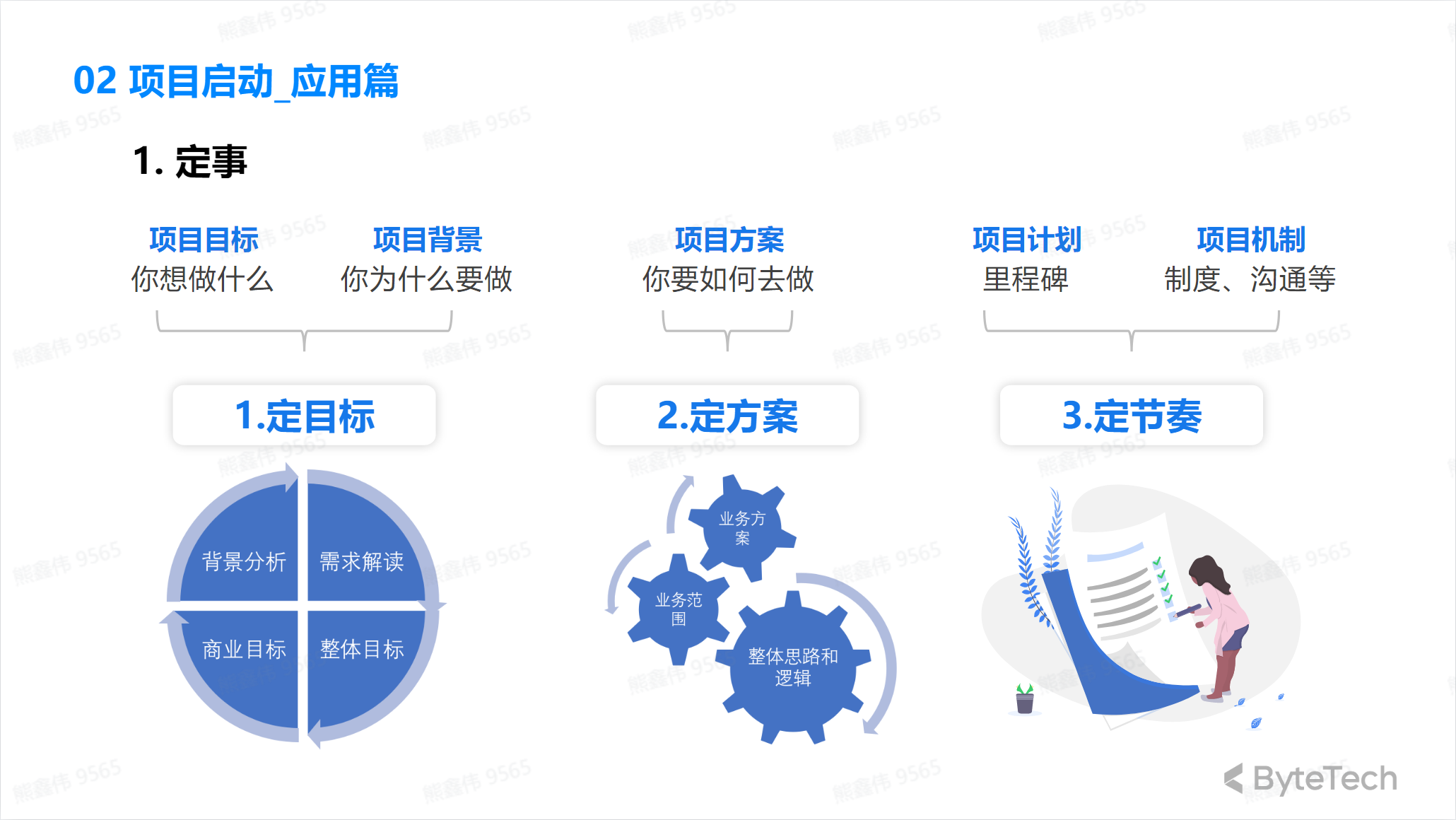
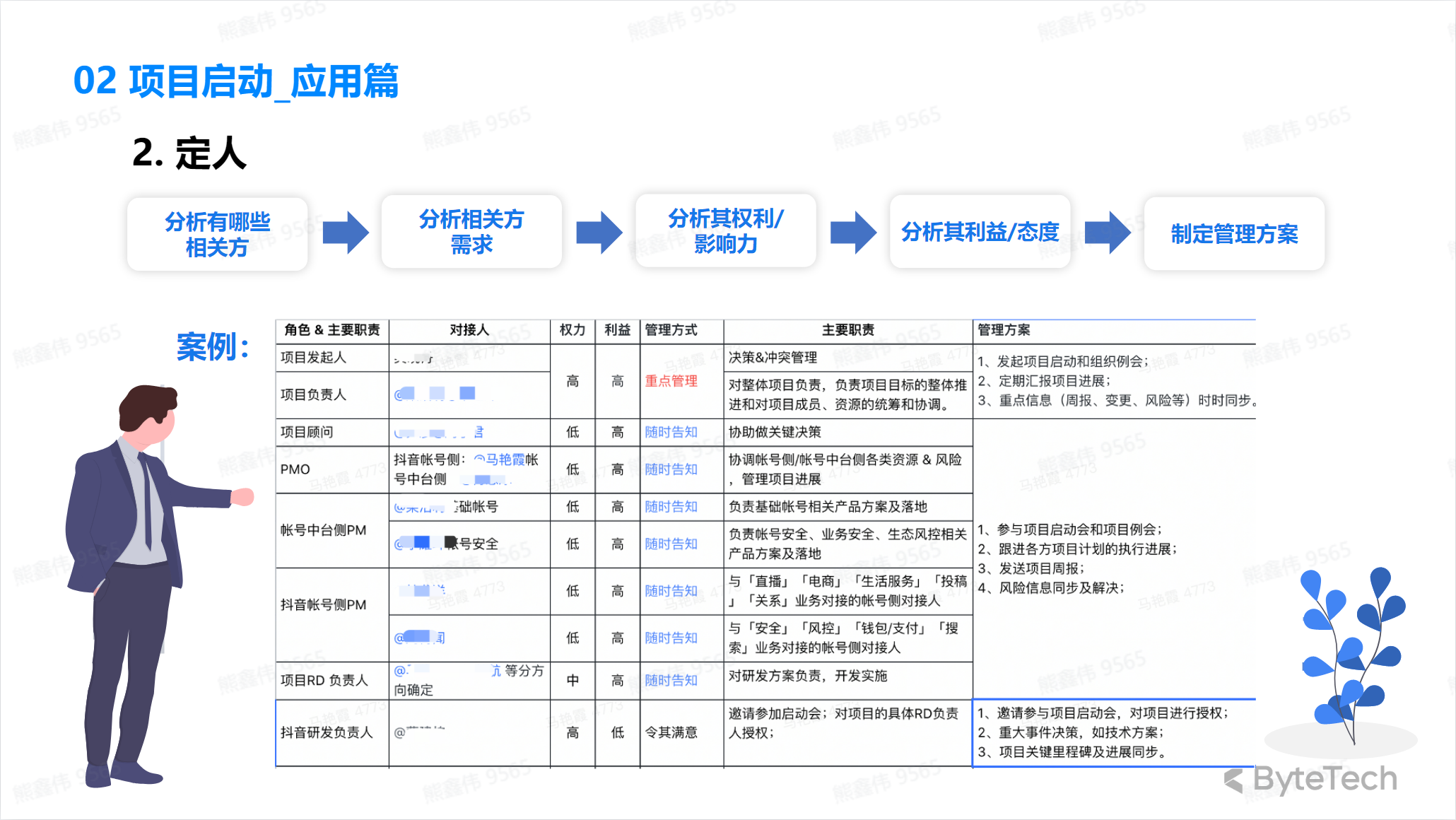
💡A simple case is as follows:
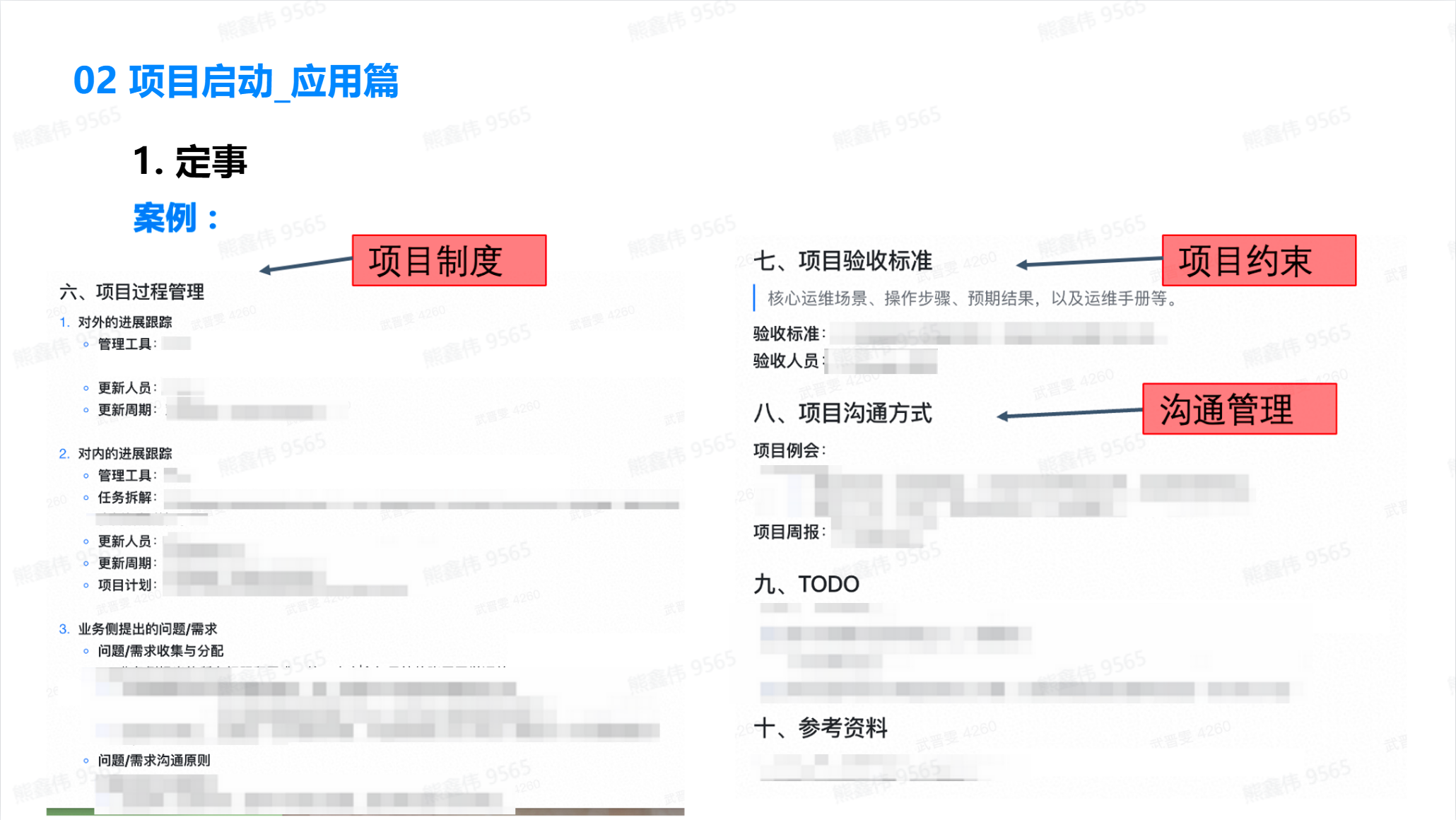
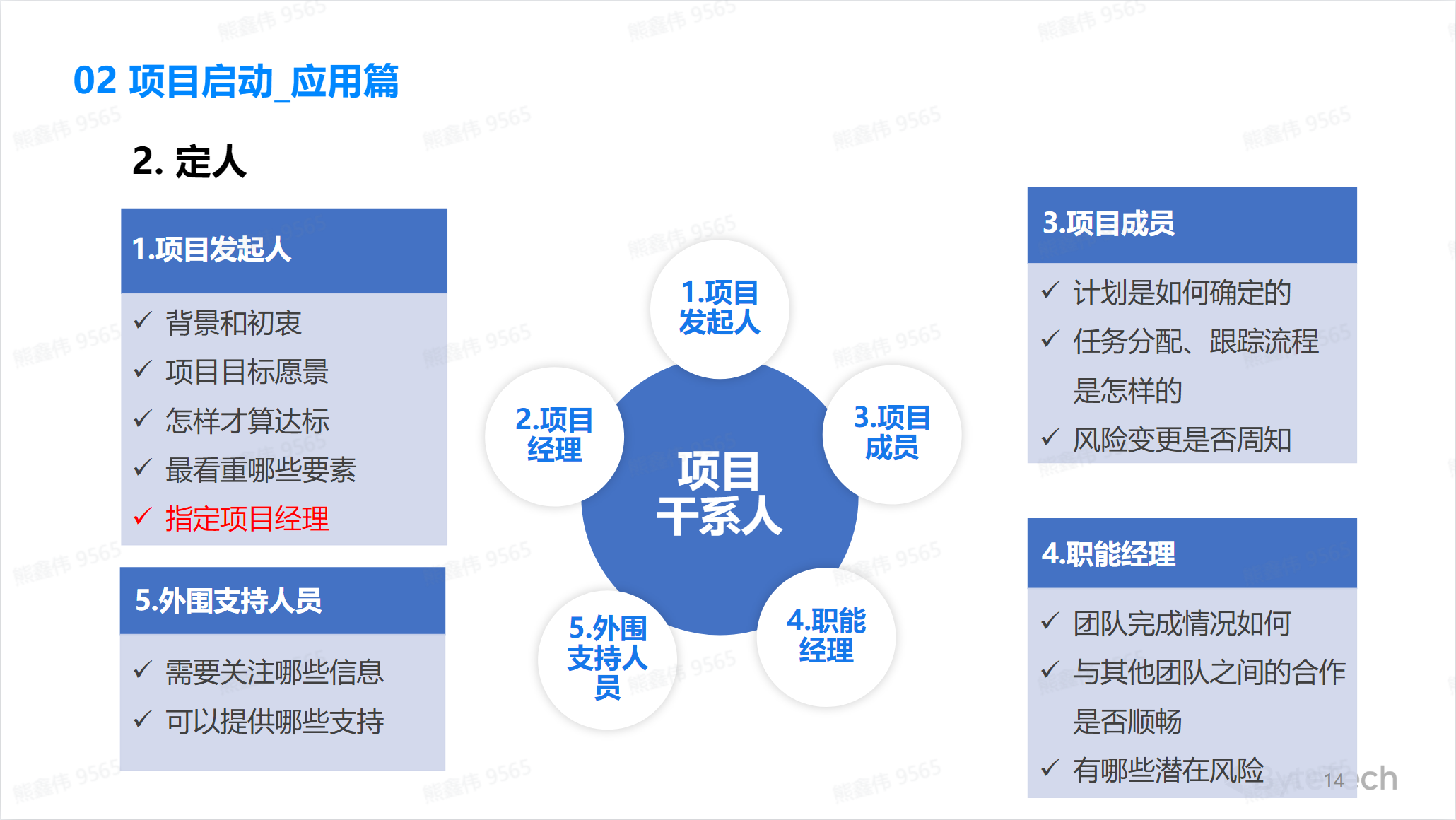
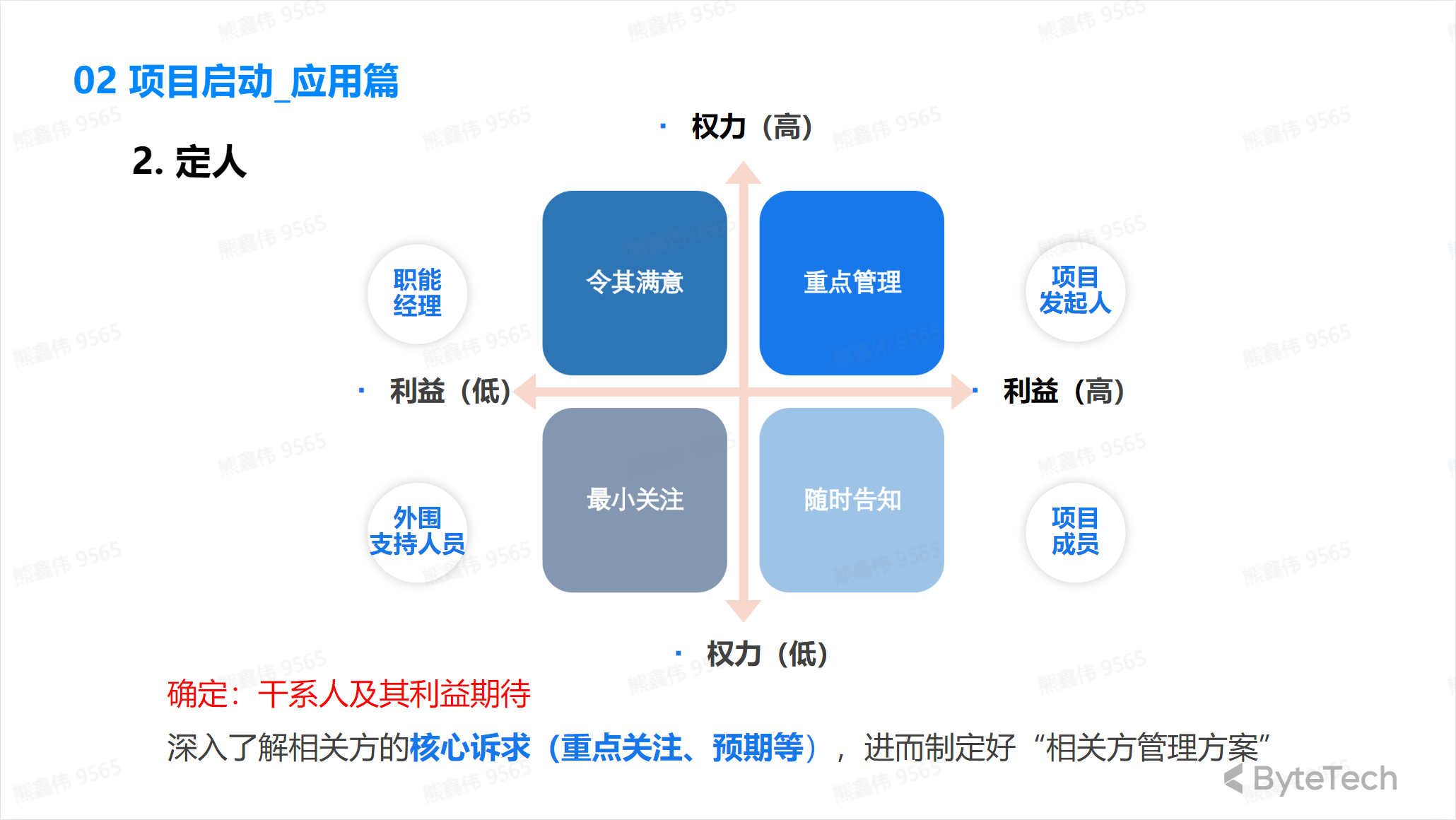
💡A simple case is as follows:
Proof of concept (English: Proof of concept, referred to as POC) is a shorter and incomplete implementation of some ideas to prove its [feasibility](https://zh.wikipedia.org/w /index.php?title=feasibility&action=edit&redlink=1), demonstrate its principle , the purpose is to verify some concepts or theories. A proof of concept is often considered a landmark implementation of a prototype.
In the project life cycle, a POC usually occurs during the planning or beginning stages of a project. During the planning stages of a project, a POC can be used to evaluate the feasibility and cost-effectiveness of a new technology to determine whether to use it in the project. If the POC results indicate that the new technology is feasible and meets project needs, then more comprehensive implementation can occur during the initial stages of the project.
A POC can help the project team determine whether the new technology meets the company’s needs and can be successful in practical applications, allowing for a better assessment of technical feasibility and cost-effectiveness during the project planning and initiation stages.
Minimalist Douyin POC proof of concept:
Demand analysis: Analyze the user needs of the minimalist version of Douyin application and determine the function and performance requirements of the application.
Technology selection: Select technologies suitable for application development, such as languages, frameworks, etc.
Develop a prototype: Develop a prototype of the application based on demand analysis and technology selection, and determine the application interface and interaction method.
Build POC: Develop POC based on the prototype to ensure that the application can meet user needs and performance requirements.
Test verification: Test the POC to verify whether the function and performance of the application meet the requirements.
Evaluate the results: Evaluate the results of the POC to determine whether to continue developing the application.
Documentation: Record the process and results of the POC for future reference.
Optimize the plan: If the POC results are feasible, formulate a plan to improve the application and determine the actual development tasks and progress.
Execution plan: Execute the project according to the plan, using the results of the POC as a basis.
Continuous monitoring and management: Continuously monitor and manage the progress and quality of the project during the project implementation process, and adjust and control the project in a timely manner.
Project closure: Complete the project and archive the project files.
Feedback and improvement: Improve the project based on the feedback results after the project is completed, and record it for future reference.
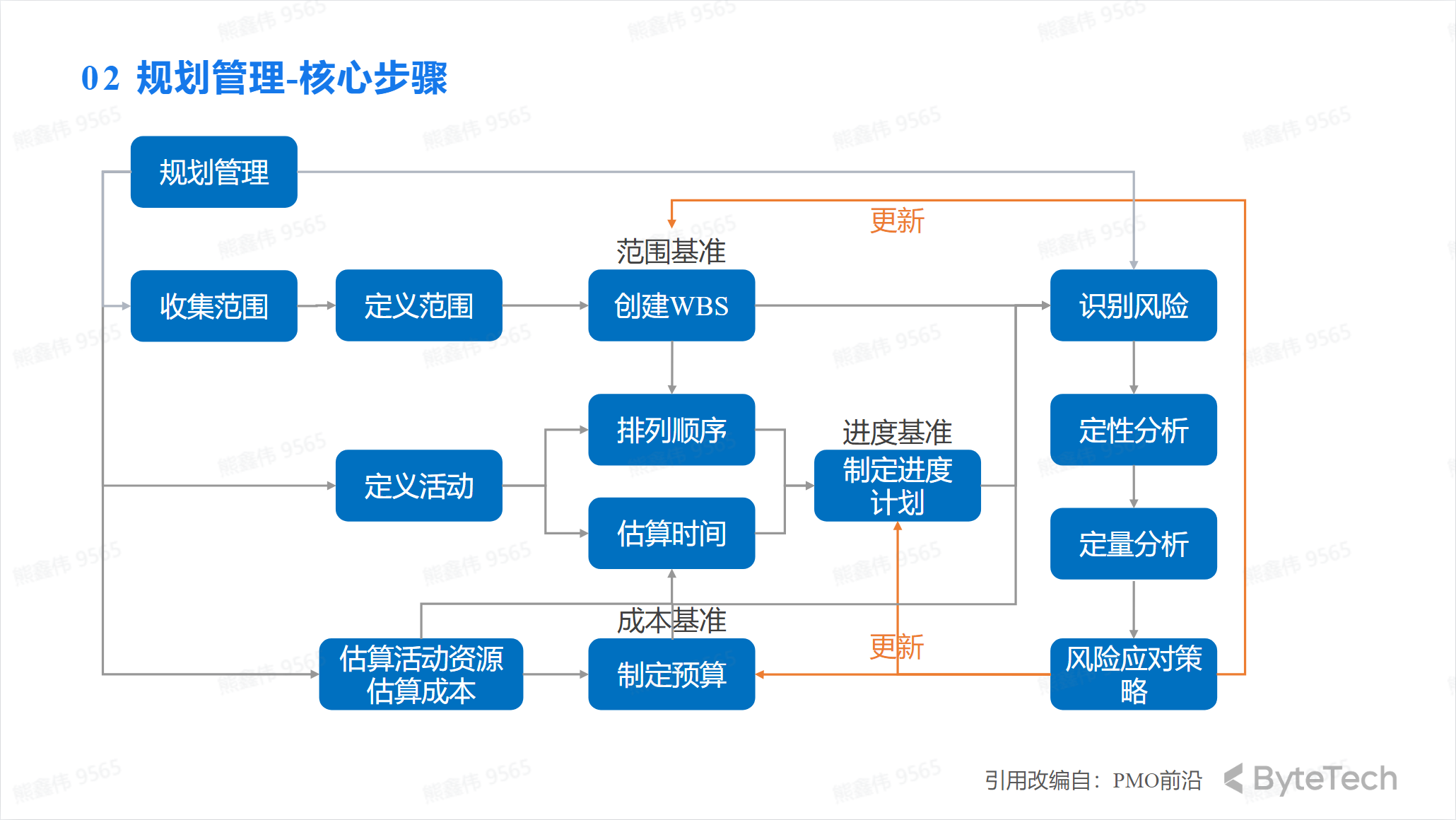
Project planning is an important part of project management and is the key to project success. Developing a project plan requires following these steps:
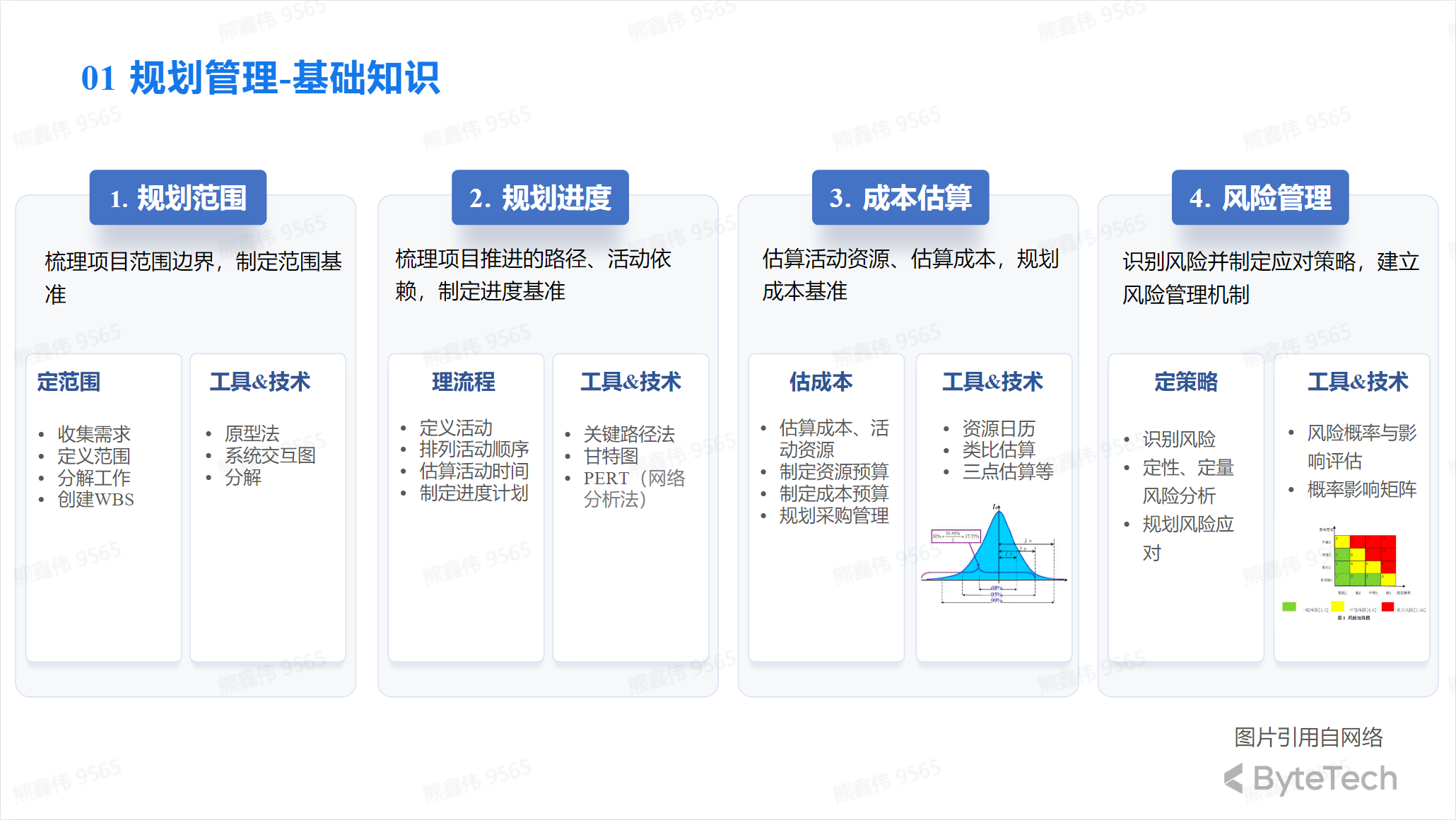
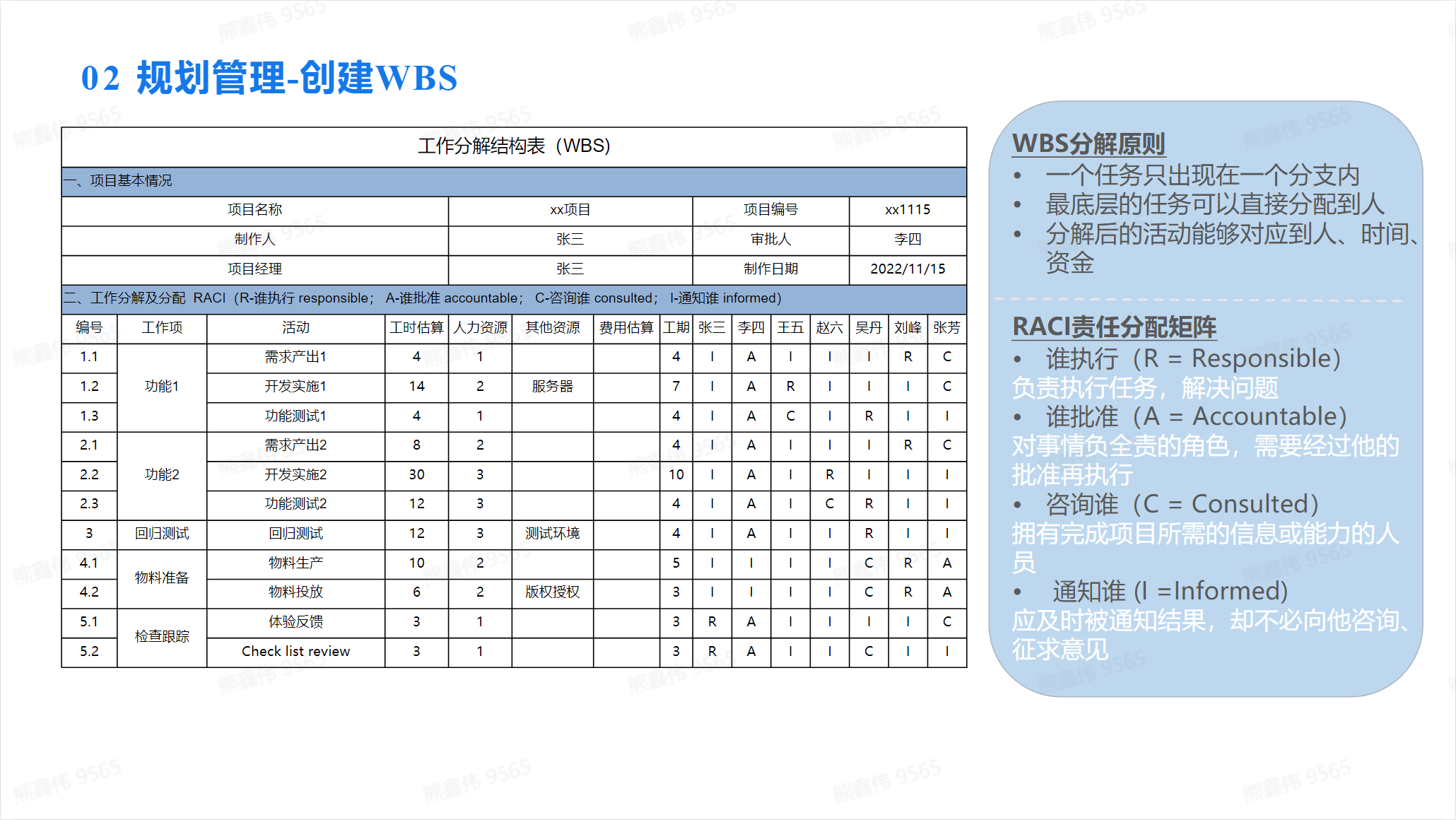
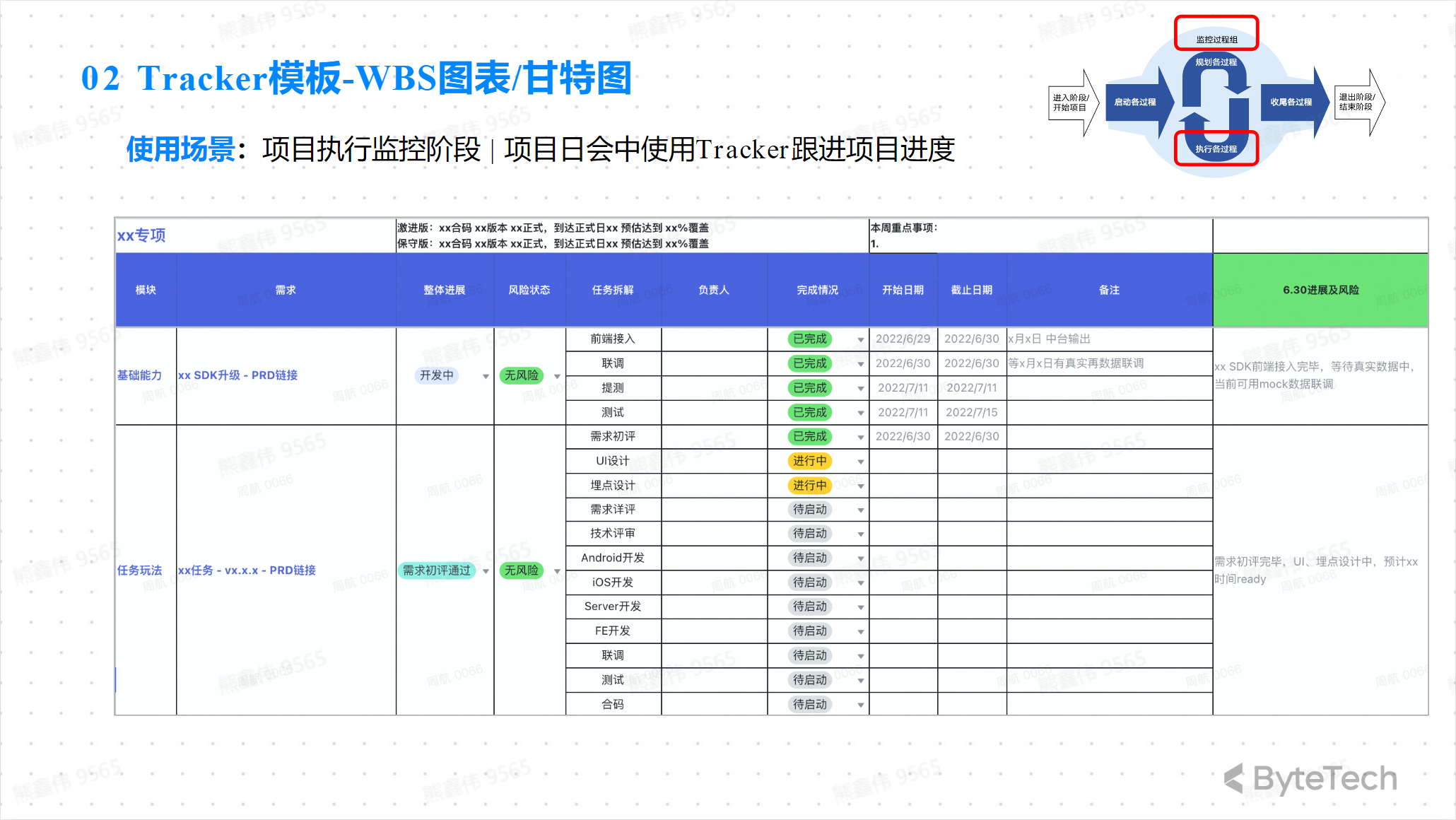
WBS (Work Breakdown Structure) means work breakdown structure. It is a tool for organizing and managing project tasks, helping project organizers better control the progress and quality of the project by dividing the overall goal of the project into smaller, manageable parts.
The WBS is usually organized in the form of a tree structure, with the overall goal of the project at the top, and the subtasks decomposed below, and so on. The tasks at each level are subdivisions of the tasks at the previous level. The purpose of this is to ensure that each sub-task can be completed independently, and also to track the overall progress of the project.
WBS can help project organizers better understand the scope, schedule and risks of the project, and can be used to determine the project’s resource requirements and schedule tasks.
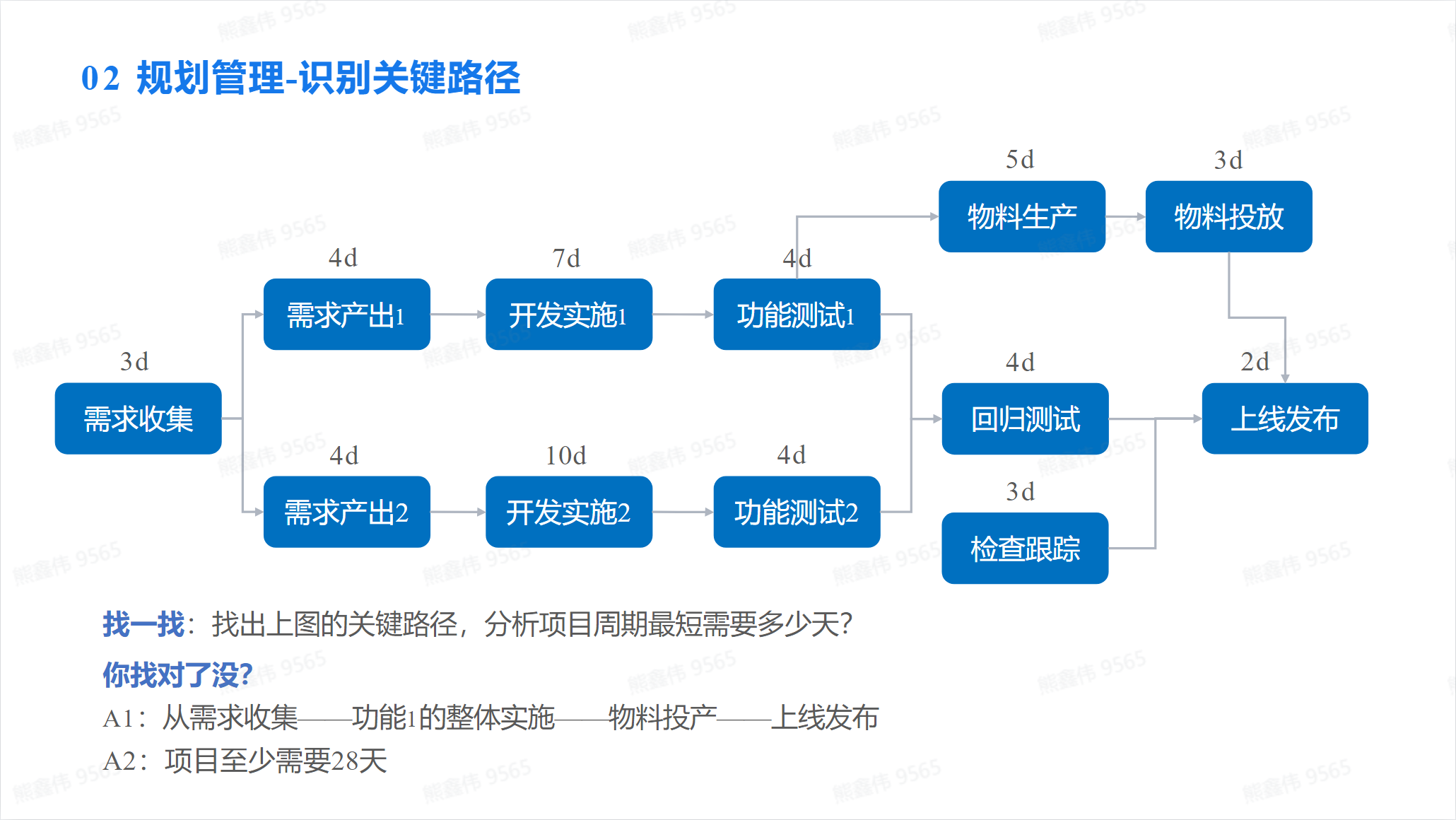
The project planning chart can calculate the project development cycle, which is clear at a glance~
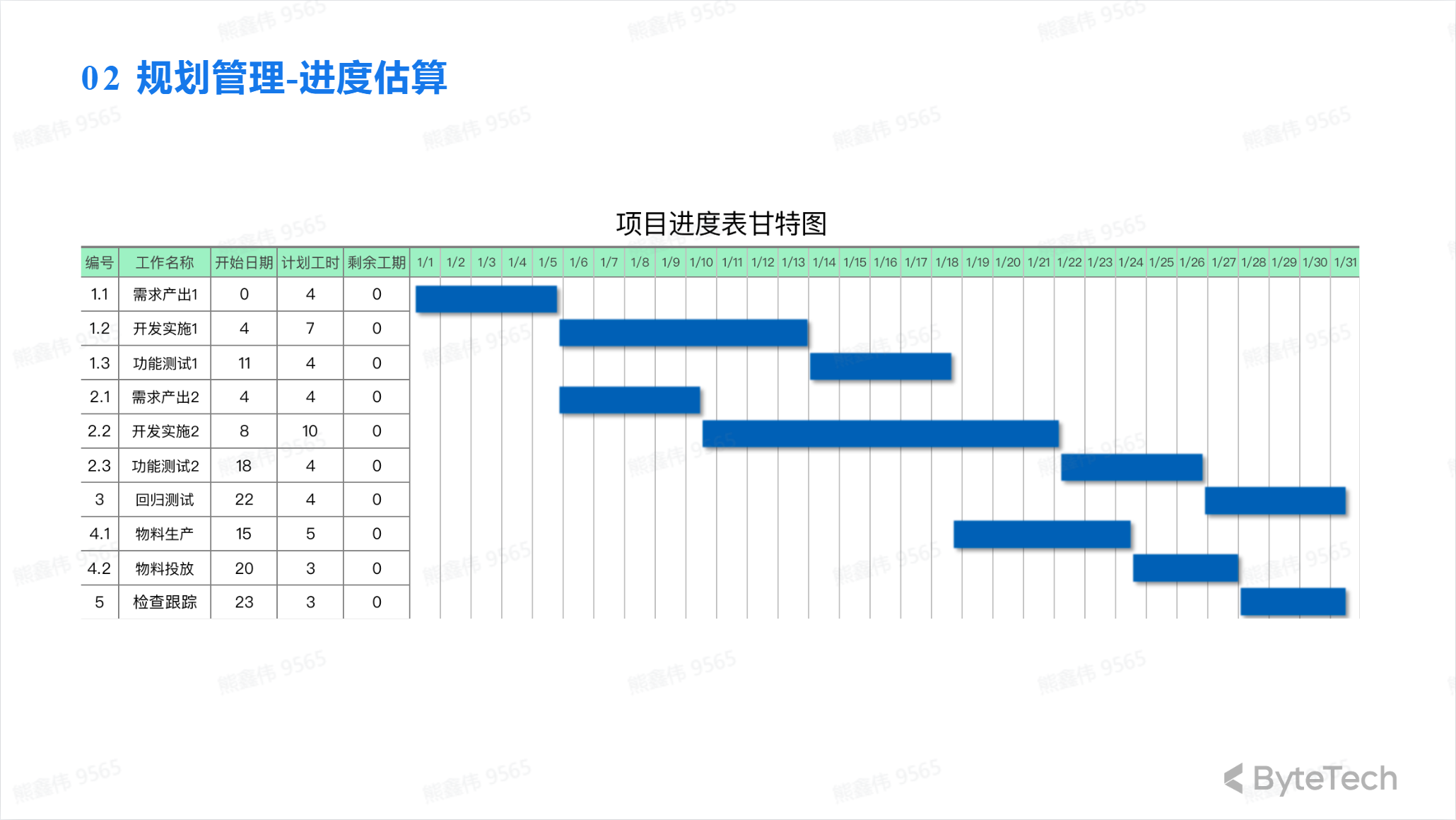
Gantt chart is a project management tool used to represent the progress and resource allocation of a project. It is a graphical tool that usually consists of a horizontal timeline and a vertical task bar.
On a Gantt chart, each task corresponds to a horizontal bar indicating the task’s start time and end time. By looking at the Gantt chart, you can easily understand the progress of the project, the dependencies between tasks, and resource allocation.
Gantt charts can help project organizers better grasp project progress, adjust project plans, and better control project progress and resource allocation. At the same time, it also allows other members of the project to better understand the progress of the project.
[[MVP version]]:
The concept of MVP is a concept proposed by Eric Ries in “Lean Startup”. Simply put, it means that the development team obtains user feedback by providing a minimum viable product, and continues to iterate rapidly on this minimum viable product until the product reaches a relatively stable stage. . MVP is very important for entrepreneurial teams, as it can quickly verify the team’s goals and enable rapid trial and error.
Project background: With the company’s strategic development needs, business A must initiate key projects
Project content: Based on the existing capabilities of xx company, a new APP is developed and released in a new national market.
Project Goal: Complete MVP version APP development in 5 months
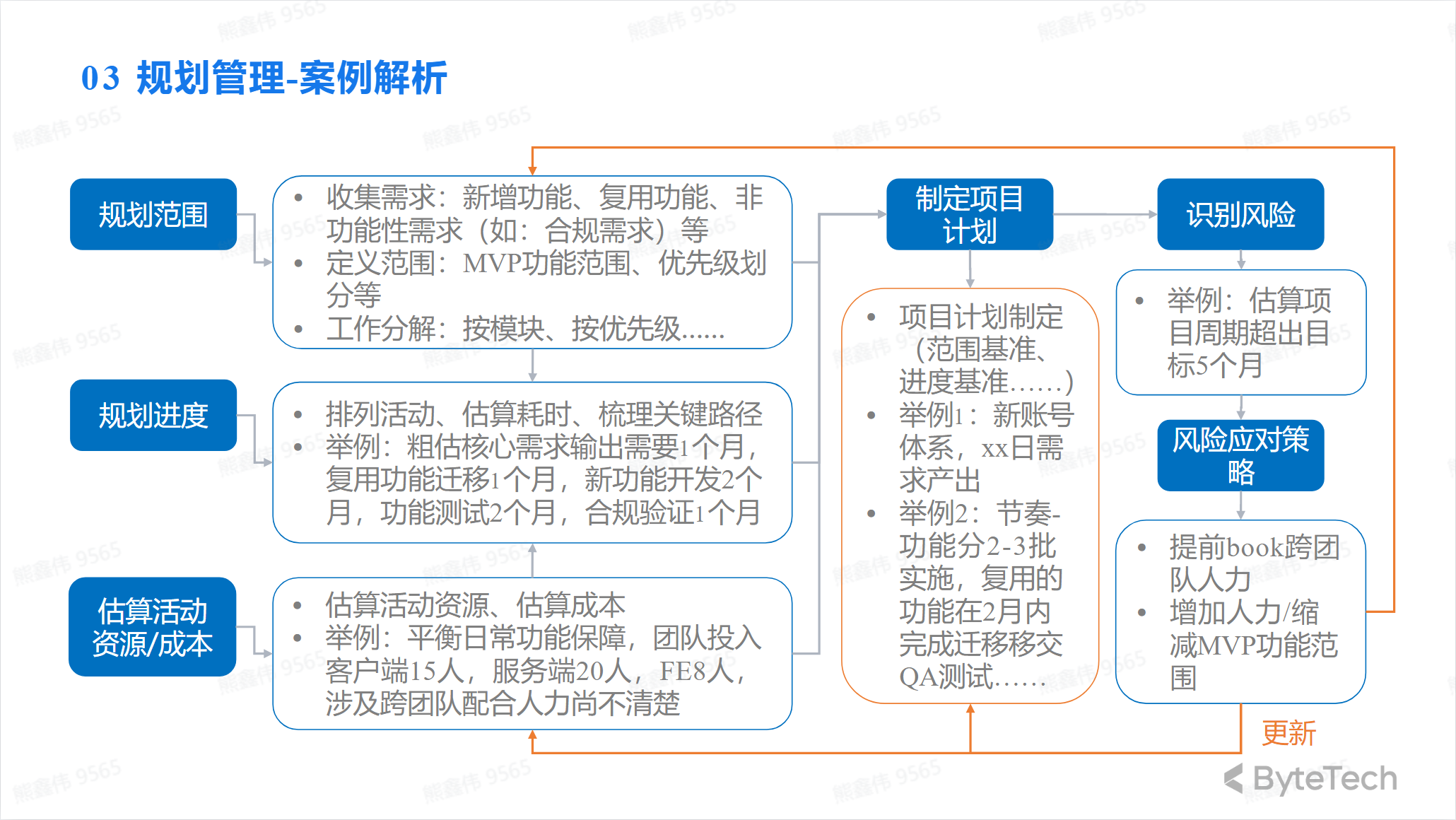
Some nouns:
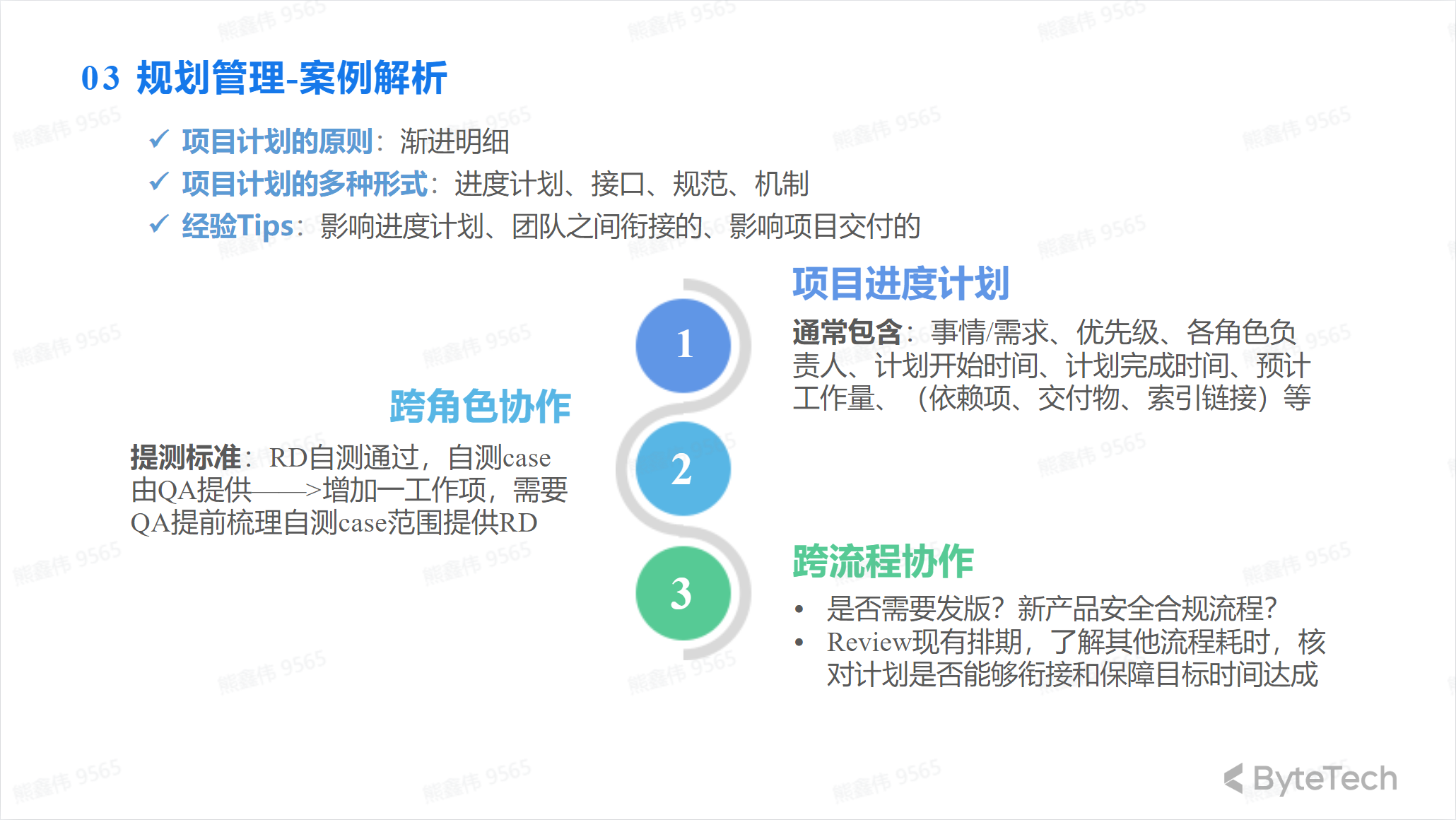
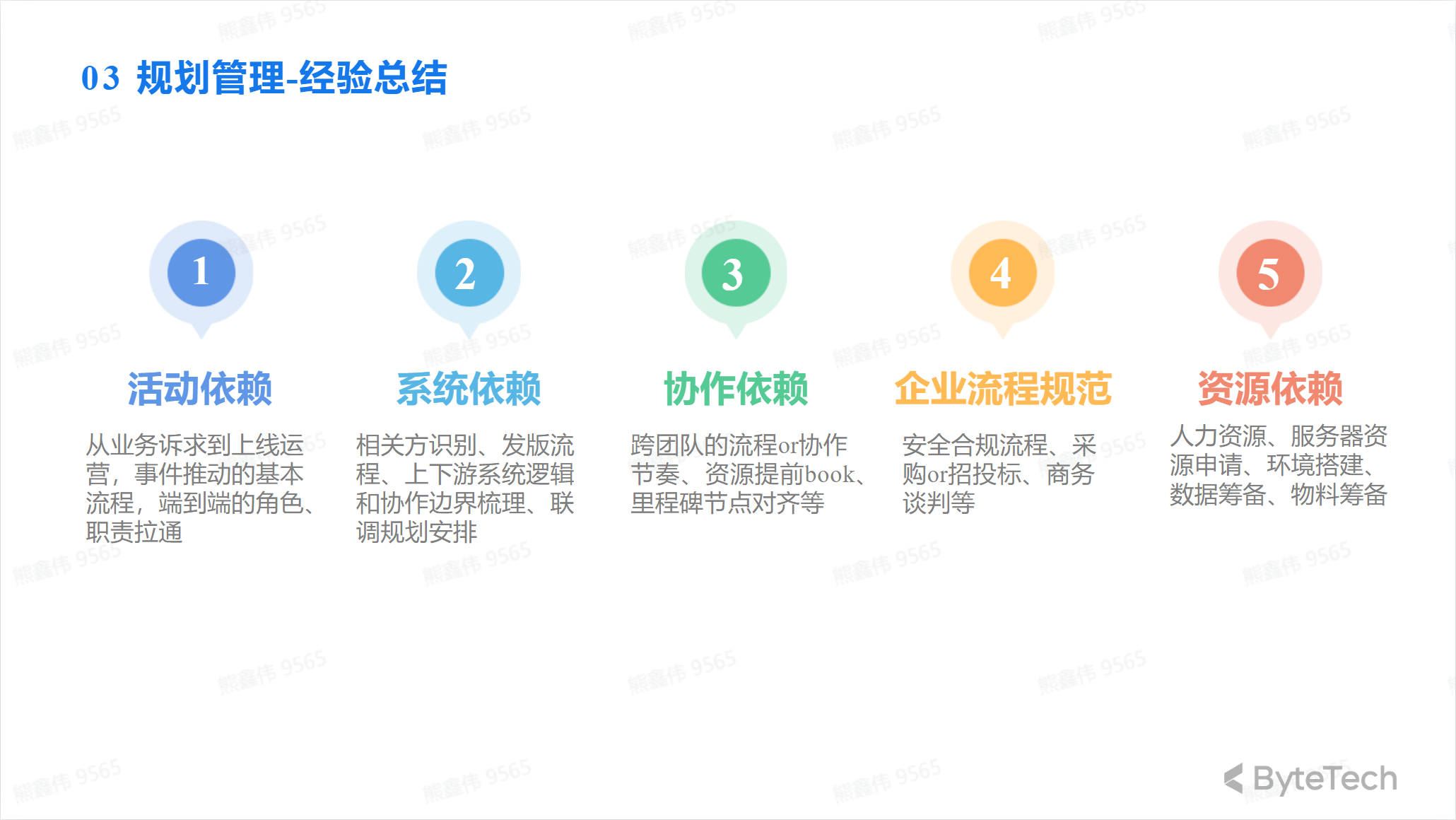
When you need to ensure efficient follow-up, pay attention to the following aspects:
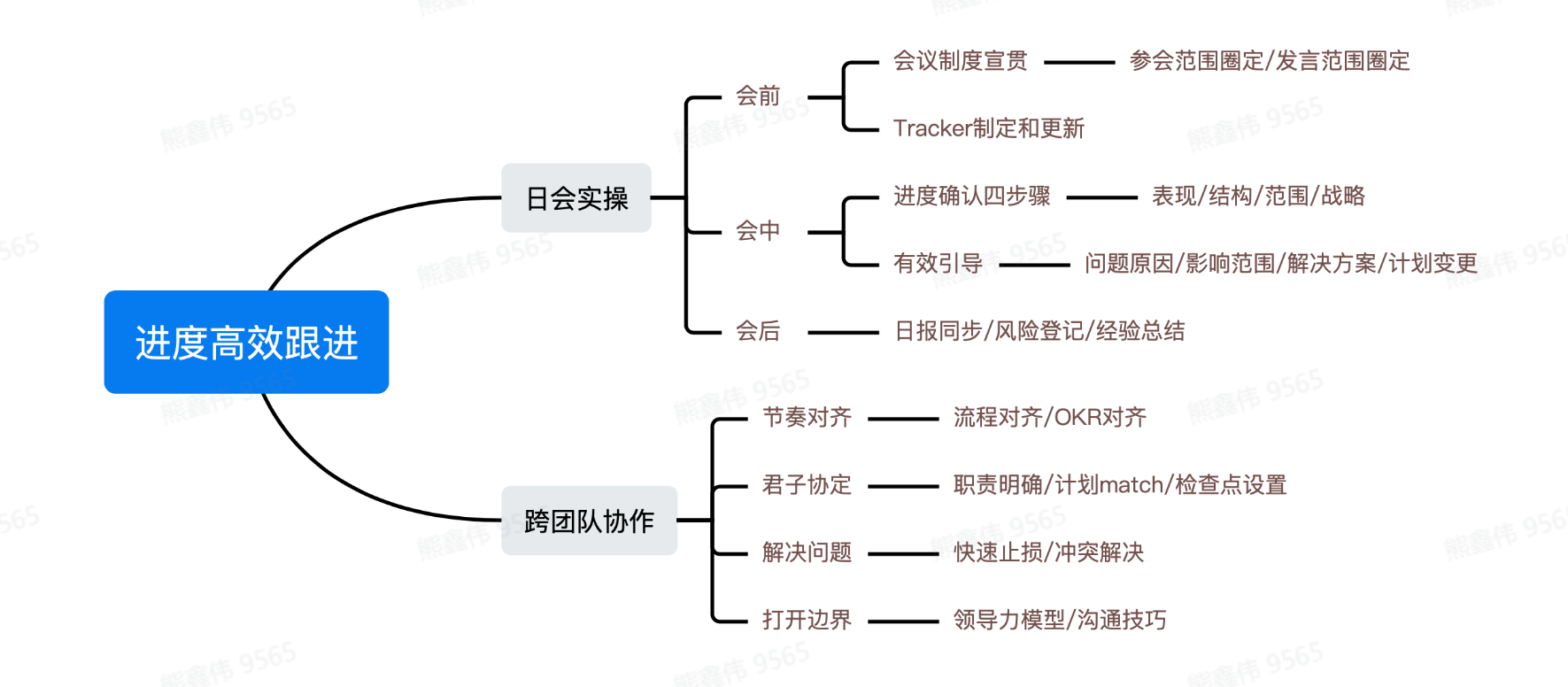
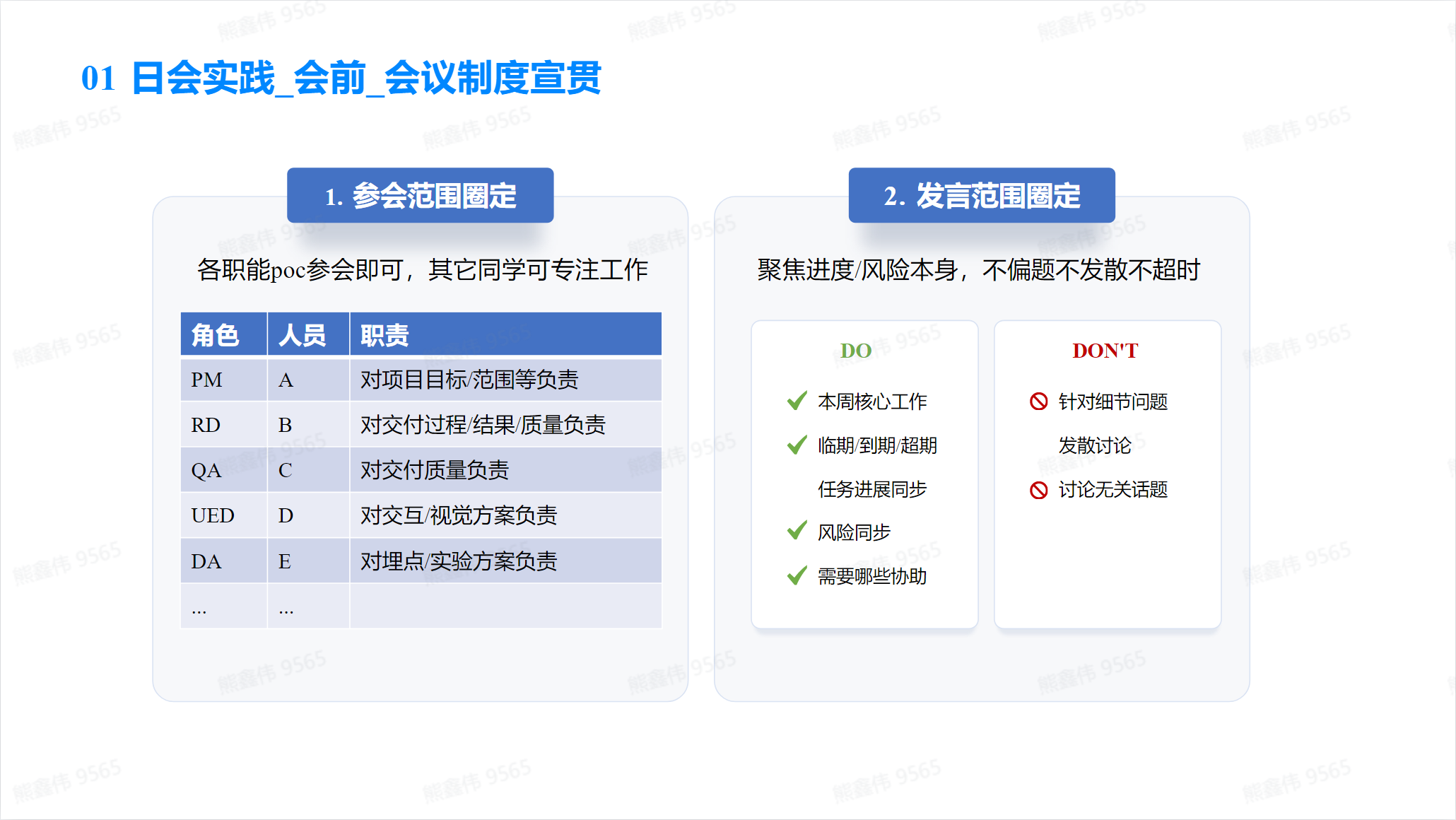
**Meeting time is very important, don’t waste other people’s time, there is no need to hold a group meeting if it can be solved in an individual meeting. **
Specify template and plan before meeting:
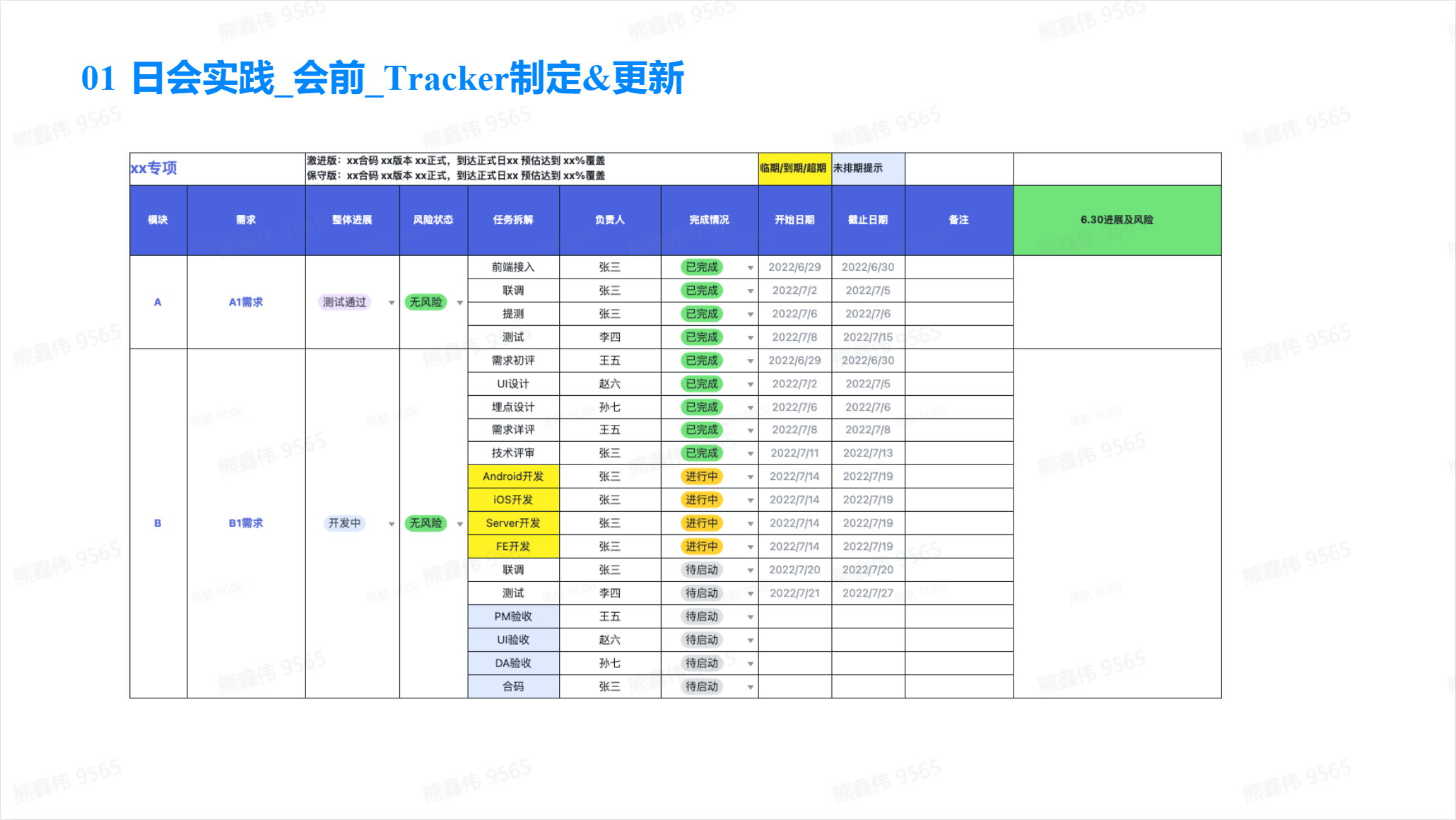
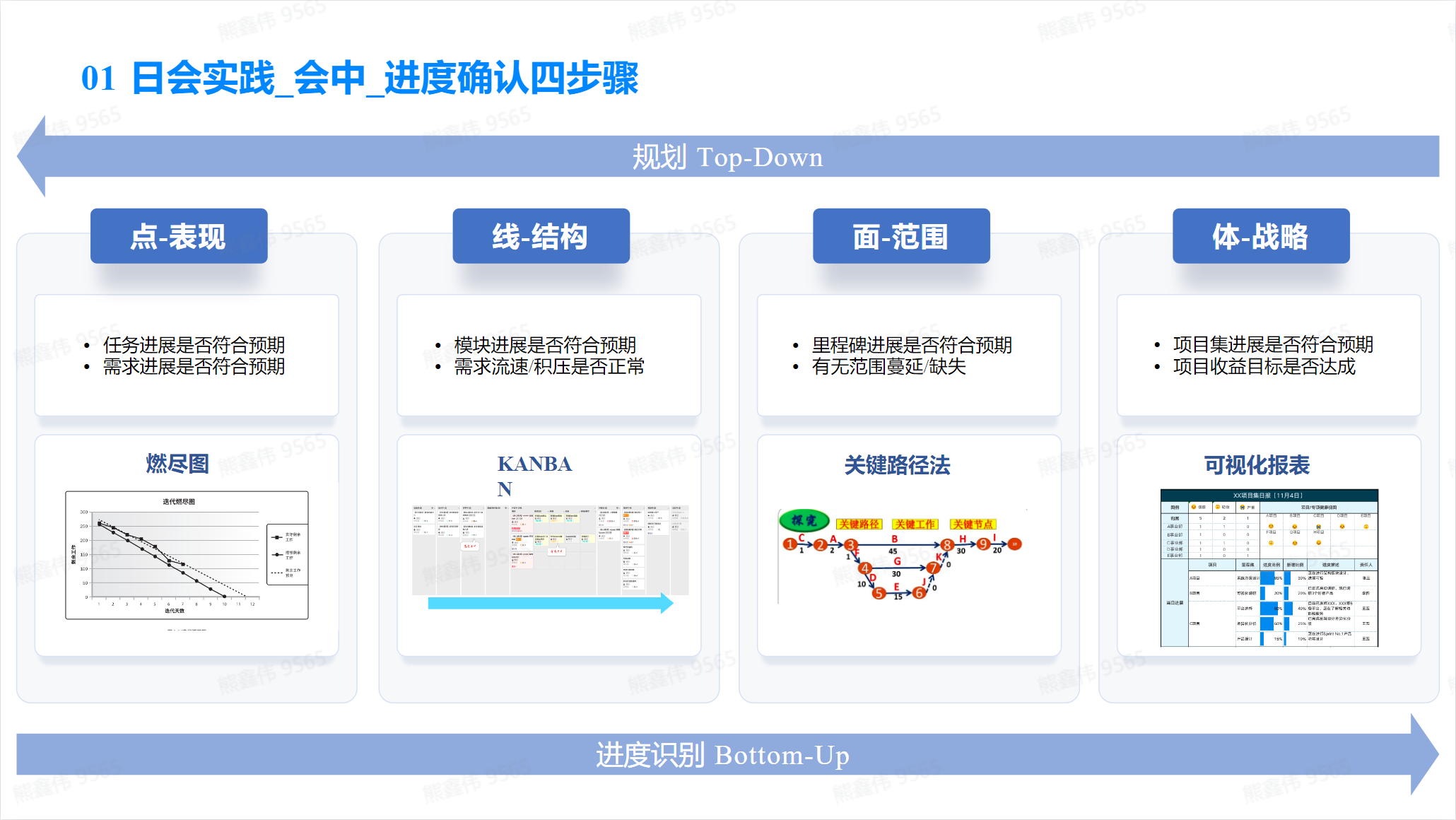
**In the open source community, I often see two methods of meeting guidance. One is the issue and solution of the specified meeting in GitHub Dicussions. The second is to collaboratively write meeting summaries and plans in Google Docs, nothon or Feishu documents. **
We should note:
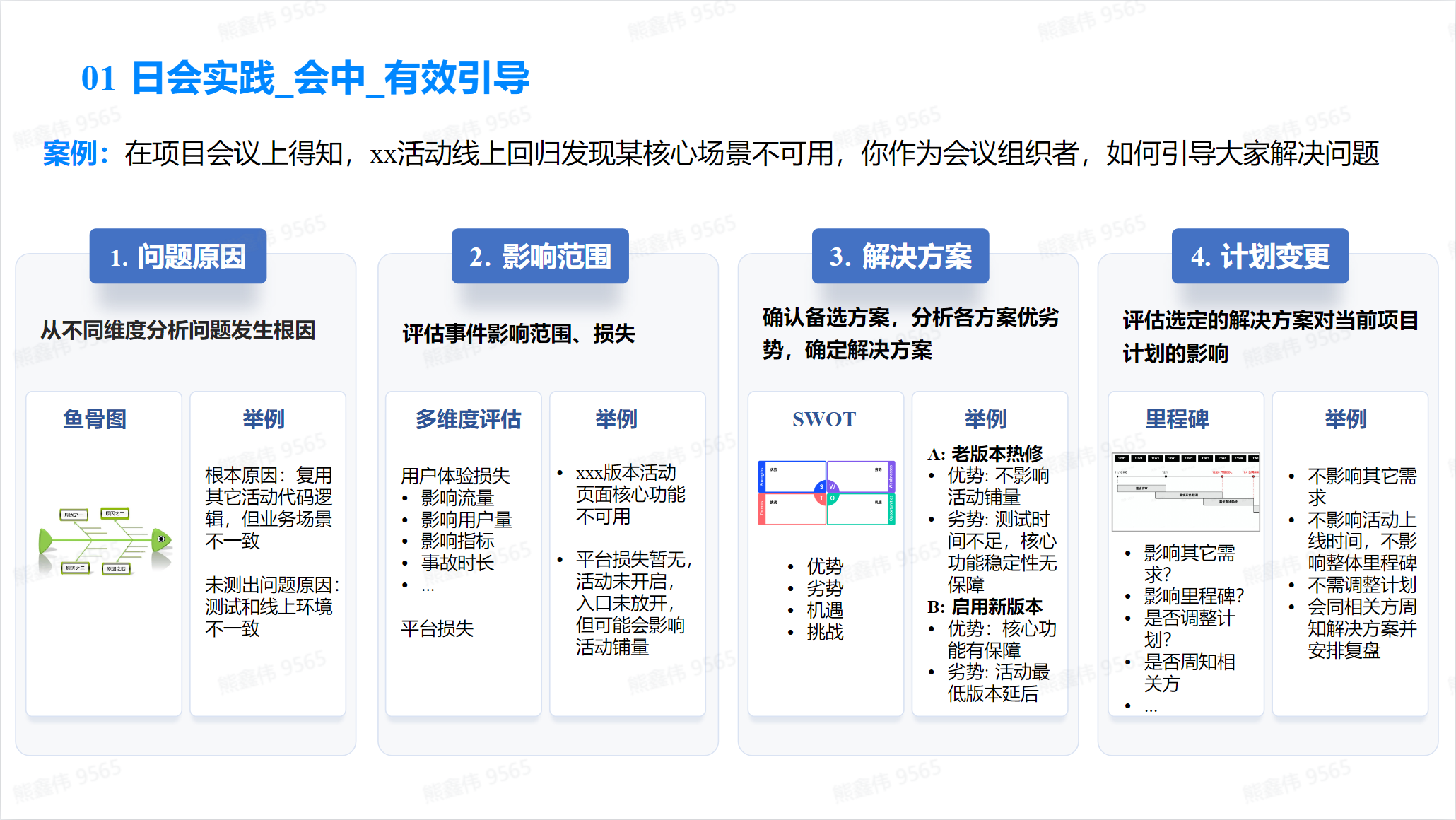
After the meeting, meeting minutes need to be sent, including:
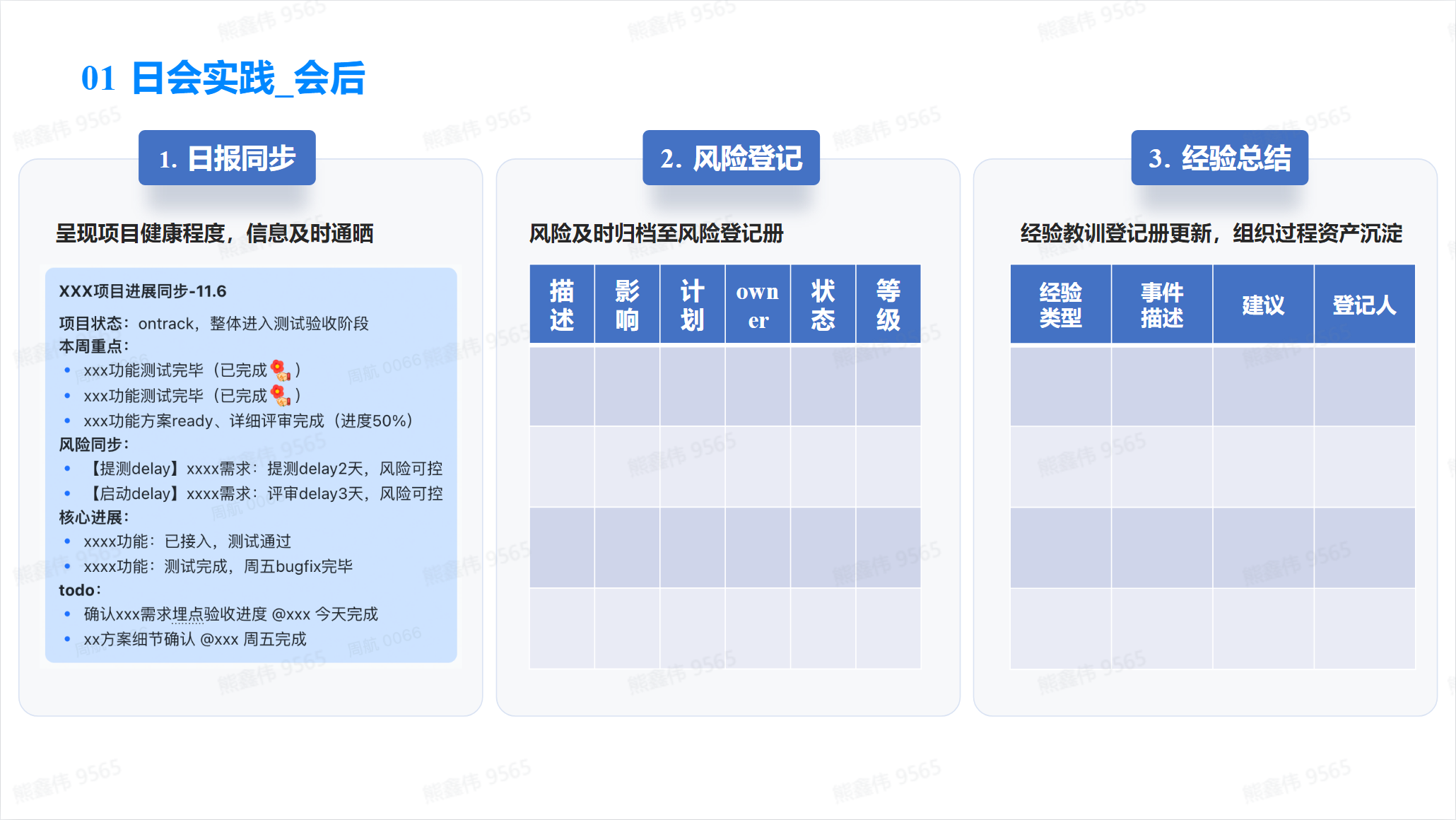
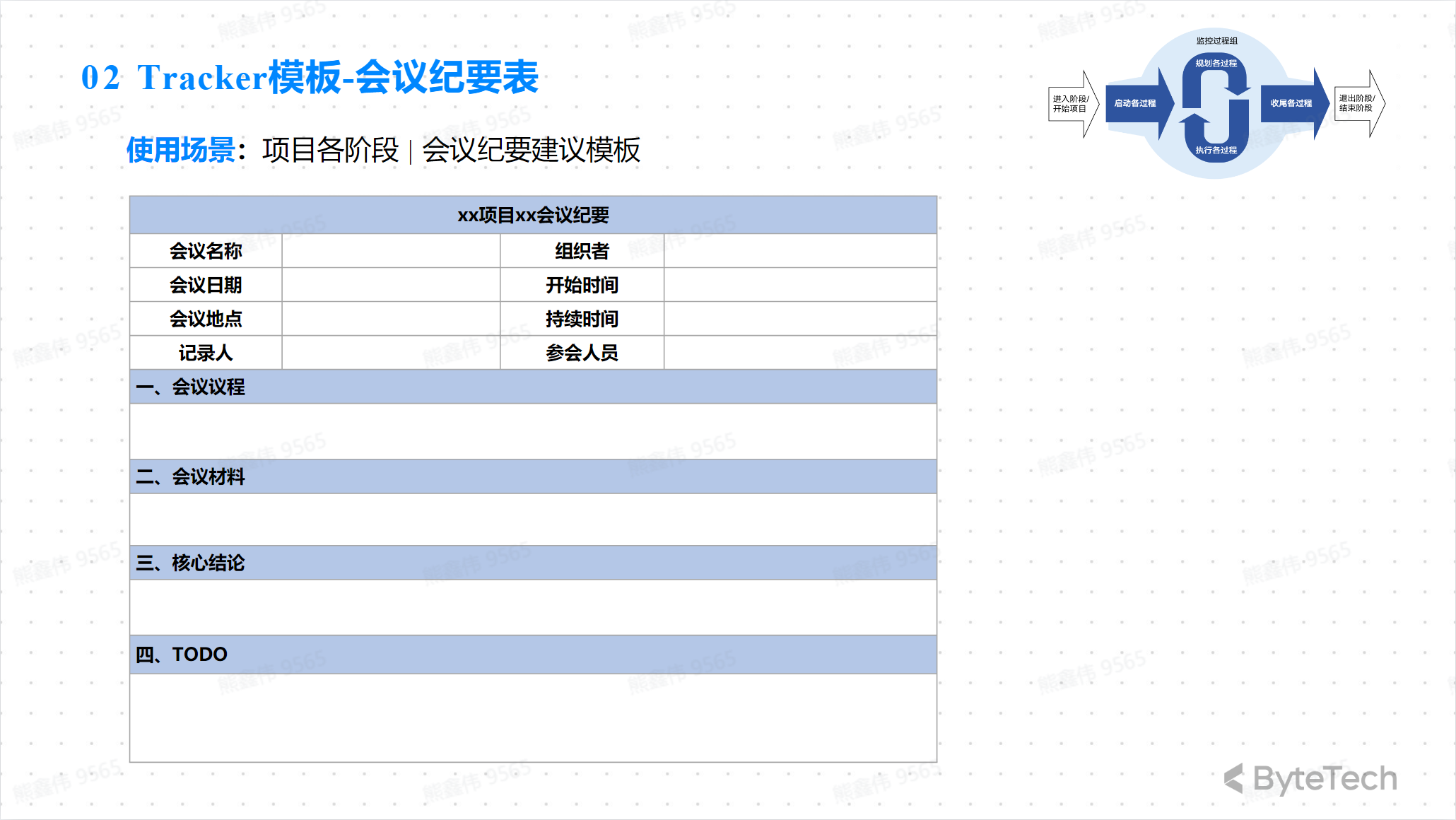
**🔍 The following is a meeting minutes template: **
Conference theme: [Conference theme]
Meeting date: [meeting date]
Meeting place: [meeting place]
Participants: [List of participants]
Meeting agenda:
Meeting minutes:
[Issue 1]
[Issue 2]
[Issue 3]
action plan:
The next step of the job:
Meeting end time: [meeting end time]
Next meeting time: [next meeting time]
Minute writer: [Minute writer]
Contact information: [Contact information]
Please complete the [Action Plan] by [Deadline] and report on progress at the next meeting.
Meeting minutes should be sent to all participants as soon as possible after the meeting so that they can understand the progress and results of the meeting and ensure that they have completed their work according to the requirements of the action plan.
In addition, before the next meeting, ensure that all action plans are completed and reported during the meeting. If there are any problems or delays, they should be reported to the project manager as early as possible.
[[OKR]]:
OKR (Objectives and Key Results) is an objective management method, a process in an organization to define goals and indicators and achieve them.
It consists of two parts:
- Objectives: Objectives are the results that the organization wants to achieve. It should be clear, specific, measurable, and challenging.
- Key Results: Key results are the specific indicators that need to be achieved to achieve the goal. It should be measurable and can be tracked and evaluated in some way.
The purpose of OKR is to help organizations better manage goals and results and achieve goals through continuous tracking and evaluation. OKR can help organizations better manage goals and results, better control project progress, and better evaluate project effectiveness. The OKR method is often used for enterprise-level goal management and is implemented differently in different companies and organizations.
The advantage of OKR is that it helps organizations better position and track goals and better evaluate project effectiveness. The OKR approach also helps organizations communicate and coordinate better, and can improve project team motivation and performance.
However, if OKRs are not implemented carefully or properly supported, it can lead to project deviation or failure. Therefore, when implementing OKR, you need to ensure that there is a good management team to organize and supervise the implementation process to ensure that all goals and key results are reasonable and can be effectively tracked and evaluated. In addition, it is also necessary to ensure that all employees and teams can understand and support the goals and methods of OKR to ensure that OKR can be effectively implemented.
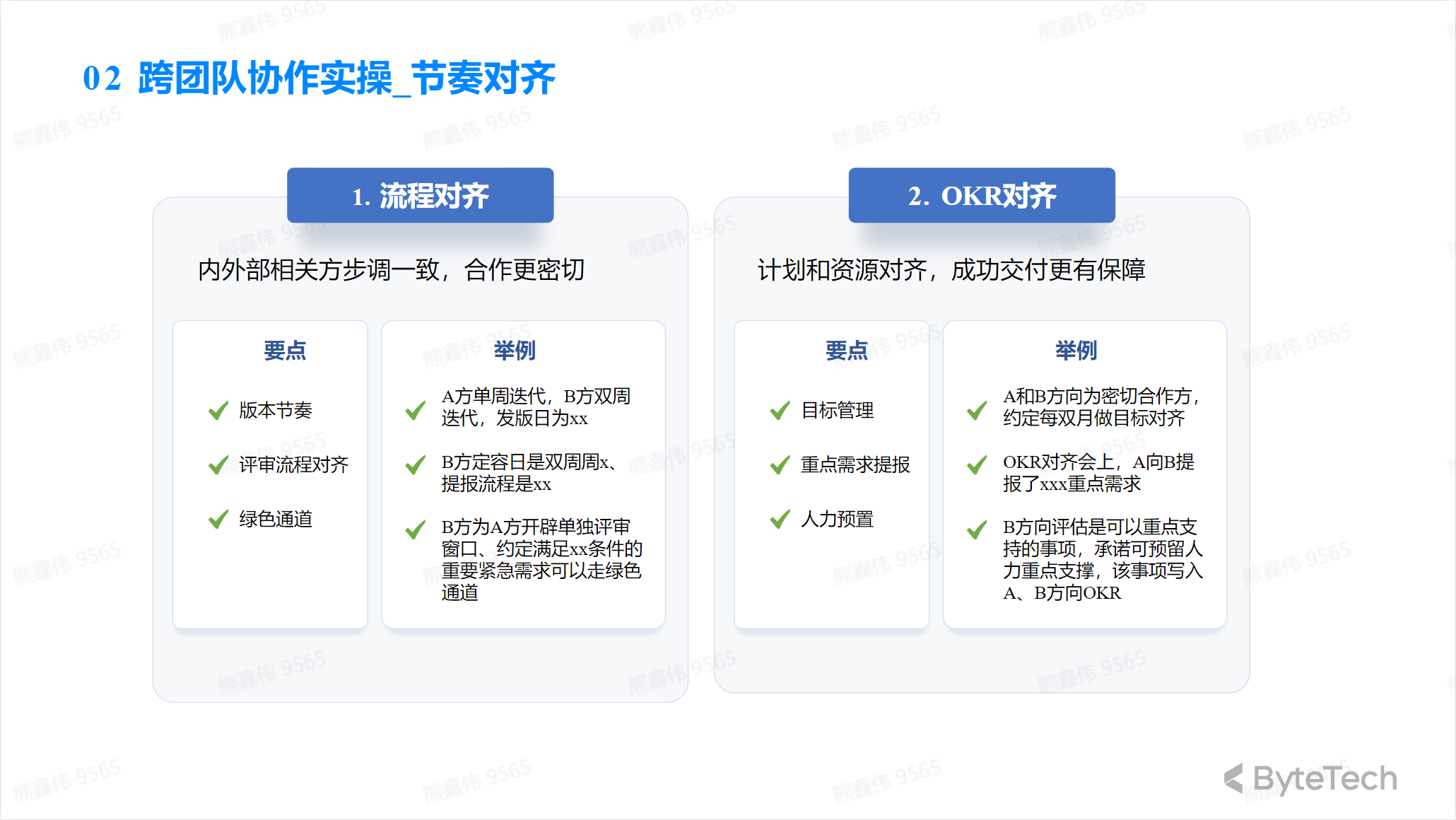
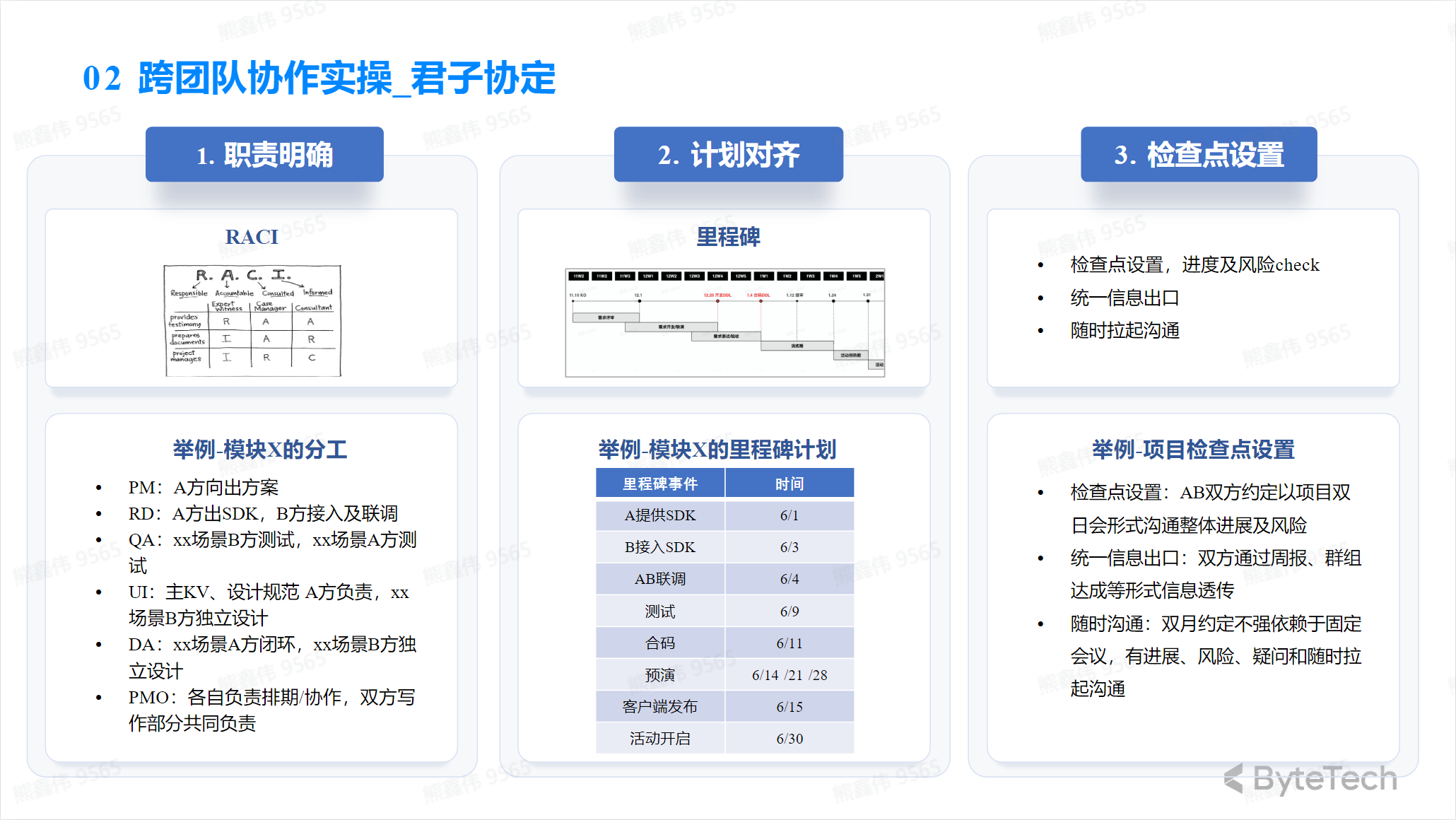
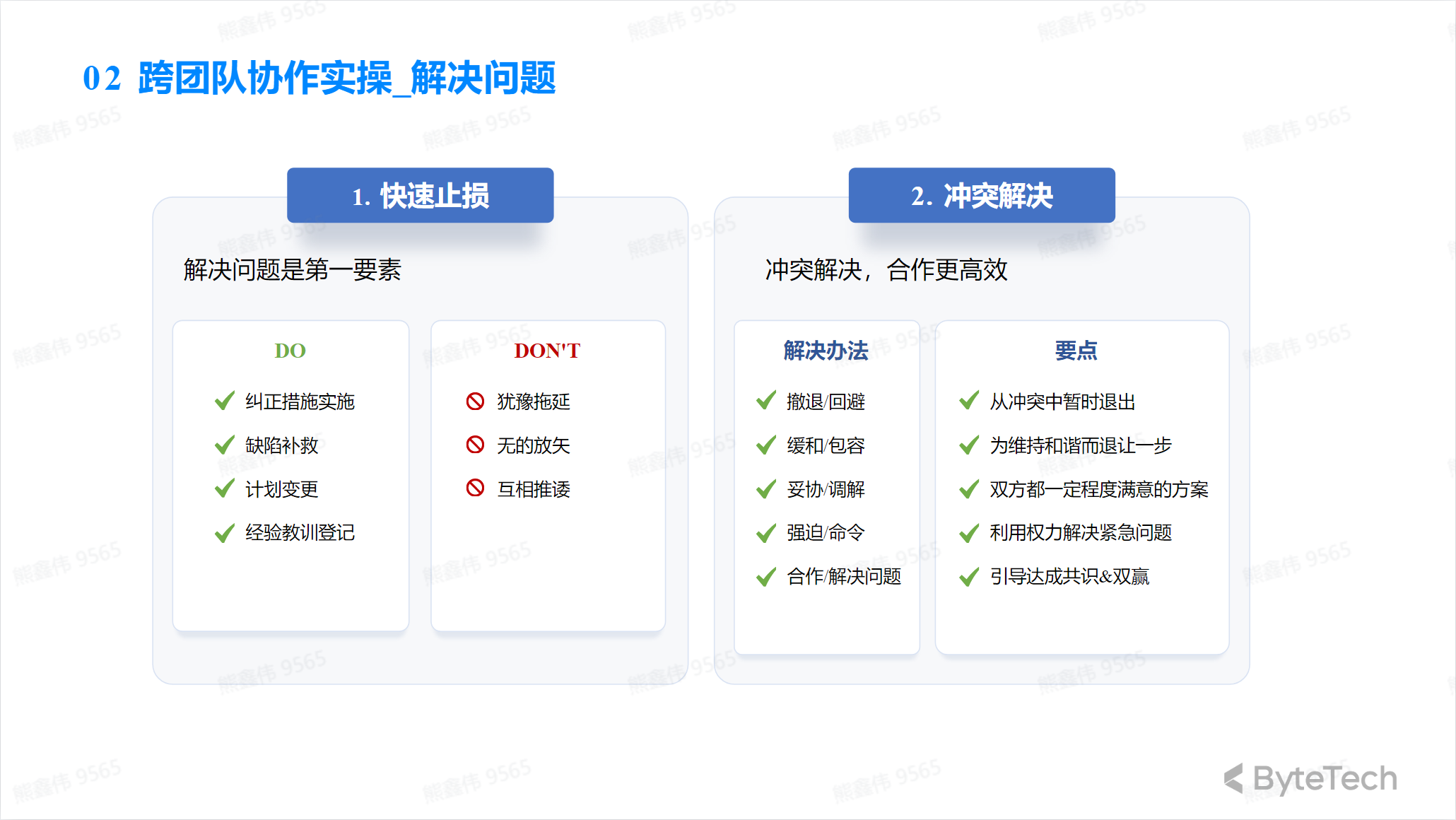
“Gentleman’s Agreement” refers to the rules and guidelines agreed between project participants in project management. These rules and guidelines can help ensure that the project runs smoothly and that communication and collaboration between project members are effective.
A gentleman’s agreement may include the following:
It is important to ensure that all project members follow gentleman’s agreements and that these agreements are valid and can help the project be completed smoothly.
Open borders:
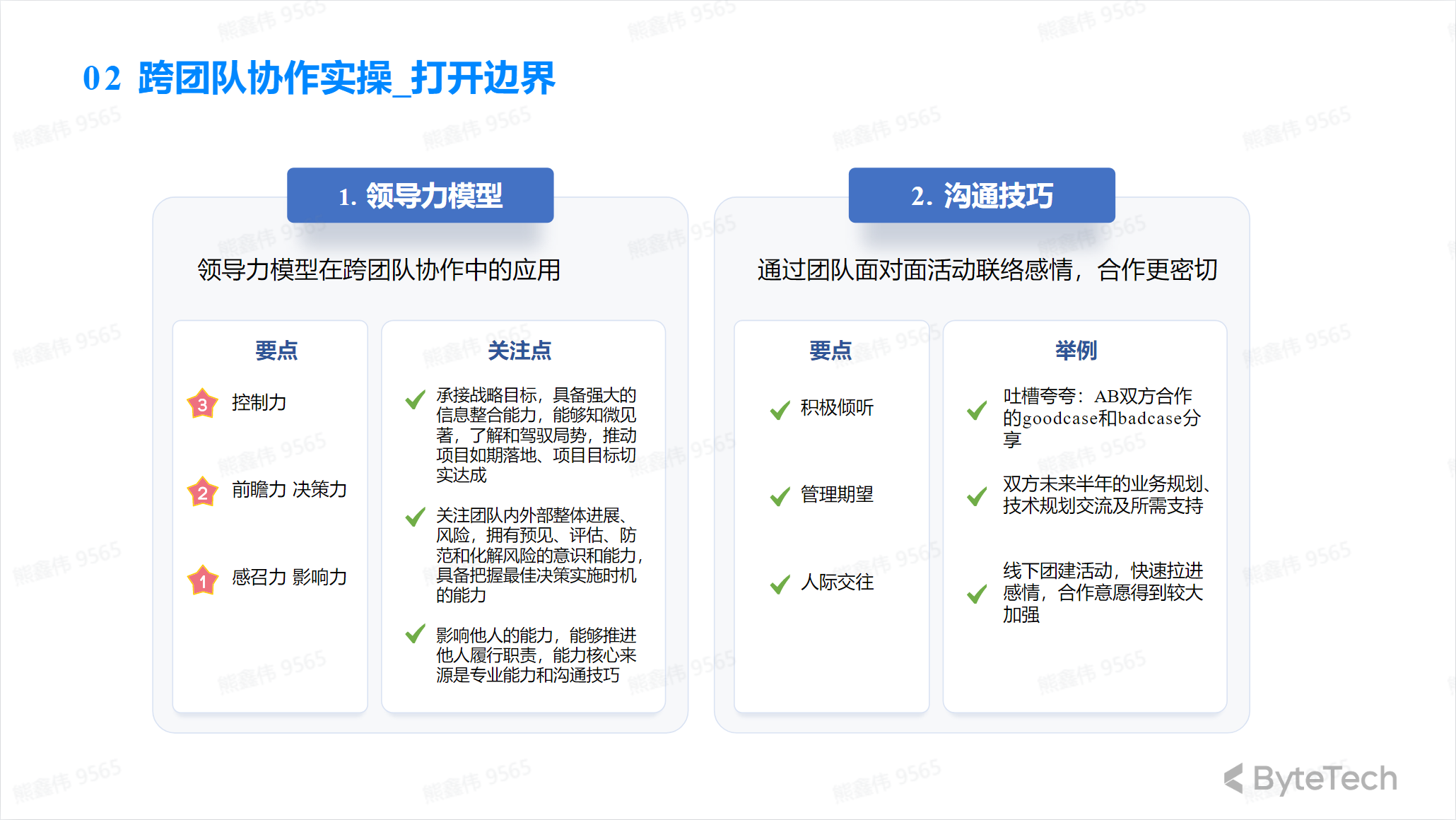
🎈 **What never changes is change itself. Face changes squarely and face them with a positive attitude. **
The execution phase in project management refers to the process of converting project plans into actual actions. During this phase, the project manager needs to ensure that the project team executes the project plan correctly and manages the project’s schedule and progress.
Embracing change is very important during the execution phase, as the progress of the project is often affected by various factors, causing changes to the plan.
To embrace change, project managers can take the following steps:
Through these steps, the project manager can help the project team better adapt to changes and enable the project to be successfully completed.
In addition, project managers should also cultivate flexibility and adaptability among team members. This can be done by providing training and support within the project to help team members learn to cope with change and find opportunities in change.
All in all, embracing change is a very important point in project management. Project managers need to take effective steps to deal with changes and help the project be successfully completed.
Common types of changes include:
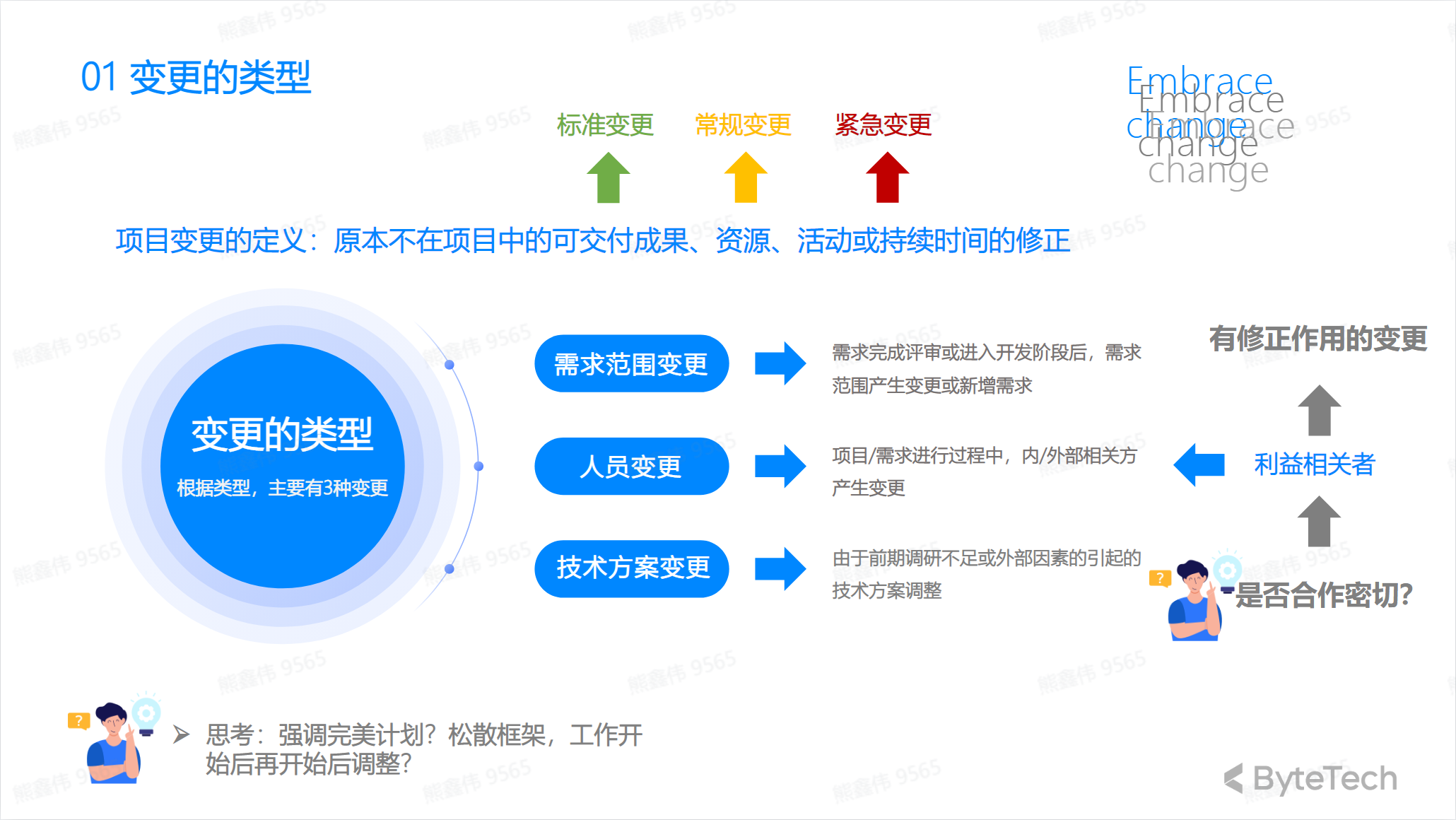
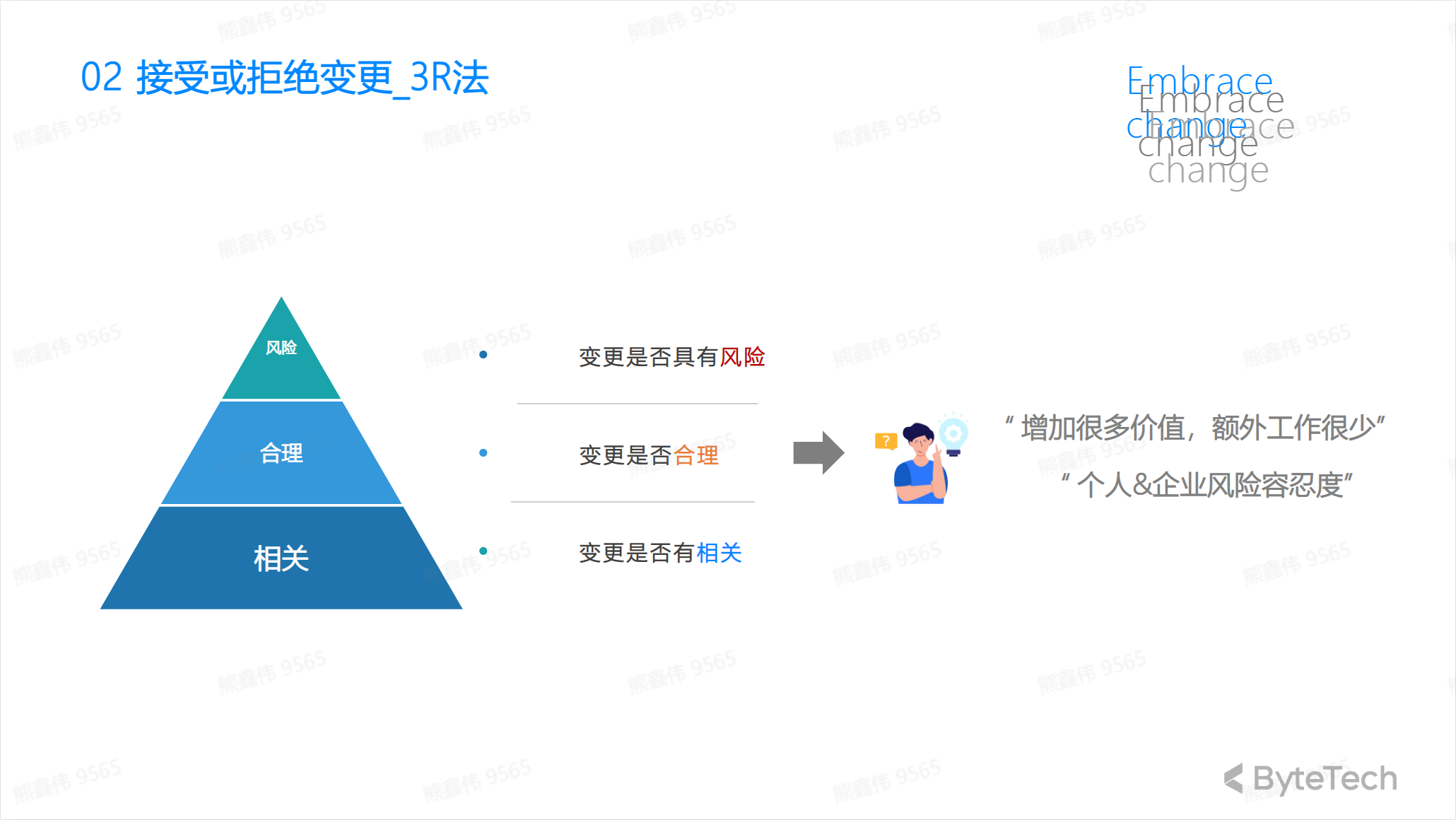
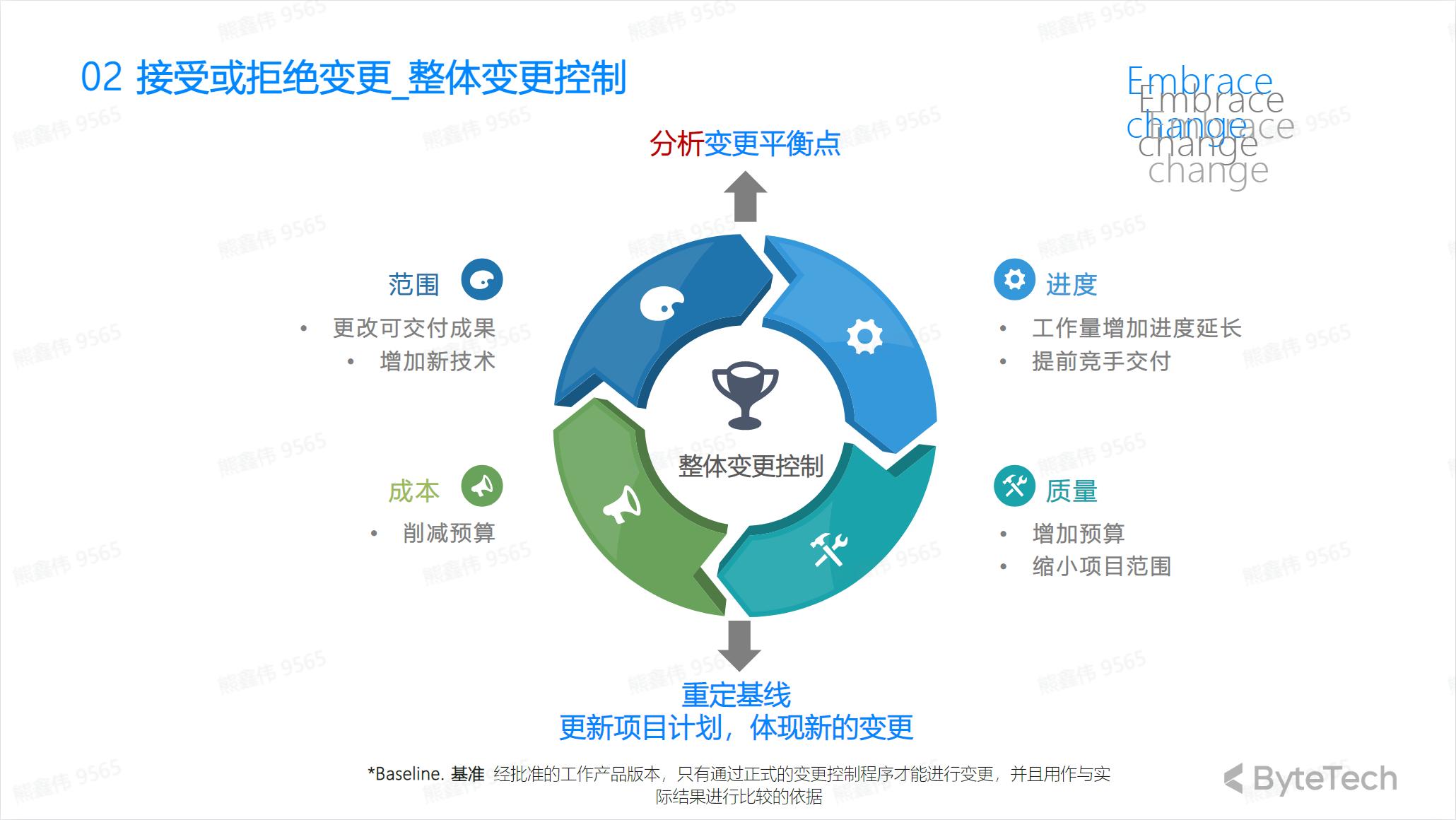
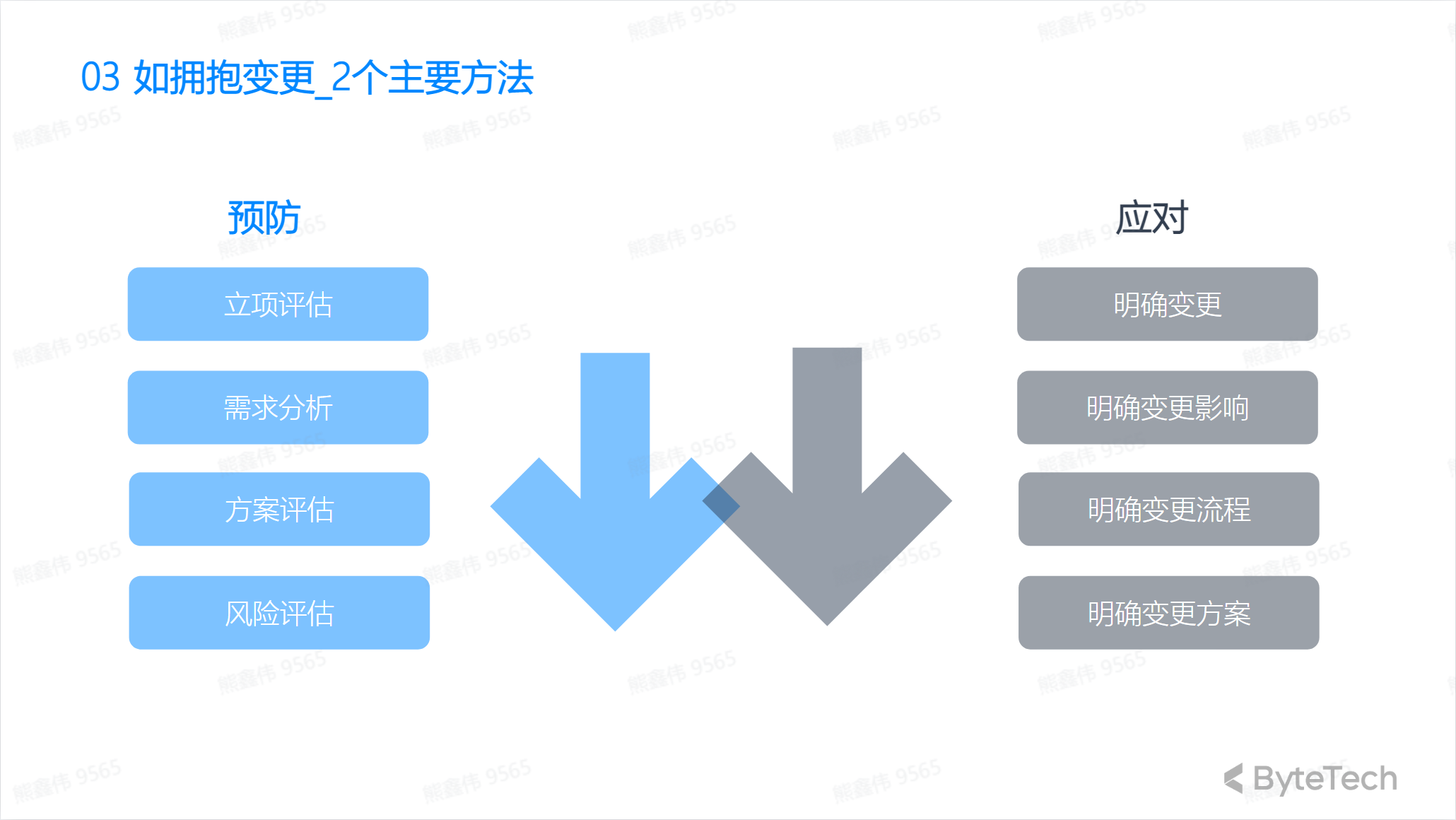
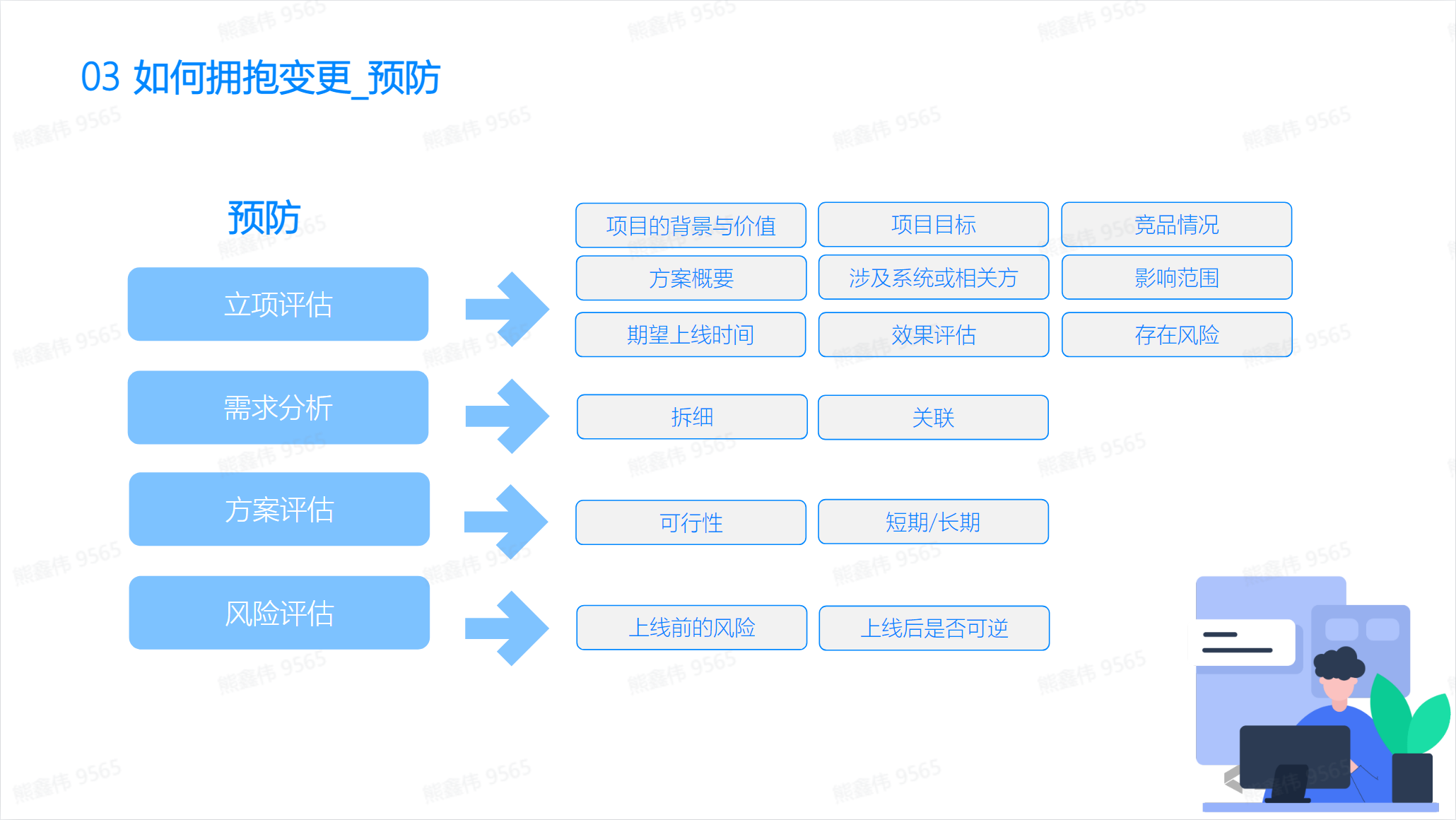
Measures to prevent change include:
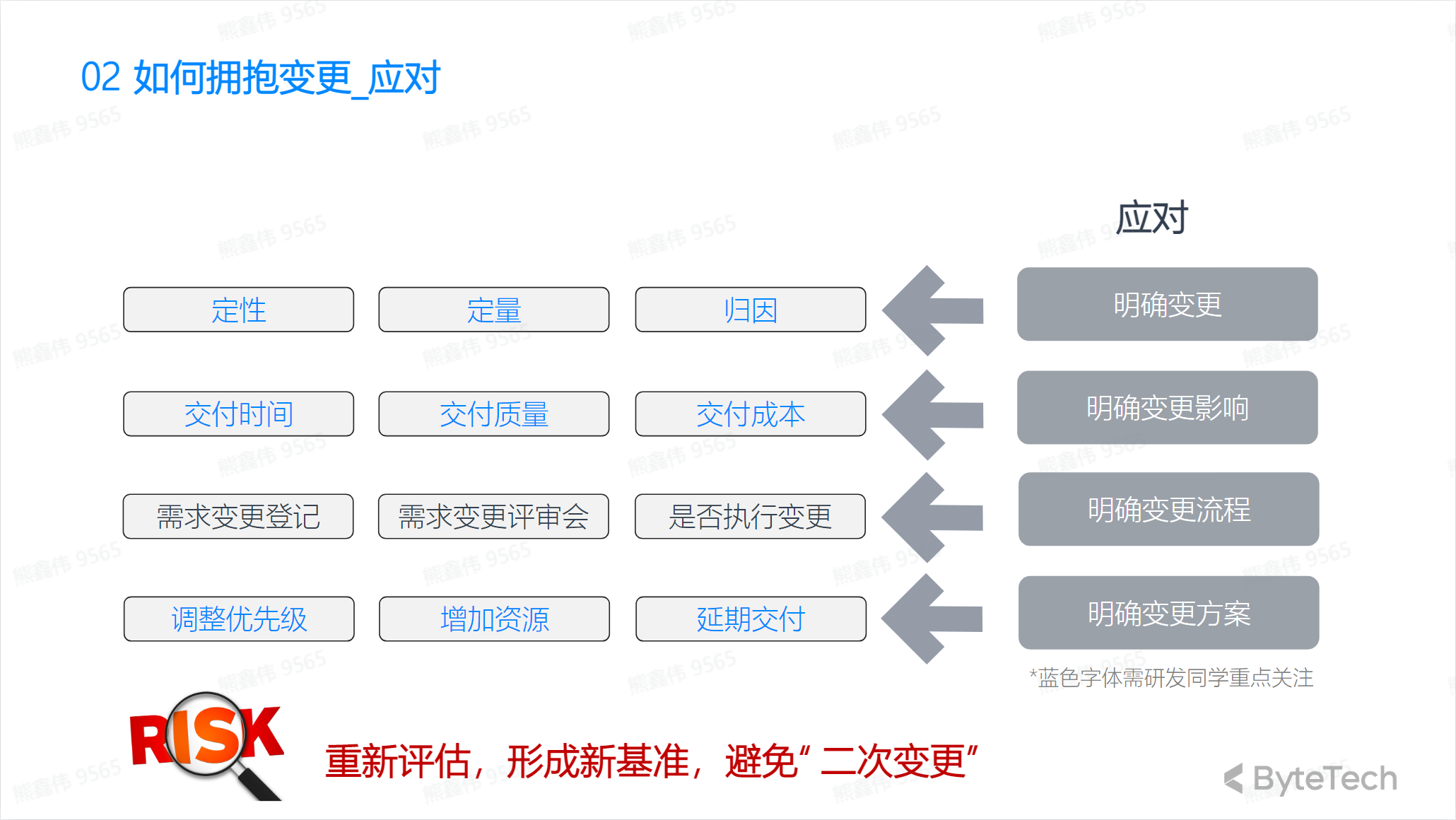
Measures to respond to changes include:
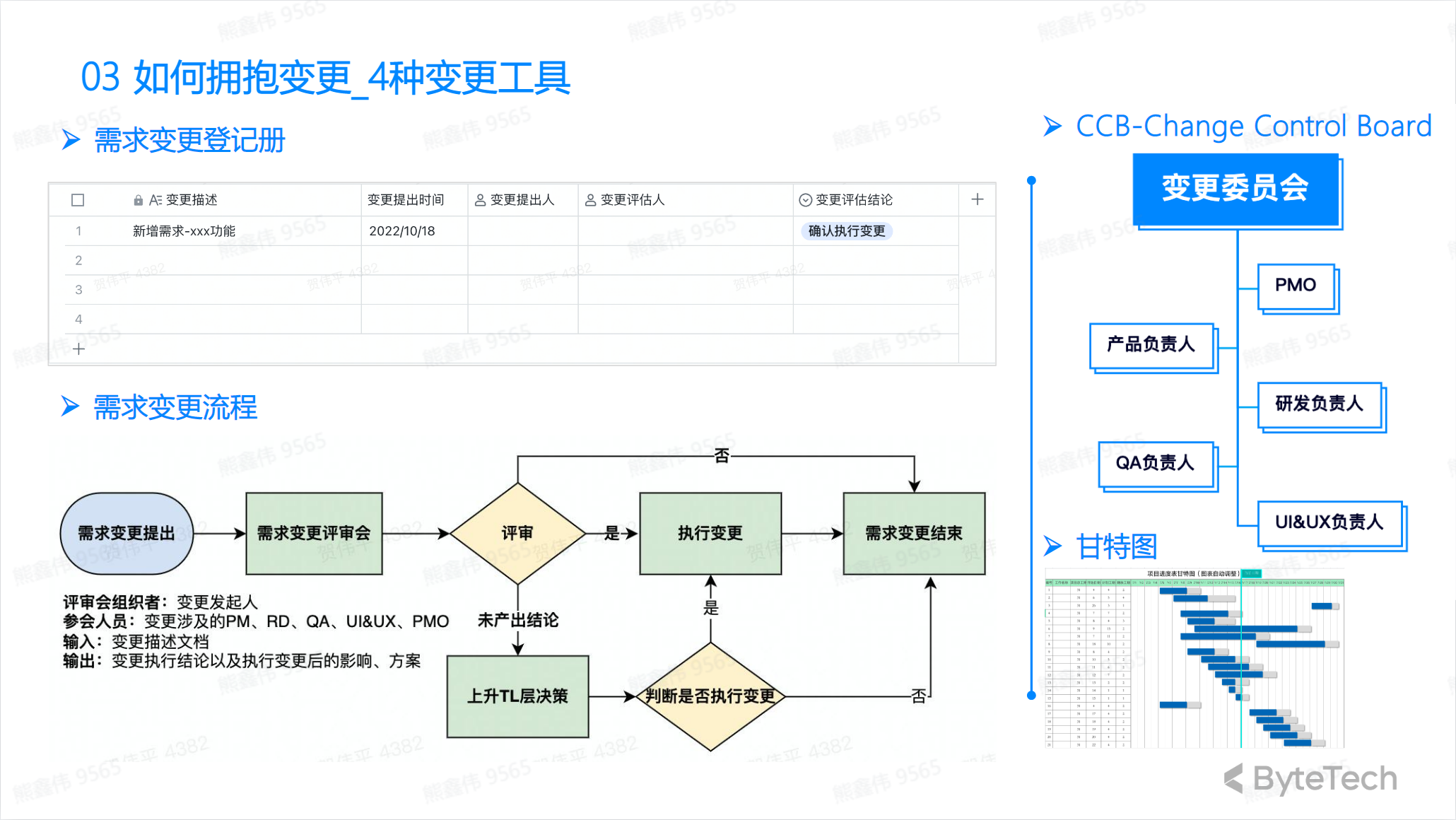
🤸 **Risk is measurable uncertainty. **
**We saw above that monitoring occurs throughout the entire project life cycle. **
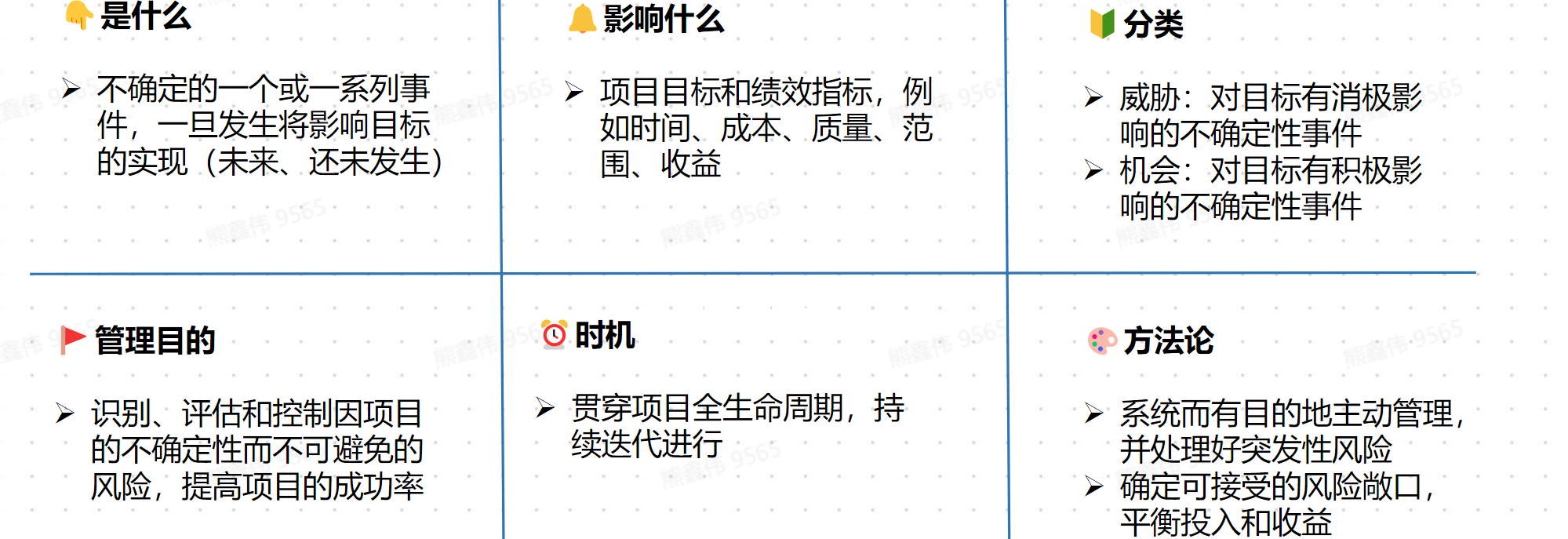
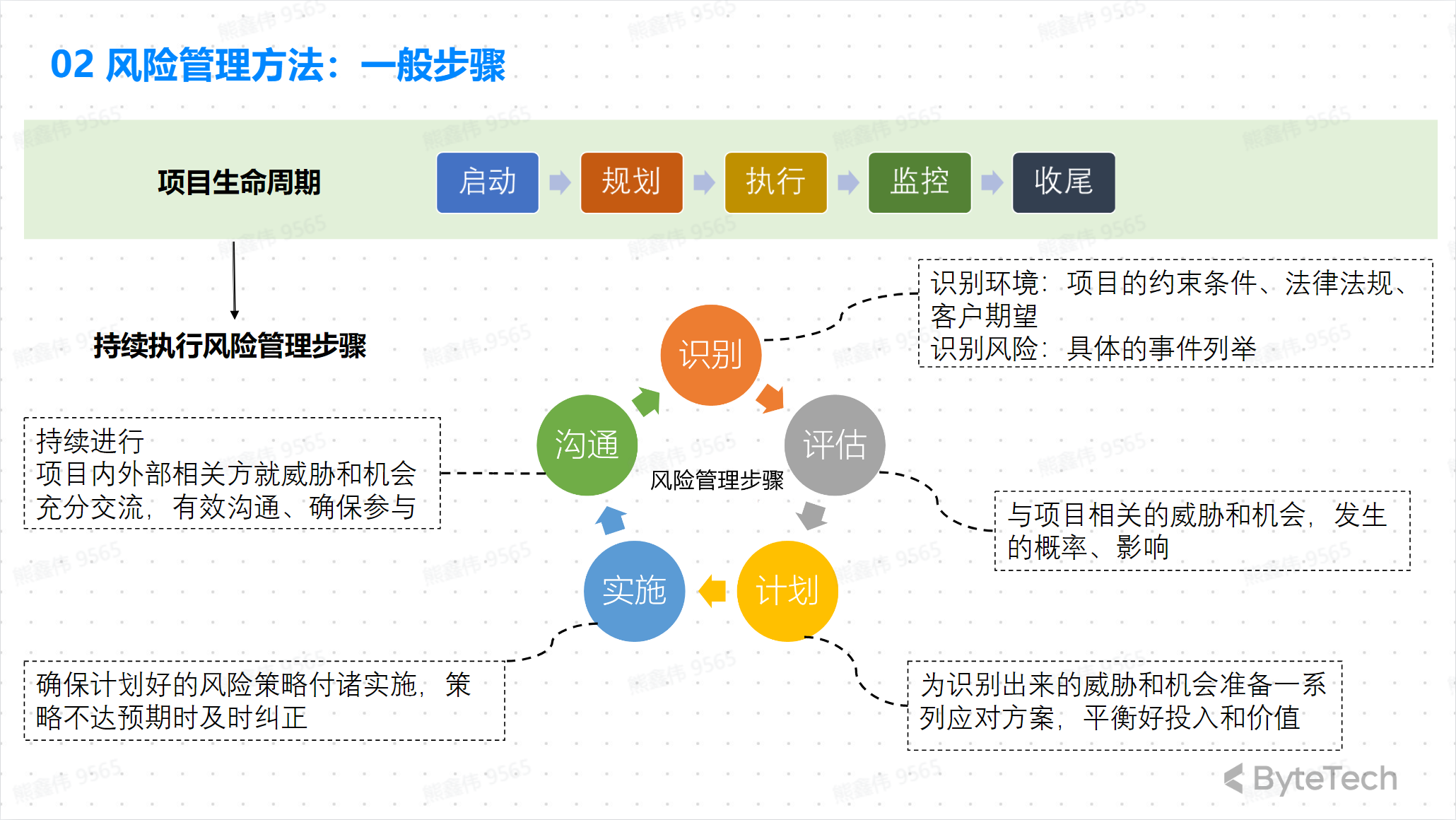
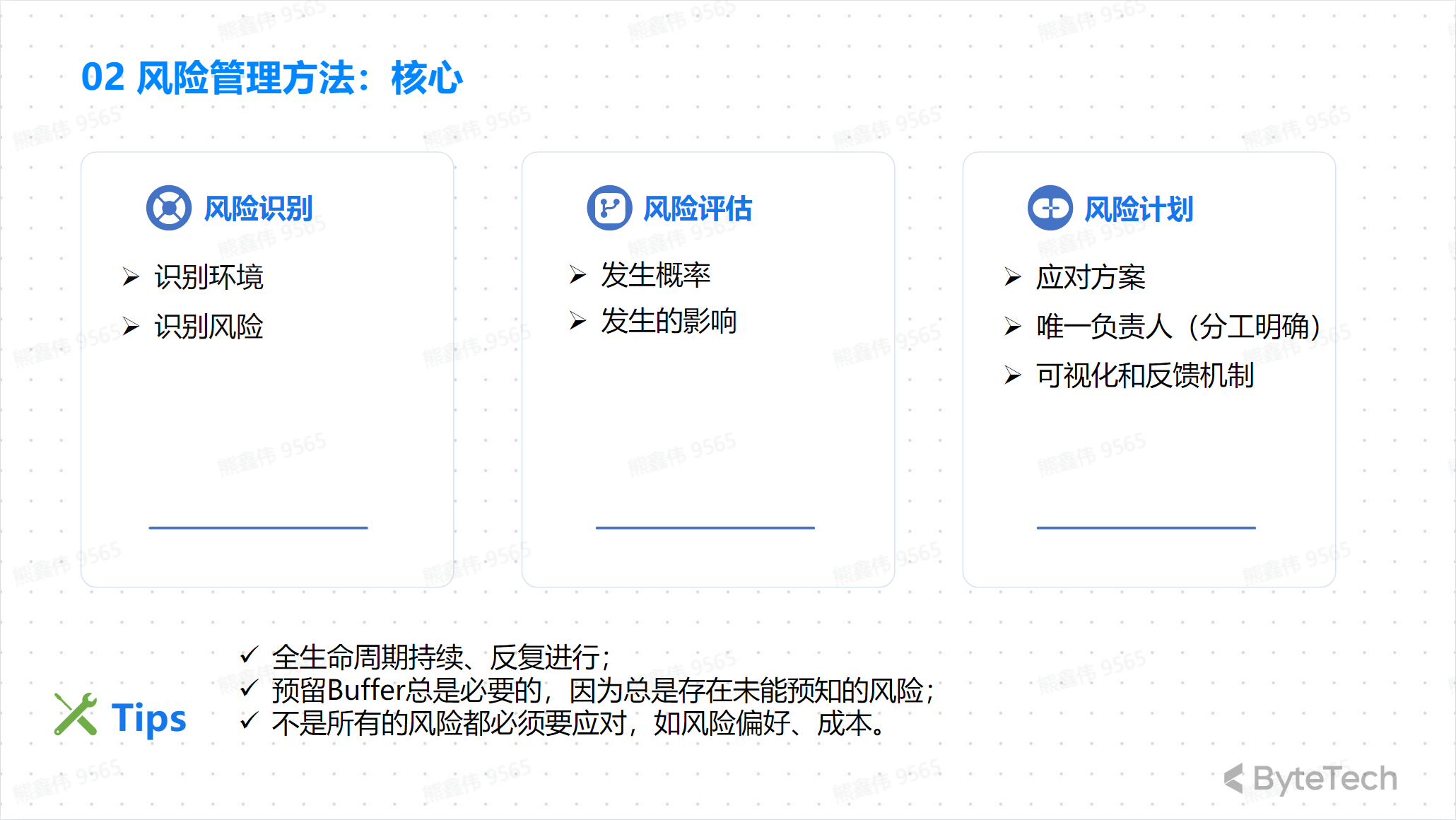
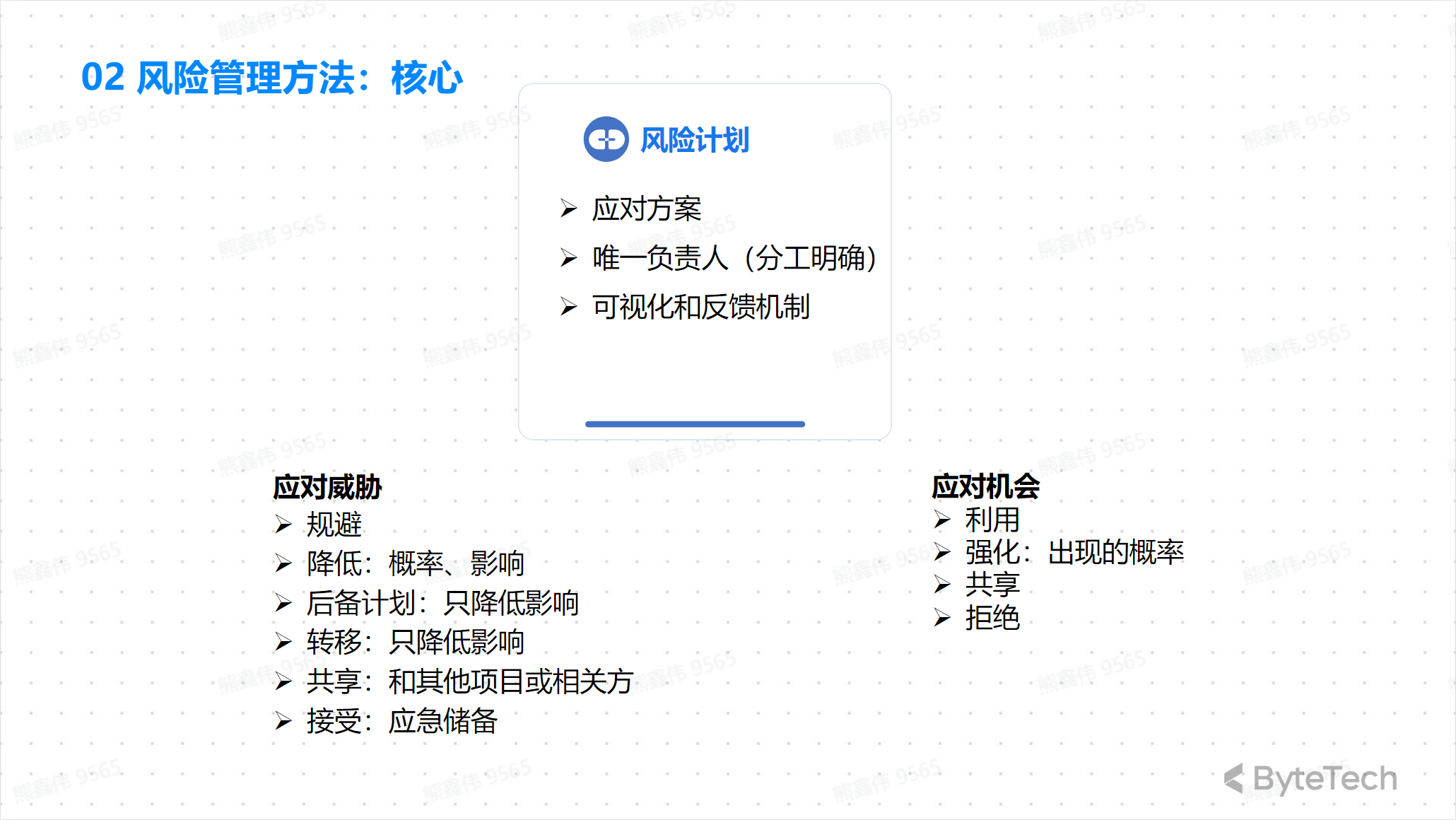
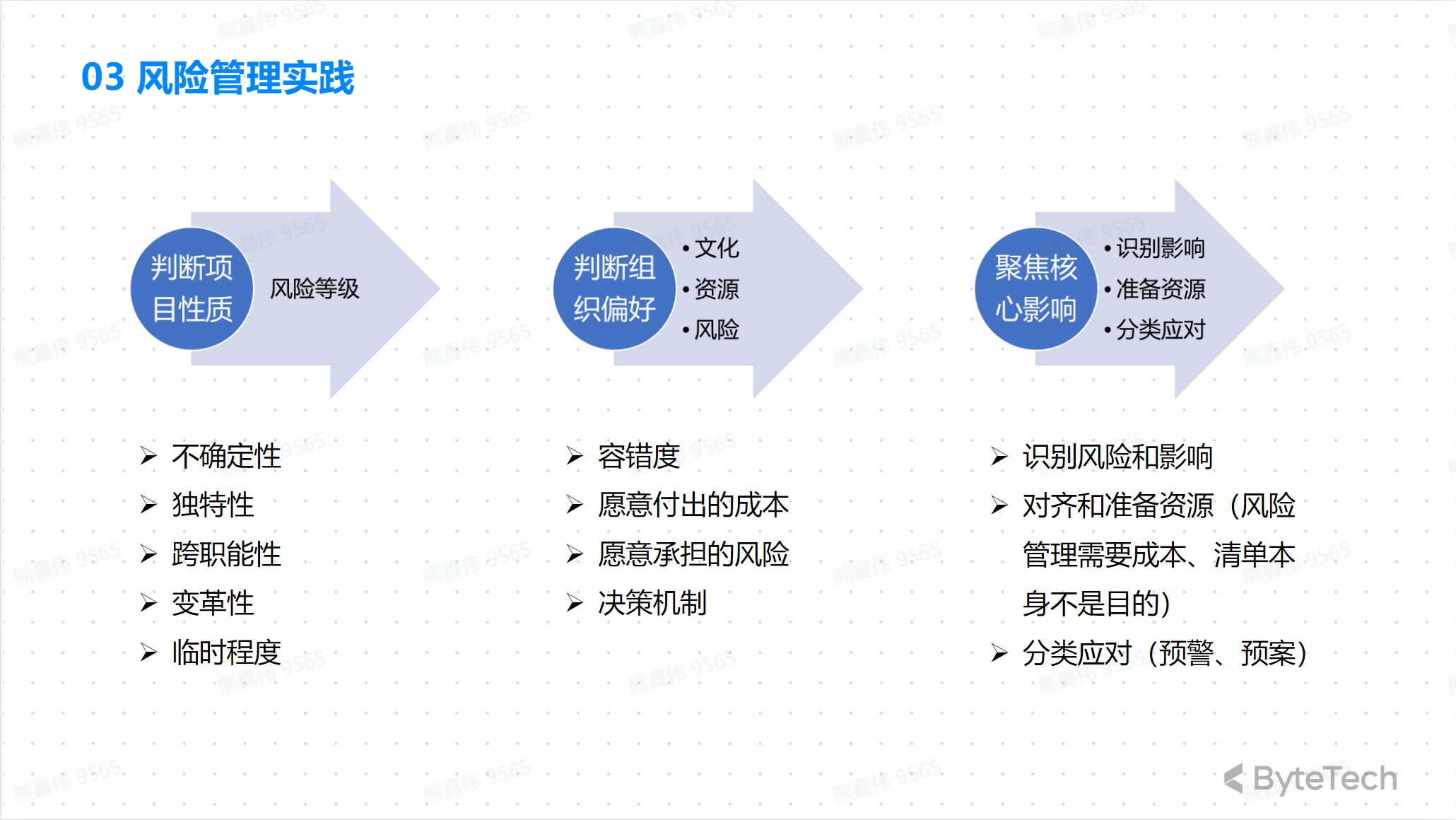
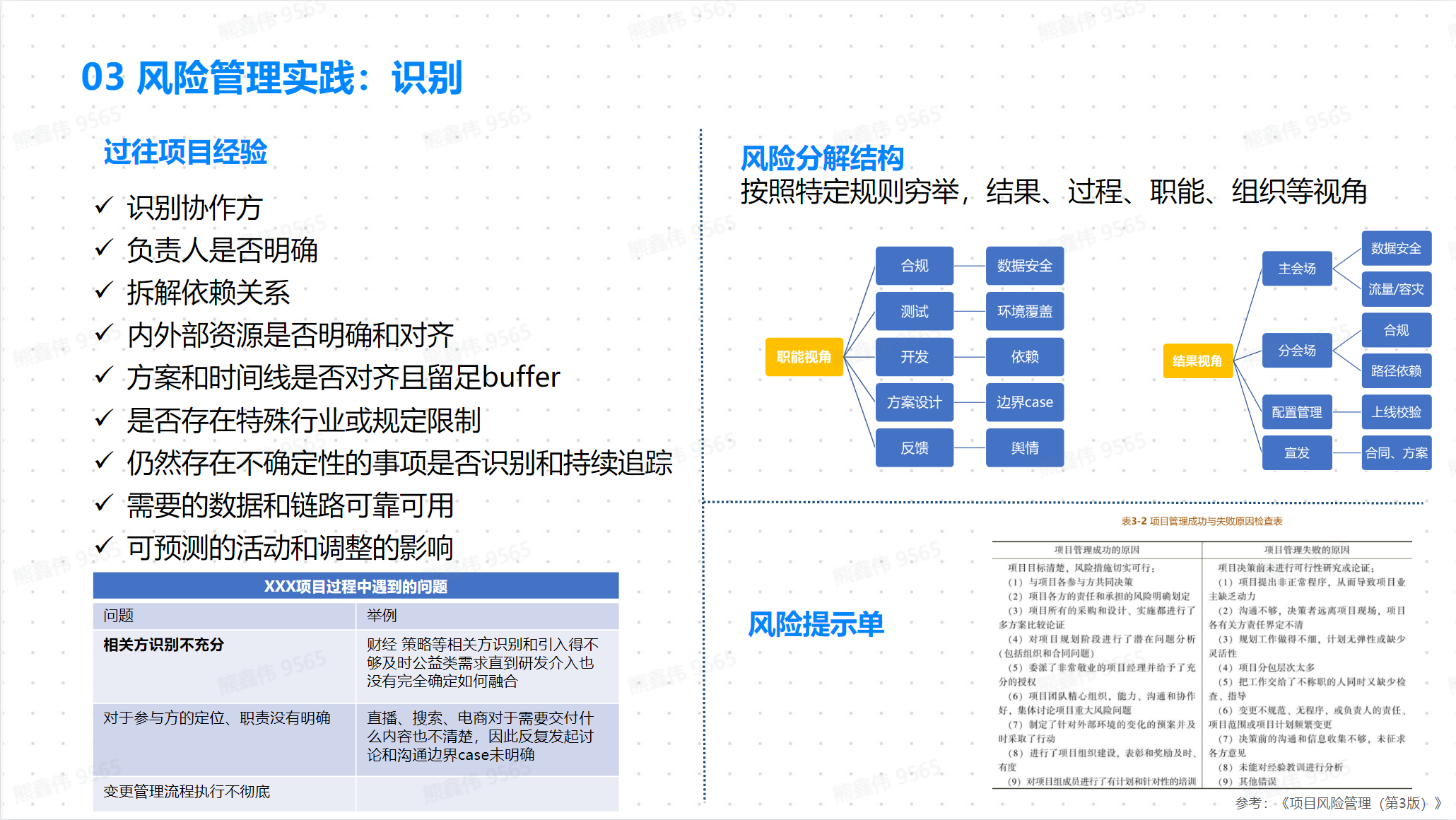
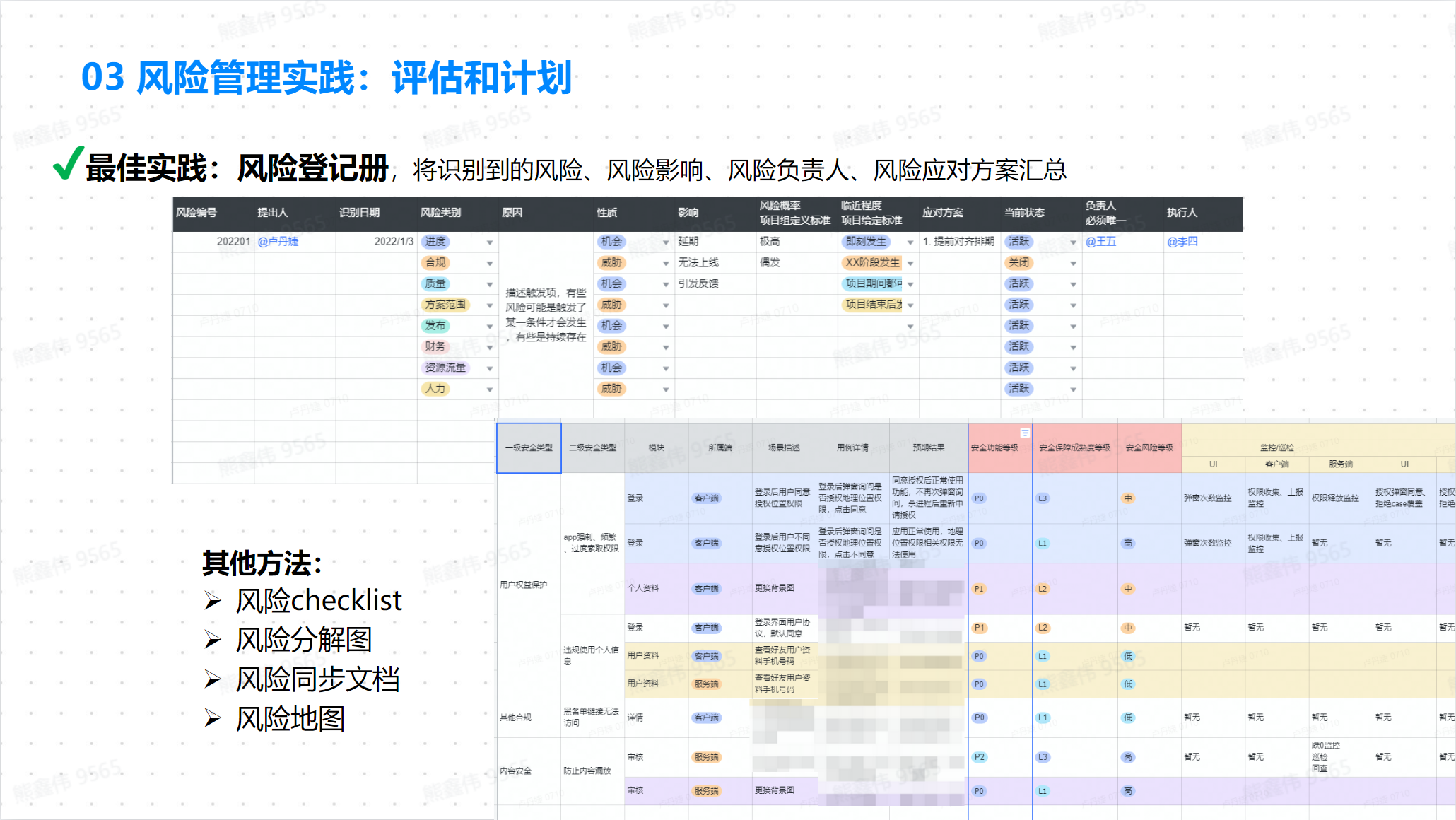
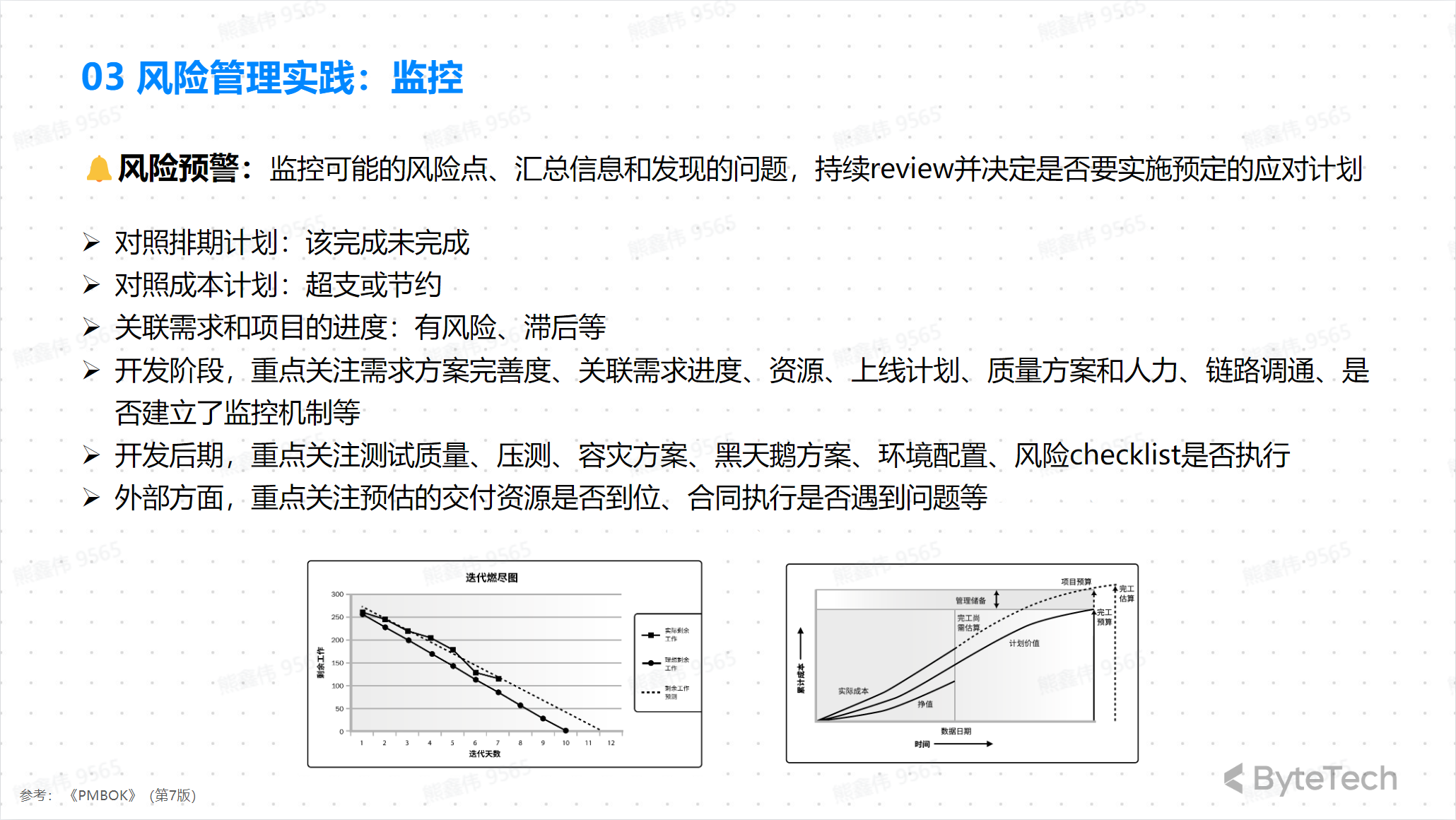
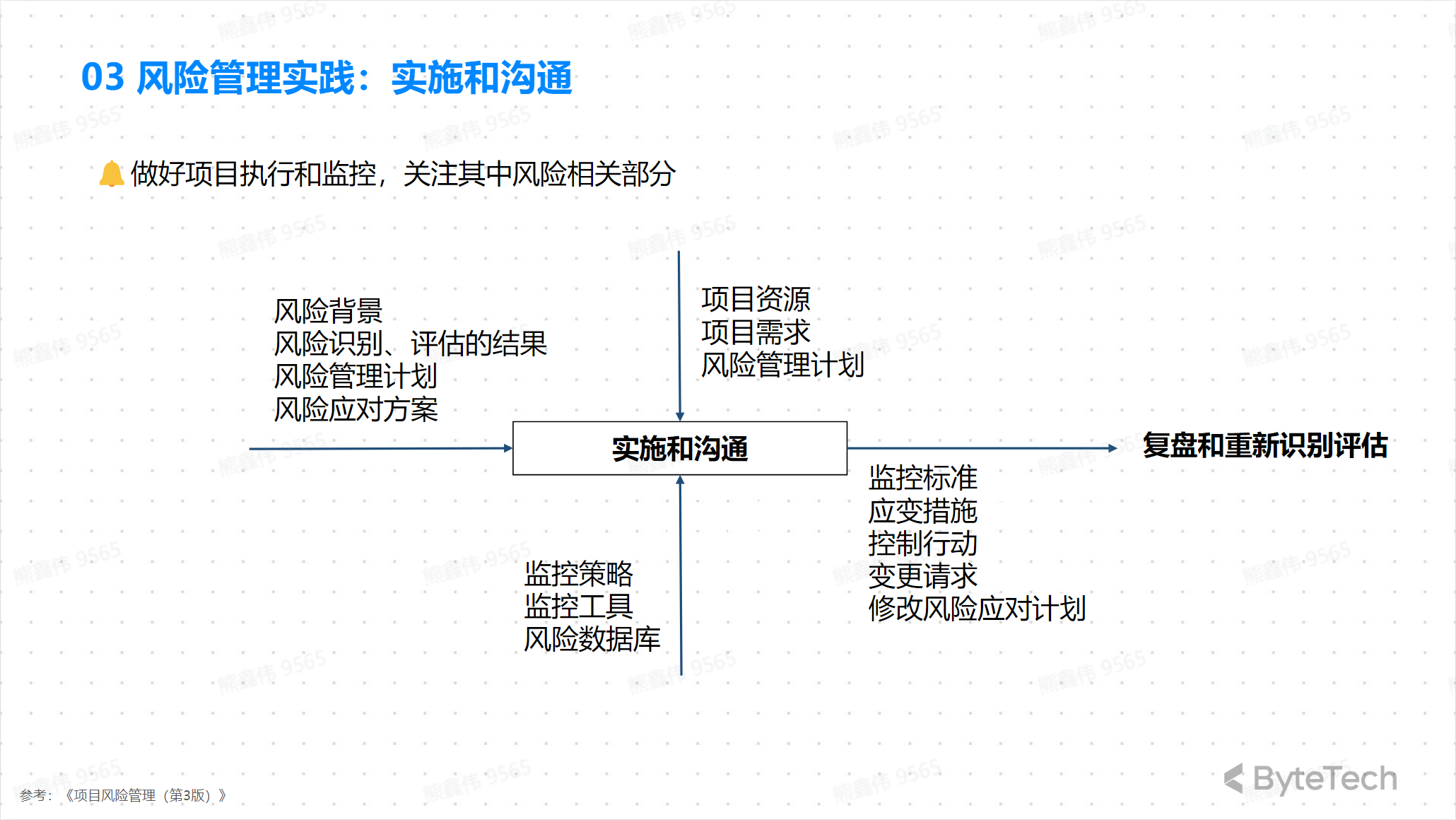
Risk monitoring and early warning are important components of project management. Risk monitoring is the process of identifying new risks or updating known risks by regularly monitoring and evaluating the progress of a project. Risk warning is to issue warnings to relevant personnel so that corrective measures can be taken after new risks are discovered or known risks are updated.
Typically, risk monitoring and early warning tools include:
Importantly, risk monitoring and early warning should be a continuous process to ensure that the project management team can take timely action to manage risks.
As my most commonly used website, GitHub has endless functions.
Projects is an adaptable and flexible tool for planning and tracking work on GitHub.
Traditional project management in Github is carried out using issues and pull requests. This part is not the focus of this article and will not be discussed in detail. But there are some features that need to be mentioned:
Project provides real issue management capabilities; while the traditional tag method can only manually manage categories (such as Q&A, bug, duplicate, feature tags), or manually manage issue progress (need test, in progress) , wait approval and other tags).
**You can choose a high-density table layout or use the Kanban board function. **
Please read the corresponding github documentation: [https://docs.github.com/zh/enterprise-server@3.10/issues/planning-and-tracking-with-projects/customizing-views-in-your-project/changing-the -layout-of-a-view](https://docs.github.com/en/enterprise-server@3.10/issues/planning-and-tracking-with-projects/customizing-views-in-your-project/ changing-the-layout-of-a-view)
Kanban management originated from Toyota’s production model and refers to a tool for controlling on-site production processes in order to achieve just-in-time (JIT) production. The pull production system in the just-in-time production method can shorten the information process, and cooperate with methods such as rationing and fixed loading containers to smooth the flow of materials in the production process.
It can be seen that the so-called Kanban board is to divide a wooden board into several columns, and then paste cards with different contents on each column. The columns on the board are generally in order, and cards can be moved between different columns to indicate their status.
In the above two examples, Kanban is not targeted at software engineering, and their market is also for general enterprises (such as Toyota).
The following two examples are optimized for software development. To be precise, they are adapted to Github.
**Why Projects? ** A repository can contain multiple projects; at first, this setting made me confused. It was not until I used it that I realized that a code repository usually has many things to do, such as:
Therefore, we can create a Project for each of the above things. Since there is no Epic-like mechanism in Github, it is useful to use different Projects.
It can be seen that with Project’s Kanban, some of the original tag functions (such as tag processing progress, etc.)Can be replaced by Kanban. Notes provided by Github Project can be individually converted into issues when needed:
At the same time, Kanban can not only contain issues and notes, but also pull requests.
Github finally has a more reliable project management tool, and open source projects have better tools. Sprinkle flowers o(^▽^)o
I wish myself to complete my first open source project (IMAP Server) as soon as possible.
GitHub is currently one of the largest open source centers in the world, and many people manage their own open program codes on it. The built-in Issue function is also very convenient, where you can put forward areas that need improvement/enhancement. But for project developers, management is a little more inconvenient, especially in an era when billboard management is becoming more and more popular, and listed Issues will appear to be messy and difficult to manage. There are also many third-party companies that have launched billboard functions integrated with GitHub, but management is always a little inconvenient, so GitHub also decided to launch a built-in billboard function─Projects! It allows you to easily integrate the current Issues/Pull Requests into the billboard. Although the overall function of the billboard is relatively bright, the basic functions are also available, and the operation method is similar to the functions of the currently popular billboard software, and for Direct integration with GitHub is really convenient! Next, I will use a small project I am currently working on, 8ComicDownloaderElectron, to introduce the billboard function on GitHub!
**Project review is an evaluation process conducted after the end of the project. The purpose is to summarize the results and lessons learned from the project and make improvements for future projects. **
Project review steps include:
Project review is an important part of project management. It can help project management teams and organizations improve the project management process and increase the success rate of future projects.
The review process for small projects and large projects is basically similar, but there may be some differences in implementation.
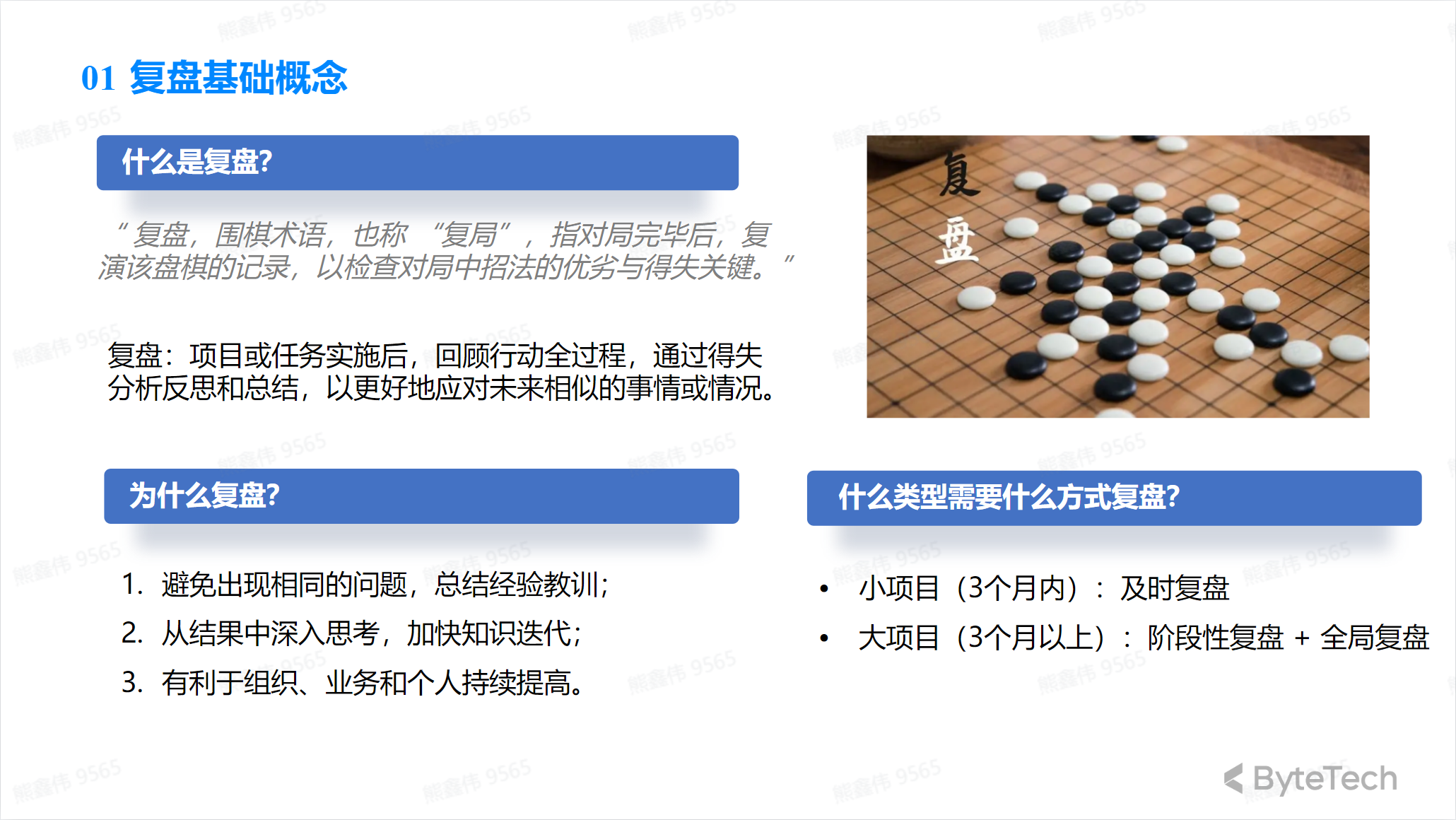
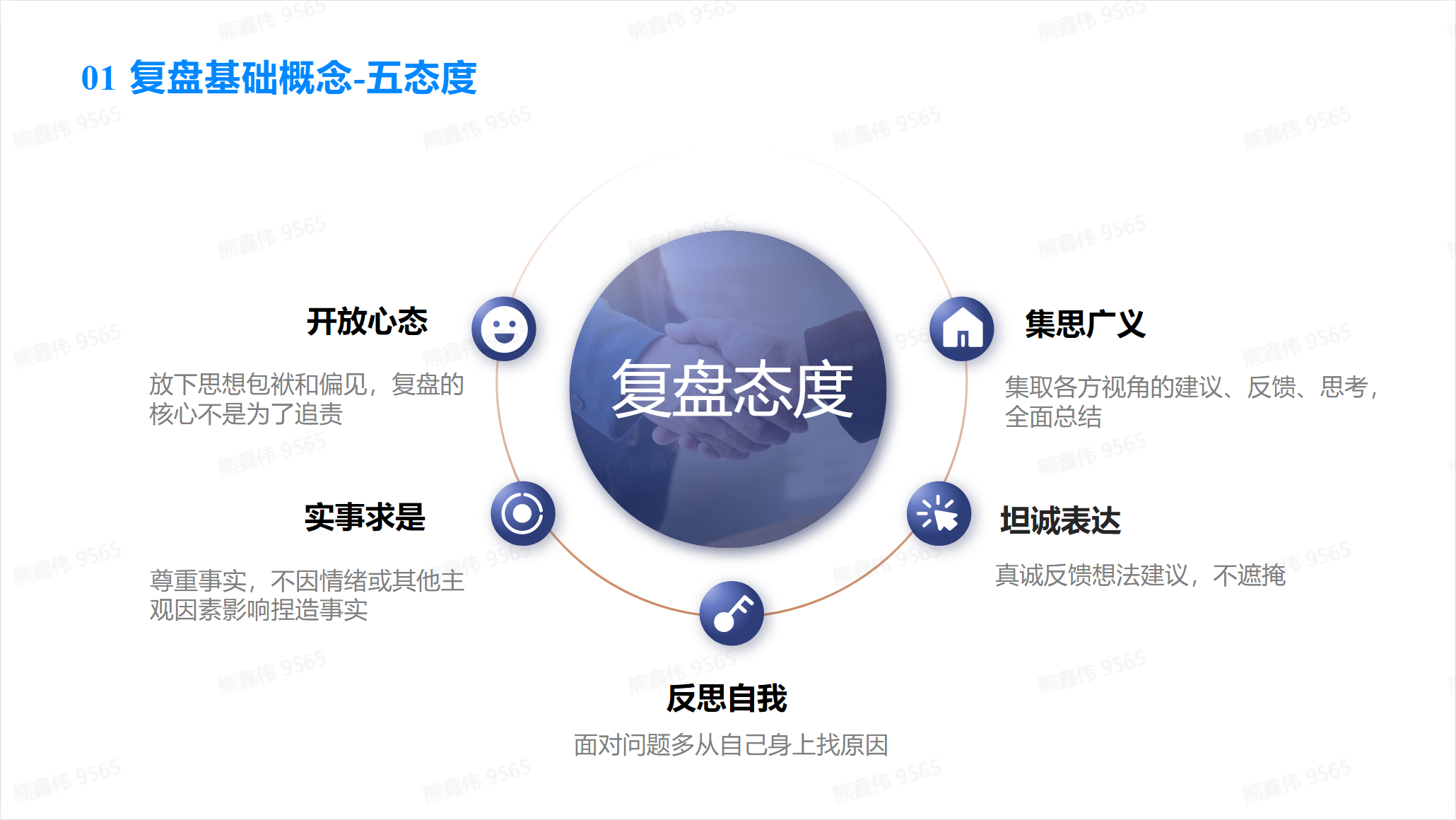
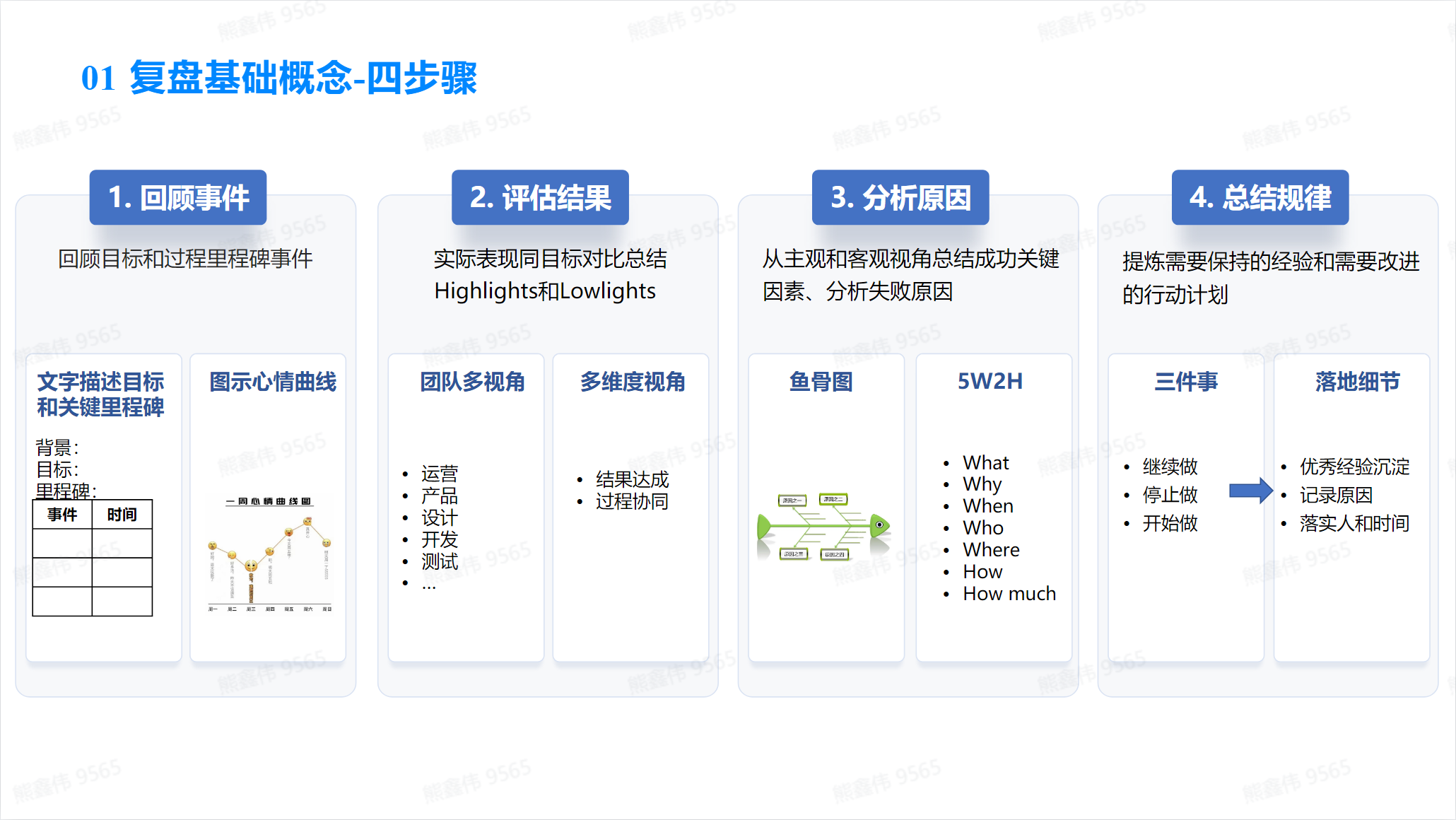
The corresponding💡simple case is as follows:
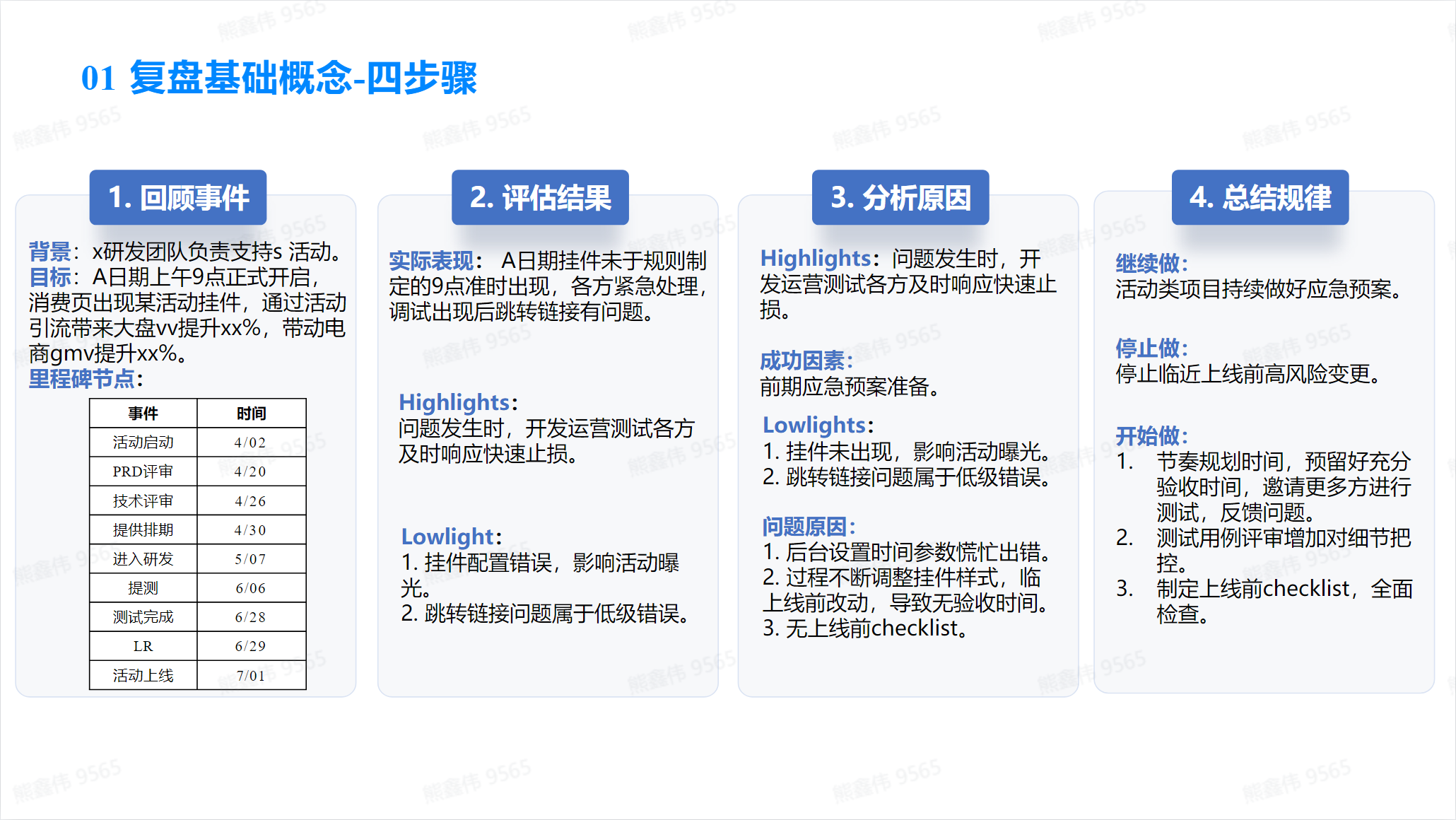
Review steps:
Review is a continuous process that continuously summarizes the progress of the project and develops improvement plans to improve the efficiency and success rate of the project.
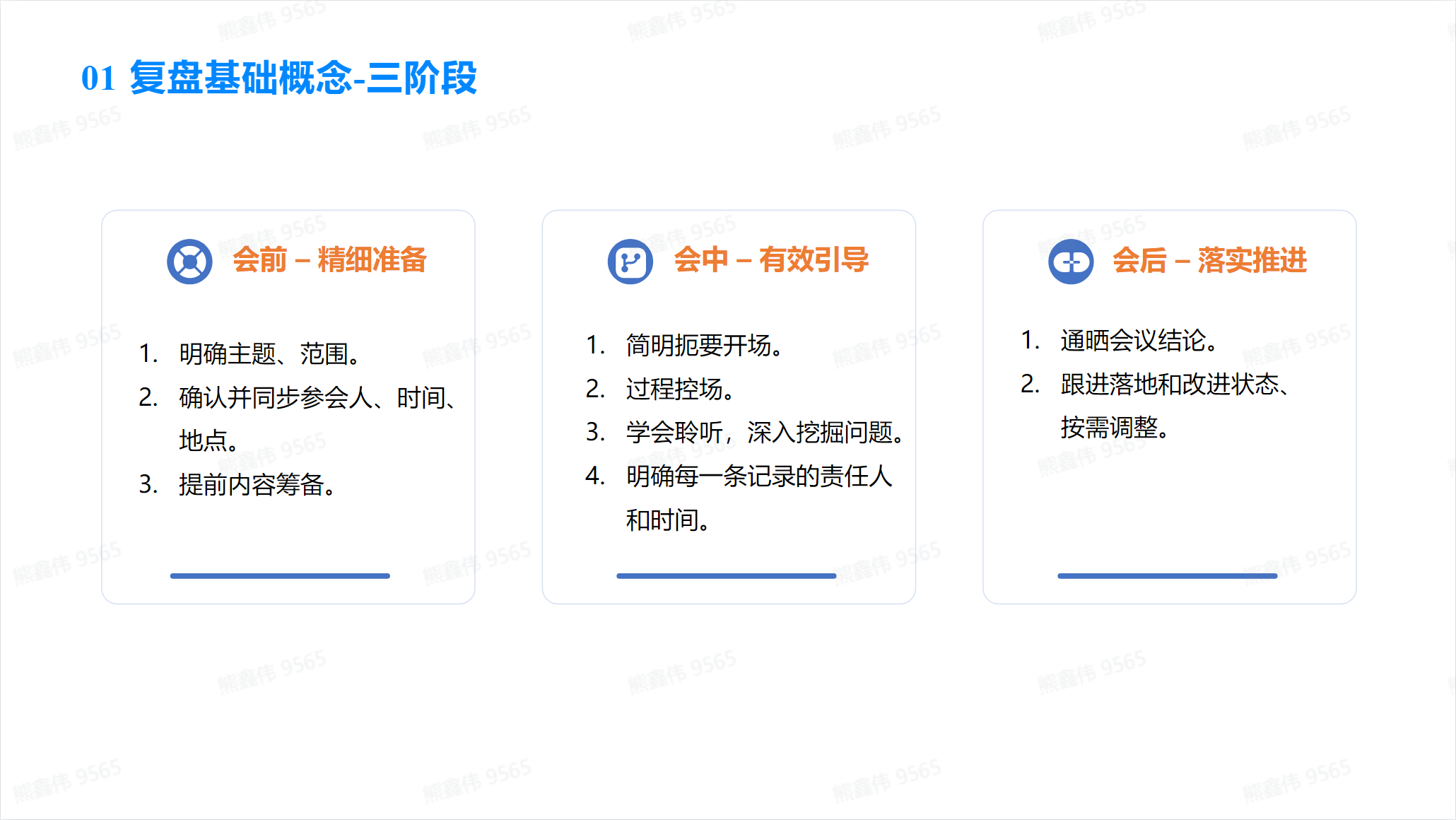
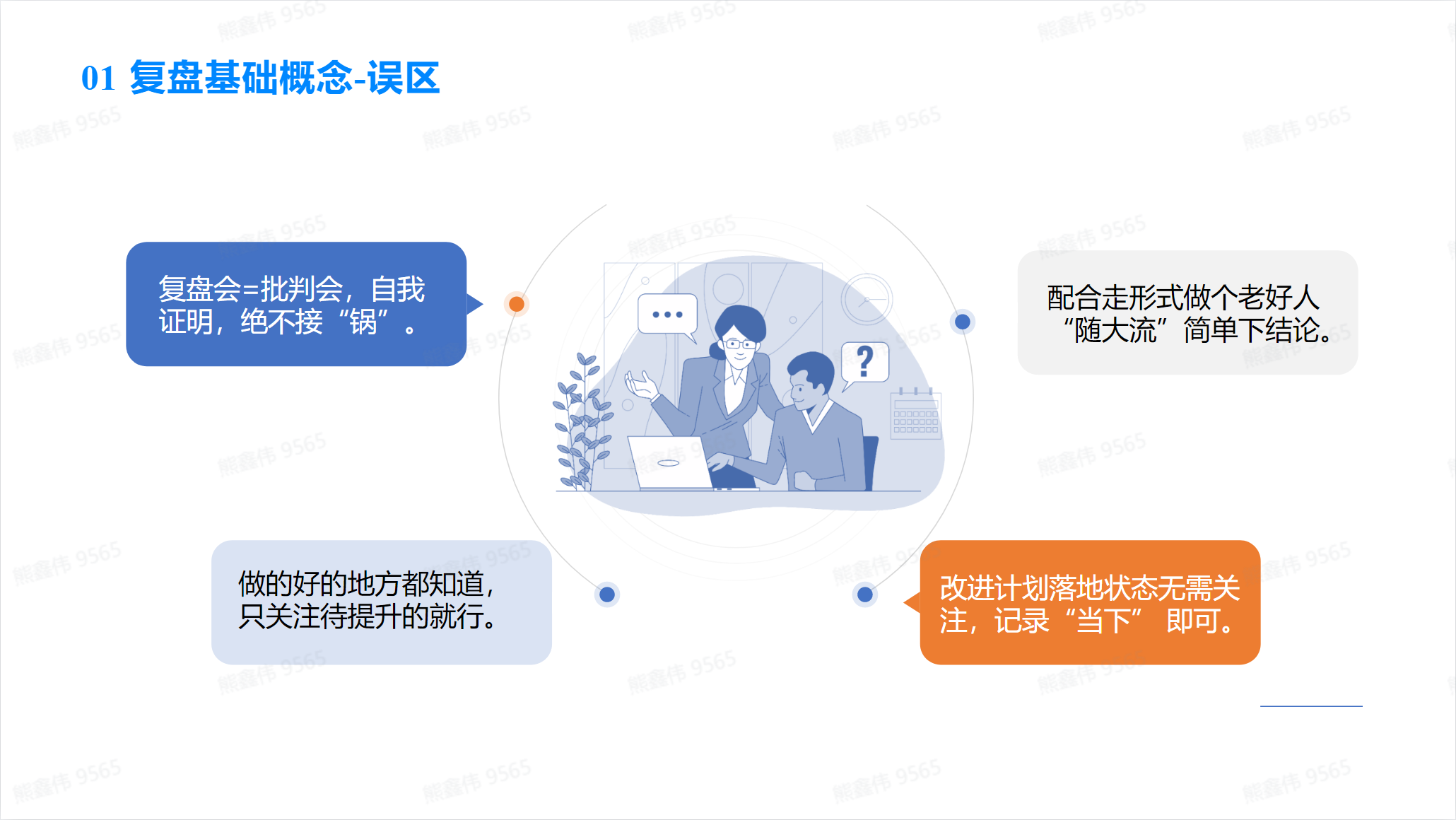
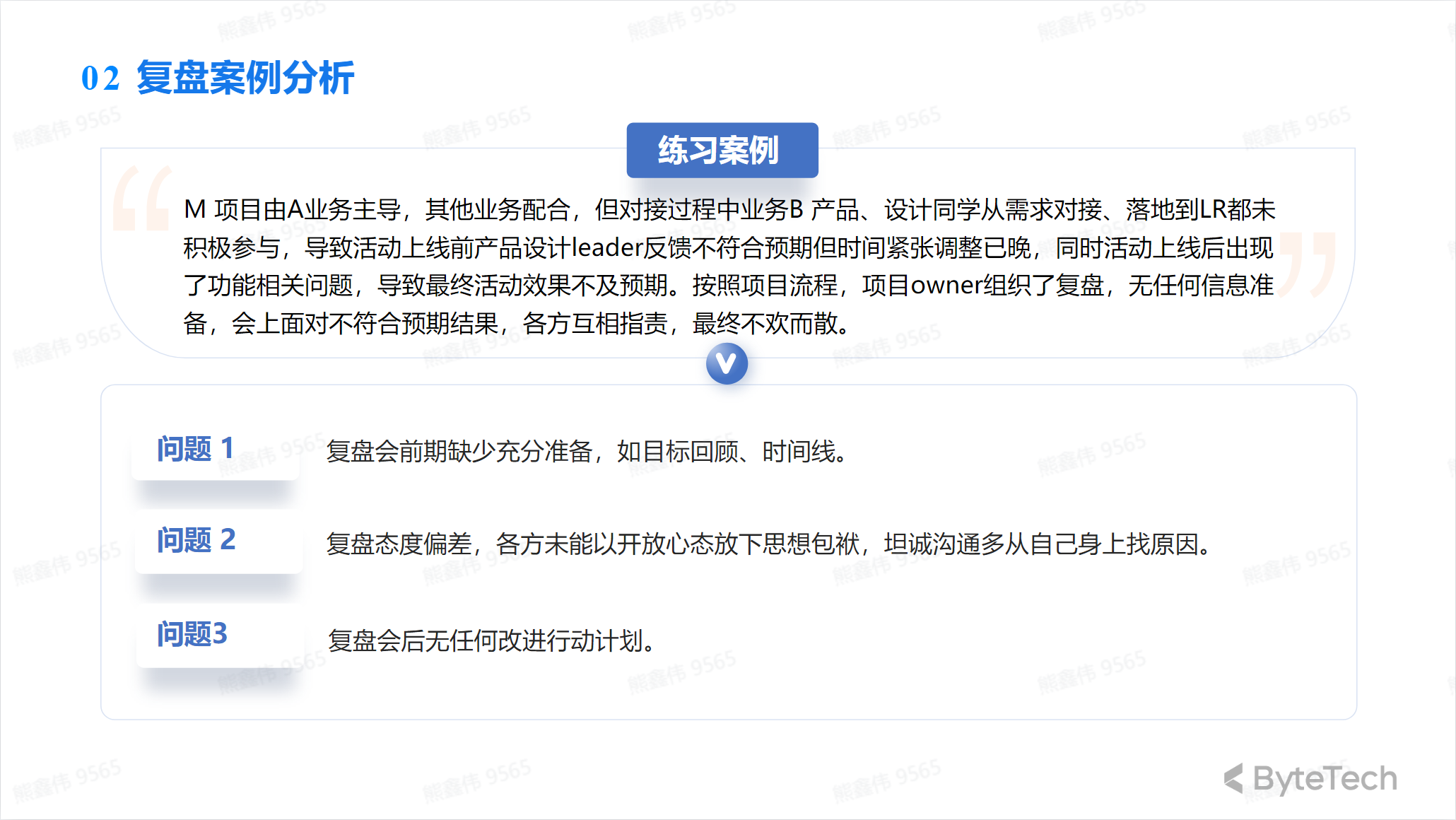
Directory:
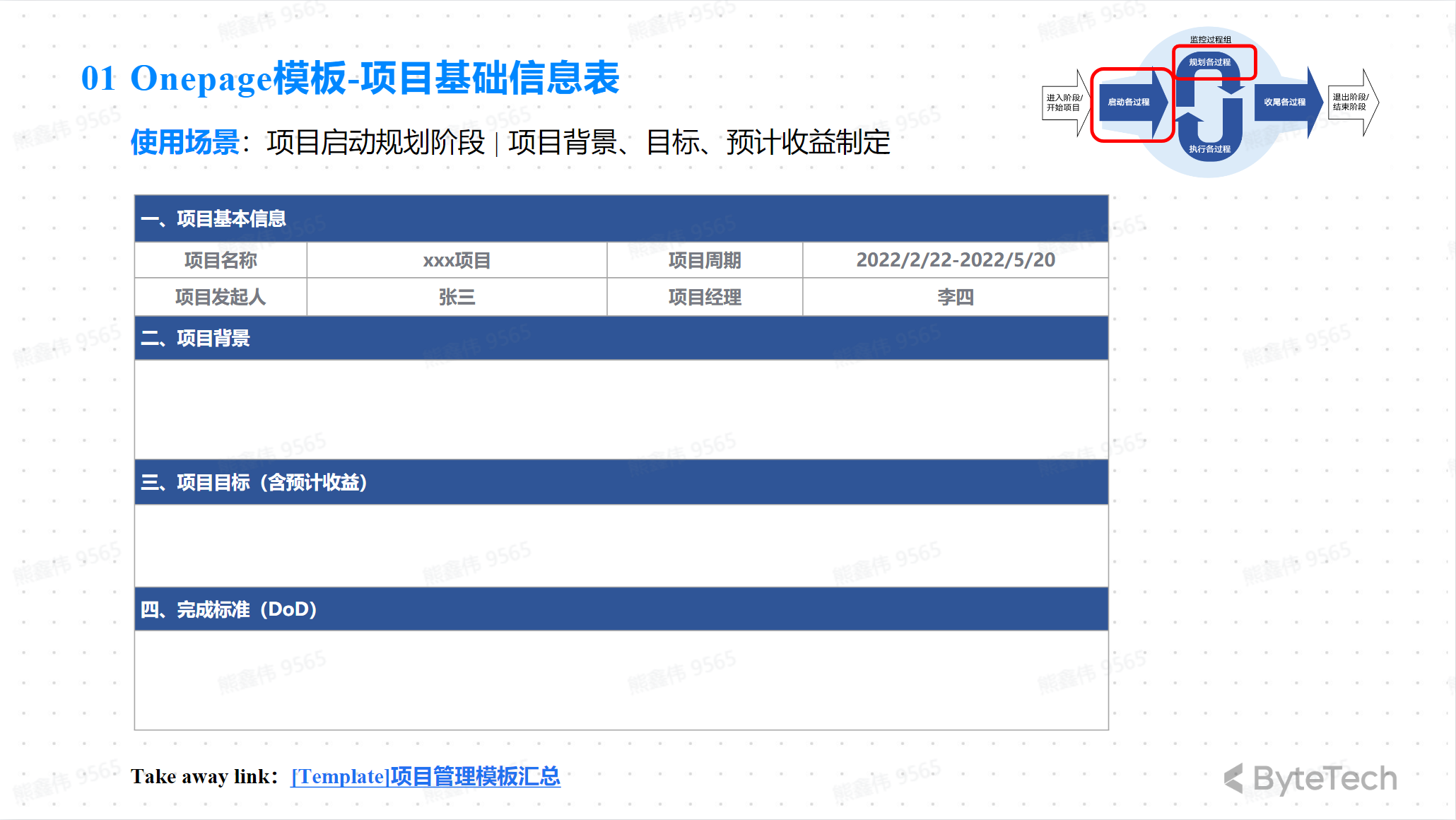
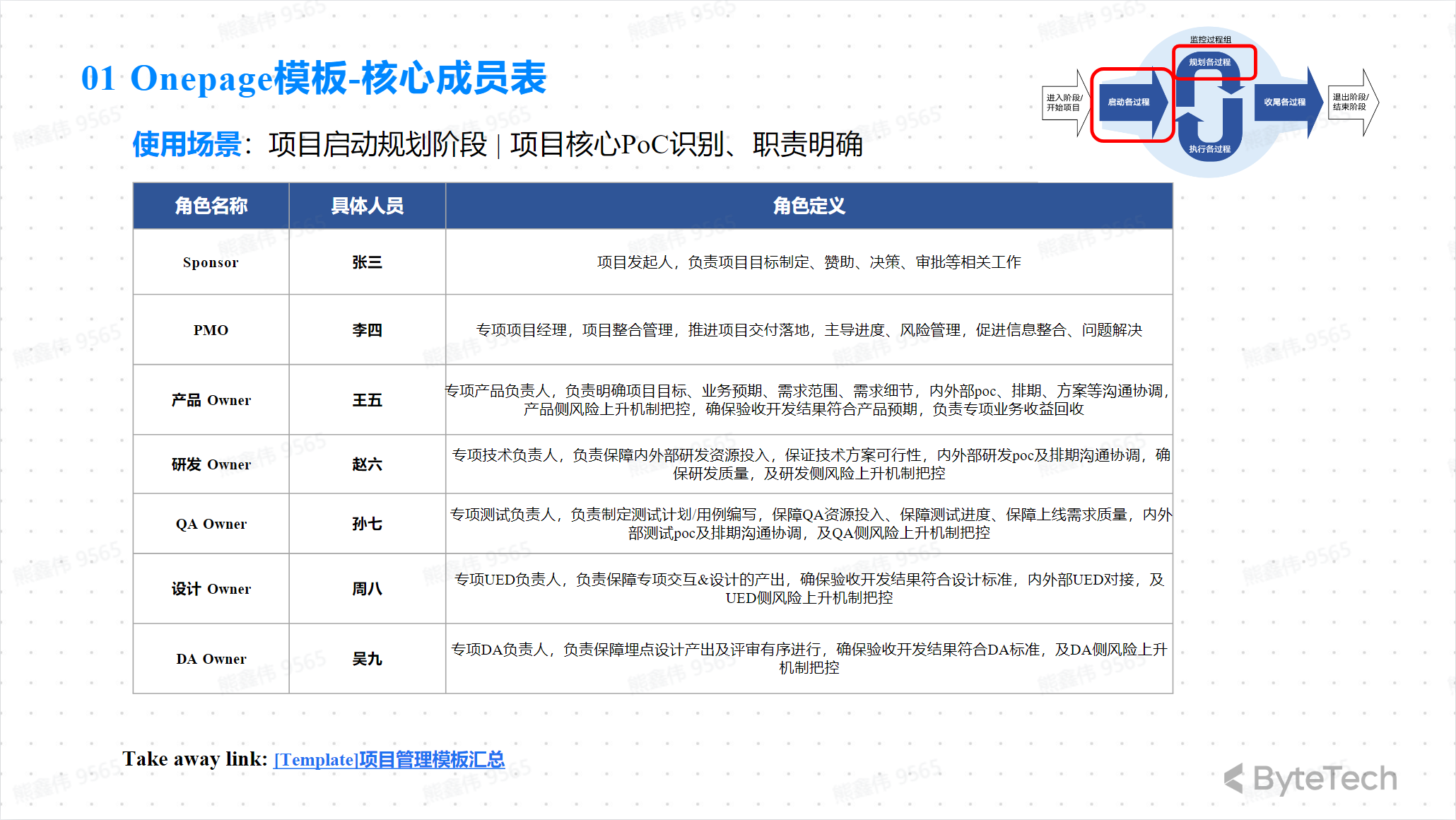
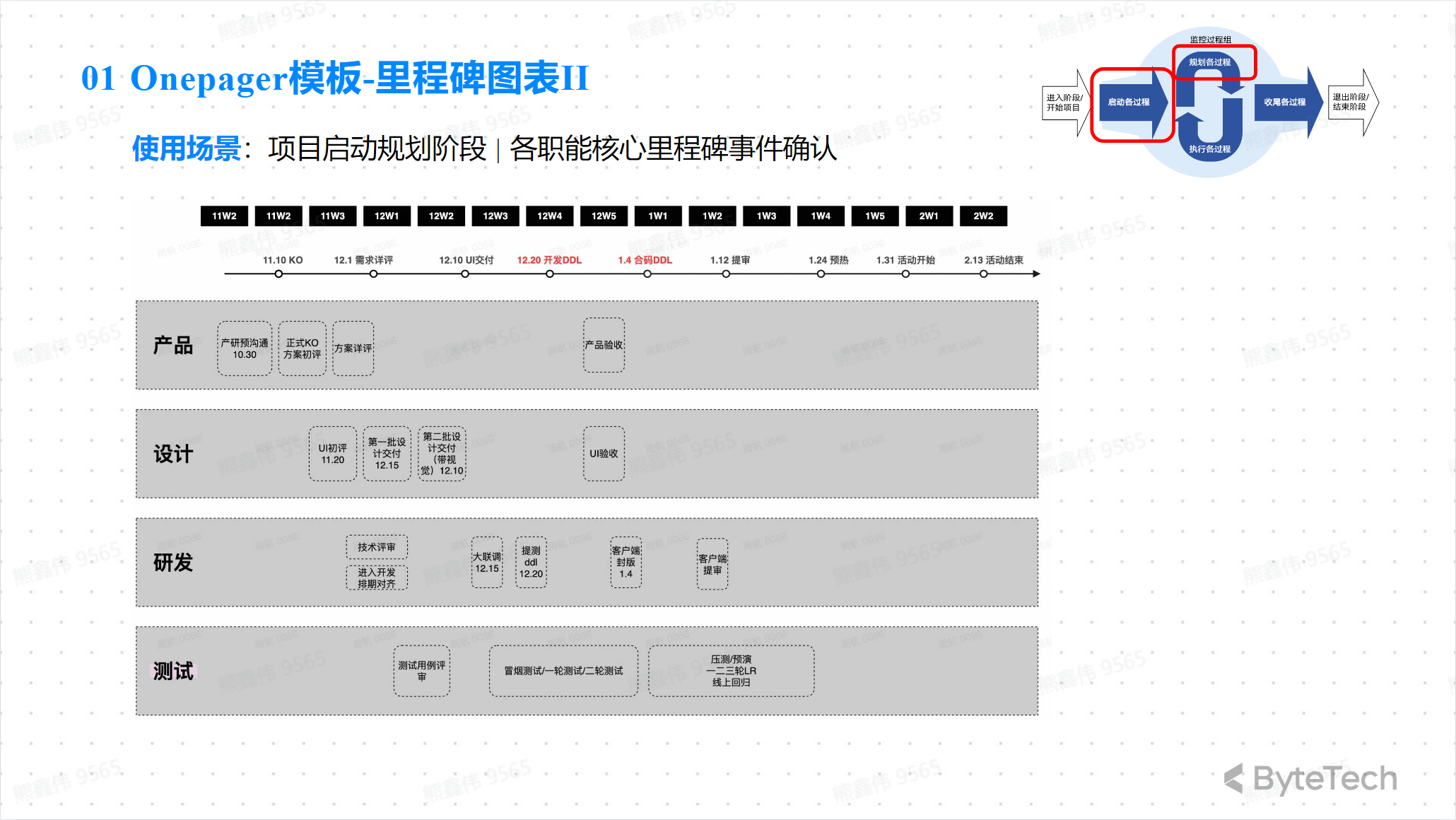
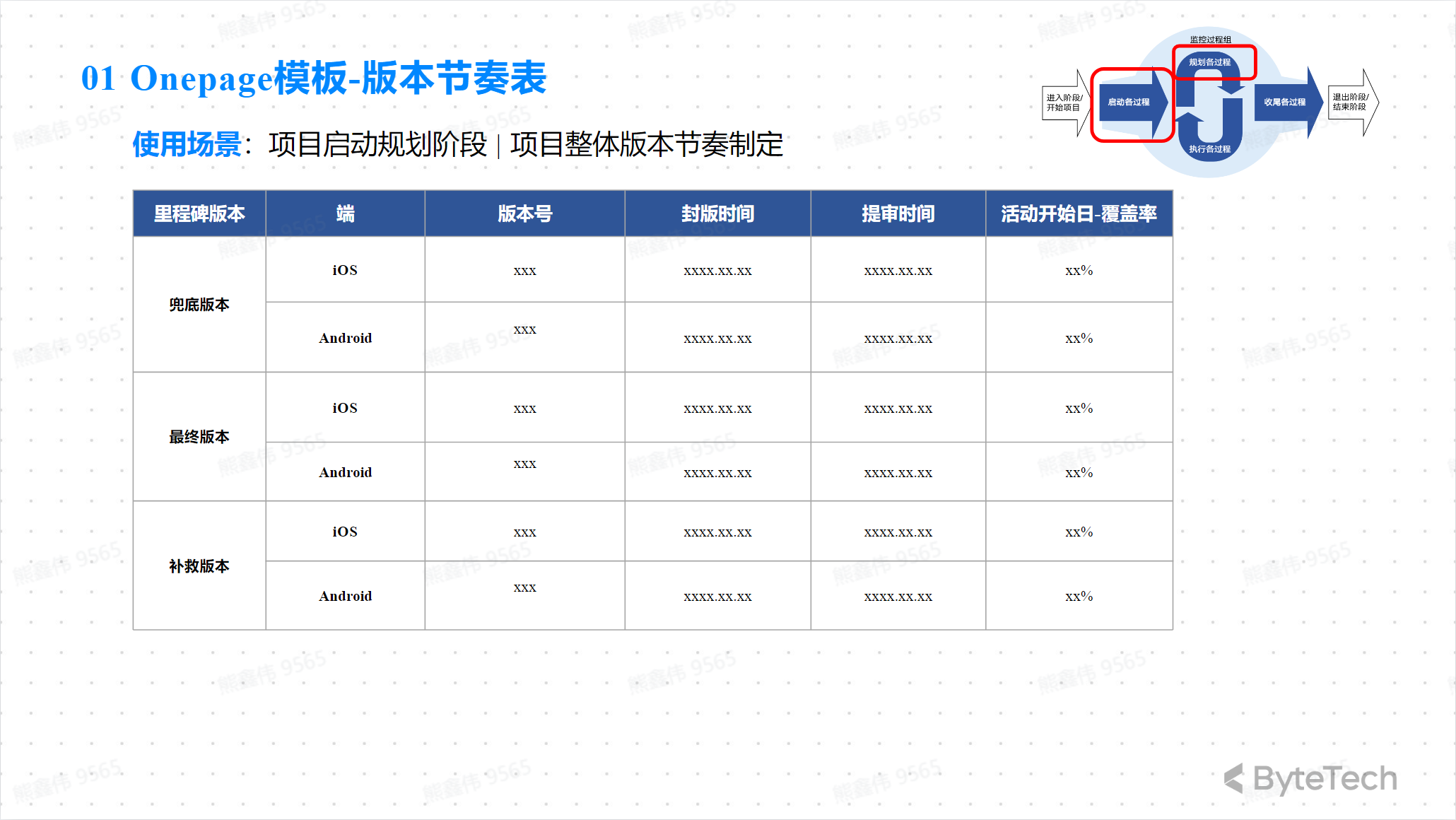
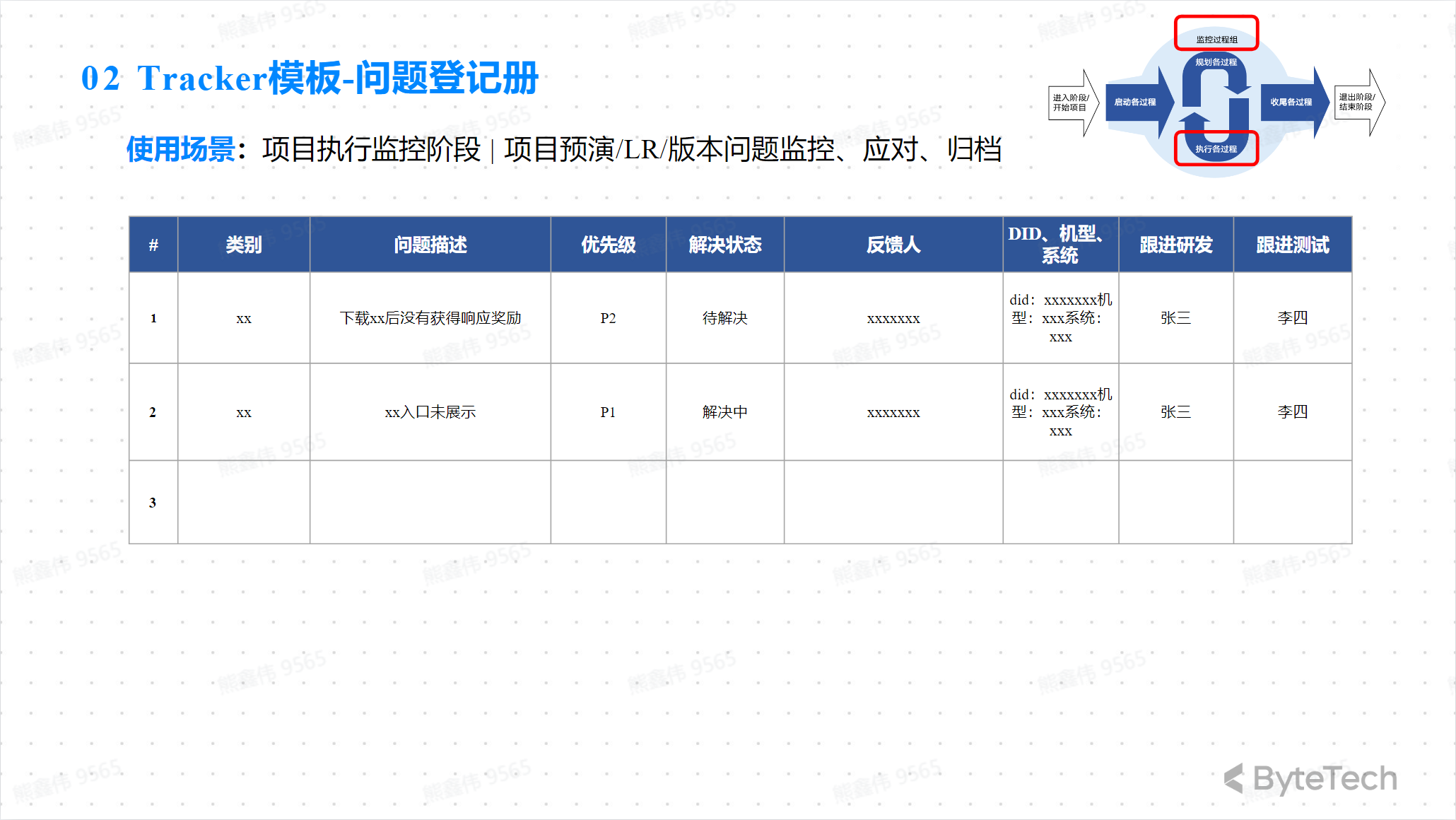
| Document name | Document link | |—————- | ———————————- - | | Project basic information table | Project basic information table | | Core Member List | Core Member List | | Milestone Chart | Milestone Chart | | Version Rhythm Table | Version Rhythm Table | | Project Communication Plan | Project Communication Plan | | tracker-Gantt chart | tracker-Gantt chart | | Risk Register | Risk Register | | Problem Register | Problem Register | | Meeting Minutes | Meeting Minutes | | Project Phase Report | Project Phase Report I Project Phase Report II | | Program phase reports | Program phase reports | | Review Template | Review Template |
Usage scenario: Project startup planning stage | Project background, goals, and expected revenue specification
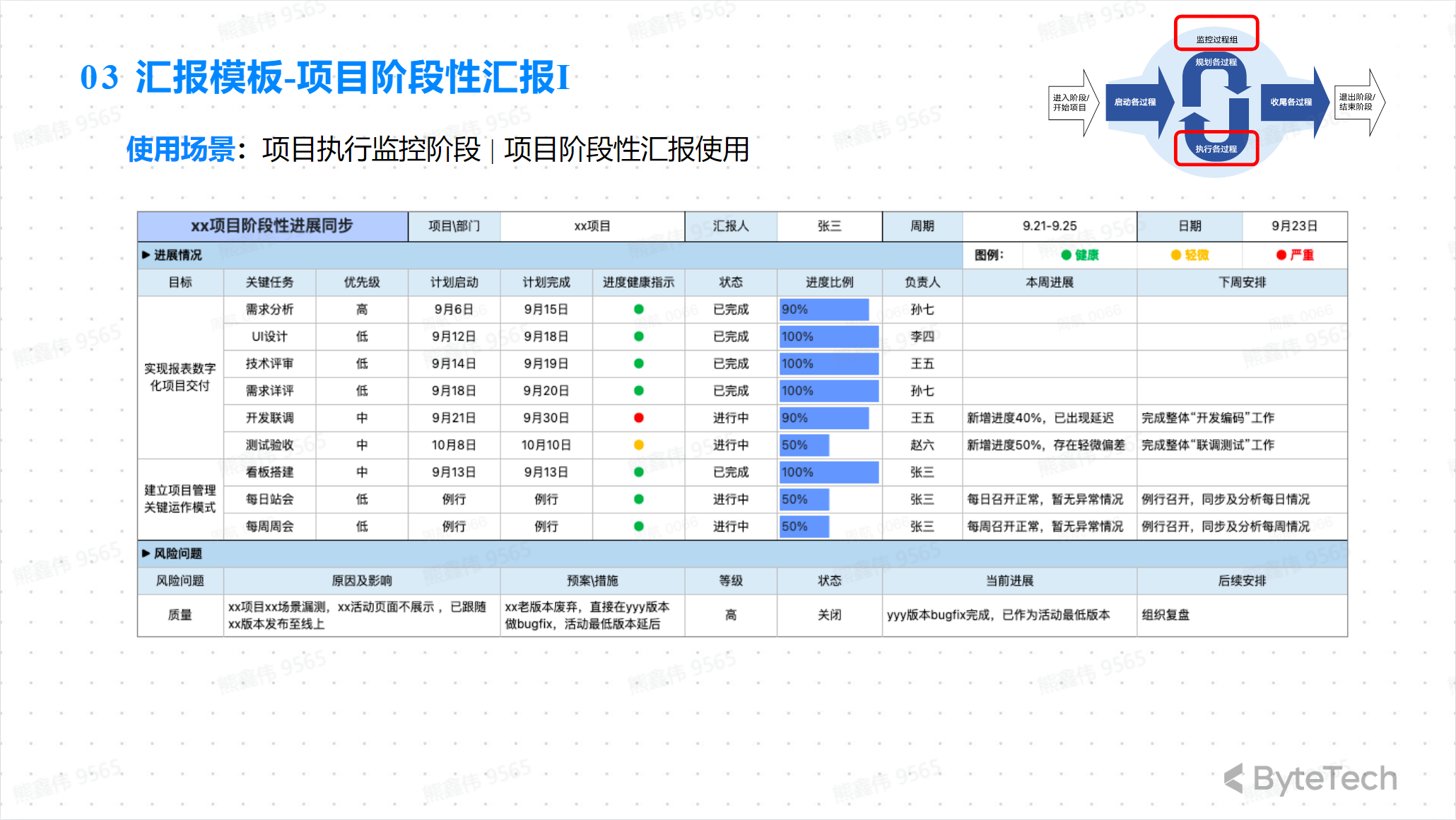
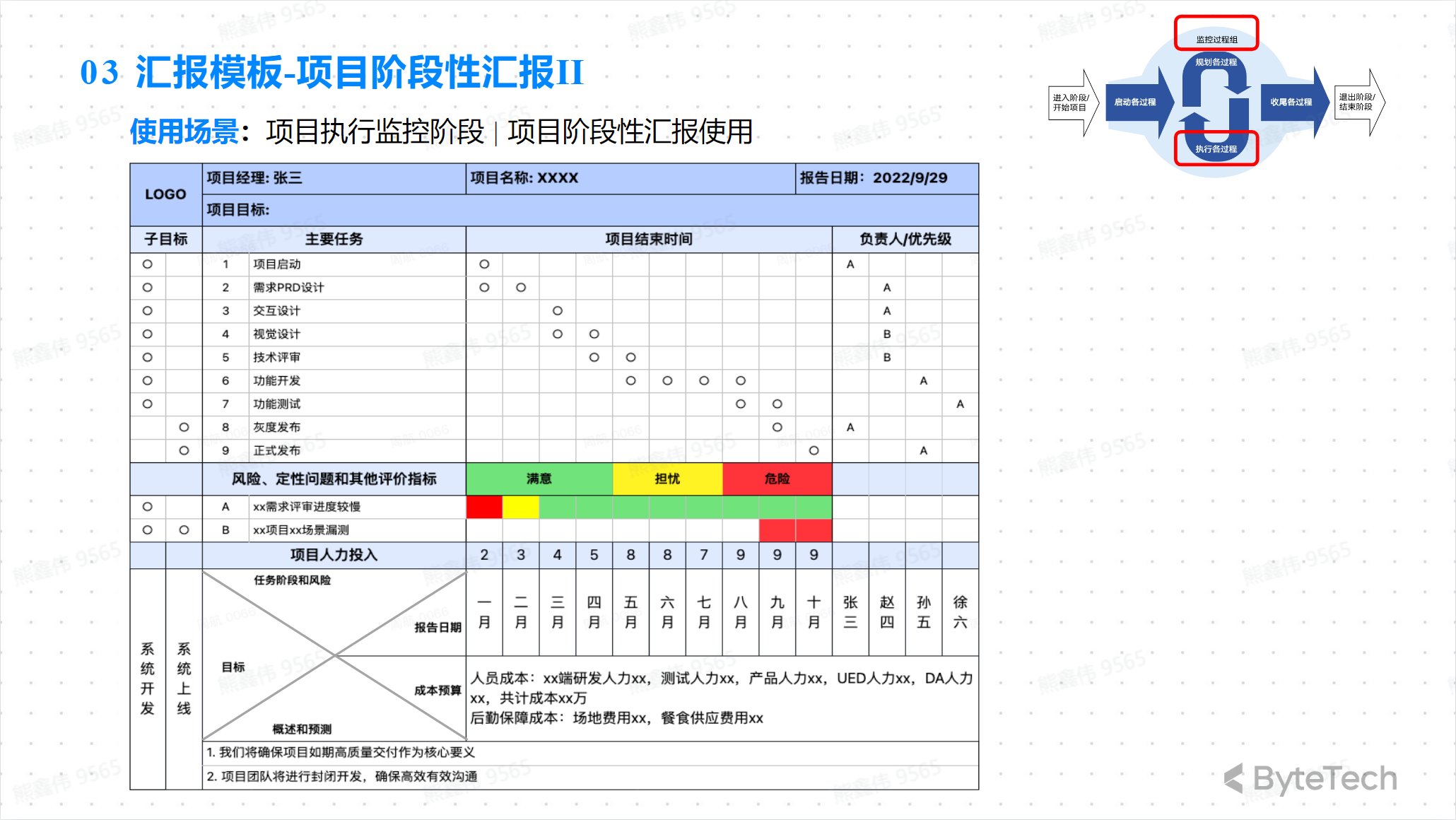
###Project stage report
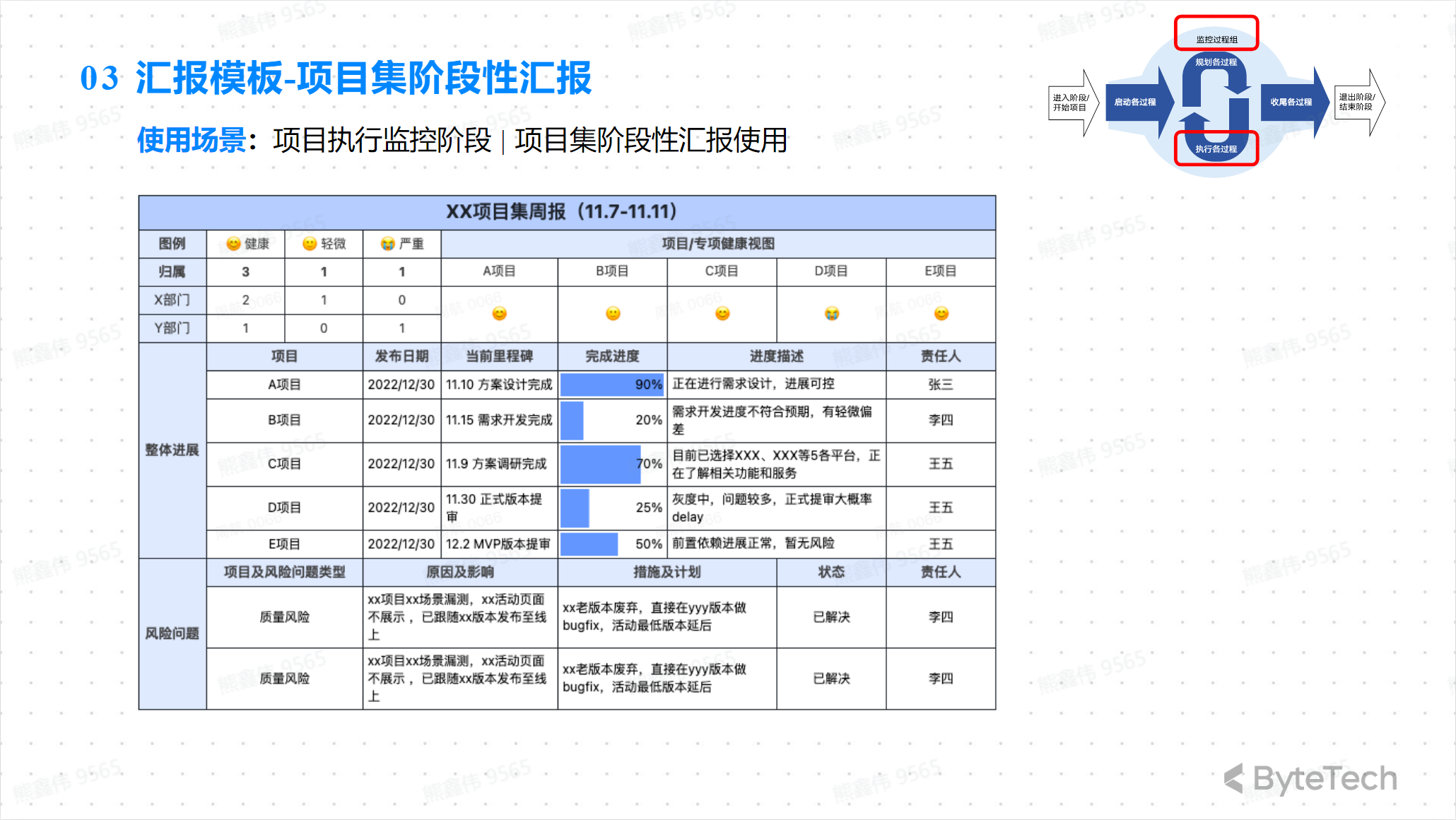
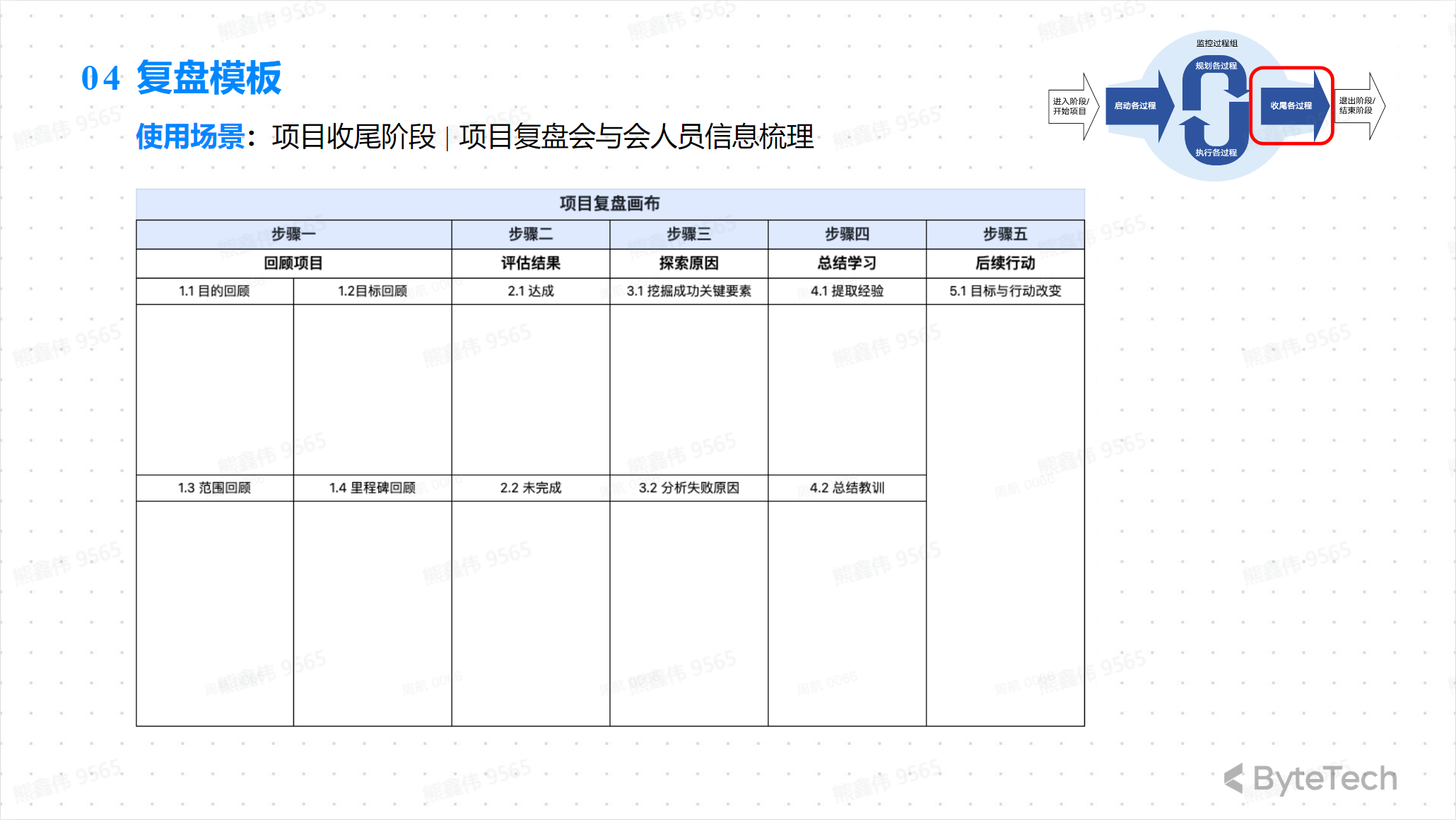
此内容由惯性聚合(RSS阅读器)自动聚合整理,仅供阅读参考。 原文来自 — 版权归原作者所有。