







Modern IDEs are useful, but they are not flexible enough for AI. The next step is not a smarter sidebar. It is a programmable operating surface where every useful thing can be addressed, inspected, changed, and replayed.
Most IDEs are still organized around files, tabs, projects, and panels. That works for a human editing one thing at a time. It starts to break when the work includes terminals, logs, browser state, tests, diffs, agents, approvals, notes, and long-running sessions. The pieces exist, but they do not compose cleanly.
The weakness is flexibility. A terminal has its own history. A chat transcript has its own memory. A test runner owns its output. A browser preview owns its errors. A debugger owns its watches. The user has to stitch those surfaces together. An AI agent has to infer the same state from text, screenshots, or hidden UI conventions.
Older environments had a better instinct. Smalltalk treated the running system as an inspectable object space. Lisp machines made the programming environment part of the runtime. Emacs made buffers a universal substrate: a file, shell, help page, process, or mail view could be opened and acted on through one model. Those systems are old, but this idea is more modern than many current IDEs.
For AI, every surface should be addressable. A file line, terminal byte range, command invocation, diff hunk, screenshot, network request, approval, setting, branch, table row, and note should each have identity. If the system can act on something, it should have an address. If it has an address, it should be inspectable, searchable, linkable, replayable, and explainable.
A buffer should not mean only a text tab. It should mean a durable work item with a type, URI, capabilities, position, history, and links. A terminal pane, failed test, browser replay, queue item, database row, and agent run can all be buffers. They render differently, but the same commands should still apply: open, split, search, mark, copy, annotate, diff, replay, and export.
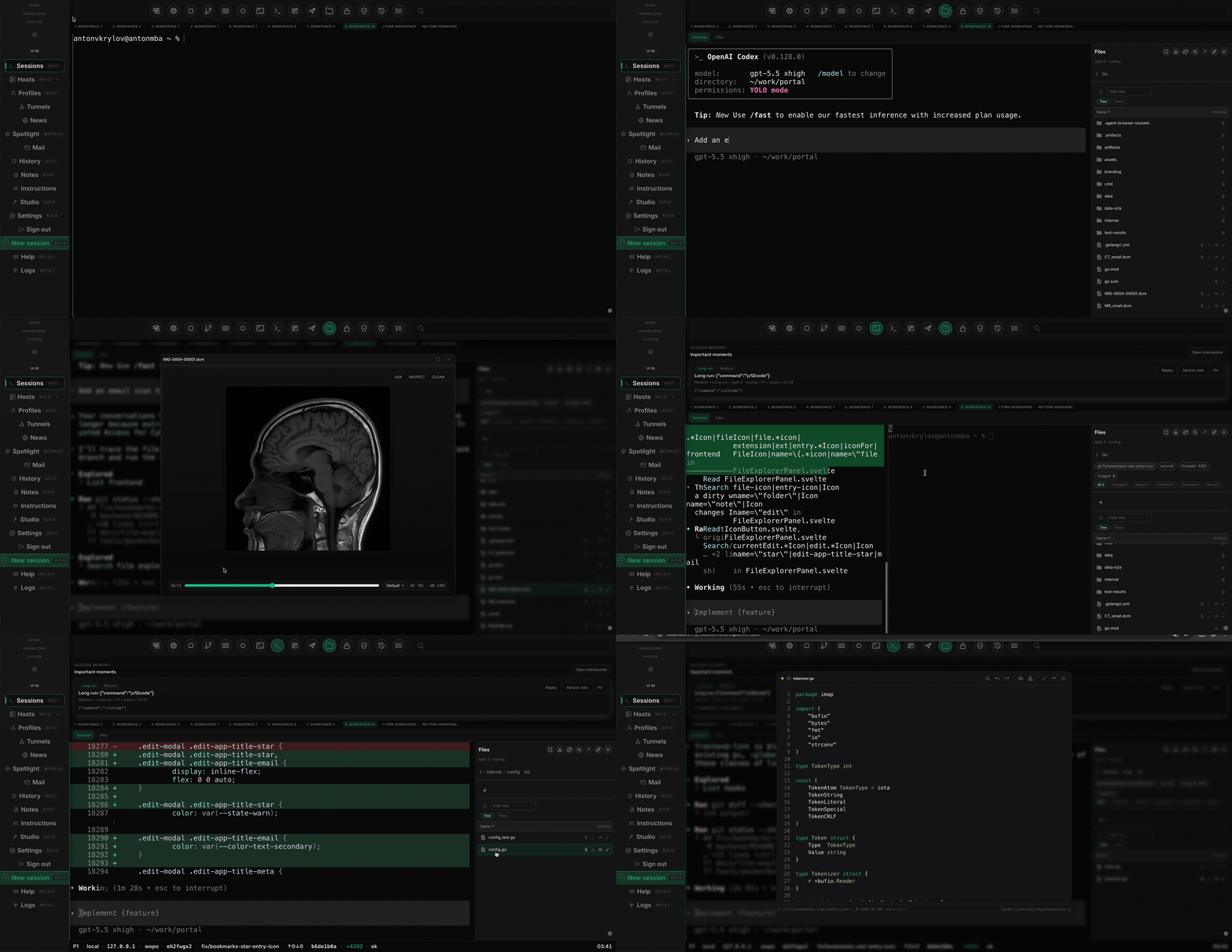
The demo shows the important part: features are added from inside the tool itself. The browser workspace is not only displaying code. It is acting as an operating system in a browser, with terminal state, file state, history, evidence, and command surfaces living together. That is the shape AI work needs.
Modern IDEs are not good enough because they remain app-shaped. AI needs an OS-shaped workspace: a scheduler for tasks, memory for sessions, an object model for work, permissions for actions, an event log for evidence, and a command language for humans and agents. The UI can stay calm and simple. The underlying state needs to be typed and durable.
This also changes safety. Today an agent often scrapes terminal output, reads the DOM, or asks the user to paste context back into chat. A better system lets the agent query the object graph: what commands exist, what buffer is focused, what changed, what evidence failed, and what actions are allowed. The same commands that power the menu and command palette should power the agent. No private UI powers.
The future IDE should not hide files, Git, terminals, or browsers. It should make them coherent. Git refs, worktrees, tests, logs, browser sessions, notes, and deployments become objects in one space. The user and AI navigate the same system. The IDE stops being a place where code is typed and becomes the runtime for software work.