










Every conversation about AI and the legal profession eventually arrives at the same anxious question: what happens to the lawyer? It’s a fair worry. The associate model that defines elite law firms today depends on armies of well-paid juniors doing rate-limiting work—document review, first-pass drafting, research memos—that LLMs already do faster, cheaper, and (whisper it) often better. If you take that work away, the whole pyramid wobbles.
But the panic about the lawyer’s future would be more credible if today’s lawyer were the natural, eternal form of the profession. The pyramid-shaped firm with a ten-year partnership track and hyper-specialized practice groups is, in the long arc of legal history, a recent invention, barely a century old and contingent on the technology of its era. Even the billable hour is relatively new.
Add in AI and what you get isn’t the death of the lawyer. Instead, a lawyer’s work looks like a blast from the past. But it will make the law firm’s structure look different than what we’ve seen before. It will look more like a normal company.
In 1872, there were exactly three law firms in the entire United States with five or more lawyers. Three. The “large firm” of the era, by the era’s own definition, had four people in it. As late as 1906, a respectable Chicago firm like Holt, Cutting & Sidley consisted of four lawyers, four clerks, and ten non-lawyer staff — a ratio that today would risk looking quaint.
These small firms didn’t specialize. A nineteenth-century lawyer was a generalist by default, doing whatever his clients needed: a will on Monday, a railroad easement on Tuesday, a contract dispute on Wednesday, a criminal defense on Thursday. The infrastructure for specialization didn’t exist yet. No formal practice groups, no specialty bars, often no formal legal education required for admission. You learned law by doing law, and you did all of it.
The work itself looked different too. The bottleneck was document production, which was physically hard. A “scrivener” (usually a young man without formal legal training) would handwrite fair copies of every document, every contract, every pleading.1 A good scrivener could produce maybe 30 words per minute.2 The lawyer’s job was to know the law, draft the original, and direct the production. The scrivener’s job was to turn that intent into a document.
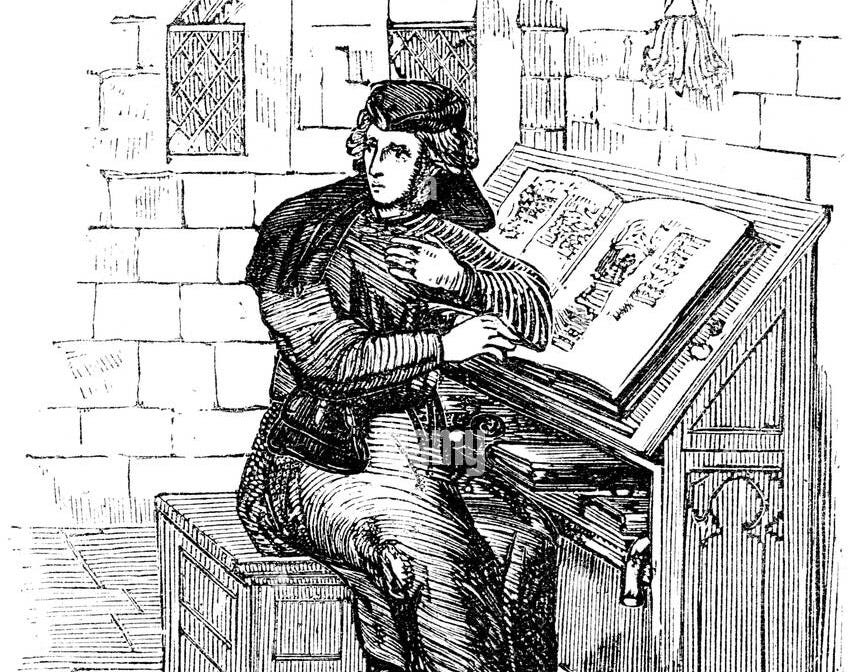
Similarly, a law librarian did much of the manual work of maintaining information. A law librarian would do more than merely maintain a library of physical books like case reporters, statutes, and treatises. They would also file daily updates into binders, called “loose-leafing,” to make sure the legal materials were all up-to-date. They would not only maintain catalogs and develop indices but also go down into the shelves to do the first cut of legal research on behalf of the attorney.
This setup is more than historical color. It’s the original division of labor in legal work, and it’s worth holding in your head while we look at what came next.
The pyramid-shaped firm we now treat as the natural state of law is the product of a specific person solving a specific problem. Around 1906, Paul Cravath was reorganizing his firm to handle the legal work coming out of the second industrial revolution. Think Westinghouse reorganizations, railroad consolidations, early electrical-industry litigation. The small generalist partnership was visibly inadequate to the scale. So he built something new.
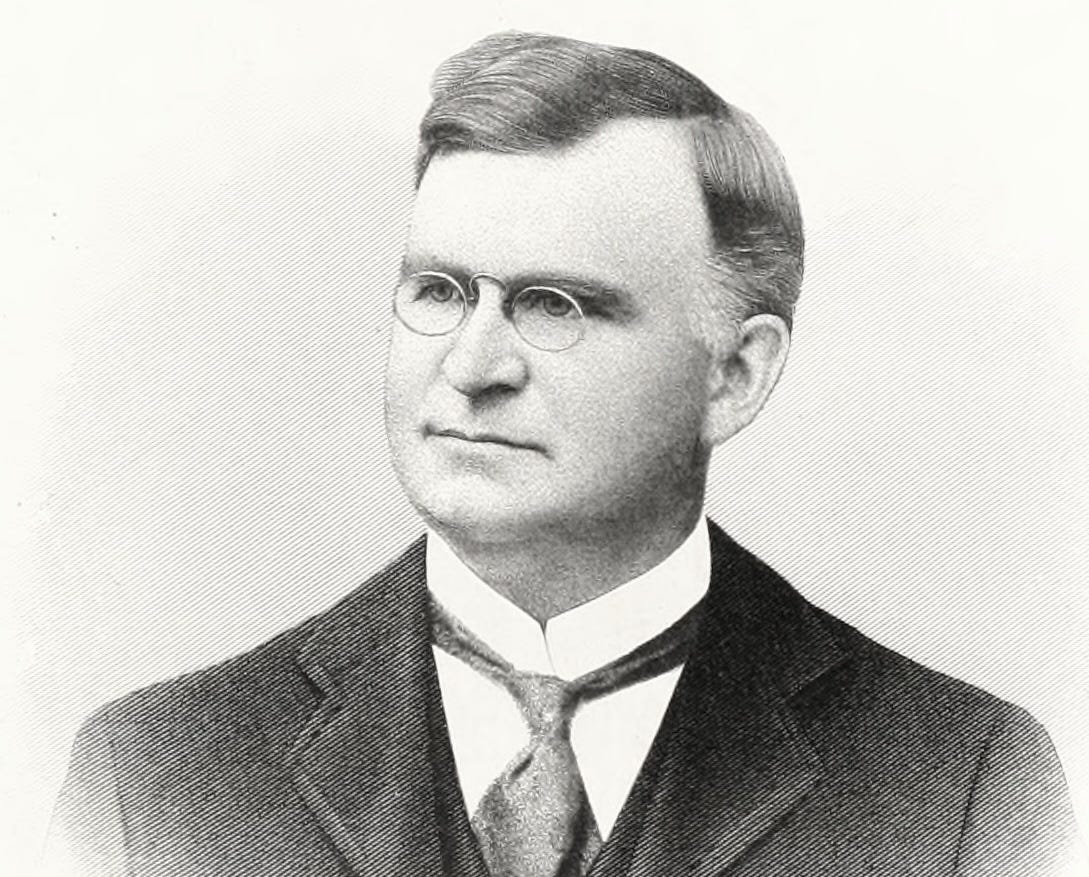
The “Cravath System,” as it came to be called, had a few innovations that compounded into something larger than their parts. He hired straight from the top law schools. He paid associates a salary instead of letting them eat what they killed. He brought in professional law librarians (a first). And he trained his associates as generalists.
The Cravath rotation system, which the firm still describes on its website today, moved associates through different practice groups every fifteen to eighteen months. As the firm itself puts it, the system was “designed to produce lawyers with breadth, sophistication and a deep working knowledge of a wide variety of practice areas.” The point was emphatically not to crank out specialists. An associate would do litigation for a stretch, then corporate, then tax, then back to litigation under a different partner, building a generalist’s intuition for the firm’s full range of work before any specialization happened.
Note the unit of measurement. Every fifteen to eighteen months, a new rotation. Total tenure as an associate was a multi-year apprenticeship. Robert Swaine, Cravath’s chronicler, was explicit: “Men who are willing to stay only a year or two are not desired, for the Cravath system cannot train a man in that short time.” This wasn’t a job. It was, in its conception, the way one became a lawyer.
What’s often missed about the Cravath model is that the original associate was much closer to the original partner than to today’s seventh-year associate grinding through a 200-page diligence review at 2 a.m. The associate was a learner, embedded in a partner’s practice, watching closely, doing real but supervised work, and rotating to broaden out. They were, in effect, mini-partners; after all, the original Cravath system was an attempt to industrialize apprenticeship without destroying it.
Notably, these lawyers also did not bill by the hour. Work was typically flat fee, and “going rates” were often regulated to prevent the fleecing of unsophisticated clients. The billable hour was itself invented in 1913 by Hale and Dorr, which became WilmerHale. However, it did not become common practice until the 1970s when the Supreme Court invalidated bar fee schedules in the 1975 case Goldfarb v. Virginia State Bar. Ironically, corporate in-house departments were the main drivers of billable hours because they felt it would generate alignment and provide transparency.
You can trace the path from there to here without much trouble. Firms grew. By 1925 there were over a thousand “large” (four-plus-lawyer) firms in the country. The post-World War II expansion of corporate America gave firms more work than they could handle, and the response was to deepen the pyramid: more associates per partner, and more specialization. Justice Byron White noticed it more than forty years ago, calling out “the gradual change in the character of law practice from a generalist skill to an increasingly specialized one.” Today an associate isn’t a litigator; she practices construction law, or OSHA compliance, or non-compete and trade secrets. The rotational generalist Cravath was trying to mint has been replaced, almost everywhere except Cravath itself, by a specialist who picks her practice group as a 2L and never really leaves it.
The other quiet drift was in the nature of associate work. The original Cravath associate did first-rate work under close supervision. Today’s associate often performs the rate-limiting tasks: necessary because someone has to do them, justified as “training,” and priced at a markup that gives the firm every reason to keep the machine running. We tell our second-years that grinding through diligence is how they learn. It’s a lovely story. It’s mostly not true. They learn a little; they bill a lot.
And the work itself, which today’s associate does at her own keyboard, used to be done by someone else entirely, from the scriveners and law librarians to the typewriter pools and secretaries.
There is a single thread running through all of this: for most of the history of the legal profession, the lawyer’s job was to know things and direct the finding and production of documents.3 The actual document didn’t get touched by the lawyer’s hands — that was someone else’s job, whether scrivener, typist, secretary, or junior associate. And all of that human work probably started with a form book or treatise. The lawyer of 1880 dictating to a scrivener and the lawyer of 1980 dictating to a Dictaphone were doing the same thing in different costumes. Yet without the associate’s output, the partner couldn’t do their work.
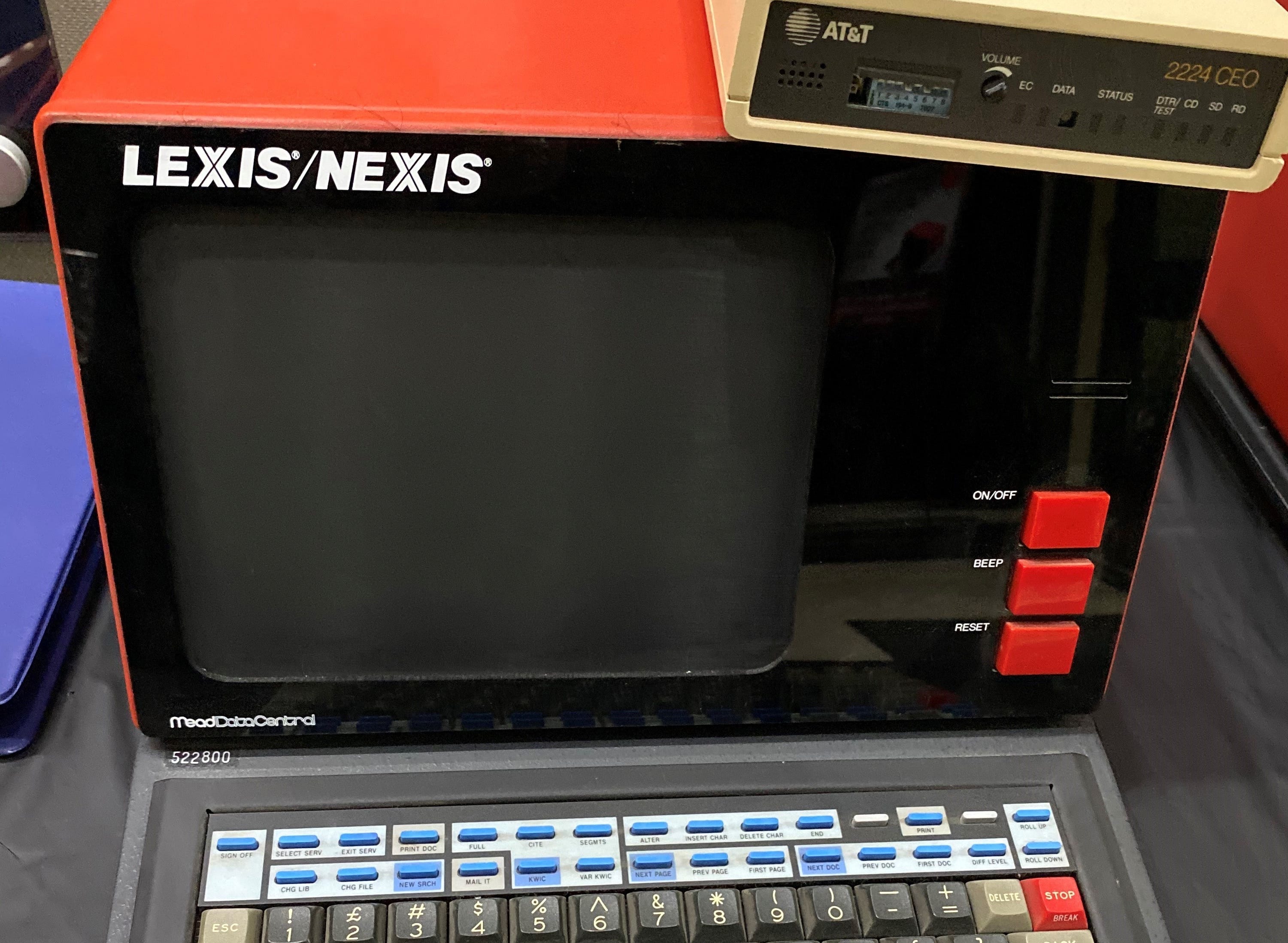
Information technology changed everything. Suddenly, with Microsoft Word and Lexis Nexis, it became more efficient for lawyers to do things themselves. They would type their own briefs and look up their own cases. It became more efficient that way. But it did mean a change in the job of a lawyer from overseeing information to producing it directly. That’s the job lawyers do today.
The anomaly, the historically weird situation, is the lawyer of the last twenty years, sitting at her own desk, writing the first draft of every memo herself. That’s the deviation from the pattern. That’s the thing AI is going to fix.
If you describe an LLM to a lawyer in 2026, it sounds futuristic and a bit threatening. If you describe it to a lawyer in 1906, it sounds like a really good scrivener. You tell it what you want; it produces a fair copy; you review and revise. You tell it what you want to know; it looks up a legal database like Westlaw; and it produces the case to review. The lawyer’s value-add is exactly where it has always been—knowing what should be said, understanding the context, exercising judgment, catching the errors. The thing that’s changed is the medium for getting it onto the page, which is the one part of the job that has been changing constantly for two centuries.
This reframing matters because the doom-loop conversation about AI in law is built on a false baseline. The argument goes: today’s associate drafts memos and LLMs draft memos, so associates are obsolete. But “drafting memos” is the part of associate work that most resembles the work that has always been done by non-lawyer staff or junior apprentices under close supervision, not the part that has historically defined what it means to be a lawyer.
We’re not eliminating something essential here. We’re eliminating the keyboard step that most lawyers in history would have looked at and said, “wait, you do that yourself? Why?” The consequence is that, with the keyboard step automated, the rest of the lawyer’s day starts to look more like what it used to. More research and reading. More negotiation. More client work. More thinking.
The other thing LLMs do is collapse the cost of working outside your specialty. A construction lawyer in 2026 with a halfway decent AI tool can spin up enough working knowledge in a neighboring domain quickly enough to ask better questions, handle routine tasks, and know when true specialist help is needed. The activation energy for cross-domain work, which has been climbing for fifty years, is suddenly falling.
This points back to the Cravath original model. Cravath built a system that took elite generalists and kept them generalists through years of rotation, because he believed that a lawyer who had seen the firm’s full range of work was a more valuable lawyer than one who had drilled into a single practice. The market drift since then has been away from that vision and toward narrow specialization, partly because client work got more complex but mostly because firms got larger and the economics of specialization (high billing rates for narrow expertise) became too tempting to resist.
AI doesn’t fully reverse that. There will still be a place for the deep specialist, the partner who has done a hundred SPAC deals and knows where the bodies are buried. But for everyone in the eight tiers below that partner, AI is a great equalizer toward generalism. The cost of being competent outside your specialty just dropped by an order of magnitude.
When people imagine AI eliminating associate work, they picture the pyramid getting flatter—fewer associates per partner, leverage ratios collapsing, firms shrinking. That’s the wrong picture. What’s actually happening is more interesting: every associate now has, sitting next to her keyboard, the equivalent of the team of juniors that used to sit a floor below her.
Think about what a fifth-year associate in 1995 needed to draft a complex agreement. She needed first-years to mark up precedents. She needed paralegals to chase down corporate documents. She needed a secretary to type the redlines. She needed a librarian to pull case law. The reason she had all of this support was that producing legal work product — at the speed and quality clients expected — required a small standing army.
A fifth-year associate today doesn’t need any of it. She has an LLM that does precedent comparison in seconds, document review on demand, drafting and redlining at conversation speed, and research that used to take an afternoon in fifteen seconds. She has, functionally, her own associates. The work that the partner used to delegate down through three layers of staff now runs through one person—her—with AI doing what those layers used to do.
This is why the Cravath original model is the right model to think about, not despite the technology but because of it. Remember, the Cravath associate was a mini-partner, handling real client work with real responsibility, building a generalist’s intuition under close supervision, on a track measured in years rather than billable-hour quotas. That model collapsed under the weight of the work. There was simply too much volume for partners to mentor closely, and the only way to get the work done was to throw bodies at it. So the apprentice became a worker, and the firm became a factory.
Take the volume problem away by giving every associate the leverage that used to require a standing army and the apprentice model becomes viable again. Not because firms become small and quaint, but because the unit of legal production shrinks. One associate plus an LLM is a reasonable replacement for one mid-level associate plus three first-years and a paralegal. It’s a skyscraper, not a pyramid. Same number of floors, maybe more—but each floor is a self-contained unit that does the job for its own segment using AI as leverage, not a layer of support for the floor above.4
Once you see the unit getting smaller, the rest of the picture comes into focus. The middle of the legal market will fall under pressure. After all, skyscrapers are generally pretty big and tend to dwarf everything near them.

The big firms will get much bigger. They have to. The work that’s left after AI handles the rate-limiting tasks is the work where scale, brand, and bench depth actually matter — bet-the-company litigation, market-defining transactions, regulatory crises that need a hundred specialists pointed at the same problem by Sunday morning. That work is fundamentally a winner-take-most market, and the firms with the deepest benches and the most defensible brands are going to consolidate it. The consolidation wave is already underway, with big firms merging like Cadwalader and Hogan Lovells, and big firms buying regional players like Ballard Spahr buying Lane Powell. Expect more.
The small firms will thrive, but in a particular way. Obviously, using AI will help them strengthen their core competency—the patent firm that is the world’s best in synthetic biology patents will get more leverage than ever. But beyond that, the boutique that used to handle one slice of a startup client’s legal needs now handles five slices, because the activation cost for each new slice has collapsed. Your trademark boutique is suddenly a credible vendor for your client’s employment IP matters, their commercial agreements, their basic litigation. Boutiques will get broader on a per-client basis even as they remain narrow on practice expertise, because the LLM is doing the cross-domain work that used to require hiring a generalist or referring out.
The pressure therefore will fall on the middle. The 200-lawyer regional full-service firm, whose value proposition was “we’re cheaper than the white-shoe firms but bigger than the boutiques,” faces real risk. Their pricing advantage over the big firms will shrink as AI compresses the cost of complex work everywhere, at least for certain segments. Their breadth advantage over the boutiques will shrink because AI lets boutiques handle adjacent work competently. They will get squeezed on both sides simultaneously.
There are strategies to survive and even thrive. The obvious approach is to look at the required change in size and fit into that tier. Mid-size firms can merge or split up. Either way, they either become boutique or big. That is one approach. The more radical approach is to ask how the firm can become an n-of-1 firm. Specifically, how can a mid-size firm come to dominate a practice area, either in their country or globally? If you are the world’s expert in a unique area like environmental compliance law, can you acquire all 40 lawyers in the world who are the masters of that area, thus building a highly differentiated firm that is mid-size but a giant in its field?
The industry calls itself “white shoe,” but what law firms actually sell is white-glove service, even for tasks that seem routine. In contrast, a Macbook comes in a white box with a price.
Law firms today are always selling bespoke, hand-fitted, accounted for in six-minute increments. Clients don’t get a fixed price; they get a bill of particulars: partner time versus associate time, line items for the Westlaw search and the conference room and the car service home. Every other professional service that bills this way—management consulting, accounting—has at least made peace with fixed fees for productized work. Law has held out longest, but not for a bad reason at all.
Yes, the billable hour was originally demanded by clients, but the reason it persists is that the cost of providing a legal service has been genuinely unpredictable. You don’t know in advance whether the diligence will turn up a clean cap table or a tangle of side letters from 2014 that nobody remembers signing. You don’t know whether opposing counsel is going to be reasonable or going to make every deposition a war. So the firm protects itself by passing the unpredictability through to the client, hour by hour. The billable hour isn’t a pricing model; it’s a risk-transfer mechanism.
If Apple finds a way to manufacture the next one more cheaply, that gain doesn’t flow to the customer as a refund—it flows to Apple as margin. The customer gets a Mac; Apple gets the upside of its own efficiency. You can still get a bespoke computer if you want one, with custom liquid cooling and a hand-tuned GPU, and for that you’ll pay a craftsman by the hour. But that’s a vanishingly small slice of the computer market, and nobody confuses it with the main event.
If AI makes the work faster, and the firm bills by the hour, then the firm’s revenue falls in lockstep with its productivity gains. Every other industry would call this a win. In law, it reads as a threat, because legal accounting norms confuse revenue its cost because they are the same line item: the billable hour. There is no other industry, anywhere, that runs this way. A consulting firm’s cost is its salaries; its revenue is its fees. A law firm’s revenue and cost are the same number multiplied by different markups. This is why so many lawyers are quietly afraid of AI’s efficiency.
AI makes many legal tasks fast and predictable to provide, which allows them to be productized. Lawyers can now economically quote a fixed fee for it, deliver it reliably, and book the difference between the fee and your cost as margin. The firm’s incentive flips. And competition will drive the adoption of productized services.
Some corners of the law have already made this transition, and the lesson is right there. Incorporating a company used require lots of work and was easily a $25,000 dollar affair. Today a competent firm will incorporate your startup for a few thousand dollars, sometimes less, because the forms are mature, the variations are well-understood, and the firm just has to keep up to date with major caselaw to keep everything current. These are effectively 100% margin products. The law firms that do this work are doing just fine. Certainly intellectual property has been trending this way, with flat fee clearance searching, application drafting, and more.
Extend that across the next decade. Many things that today require a partner thinking from first principles for two hours, with an associate thinking for ten more, will become products. Not because the underlying judgment isn’t valuable, but because AI makes it cheap to encode that judgment into something repeatable. The firm’s job shifts from selling the judgment by the hour to selling the product that contains the judgment, at least in standard cases.
That looks much less like a traditional service organization and much more like a product development shop. There’s a team that builds and maintains the incorporation product, a team that builds and maintains the clearance search product, and so on. They iterate and respond to the market with new standard services. The economics of this are software economics, not law-firm economics—high upfront investment, low marginal cost, profit margins that compound as the product matures.
This is, coincidentally, exactly the kind of business structure that supports the skyscraper firm model. White-glove services don’t scale; every new client requires another person-hour, which is why the pyramid model evolved. White-box products scale beautifully; the marginal cost of the ten-thousandth incorporation is essentially zero. The firms that learn to sell both—white box for the productized work, white glove for the bespoke matters—will be more profitable. The law firms that do this suddenly start to look a little more like normal companies.
We’re going back to the future. The lawyer of the future looks more like the lawyer of the past — apprentice-trained, generalist-leaning, working closely with seniors rather than grinding through diligence at scale, and billing a list price at a high margin. But the firm she works at is going to look like nothing the legal profession has ever seen: a global colossus with thousands of generalist mini-partners, or a five-lawyer boutique handling everything its clients throw at it, all investing in standard services sold like SKUs alongside bespoke specialist work.
Back to the future, but only for the lawyer. The firm is going somewhere new.
此内容由惯性聚合(RSS阅读器)自动聚合整理,仅供阅读参考。 原文来自 — 版权归原作者所有。