







We're building Open Notes, a system for making sense of messy, real-world online discussions -- especially where people disagree.
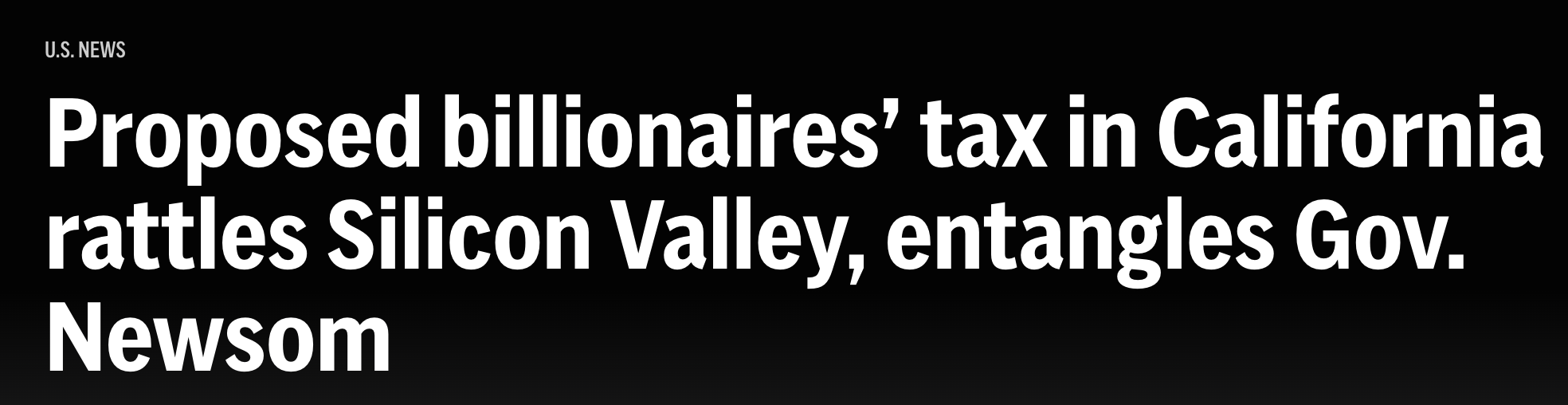
To understand how those discussions actually behave today, we analyzed comment threads about the same policy -- California's proposed billionaire tax -- across three different platforms: a California Post article, an Associated Press article, and a Hacker News thread.
Same topic. Same underlying facts. What we found wasn't just variation in opinion -- it was three fundamentally different ways of processing information.
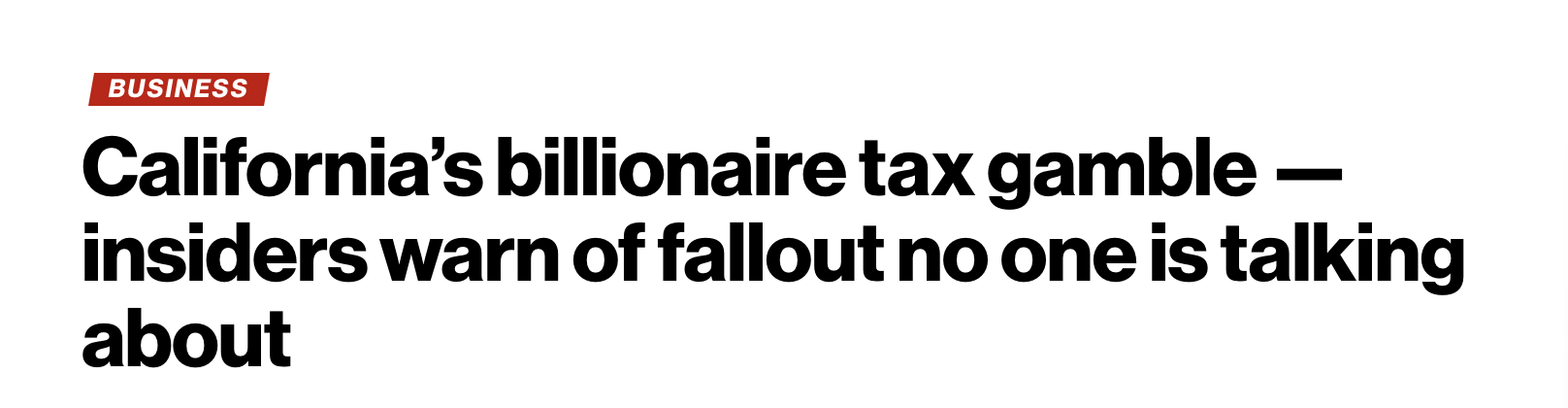

At first glance, the California Post comment section looks like a debate. In practice, it isn't.
Instead, it forms a highly consistent narrative that repeats across participants.
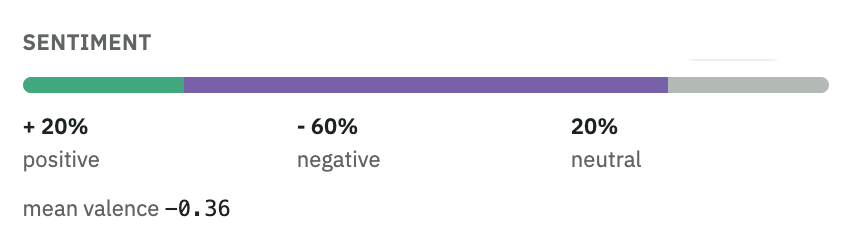
Sentiment skews heavily negative, and claims cluster tightly around a small set of themes -- fraud, government mismanagement, and economic collapse. Comments tend to reinforce one another rather than challenge or expand on previous points.
As the analysis shows, responses quickly converge into a shared framing of the issue, with very little back-and-forth or meaningful disagreement. People aren't arguing so much as aligning around a common interpretation.
The result is a kind of narrative lock-in: once the frame is set, the discussion doesn't move.
The Associated Press thread initially appears more balanced. You see both supportive and critical views of the policy, a wider range of arguments, and less overtly hostile tone.
But the structure of the conversation reveals a different failure mode.
Rather than converging on a shared narrative, the thread fragments into a series of independent reactions.
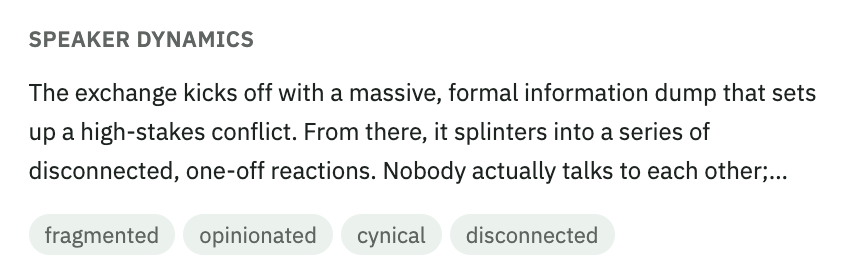
Commenters respond to the article itself, not to each other. As the analysis notes, "nobody actually talks to each other… they treat the original post as a sounding board for their own individual takes."
So while there is more diversity of opinion than in the Cali Post thread, there is still no synthesis. Arguments coexist, but they don't interact. The discussion accumulates perspectives without ever resolving them.
Hacker News comes closest to what we might consider a functional discussion.
Here, commenters engage directly with each other. They introduce competing economic arguments, question assumptions, and attempt to reason through the implications of the policy. Unlike the other two platforms, there is genuine back-and-forth.
But this structure doesn't hold.
As the thread develops, it begins to fracture.
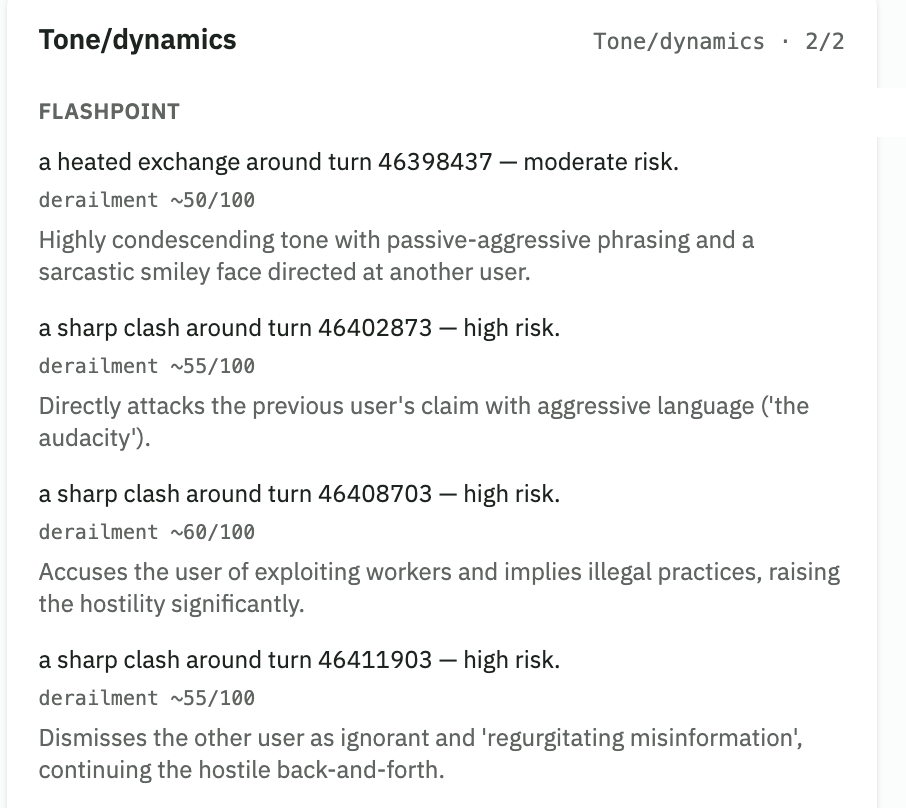
Tone escalates, arguments become more personal, and participants start accusing each other of bad faith or misinformation. The analysis highlights multiple "sharp clashes" and points of derailment throughout the discussion.
By the end, the thread exhibits strong negative sentiment -- roughly two-thirds of the comments skew negative -- and a proliferation of competing, often contradictory claims. What begins as debate gradually turns into conflict, and then into fragmentation.
What differs across these platforms isn't just tone -- it's the structure of disagreement.
On the California Post, discussion collapses into agreement and narrative reinforcement. On the Associated Press, it fragments into parallel, non-interacting viewpoints. On Hacker News, it begins as debate but ultimately breaks down under the pressure of conflict.
The underlying topic is identical, but the outcomes are completely different: alignment, fragmentation, and escalation. These differences aren't about the topic itself -- they reflect how each platform processes disagreement, shaping what the conversation becomes.
Open Notes is designed, in part, to operate in this layer -- not at the level of removing content, but at the level of structuring how it's interpreted.
Instead of collapsing discussion into a single narrative or letting it fragment entirely, it surfaces the key claims, perspectives, and supporting context in a way that different participants can engage with.
Looking at these three threads side by side makes something clear: the same policy can generate entirely different realities depending on how the surrounding conversation unfolds.
The issue isn't simply what gets posted, but what happens afterward -- how claims interact, how disagreements evolve, and how people interpret what they're seeing.
That process looks very different depending on where it happens.
此内容由惯性聚合(RSS阅读器)自动聚合整理,仅供阅读参考。 原文来自 — 版权归原作者所有。