







No AI was used in writing this post.
If academia was a game, I've won it. Tenure, an endowed research chair, awards, leadership positions, an international journal I helped to found and now serve as the Editor-in-Chief, students I have supervised to their own successes, a good h-index, all the classic marks of success. This isn't meant as bragging but rather to point out that while I've won this game, the game no longer makes sense.
Academia, as most of us have practiced it, runs on maximalism. The most grants, the most papers, the most students, the most awards, the most news coverage. While we are doing much better these days in highlighting impact and contributions, the underlying engine is still volume, and the volume has always been produced by independent human writing (applications, submissions, letters of support, reports, Conversation articles, press releases, etc., etc.). The problem is that AI makes volume essentially infinite (until the world burns up, but that's a parallel discussion).
Assignments are the most obvious casualty
I'll start with the part that is already visible to the general public. Any assignment a student takes away and brings back is, for all practical purposes, extremely likely to be AI generated or AI refined. To date we've often been able to detect this use and this is because some students still use AI badly. They submit the obvious slop with classic Chat GPT formatting, comma-separated three item lists in every sentence, the hallucinated citation, the tell-tale hyperbole, lack of paragraph tabs, etc. We catch those students and we feel like we're still on top of things.
But the real obvious problems are the ones we'll never notice and that are already passing by detection. Take a student with two paid accounts, say Claude and ChatGPT, who has one AI draft the work and the other critique and refine it, looping until the prose is clean and the argument is tight. The have AI double and triple check references, they nail every bit of formatting and punctuation. That student produces work that is not only undetectable, it is better than most of what gets submitted, and it will therefore earn a higher grade. These AI-maximizing students become the rational ones rather than being 'lazy' or 'dishonest' because they start to see the obvious connection between AI use and grades. Most egregiously, the system now does two things: it penalizes the student who wrote their own merely human essay with natural flaws and limitations, and it hands zeros to the unsophisticated AI users who we catch, while rewarding the sophisticated (and higher spending) ones. If your class has a term paper that students do on their own and submit for grading, chances are that you (or your TA (our your TA's AI)) are assigning grades unrelated to real knowledge of the content.
But it's the research issues that really hit me personally
We've been talking as a sector a lot about the teaching/learning issues around AI but as I told my research team last week, it seems like we're still 'head in the sand' about what this means in terms of research and overall academic success.
Mass produced, publishable content, is ALREADY HERE. Review articles, methodology pieces, theoretical syntheses, reports, secondary analyses of qualitative data; a researcher today can generate these in volume by combining a couple of pro subscriptions to tools like Consensus and Claude, and a significant share of these will be good enough for publication. Sure, some reviewers will spot some article submissions as being too fluffy (but again, I still think that's just not using the tools optimally, you can train AI away from all the hyperbole and empty premises) but if you're blasting them out like a firehose, a lot will get through. Someone willing to work this way can produce something close to a paper a day, slowed down a bit by online submission system clunkiness, and their CV will quickly eclipse anyone doing independent intellectual work.
It's the same issue with grant submissions, restrained only a bit by limits on how many a single researcher can submit or hold simultaneously. Picture a team of five colleagues running ten applications into a single CIHR Project Grant cycle by rotating which member sits as nominated principal investigator (each can submit 2 per cycle). The odds of landing at least one are high based on volume alone, before you even account for the fact that AI is genuinely good at some of the common critical errors that sink applications: budget flaws, a highly relevant paper the team missed citing, the eligibility criterion that was maybe flagged so late in final review they decided they didn't have time to fix it. The careful, error-free, comprehensive application used to be the outcome of several failed submissions, now it's just someone who knows how to use multiple AIs or use a cowork/agent system.
What's CIHR even going to do when the number of applications triple? What are they going to do when AI submissions are better than human developed ones? So far, the discussion about dealing with this volume is thinking about AI pre-screening of applications. So your AI is now checking my AI...cool, cool, cool.
I don't want this to sound like sour grapes like I'm worried that junior scholars are going to outpace me. Rather, I'm worried that academia as a whole careens into nonsense because we haven't adjusted our reward systems to match the current reality.
We will pretend this isn't happening for a while
The institutional response has been reasonable in terms of coursework and assignments. Due to the complexities of academia, including academic freedom, de-centralized structures, unionized contracts, etc., there won't be rapid, centralized responses about course assignments. Rather, universities are providing supports and guidance to redesign assessments, redesign syllabi, and providing cheating prevention software for certain remote assessments. Many scholars have written more eloquently than I can about processes to ensure learning is occurring and evaluation is meaningful. Yes, going back to paper and pencil strains our current resources, but is a likely necessity.
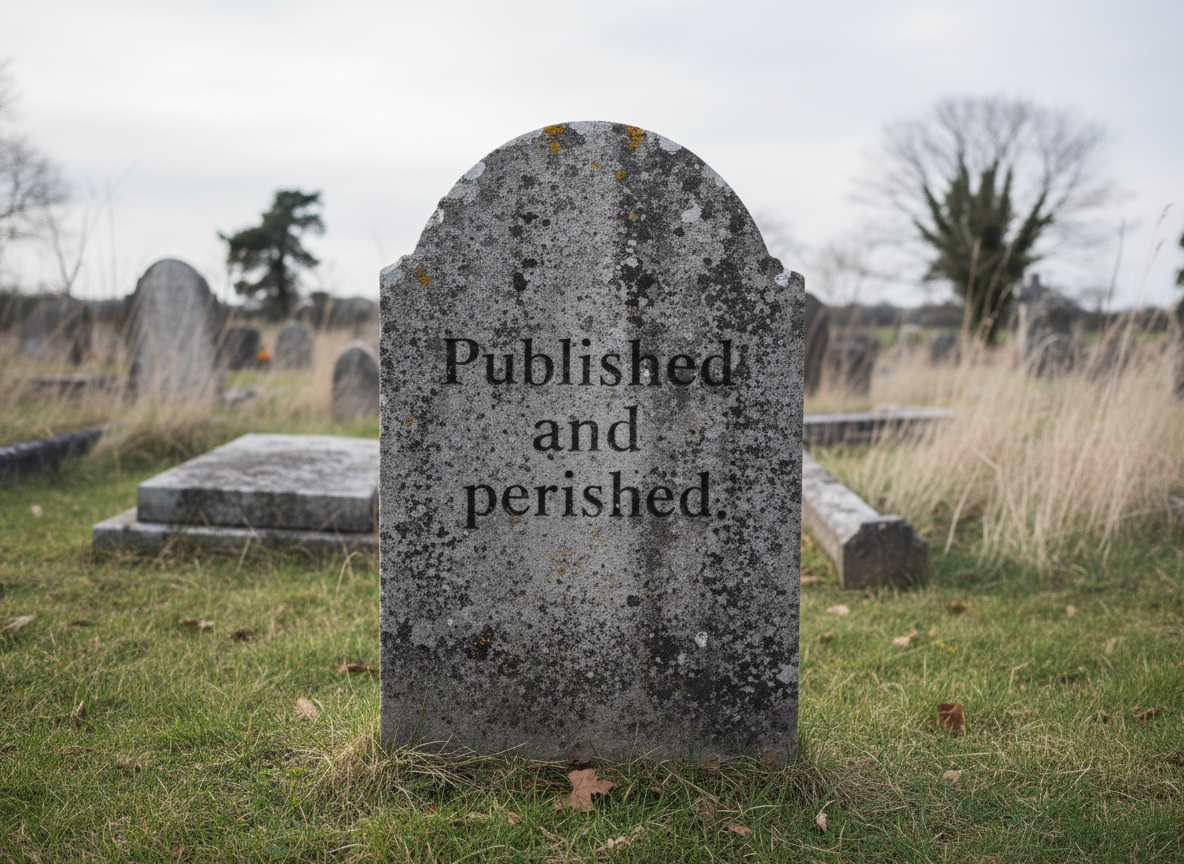
On the research side, the response has seemed far slower. From Tri-Councils initially banning AI use to then allowing it, and most journals having very limited responses beyond perhaps self-declarations, it seems we are already 2 years behind the reality. Indeed, we continue to run on our former processes and metrics while an entirely new system is in place that essentially negates these metrics. The version of academia whereby you submit written content and are rewarded for how much of that written content is taken up in formal venues is already dead in terms of meaning. We just haven't gotten around to holding a funeral yet.