


There are a few reasons that MSPs start looking for ThreatLocker alternatives. You might have had enough of the friction with end users.
The high levels of admin required to set policies for your different customers. Or that, while powerful, it can only handle certain kinds of security risks.
If so, we wrote this guide for you. I’ve handpicked six other companies whose products do similar things to ThreatLocker, but who give you different features, tools, or ways of doing things.
Some of these are direct ThreatLocker competitors, others give you the means to manage your clients’ environments in a different way.
I’ve included the following six companies in this list. They all offer strong features that compete with ThreatLocker’s zero trust, allowlisting and ringfencing security approach. But they also give you other capabilities or advantages.
Transparency: While we offer tools that compete with ThreatLocker’s, this guide aims to be neutral, objective, and balanced.

ThreatLocker is a highly regarded vendor and they’ve played a significant role in the development of the industry’s current approach to zero trust. And, with their ringfencing security and application allowlisting software, they’ve built highly effective tools to enforce a ‘never trust, always verify’ posture.
But as strong as this model is, it has its limits.
Some of this relates to practical issues. Whenever apps or software aren’t on an allowlist, users must make a request to IT. That’s OK for a mid-size company with an in-house IT department. They can deal with a handful of tickets a week. But it’s a whole different ball game when you’re an MSP, with thousands of end users at firms with different policies and working in multiple time zones.
Using zero trust tools like ThreatLocker’s is also time-intensive and very manual. This isn’t a mistake – it’s an inherent feature of the design. The whole philosophy of zero trust is that it requires companies to develop detailed policies that evolve over time.
Again, that’s fine in a small-ish organization where IT can collaborate with other departments. It’s a nightmare for an MSP with dozens of clients.
There are also technical and security limits of a pure zero trust model. For example, if hackers find a zero day weakness in any apps on your allowlist, then you’ve got almost no protection at all.
This is only going to become a bigger risk now that AI tools can discover weaknesses in apps at machine speed.
As a cybersecurity platform vendor ourselves, we know this market inside out. We handpicked six alternatives to ThreatLocker that we think any MSP should consider.
As mentioned above, we do have skin in the game. But I’ve aimed to compare these tools objectively and with as little bias as possible.
For each ThreatLocker competitor, I’ve analyzed them using the same metrics.
To make this exercise fair, I’ve also included ThreatLocker in this list so you can compare ‘apples with apples’.
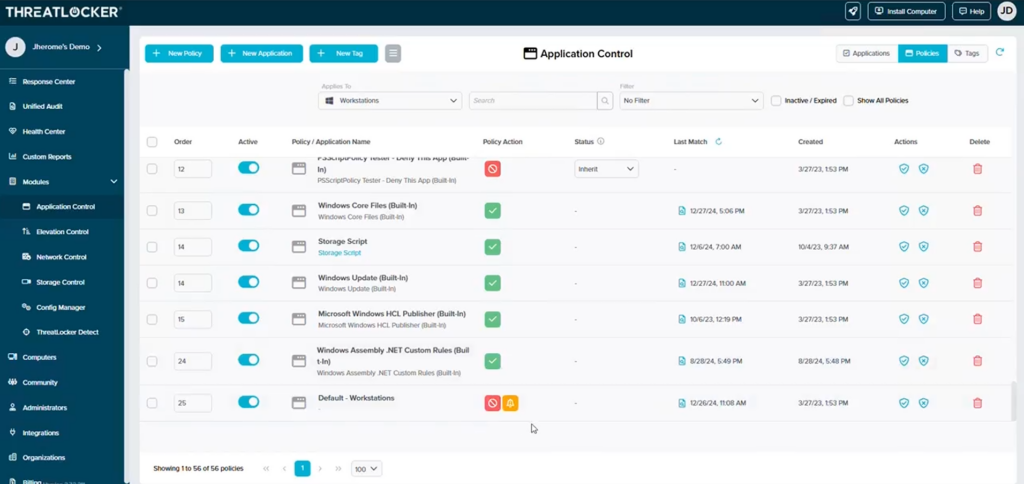
ThreatLocker is a zero-trust, default-deny application control and allowlisting platform. It gives companies the tools to implement a true zero trust policy. By default, all applications are blocked, unless the administrator actively approves them.
This approach massively reduces the attack surface, since it’s much harder for attackers or users to download and run malicious files.
The core product is made up of the following modules:
You pay a per-endpoint, per-month subscription – approximately $2 to $5 per endpoint per month depending on bundle and volume.
ThreatLocker does not publish price lists – these estimates are gathered from third-party websites, forums and market knowledge.
ThreatLocker’s stand-out features include:
ThreatLocker has a few important drawbacks:
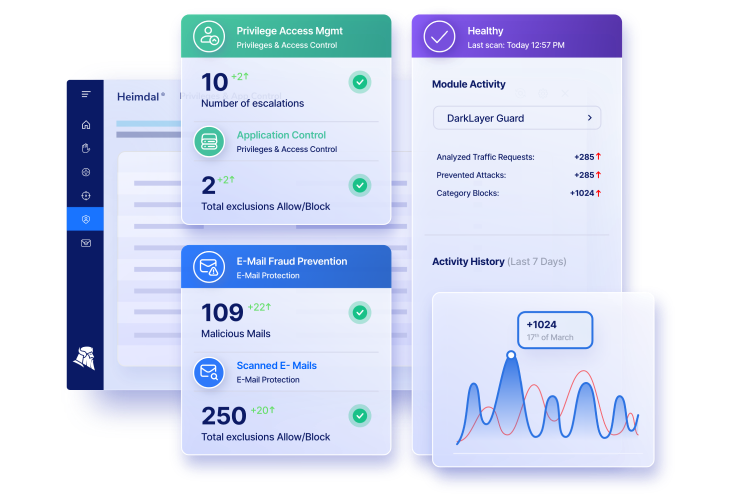
Heimdal is a unified cybersecurity platform which includes a full suite of tools. You can buy individual point solutions or a complete platform with multiple security products in one place (it’s also available as a managed service).
Heimdal’s wider product suite includes a couple of tools that offer very similar functionality to Threatlocker. Here are the most relevant modules:
As with most other brands on this list, Heimdal does not publish pricing online. However, you can use our self-service calculator. This will give you an estimate based on the tools you need and the number of seats or devices you manage.
As one of the main ThreatLocker alternatives, Heimdal has a number of key strengths:
Heimdal isn’t right for everyone in every situation:
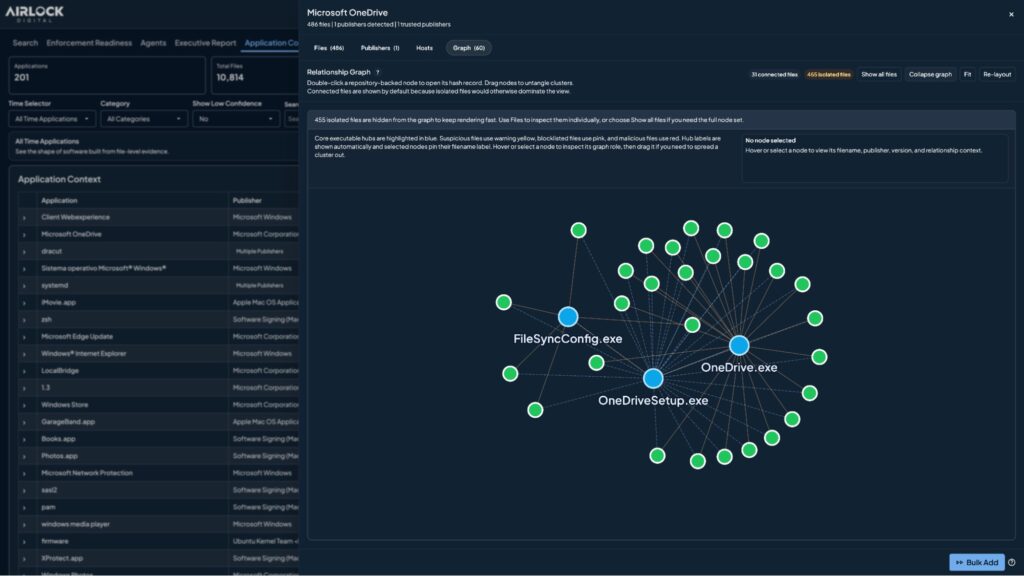
Airlock Digital is a pure-play allowlisting specialist. If you’re just looking for a direct ThreatLocker alternative that can help you create secure allowlists, then this is the way to go.
Its core modules include:
Again, Airlock Digital does not publish pricing online, but various online sources suggest you can expect to pay $3 – $5 per endpoint per month.
As a direct ThreatLocker competitor, Airlock Digital has a few key advantages:
Airlock Digital has some drawbacks to be aware of:
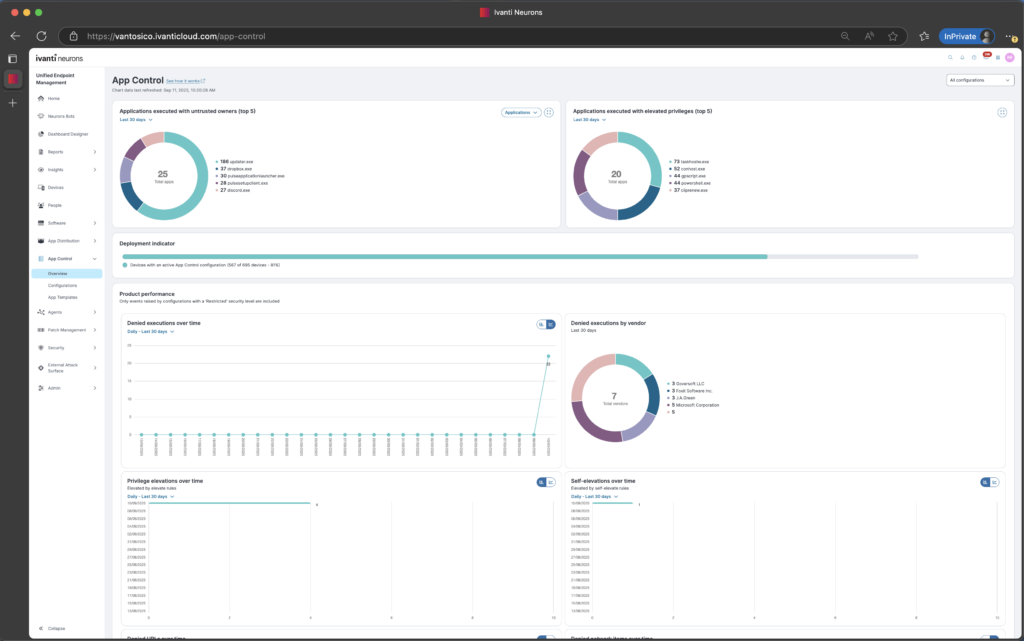
Ivanti’s approach to application control is slightly different to other companies’. Users are only allowed to use an app if the owner (that is, the person who installed it originally) is an official administrator.
This approach saves admins from needing to create long lists of permitted apps – people can only access what you’ve installed yourself.
Ivanti Application Control’s core features include:
Once again, pricing isn’t published for Application Control online. You will usually pay a base fee for Ivanti Neurons, then an annual fee for modules such as Application Control. Some sources suggest this would be around $6 per user, per month.
MSPs choose Ivanti for a few reasons:
Application Control does come with some limitations however:
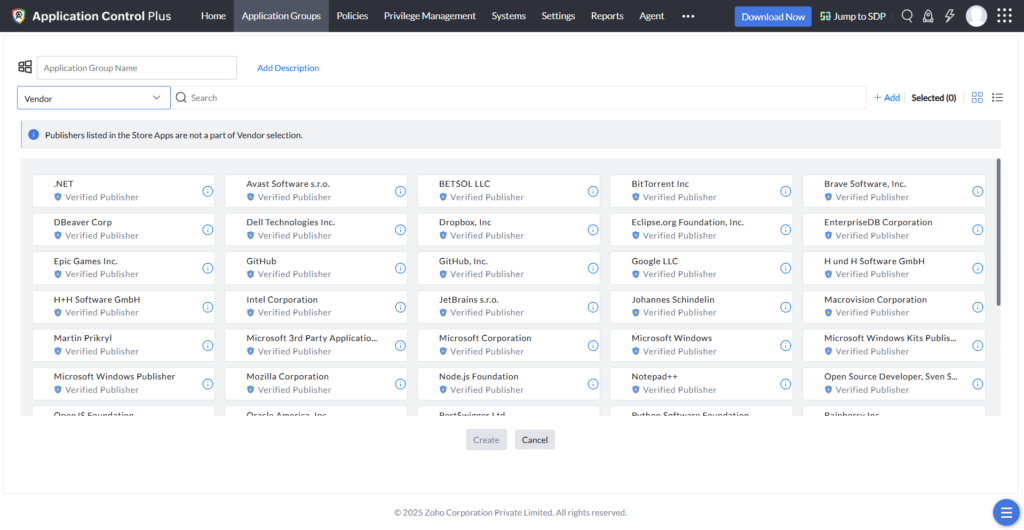
Part of ManageEngine’s wider suite of endpoint products, Application Control Plus gives you a good ThreatLocker alternative. It’s also available to buy on its own. Key features of the module include:
There is a free version of the product that’s available for up to 25 devices. You can use it to test if it’s right for your MSP. Once you commit, you’ll be paying $6 per endpoint per year.
There are a few key reasons that MSPs use Application Control Plus:
The system does have some drawbacks too:
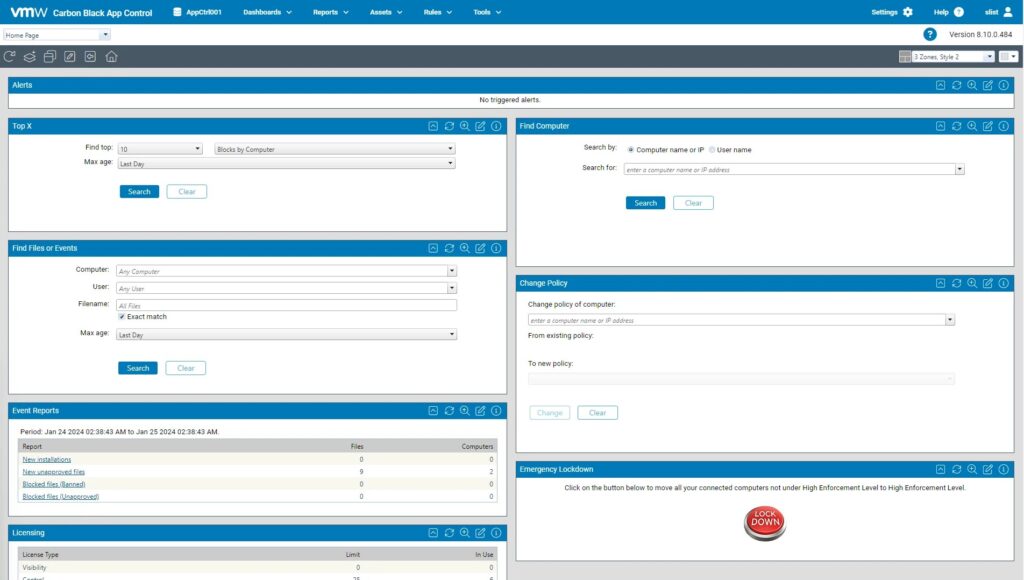
Like ThreatLocker, Broadcom’s Carbon Black App Control allows you to approve certain kinds of software and block anything else. It comes with a couple of unique features:
Broadcom does not publish a list price for Carbon Black App Control, but various online sources indicate it costs between $30 and $40 per device, per year.
MSPs choose Carbon Black App Control for the following reasons:
Carbon Black App Control does have some drawbacks to be aware of:
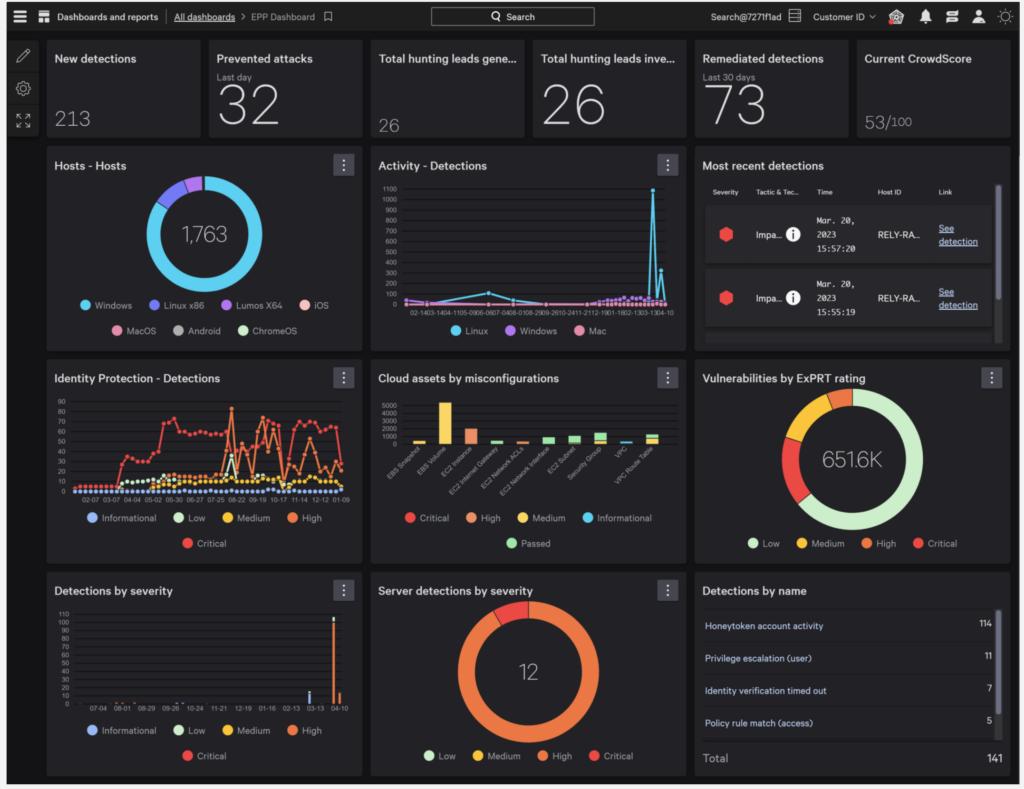
Although CrowdStrike is not a direct ThreatLocker competitor, I’ve included it in this list because it offers an alternative approach for MSPs. If your business is evolving and you’re looking to offer more comprehensive services than ‘just’ allowlisting, it could be a good option.
CrowdStrike Falcon is primarily an EDR/XDR platform with a powerful AI detection engine underneath. But it does also offer some similar zero trust features to ThreatLocker, including:
These tools don’t offer full default-deny allowlisting or ThreatLocker-grade ringfencing. For some MSPs this might be appealing – if you’re looking for ThreatLocker alternatives, it’s likely because you’re fed up with the friction this causes. But you can also use the two platforms side by side.
Falcon Go is around $60 per device per year, Pro around $100 per device per year, Enterprise around $185 per device per year. MSP and reseller negotiated pricing typically runs lower, roughly $8 to $20 per endpoint per month for Pro-class tiers at scale. Falcon Complete is quote-based and materially higher.
There are several key features that make it appealing:
CrowdStrike Falcon does have some limits though:
There are several strong ThreatLocker competitors and alternatives out there. As I’ve seen, many of them offer similar ringfencing and application allowlisting software, but with a different emphasis. Some give you a much simpler, pureplay option. Others, particularly CrowdStrike, give your MSP a different approach to security. And others, like Heimdal, give you very similar tools, but additional products as well.
Deciding on which alternative to ThreatLocker is right for your business will ultimately depend on you – your goals, your budget and the market you serve. By getting to know some of the key ThreatLocker alternatives, you can start your journey to finding a platform that better meets your needs.
Some of the most direct ThreatLocker competitors include:
ThreatLocker alternatives fall into three categories.
First are pureplay competitors – this includes companies like Airlock Digital whose tools are more specialized than ThreatLocker and who just focus on allowlists.
The second category are firms that offer comparable products but with a different approach. For example, Heimdal offers very similar app ringfencing tools, but also offers these as part of a wider suite of security solutions.
The final category are firms like CrowdStrike. They don’t offer the exact same tools (they don’t have a pureplay allowlisting product). Instead, they offer a powerful EDR that provides a different approach to cybersecurity. This means seeking out suspicious activity on endpoints, rather than just blocking unsanctioned apps.
There are several cybersecurity companies that produce high quality, reliable and effective EDR tools. These include:
Deciding which of these is right for you depends very much on your business’s situation, technical requirements, market and budget.
ThreatLocker is not primarily an EDR or an XDR provider, although it does have an EDR tool. Rather, it is mainly an application allowlisting software provider.
Its technology lets you create lists of apps that are approved, and then blocks anything else from being installed on your systems.
ThreatLocker and CrowdStrike are both cybersecurity companies whose tools are well regarded. However, while there is certainly some overlap in what they do, they mainly offer quite different products.
CrowdStrike is primarily a provider of endpoint detection and response (EDR) tools.These monitor all the devices on your network to identify suspicious activity. By contrast, ThreatLocker is primarily an allowlisting solution.
The technology lets you create lists of approved, trusted apps that your users can download and run. Anything that’s not on the allowlist is blocked by default. This prevents people from downloading and installing risky apps or code.
When you’re camparing ThreatLocker alternatives, there are a few key things to think about.
First, decide if you want a like-for-like alternative (such as Airlock Digital), or you want an allowlisting and ringfencing tool that’s part of a bigger platform (like Heimdal).
Next, consider your budget – how many seats will you be monitoring? How much can you (or your MSP’s customers) afford?
You should also think about your market and regulatory issues. For instance, some vendors’ tools are better suited to certain industries, or data regulations means you’ll want a provider with a base in specific geographies. You also want to consider the learning curve, ease of use and customer support. Check reviews and see which vendors have a good reputation.
If you liked this article, follow us on LinkedIn, Reddit, X, Facebook, and Youtube.
Newsletter
If you liked this post, you will enjoy our newsletter.
Get cybersecurity updates you'll actually want to read directly in your inbox.

Communications and PR Officer
Livia Gyongyoși is a Communications and PR Officer within Heimdal®, passionate about cybersecurity. Always interested in being up to date with the latest news regarding this domain, Livia's goal is to keep others informed about best practices and solutions that help avoid cyberattacks.
此内容由惯性聚合(RSS阅读器)自动聚合整理,仅供阅读参考。 原文来自 — 版权归原作者所有。