











The World Cup, probably the biggest and most captivating sporting event on Earth, is laden with photographers on the pitch but what about getting closer to the action as a fan? A smartphone with a teleconverter lens attached lands as a worthwhile alternative — provided you have the right combination.
With the 2026 World Cup in full swing, I got to test this out during the Canada-Bosnia and Herzegovina soccer match played in Toronto on June 12. The phone and lens of choice? Vivo X300 Ultra with the 200mm Gen 2 teleconverter. There are key reasons why that go beyond just the lens itself.
FIFA, which organizes the tournament and sets the rules, makes it very clear that you can’t bring a mirrorless or DSLR camera into the game as a spectator. Basically, any “professional” camera with interchangeable lenses is a total no-go. It doesn’t explicitly mention built-in lens cameras like point-and-shoot or action cameras, so it’s not entirely clear what the discretion is for those.
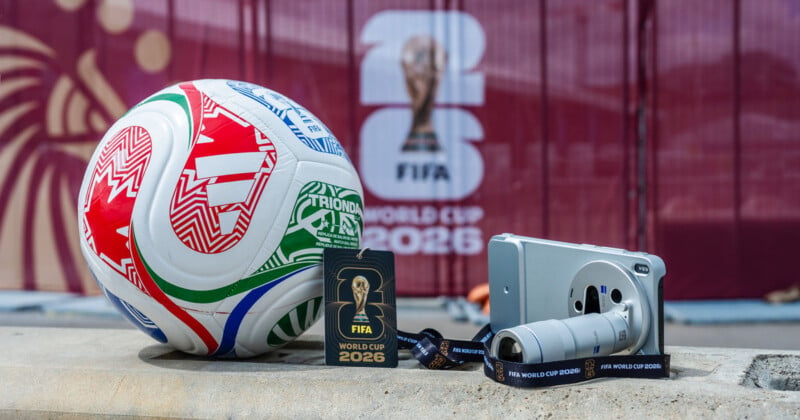
The word “professional” figures prominently in its Stadium Policies guidelines, referring to “professional video cameras” and “professional equipment that is capable of recording sound and video.” You could argue that it presents a pretty wide grey area given the type of gear available, but the rules go further by outlawing mounts like tripods, monopods, and selfie sticks. Drones and other uncrewed aircraft are also fully banned.
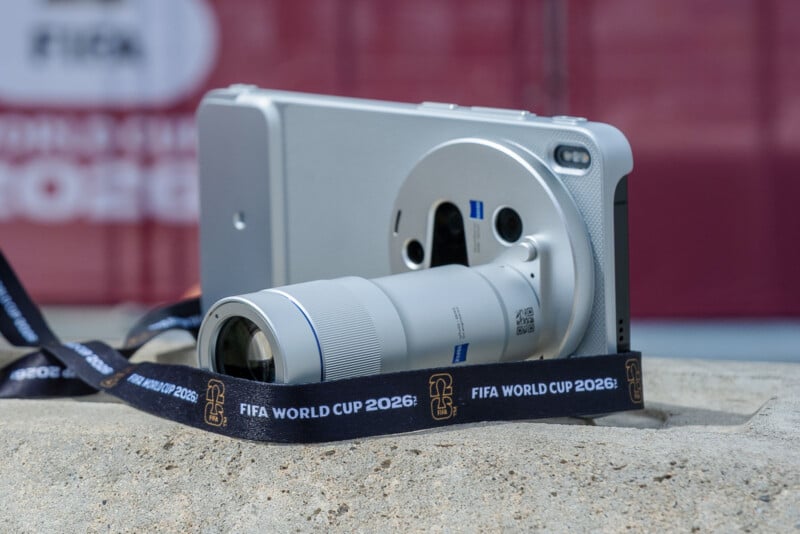
Large binoculars and other optical magnifying equipment are also out, albeit with one key exception: photographic camera lenses for non-professional purposes. This sounds like a contradiction given the existing prohibitions, but it’s an exception that could easily apply to teleconverter lenses. The ones available for smartphones won’t match the optical quality of equivalent lenses for mirrorless or DSLR models, making it clear where the professional line lies here.
In addition to FIFA’s rules, the host stadium may have its own policies. Some also overlap, but it’s mostly FIFA setting the tone. No backpacks, larger pouches or purses, or tote bags. Only clear bags within a certain size are okay, much like pouches or clutches that aren’t longer than 6.5 inches. In the case of Toronto Stadium (BMO Field, outside the tourney), this bag policy already applies to its other sporting events. Smartphones and point-and-shoot cameras are allowed.
While there’s no exact language on either focal length or the physical size of a camera’s lens, I’ve come across some information indicating 200mm is the safe limit, provided it’s not for a more “professional camera.” I went with the Vivo X300 Ultra and its 200mm Gen 2 teleconverter because the system offers the most flexibility while the lens itself is smaller than most comparable alternatives. The 400mm Gen 2 is appealing, though it risks scrutiny as a lens that looks too close to something professional to the untrained eye, even if it’s technically permitted. Plus, it’s less adaptable given that I was sitting in the lower bowl at the stadium. At 200mm, I could capture action on the pitch from both a wider and closer perspective.
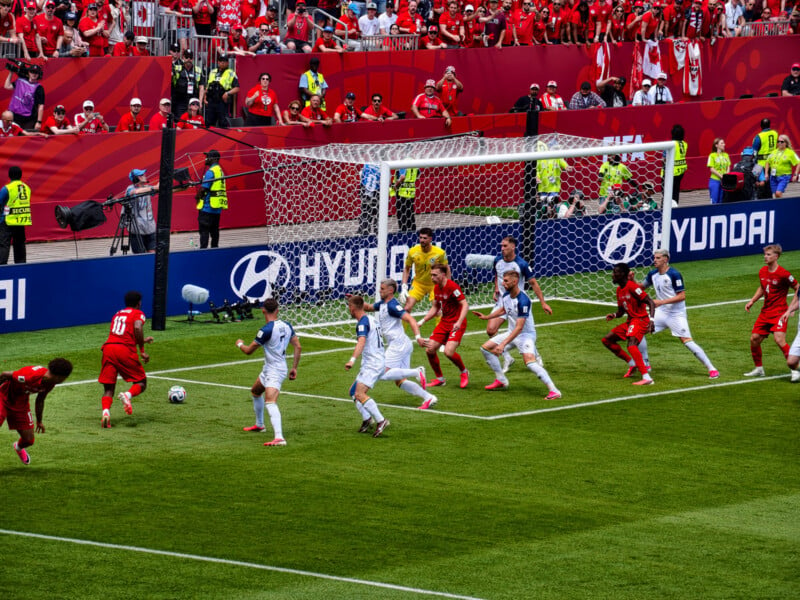
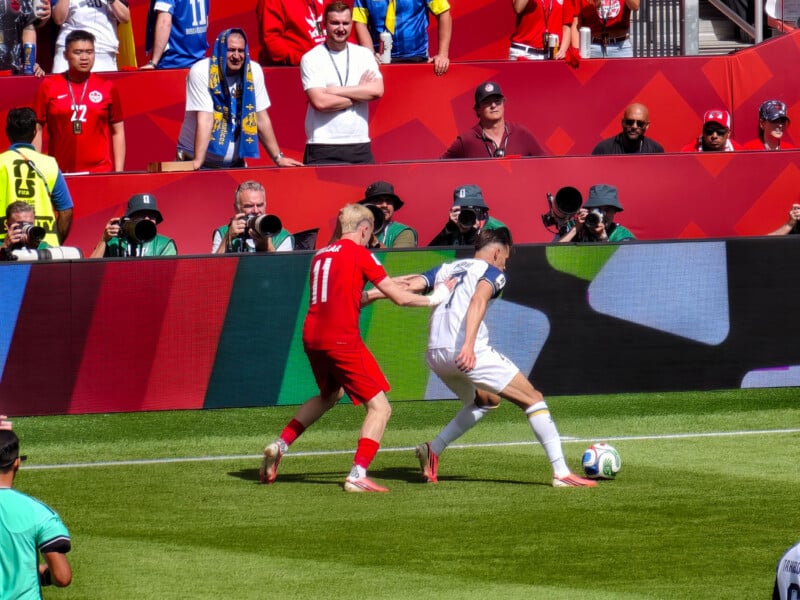
The major consideration for me is that Vivo doesn’t restrict the camera app’s interface the way Oppo does with its teleconverters, thereby removing a key tool for capturing fast-moving sports action. Vivo’s Snapshot and Pro Photo modes are the big ones, along with Pro Video (with Log) and the always excellent Film Look and Style LUTs in Video mode.
Snapshot handled most of the action stills on its own, especially with so much natural light available, but the option to switch into Pro Photo and manually adjust shutter speed offered additional control when I wanted it. An outdoor game in the middle of a sunny afternoon usually provides bright daytime conditions that can broaden the scope of how much to play around with settings before hitting a tipping point in image quality.
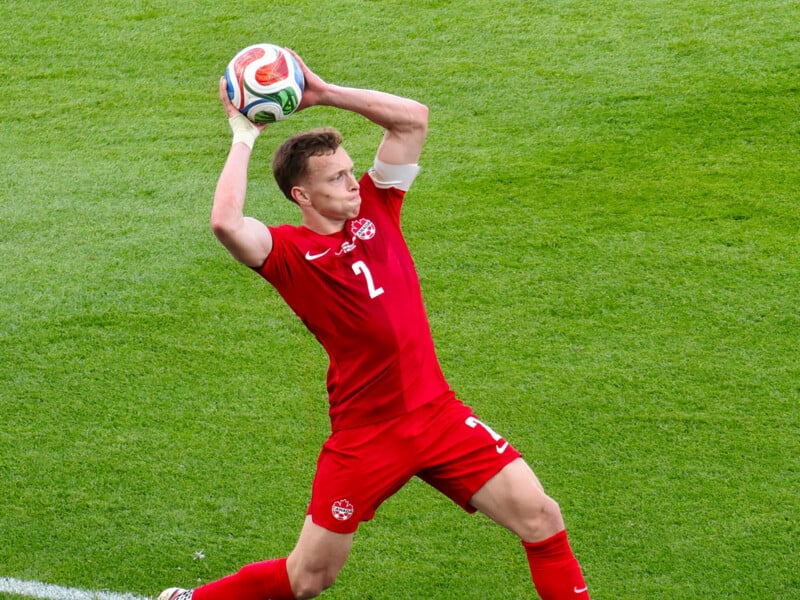
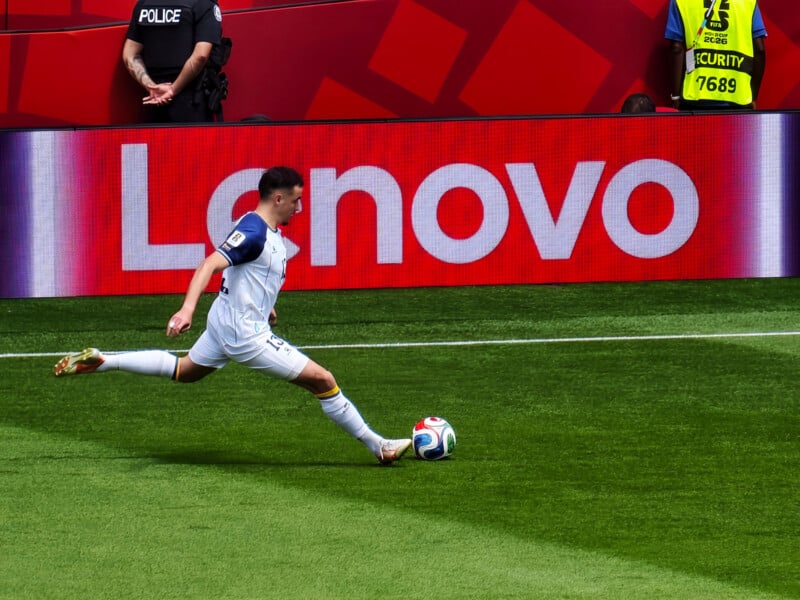
Snapshot, in particular, usually produces its best results with abundant ambient light that keeps ISO levels low, reduces noise, and gives the sensor a far better chance of freezing fast motion. The catch is that the software determines the shutter speed and ISO, whereas Pro Photo leaves that up to me.
Soccer also lends itself well to this kind of shooting because of how the game unfolds across a large pitch. Players can move and change direction by quickly pivoting, but how much that motion shows up in a shot depends heavily on distance from the camera. A player close to the lens at 200mm is far harder to freeze sharply on a phone with a teleconverter than one farther away, which only helps for a sensor far smaller than anything found in a mirrorless or DSLR body.
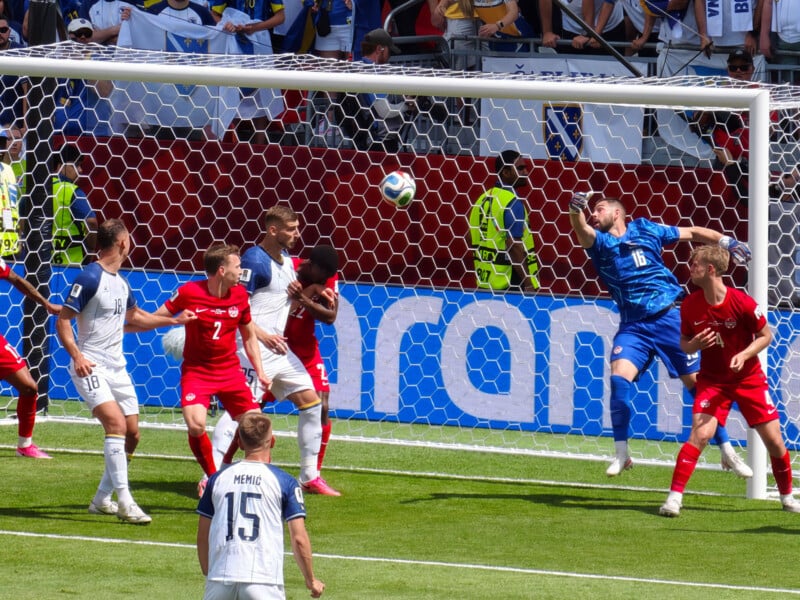

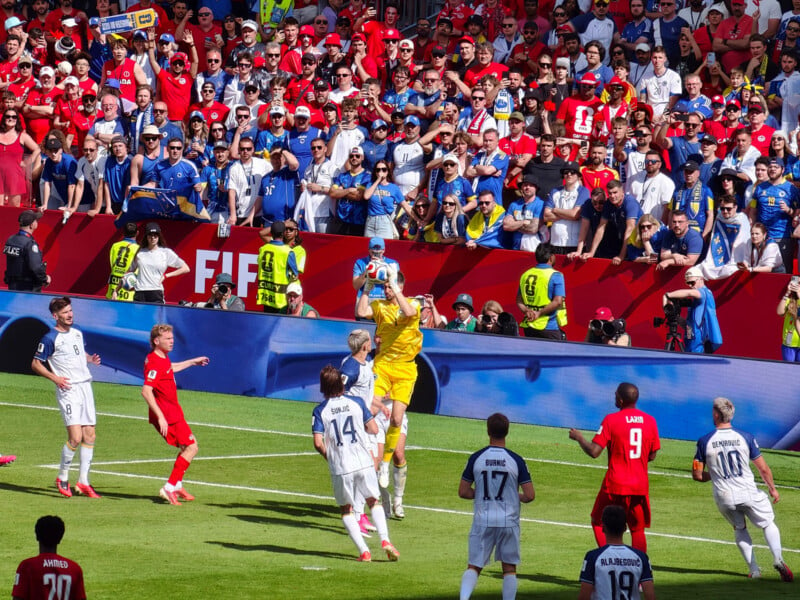
Even accounting for the heavy computational processing involved, the results still look pretty spectacular. Strong enough to capture genuine in-play moments, like one-on-one duels, defensive scrambles, and even the goal Bosnia scored during the match, rather than purely static set pieces like corner kicks, goal kicks, and throw-ins.
Vivo’s X300 Ultra Photography Kit includes a grip, but I opted not to bring it in, just in case it raised a flag with security personnel. Again, not a professional item but people who don’t know any better might perceive it differently, much like the 400mm teleconverter.
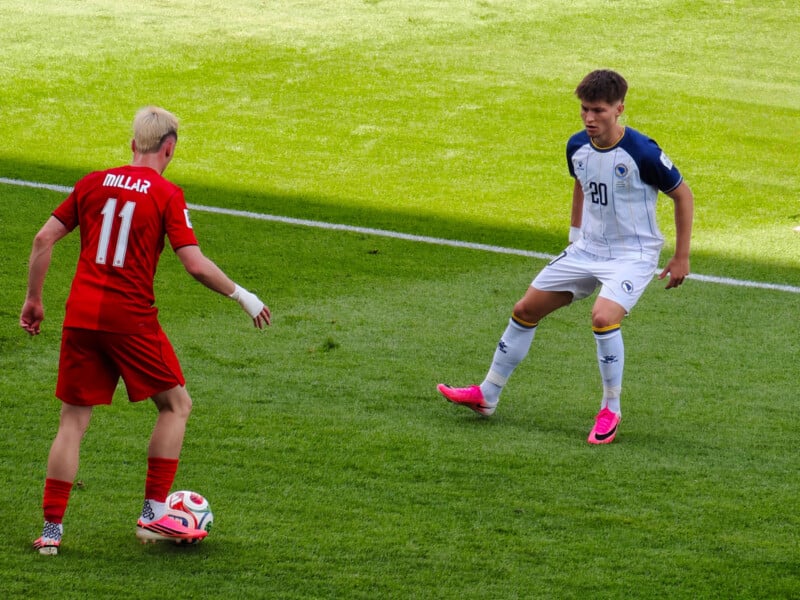
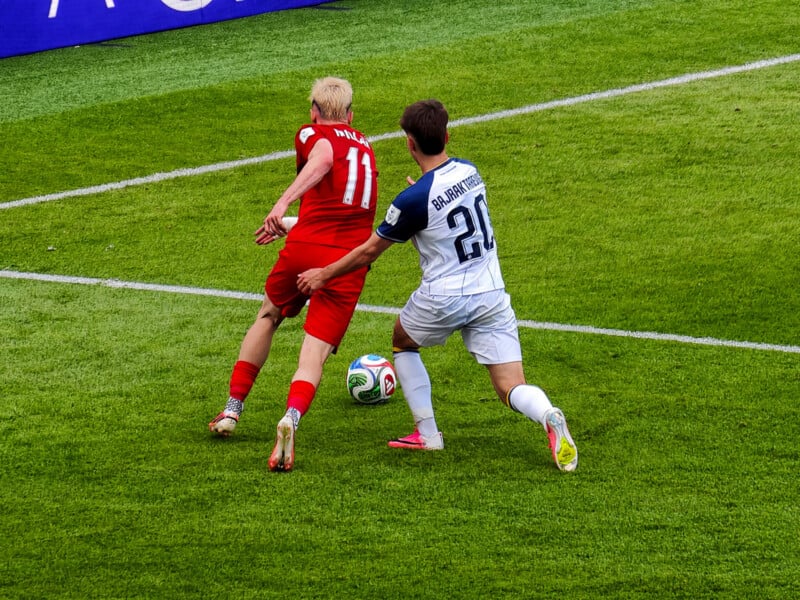
Despite missing it, I still had decent stability. Rather than shoot in burst, which is certainly possible, I rapidly fired Snapshot instead to capture key moments and account for the speed on the pitch. That’s harder to do with RAW photos in Pro Photo, where shutter lag tends to last slightly longer. Moreover, SuperRAW is essentially pointless unless it’s a static scene because it’s actually bracketing three images together in 16-bit.
Hence, most of the photos I captured were in Snapshot mode. Shooting handheld from 100-200 feet (or more) away in many instances without getting a blurry mess is impressive. The iPhone and Samsung Galaxy flagships have no comparable automatic action mode for such a scenario. Google doesn’t even let you shoot in burst to begin with, focusing those efforts on motion photo modes like Top Shot to do the job. It’s simply not the same.

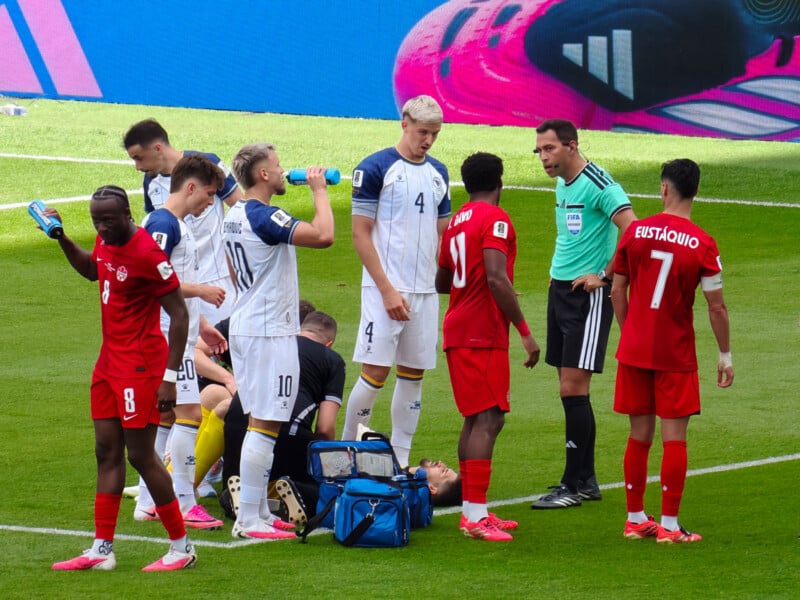
All that being said, FIFA makes clear that photos and videos fans capture aren’t for commercial use. It’s murky in the age of social media and algorithms, but you can’t sell the photos to anyone. The purpose here was personal rather than professional, a way to preserve a once-in-a-lifetime experience rather than to compete with accredited on-field photographers and their top-flight gear.
In the end, none of this drew any attention from stadium security before or during the match. The only item I had confiscated that day was a tube of sunscreen, flagged as a flammable substance.
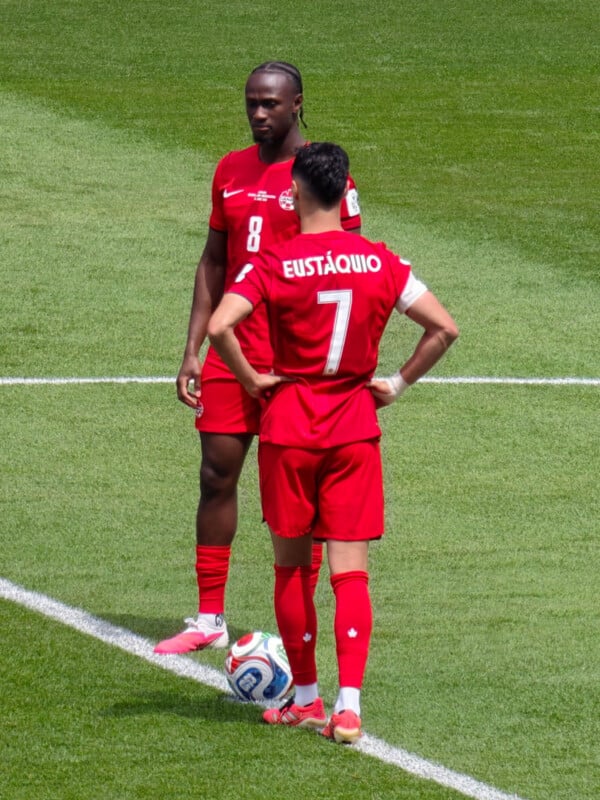
Phone teleconverter lenses may not be true sports glass but it’s telling that a phone can deliver results like this with the right attachment and software. What stands out most is how much of that gap comes down to software rather than optics alone. The same 200mm lens would’ve been far less useful on a phone that locked out its action-friendly shooting modes the moment a teleconverter got attached, the way Oppo’s does. Vivo does right by the kit with its flexibility.
Sticking to a smaller, less conspicuous lens and skipping anything that resembles a grip or rig turned out to be the right call here, even if it meant leaving some extra reach and stability at home. For a once-in-a-lifetime trip to a World Cup match, it worked out quite nicely.
Image credits: All photos by Ted Kritsonis
此内容由惯性聚合(RSS阅读器)自动聚合整理,仅供阅读参考。 原文来自 — 版权归原作者所有。