

惯性聚合 高效追踪和阅读你感兴趣的博客、新闻、科技资讯
阅读原文 在惯性聚合中打开

推荐订阅源

A
About on SuperTechFans
G
Google Developers Blog
L
LangChain Blog
aimingoo的专栏
aimingoo的专栏
OSCHINA 社区最新新闻
OSCHINA 社区最新新闻
云风的 BLOG
云风的 BLOG
小众软件
小众软件
月光博客
月光博客
Recent Announcements
人人都是产品经理
人人都是产品经理
P
Proofpoint News Feed
博客园 - 聂微东
让小产品的独立变现更简单 - ezindie.com
雷峰网
雷峰网
The Cloudflare Blog
博客园_首页
美团技术团队
大猫的无限游戏
大猫的无限游戏
B
Blog
IT之家
IT之家
Jina AI
Jina AI
H
Hackread – Cybersecurity News, Data Breaches, AI and More
C
Check Point Blog
钛媒体:引领未来商业与生活新知
钛媒体:引领未来商业与生活新知

PetaPixel

Polaroid Go Generation 3 Is the World’s Smallest Instant Analog Camera China Lucky’s New Color C200 Film Has Arrived in the US and Looks Great Chinese Private Equity Firm HSG Emerges as Leading Bidder to Buy Stake in Leica Camera Leica Cine Compact 1 Projector Promises a Plug-and-Play Home Theater Experience There Are No Photos Allowed at the Studio Ghibli Amusement Park Xiaomi 17T Pro Review: High-End Photography Without the Flagship Price Photographer Builds the iPhone Camera App He Always Wanted New $50 Y2K-Inspired Compact Camera Looks Thin In Form and Function Save Big on Macro Photography Essentials Nvidia’s New Chip Aims to Upend the Creative Laptop Market Japanese Zoo Considering Photo Ban After US Tourists Invade Punch the Monkey’s Enclosure Years in the Making, Glass Imaging Is Delivering on its Promise to Transform Smartphone Photography Gen Z are Five Times More Likely to Have a Plan for Photos After Death Long Island Beach Where Marilyn Monroe Posed for Iconic Photos Honored With Plaque Camera Trap Captures One-Armed Gorilla Raising Newborn in the Wild Photographer’s Camera Gear Gets Jet Washed by 20-Foot Wave in Tahiti Photojournalists Say ICE Agents Targeted Them and Their Cameras at Delaney Hall Protests Model Sues Fashion Brand After it AI-Generated Pictures of Her Easy Macro Photography Tips for Incredible Close-Up Photos The Myth of Intent in Photography Samsung’s Competitors Have a Better Samsung Camera Than Samsung Does Thypoch Simera 50mm f/1.4 Review: Crisp and Clean The AI Film ‘Dreams of Violets’ Is How You Get Me to Hate Movies Photographer Documents the Vanishing Wildlife of the ‘American Amazon’ Press Photographer Releases 30-Year Archive of Iconic Celebrity Images Photographer Granted Rare Access to Cambridge’s May Balls for 40 Years Atmos Is a Weather App By Photographers, for Photographers A Feature-Length AI-Generated ‘Live Action’ Movie Is Premiering at Tribeca for Some Reason Despite Being a Member, YoloLiv Isn’t Complying with the Micro Four Thirds Standard ArcBlue C42 Is the World’s First Smart Full-Frame Astrophotography System
Researchers Develop All-New Pixel Type That Can Both Reco...
Jeremy Gray · 2026-06-27 · via PetaPixel
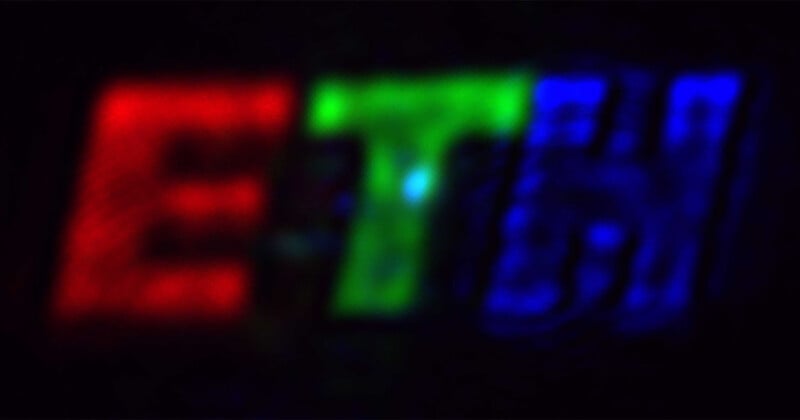
Blurry image showing the letters "ETH" with "E" in red, "T" in green, and "H" in blue, all against a black background.
“The colored logo was created using the new ETH researchers‘ Fourier pixels. The letter ‘E’ is roughly 1 millimeter tall on the camera.” | Credit: Glauser YM, Vonk SJW, et al., Nature 2026

Researchers at ETH Zurich have developed a novel type of pixel that can both capture images and display them. In the future, this new pixel could be utilized inside hybrid camera/display devices.

Nearly 100 years ago, the term “picture element,” later shortened to “pixel,” debuted in the American technology publication, Wireless World. As ETH Zurich notes, pixels are everywhere today. On screens, such as phones, computers, and televisions, pixels display light information. In cameras, the pixels instead record light. Pixels could not do both; they could do just one or the other.

A research team led by David Norris, a Professor at the Optical Materials Engineering Laboratory at ETH Zurich, has changed that by developing pixels that can both create and record light. This is a groundbreaking achievement.

“These pixels can both steer light and analyze it. Not only the intensity of the light, but also its oscillation phase and polarization can be controlled and analyzed,” ETH Zurich. “In the future, such so-called bidirectional pixels could lead, for instance, to the development of camera — displays that combine the two functions in a single device.”

The research is outlined in a new paper published in Nature, and relies on the interference of light waves.
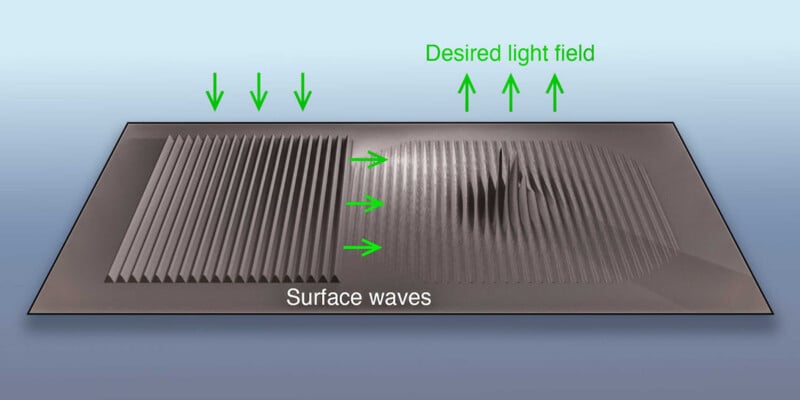
A 3D rectangular surface with rippling patterns on the left labeled "Surface waves" and smoother waves on the right with arrows and text "Desired light field" indicating transformation. Green arrows suggest the direction of wave flow.
“Fourier pixel use surface waves, which are scattered out as light waves. These light waves interfere with each other and thus create patterns and images. Conversely, the same pixel can be used to analyze the intensity, phase and polarization of incoming light waves.” | Credit: Glauser YM, Vonk SJW, et al., Nature 2026)

“When light is scattered by a surface, the waves originating from different points on the surface overlap. The shape of the surface determines the oscillation phases with which the waves propagate further. If the phases are equal, the light waves reinforce each other, but if they are opposed, the waves cancel out,” ETH Zurich writes.

Norris and the rest of his team used this physical effect to control light using wave-shaped sculpted surfaces. The pixel converts incoming light into a surface wave that propagates across the chip’s surface.

“At a different position within the pixel, the surface wave is scattered back out of the material as a light wave. Through interference of the light waves, patterns and images can be created,” ETH Zurich says.

Using Fourier analysis, the researchers can determine what the images will look like and the specific surface pattern required for a given image.

“Our new pixels for control and analysis could, therefore, become a useful tool in many areas,” Norris says.

As ETH Zurich explains, the team’s new pixels could react to a captured image and, without the use of a computer, produce corresponding light.

In the short term, a more practical goal is creating a matrix of Fourier pixels. This type of matrix could enable complex cameradisplay devices.

This is seriously cutting-edge research that has already led to a patent application and is in the running for this year’s Spark Award.


Image credits: Glauser YM, Vonk SJW, et al.: Fourier pixels for bidirectional light control. Nature, 24 June 2026, DOI: external page 10.1038/s41586-026-10681-7