惯性聚合 高效追踪和阅读你感兴趣的博客、新闻、科技资讯
阅读原文 在惯性聚合中打开

推荐订阅源

WordPress大学
WordPress大学
阮一峰的网络日志
阮一峰的网络日志
Jina AI
Jina AI
博客园 - Franky
U
Unit 42
钛媒体:引领未来商业与生活新知
钛媒体:引领未来商业与生活新知
宝玉的分享
宝玉的分享
B
Blog RSS Feed
雷峰网
雷峰网
D
DataBreaches.Net
奇客Solidot–传递最新科技情报
奇客Solidot–传递最新科技情报
I
InfoQ
美团技术团队
云风的 BLOG
云风的 BLOG
让小产品的独立变现更简单 - ezindie.com
Martin Fowler
Martin Fowler
OSCHINA 社区最新新闻
OSCHINA 社区最新新闻
大猫的无限游戏
大猫的无限游戏
G
Google Developers Blog
T
Tailwind CSS Blog
P
Proofpoint News Feed
The GitHub Blog
The GitHub Blog
月光博客
月光博客
Engineering at Meta
Engineering at Meta

Lobsters

Lunacy | Red Vice CIFSwitch: a non-universal Linux local root vulnerability RIPE NCC session fixation: poaching logins with an Atlas probe GNOME 2.20 but its Web Components Agentic Search for Context Engineering – Leonie Monigatti Garnix is shutting down [not OC] akashina.tngl.sh/jjc Concerning Emacs (and Jazz) Nitpicking the shell history scene in ‘Tron: Legacy’ What's cooking on SourceHut? Q2 2026 The tenth OpenPGP email summit Package managers that package package managers Clojure on Fennel part three: parsing WordPress at 23 Finding Miscompiles for Fun, Not Profit GitHub - creusot-rs/creusot: Creusot helps you prove your Rust code is correct. Announcing Rust 1.96.0 | Rust Blog A Love Letter to Neovim sqlite AGENTS.md Am I a Bad Friend? CSS vs. JavaScript • Josh W. Comeau Erlang Ecosystem Foundation - Supporting the BEAM community A brief note about slot access cost in Common Lisp Keyboard latency probe Rethinking the GNOME clipboard issues Back to the Building Blocks’ Building Blocks Tech Notes: Theseus: translating win32 to wasm Fast is better than slow Content-addressed Rust builds (or, what kache actually caches) Intent to Prototype: Embedding API
What is a harmonic? An interactive comic about additive s...
Interactive additive synthesis comic by Sudara and Alec Longstre · 2026-05-26 · via Lobsters

Additive Synthesis 101

Part 1, What is a harmonic.

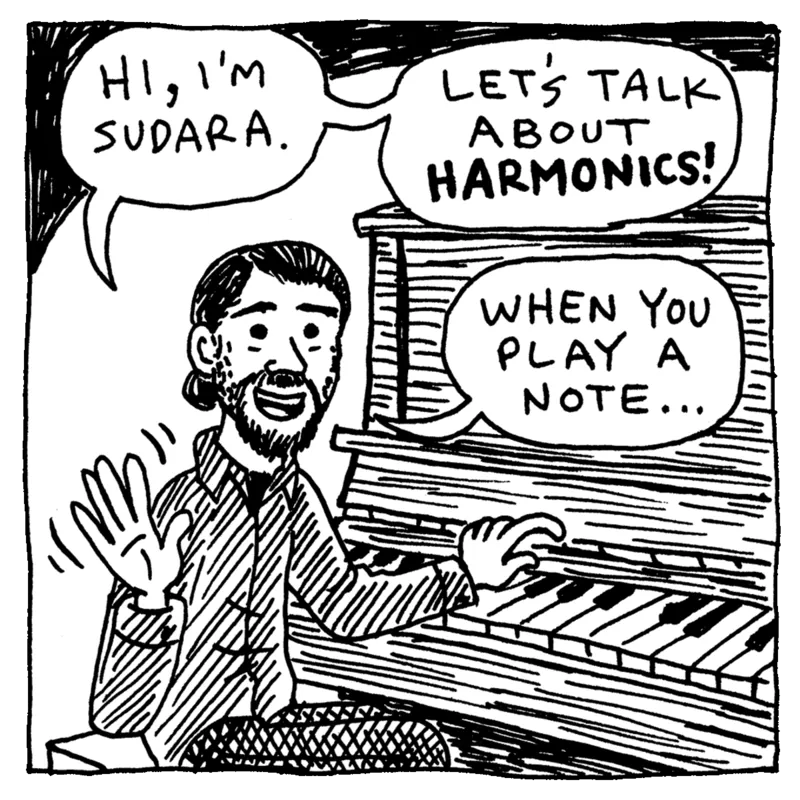
Sudara waves from a piano: ‘Hi, I'm Sudara. Let's talk about harmonics! When you play a note…’
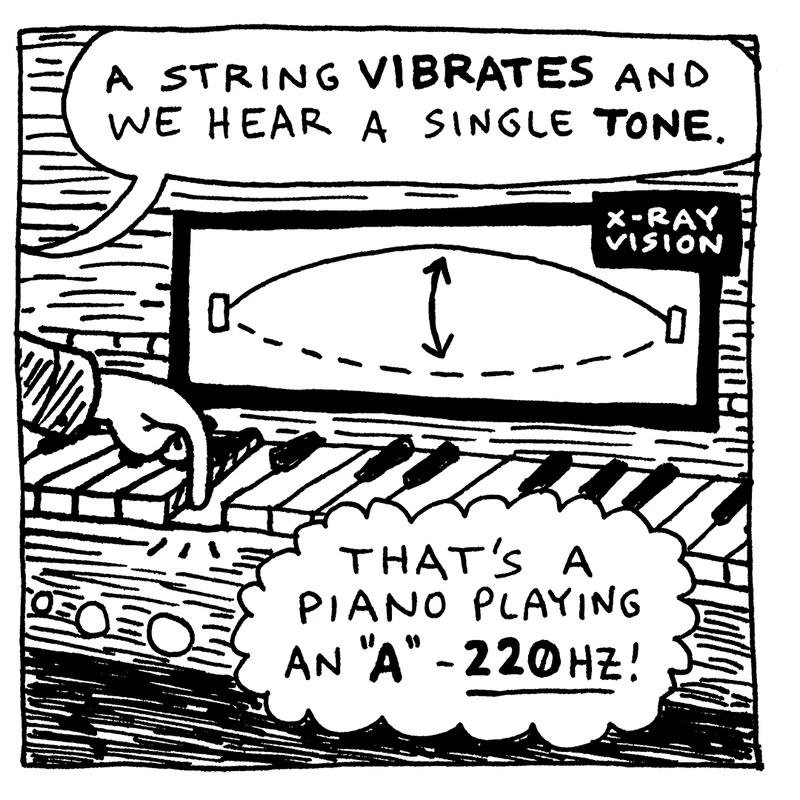
An X-ray view of a piano string vibrating end to end: ‘A string vibrates and we hear a single tone. That's a piano playing an A — 220Hz!’
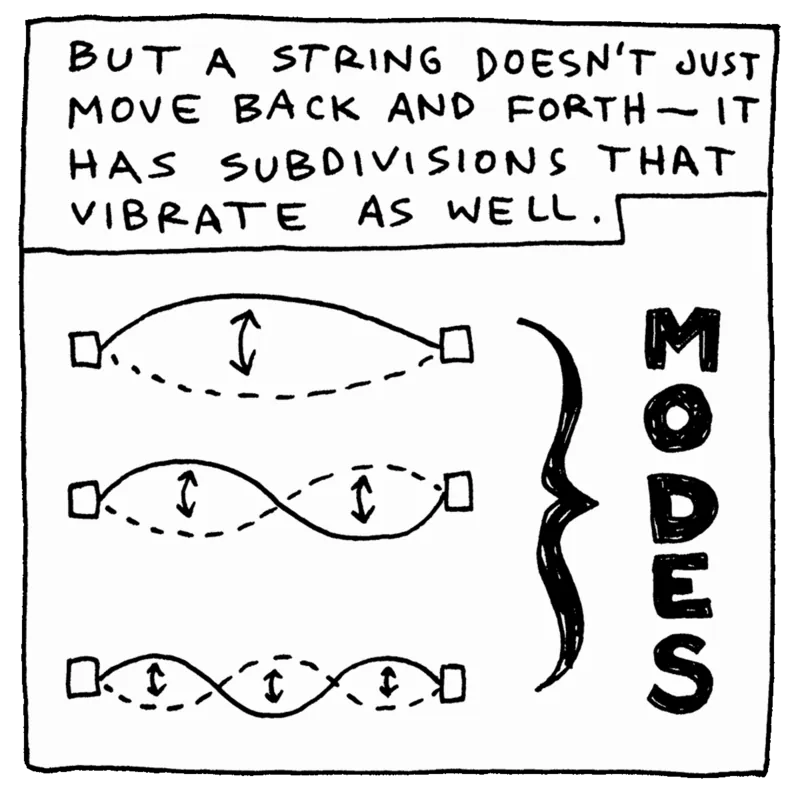
Diagrams of a string vibrating in one, two, and three subdivisions, bracketed and labeled ‘modes’: ‘But a string doesn't just move back and forth — it has subdivisions that vibrate as well.’
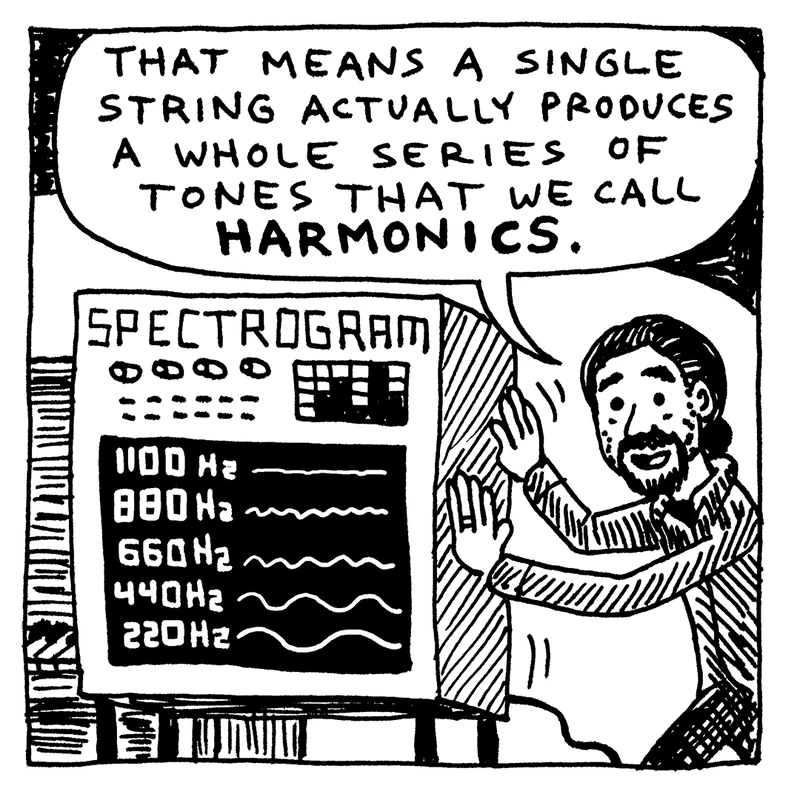
Sudara points at a spectrogram showing 220, 440, 660, 880, and 1100 Hz: ‘That means a single string actually produces a whole series of tones that we call harmonics.’
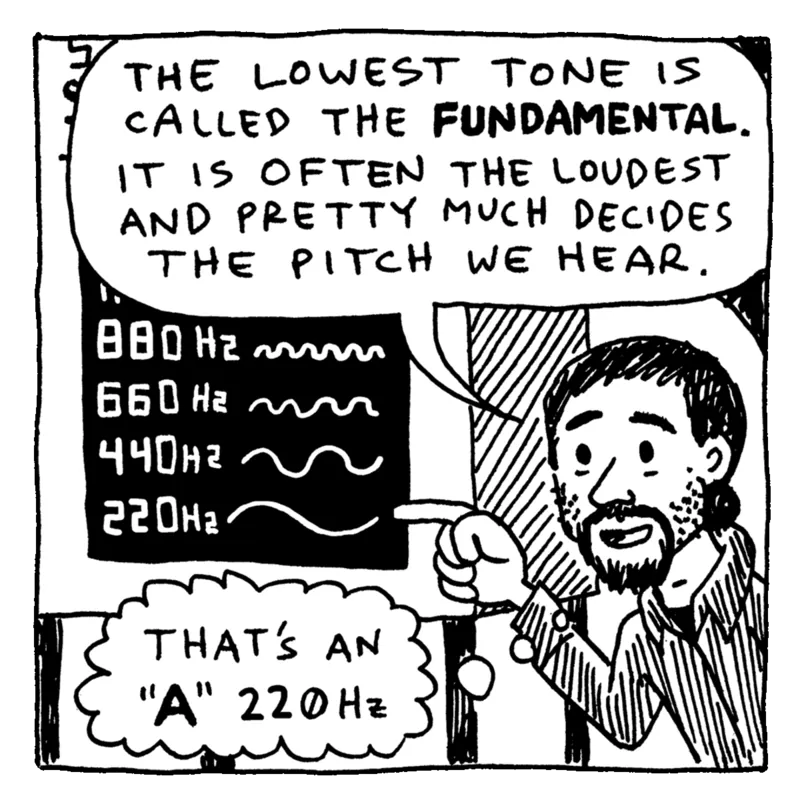
Sudara points at the 220Hz line on the spectrogram: ‘The lowest tone is called the fundamental. It is often the loudest and pretty much decides the pitch we hear. That's an A 220Hz.’
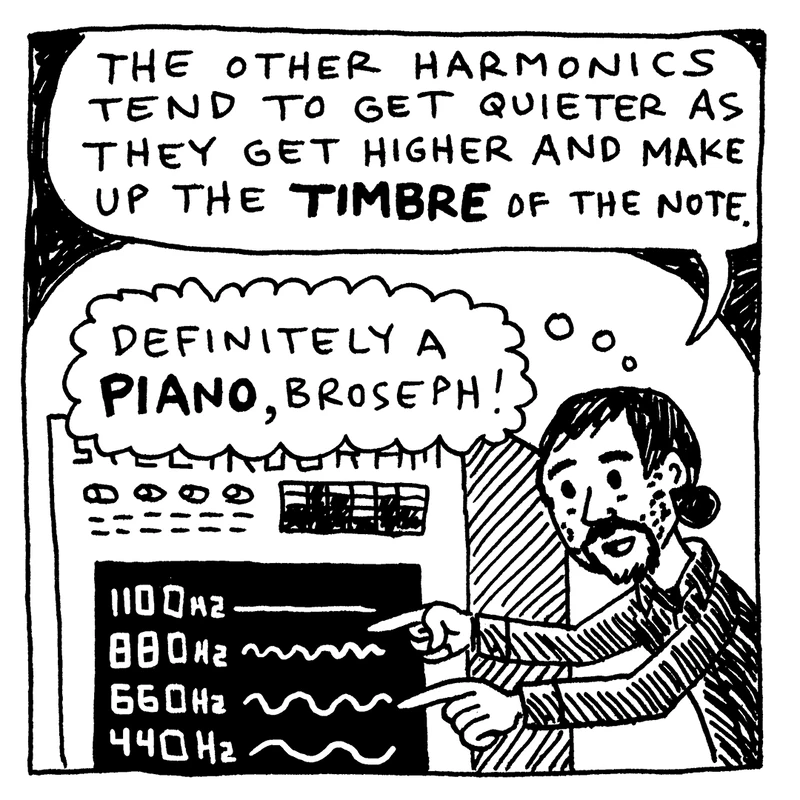
Sudara thinks ‘Definitely a piano, broseph!’ while pointing at the spectrogram: ‘The other harmonics tend to get quieter as they get higher and make up the timbre of the note.’
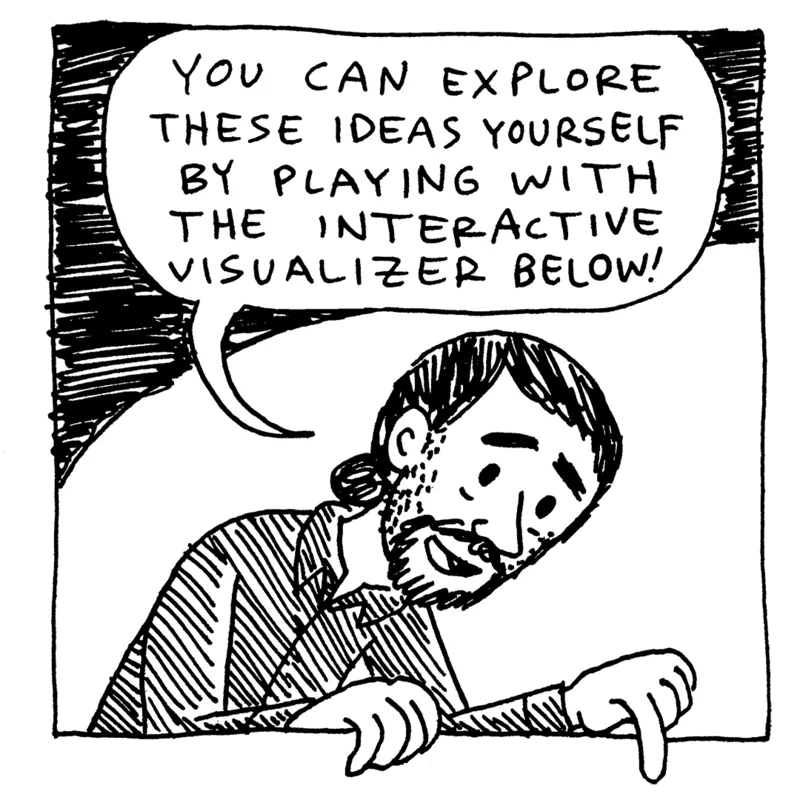
Sudara leans on the panel edge: ‘You can explore these ideas yourself by playing with the interactive visualizer below!’
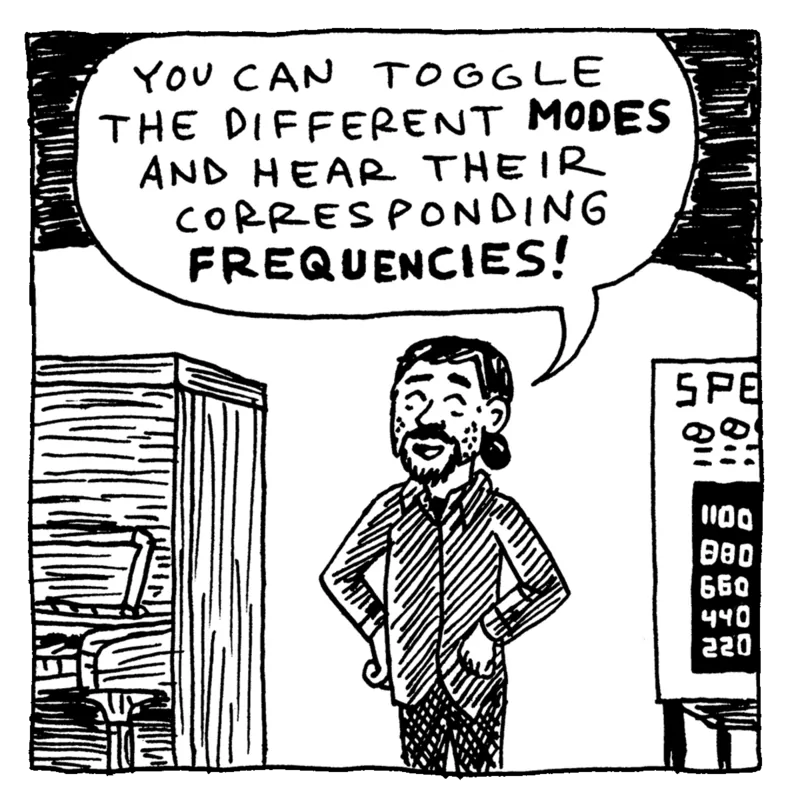
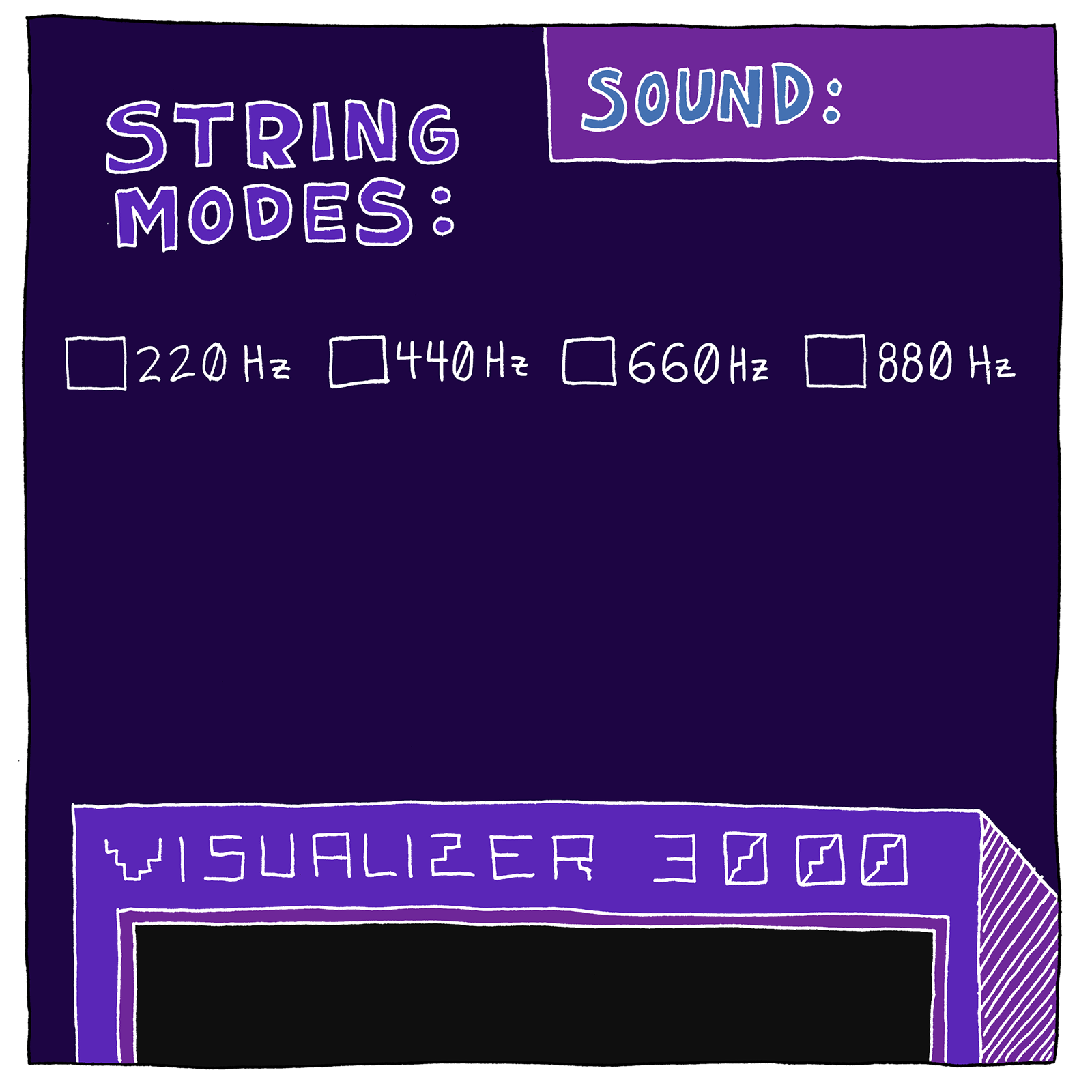
Sudara stands beside the spectrogram: ‘You can toggle the different modes and hear their corresponding frequencies!’
Interactive harmonic panel

Interactive additive synthesis comic by Sudara and Alec Longstreth
Illustrated by Alec Longstreth