





It has been 4 years since I posted Create an OAuth Server. Flask-OAuthlib has been shining in the Flask community, but it's time to say goodbye. Authlib is going to replace Flask-OAuthlib.
Authlib contains everything you need to create OAuth clients and servers. It contains:
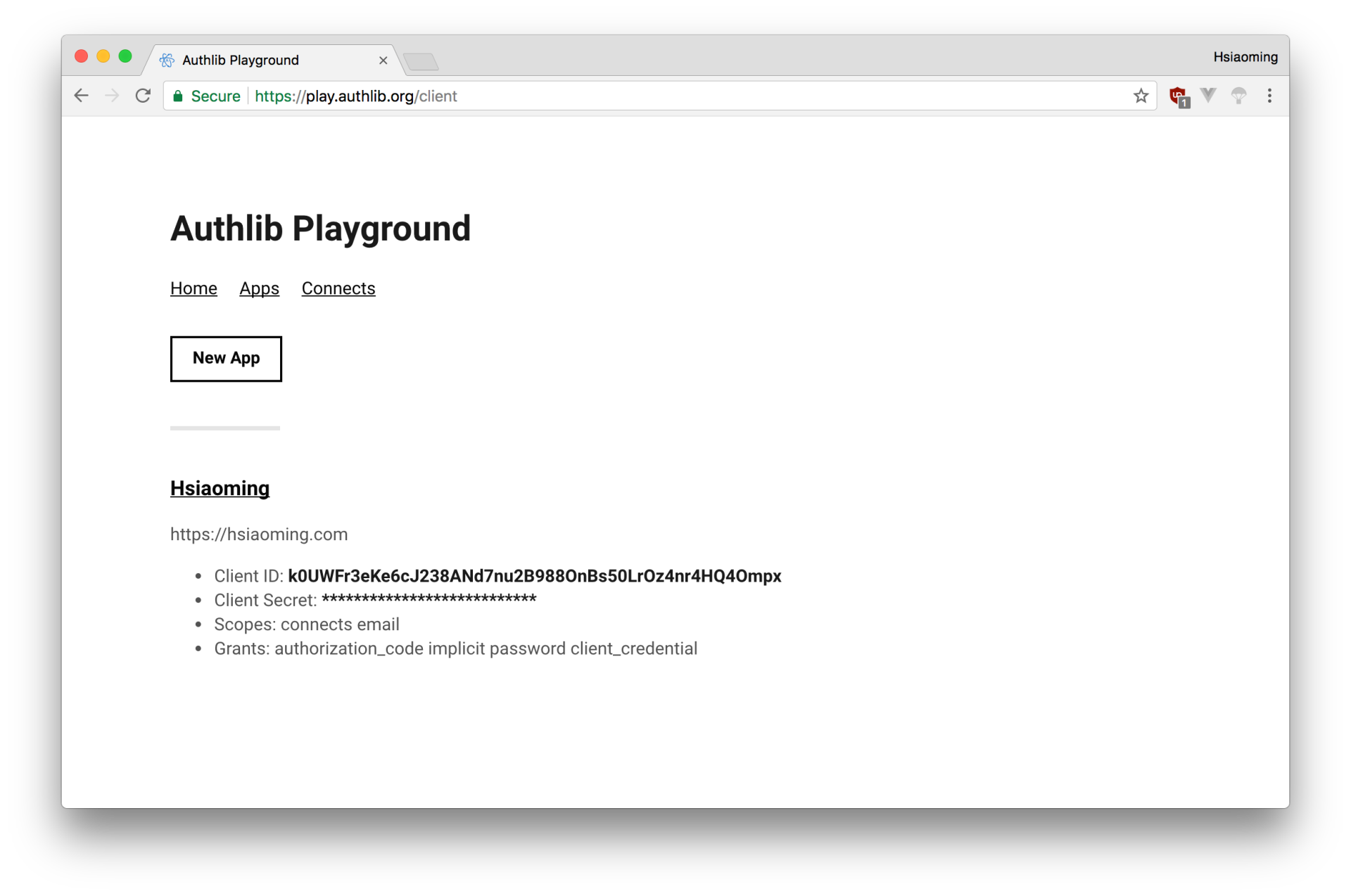
No, there will be no guide on how to create an OAuth server in this post. It is hard to keep information updated in a single blog post. Instead, I've deployed a real OAuth server online so that everyone can play with.
To get a better understanding, you can read the official documentation and the source code of Authlib playground:
I have several reasons to deprecate Flask-OAuthlib. But the main reason is that Flask-OAuthlib is not maintained well. And it seems things will not go well in the future. Flask-OAuthlib depends on OAuthLib which I believe is in a chaotic maintenance (although I am a maintainer too). Besides, there are many designs I don't like.
I created Authlib from scratch - from specification implementation to framework integrations. I didn't understand OAuth well enough when writing Flask-OAuthlib. However, this time, I read every RFC carefully so that there will be less misunderstanding (I'm not a native English speaker). The experience in OAuthLib helps too.
I started Authlib with a monolithic design in mind. As I've said "it is designed from specification implementation to framework integrations". Being monolithic is a feature of Authlib. I've always hated the micro modules in Node ecosystem, there are even lots of one line code modules in npm.
Being monolithic means it won't break things. When specifications changed, implementation will change too. It keeps everything synchronized. You don’t have to worry about monolithic, it doesn’t cost your memory. If you don’t import a module, it won’t be loaded.
Will it always be monolithic? It depends. As time goes and Authlib becomes mature, maybe I will separate the framework integrations from Authlib source code.
Flask-OAuthlib is not sustainable. I can't spare too much time on it. That's why I created Authlib with a sustainable idea from the beginning. I hope the project will last long enough.
Profitable equals sustainable. If I can make a living on Authlib, I can spare more time on it, keeping it updated, fixing bugs, resolving vulnerable securities. OAuth server implementation is an enterprise level problem, if you are running a company, you wouldn't like to use a non-sustainable module for such an important feature. What you need is a sustainable solution.
The price model for Authlib is simple yet affordable. It is $1000/year (or $500/year if your company is small), it is just 1/10 of one month salary for one year. However, if you don't care, you can always use the open source license.
I've released Authlib v0.3 when writing this post. It is started from Oct 21, 2017:
Flask comes first, Django comes second.
The next implementation will be Flask OAuth 1 server. After that, there will be Django OAuth servers, and more OAuth 2 specification implementation. I wish I can make a version 1.0 in the end of this year.
Now, head over to the documentation and play with Authlib.
此内容由惯性聚合(RSS阅读器)自动聚合整理,仅供阅读参考。 原文来自 — 版权归原作者所有。