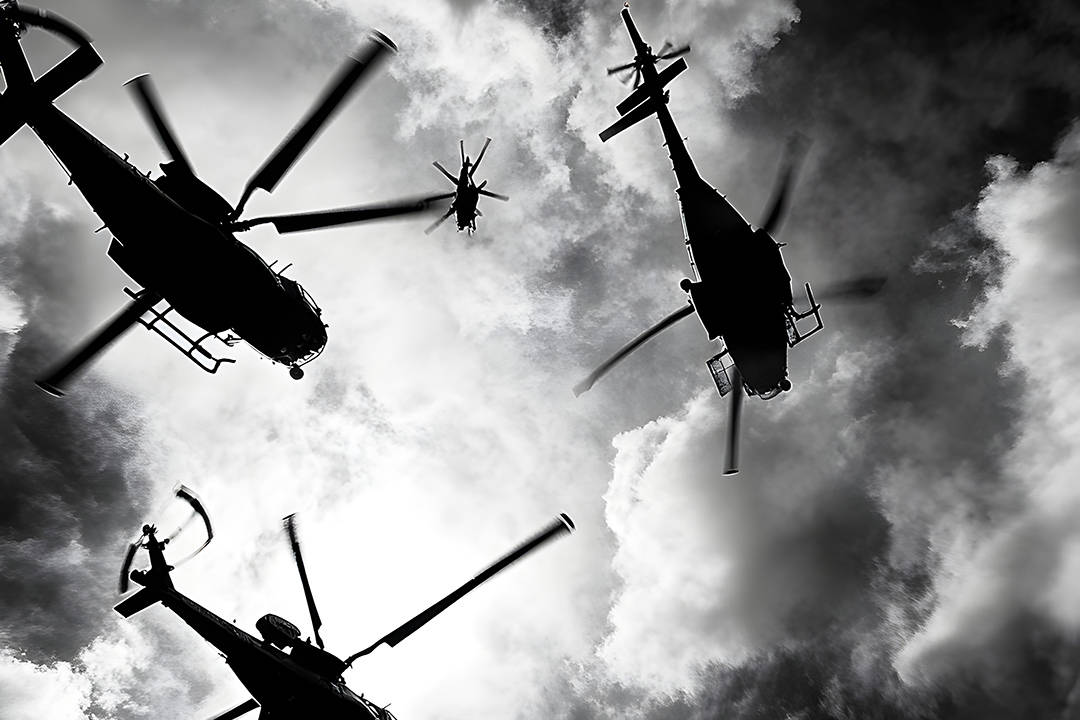
New Zealand's 2025 Defence Capability Plan is a promise, not a result. A Defence Capacity Statement could keep national-security risk, readiness and delivery connected.
Defence Capacity Statement Protocol
A practical governance method for maintaining and changing usable military capacity at the speed of relevance, authored by Ian Ball, John Crompton, Dag Detter and Major General John G. Howard.
Allied governments are preparing to spend substantially more on defence. Debate tends to focus on percentages of GDP, procurement programmes and platforms. But plans, appropriations and contracts do not themselves produce military effects.
New Zealand offers a particularly useful test. Its 2025 Defence Capability Plan represents the country's largest defence-investment uplift in a generation: NZD 12 billion over four years, including NZD 9 billion of new funding. The plan has been welcomed for recognising that a modern force requires more than platforms. It encompasses people, infrastructure, intelligence, information systems, space-enabled communications, uncrewed systems, stocks and industrial support.
New Zealand also has unusually strong public-financial-management foundations. Its Budget includes accrual forecasts and a forecast balance sheet. It has formal business-case processes, audited reporting and Treasury guidance on intervention logic. If these components cannot be connected to timely delivery in a relatively small and administratively sophisticated system, larger allied governments should pay attention.
The critical period begins in 2027. The test will not be whether the Defence Capability Plan was well written or whether its appropriations were spent. It will be whether the complete system is becoming more relevant, more ready and more capable of producing the military effects government requires.
The central delivery problem is institutional fragmentation. Strategy, capability planning, budgeting, acquisition, infrastructure, workforce, intelligence and operational-readiness reporting are handled through different organisations and decision processes. Each may perform its own function competently while the causal connection between them weakens.
A programme can therefore clear every formal gate and still fail operationally. A platform may arrive without sufficient trained personnel, stocks, maintenance capacity or information systems. A sensor may be delivered before the data rights, analysts or networks required to exploit it. An existing force may hollow out while its replacement remains years away.
This is also why capacity cannot be treated simply as something that begins with a procurement and ends when new equipment enters service. Most capacity already exists in some form. It must be sustained, renewed, adapted and protected against deterioration.
The first question is not simply which frigate to buy. It is what maritime effect the country requires: persistent awareness of its approaches, protection of sovereign interests and trade, support to Pacific partners, and a credible contribution to allied operations
To address this gap, the authors propose a two-part model: a Standing Defence Capacity Statement and linked Capacity Change Records.
A Standing Defence Capacity Statement would cover an enduring military effect or strategically important capacity area. It would show what usable capacity exists now; whether it is improving, stable or deteriorating; its readiness, endurance, resilience and adaptability; and its principal risks and dependencies.
A linked Capacity Change Record would accompany a major acquisition, reform or other intervention. It could be triggered by external factors, such as technological developments, or internal factors, which might be the loss or failure of a significant asset. It would state what change in capacity is required, the latest useful date by which the change must take effect, the complete delivery system, accountable owners, dependencies, adaptation triggers and the evidence required to demonstrate improvement. Once the resulting capacity improvement had been demonstrated, it would update the standing capacity baseline.
'Speed of relevance' does not mean haste for its own sake. It means delivering capacity while the threat, technology and strategic opportunity it addresses remain current.
Traditional acquisition processes were designed largely for long-lived platforms such as ships and aircraft. Those platforms remain important and can often be adapted with new weapons, sensors, software and autonomous systems. But software, data, intelligence tools, space services and uncrewed technologies evolve on much shorter cycles. Forcing all of them through the same approval and acquisition pathway risks delivering technically sound answers to questions that have already changed.
New Zealand's current consideration of its future naval surface-combat capability illustrates the distinction. The first question is not simply which frigate to buy. It is what maritime effect the country requires: persistent awareness of its approaches, protection of sovereign interests and trade, support to Pacific partners, and a credible contribution to allied operations.
Only then should government determine the combination of ships, surveillance, autonomous systems, weapons, people, infrastructure, maintenance, stocks, information and partner support required. Some elements may need decades of planning. Others should be acquired, tested and updated within months.
Enjoy our analysis and research? Ensure it shows up first on Google
Help your search results show more from RUSI. Adding RUSI as a preferred source on Google means our analysis appears more prominently.
The detailed acquisition process should remain with the organisations responsible for it. The Statement should not reproduce programme documentation or become another comprehensive dashboard. Its purpose is to keep the complete capacity outcome at the centre of senior decision-making, while making accountability for that outcome explicit.
In New Zealand, the Chief of Defence Force and the Secretary of Defence should be jointly accountable for whether the required military effect can be generated. Material failure or delay should not remain buried as an acquisition-management problem. Where it threatens a strategically important capacity, it should be treated as a national-security risk.
That suggests oversight through the National Security Board, with significant risks escalated through Cabinet-level national-security governance. The Standing Statement should be connected to current operational-readiness reporting and to the main Defence Capability Plan decision points. Intelligence and strategic-risk assessments should provide early warning when assumptions about threats, technology or partners are changing.
The senior decision-maker should see a short, prioritised set of capacity questions: what effect is at risk, what is causing the gap, who owns the response, when a decision is required and what happens if action is delayed. Crossing a defined threshold should force an explicit decision to continue, adapt, accelerate, suspend or stop.
A concise public Statement should describe the strategic purpose, broad capacity position, principal risks, material interventions and whole-life implications. Sensitive readiness, stockpile, intelligence and allied information would remain in a non-public annex. Independent auditors and authorised reviewers could test the evidence, ownership and follow-through without substituting their judgement for military command. Where capacity depends on close integration with allies, speed of relevance also depends on those partners having compatible ways to assess capacity, expose critical dependencies and trigger timely decisions.
Subscribe to the RUSI Newsletter
Get a weekly round-up of the latest commentary and research straight into your inbox.
A Defence Capacity Statement cannot make a shipyard build faster or create experienced personnel overnight. It can expose missing components before contracts are signed, reveal deterioration before capacity fails, preserve accountability across institutional handovers and force decisions while alternatives still exist.
New Zealand's Defence Capability Plan has supplied the ambition and resources. The next test is whether the machinery of government can convert them into adaptable and sustainable military capacity while it still matters.
A plan is a promise. Capacity is the result.
© Ian Ball, John Crompton, Dag Detter and John G. Howard, 2026, published by RUSI with permission of the authors.
The views expressed in this Commentary are the authors', and do not represent those of RUSI or any other institution.
For terms of use, see Website Terms and Conditions of Use.
Have an idea for a Commentary you'd like to write for us? Send a short pitch to commentaries@rusi.org and we'll get back to you if it fits into our research interests. View full guidelines for contributors.
Guest Contributor
View profile

Guest Contributor
View profile

Guest Contributor
View profile

Guest Contributor
View profile

此内容由惯性聚合(RSS阅读器)自动聚合整理,仅供阅读参考。 原文来自 — 版权归原作者所有。