











Origin of the Isotopes
The Origin of the Isotopes SAG will explore the scientific potential of a next-generation mission optimized to enable transformative studies of nuclear processes in explosive transients and compact objects.
About Isotopes SAG
Enabling Studies of Nucleosynthesis and Explosion Physics Inaccessible by Other Means
The Isotopes SAG will explore the scientific potential of a next-generation gamma-ray mission optimized for narrow line sensitivity to point sources.
Such a mission could prioritize detection sensitivity with spectral resolution, potentially at the expense of field of view or imaging performance, in order to enable transformative studies of nuclear processes in explosive transients and compact objects that will test the laws of physics and trace the origin and evolution of matter in the universe, from the production of the elements to the expansion history of cosmic space-time.
Nuclear gamma rays and positron annihilation radiation are among the most powerful diagnostics in astrophysics. Whereas atomic lines reveal elemental abundances and plasma conditions, and molecular lines probe gas dynamics and chemistry, nuclear lines provide direct measurements tied to specific radioactive isotopes. Further, their known decay lifetimes serve as intrinsic chronometers. These properties enable studies of nucleosynthesis, explosion physics, and matter transport that are inaccessible by other means. Observations of radioactive isotopes uniquely probe the creation, distribution, and annihilation of matter in the universe, connecting stellar explosions, compact objects, and Galactic ecosystems.
The principal objectives of this science interest group are to:
- Astrophysical Sources and Discovery Space
Which transient and persistent sources can be studied through nuclear gamma rays and positron annihilation? What unique insights would such observations provide? Candidate targets include thermonuclear supernovae, novae, core-collapse supernovae, kilonovae, rapidly accreting white dwarfs, and other explosive or accretion-powered systems. Are there additional source classes that would benefit from enhanced sensitivity?
- Measurement Requirements
What detection sensitivity is required to observe these sources to meaningful distances? What spectral resolution is needed to measure line profiles and kinematics? What are the scientific gains as a function of field of view or spatial resolution? What mission or instrument requirements are driven by these science goals?
- Mission Concepts and Pathways
What mission architectures or detector technologies could achieve the required performance? What mission classes (e.g., Probe, MIDEX, or strategic missions) are necessary to reach these capabilities? How do existing or proposed concepts compare with the science requirements identified by this group?
Stay Connected
Subscribe to the Isotopes SAG Email List
To join the list, send an email to Isotopes-SAG-join@lists.nasa.gov with Subject="join"
To unsubscribe, send an email to Isotopes-SAG-leave@lists.nasa.gov with Subject="leave"
Your email address will be used only for the purpose of subscription to the selected email distribution list. For further information, read the NASA Web Privacy Policy.
SAG Leadership
| Name | Institution |
|---|---|
| Eric Burns | LSU |
| Carolyn Kierans | NASA/GSFC |
| Chris Fryer | LANL |
News & Events
Meetings, conferences, seminars, workshops, and other events for Isotopes SAG
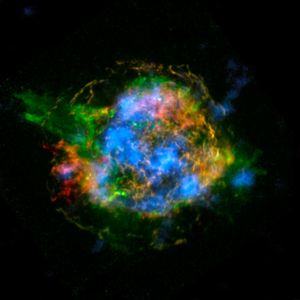
Origin of the Isotopes Science Analysis Group (Isotopes SAG)
Nuclear gamma rays and positron annihilation radiation are among the most powerful diagnostics in astrophysics. Whereas atomic lines reveal elemental abundances and plasma conditions, and molecular lines probe gas dynamics and chemistry, nuclear lines provide direct measurements tied to specific…
May 6, 2026
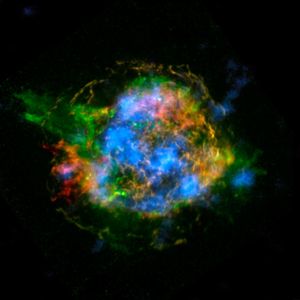
Isotopes SAG Kickoff Meeting, 5 June 2026
Kickoff Meeting As we are now unraveling the origin of the heaviest elements, we begin exploring the Origin of the Isotopes. In this area of interest, we have initiated a new Science Analysis Group to explore what a next-generation nuclear…
May 6, 2026
Documents