


惯性聚合 高效追踪和阅读你感兴趣的博客、新闻、科技资讯
阅读原文 在惯性聚合中打开

推荐订阅源

量子位
Vercel News
Vercel News
Microsoft Azure Blog
爱范儿
爱范儿
N
Netflix TechBlog - Medium
Google DeepMind News
H
Help Net Security
罗磊的独立博客
The Cloudflare Blog
J
Java Code Geeks
博客园 - 叶小钗
I
InfoQ
B
Blog
Blog — PlanetScale
Blog — PlanetScale
Cyber Security Advisories - MS-ISAC
腾讯CDC
月光博客
月光博客
博客园_首页
雷峰网
雷峰网
M
MIT News - Artificial intelligence
博客园 - 【当耐特】
美团技术团队
T
The Blog of Author Tim Ferriss
博客园 - 司徒正美

NASA Science

Cosmic Origins at AAS 248, June 2026 - NASA Science Cosmic Structure SIG Seminar, 30 April 2026 - NASA Science CMB SAG Meeting, 24 April 2026 - NASA Science BBX SAG Meeting, 30 April 2026 - NASA Science Early Career Investigator Program – Earth Science (ROSES A.11) - NASA Science XR SIG Seminar, 1 May 2026 - NASA Science Night and (Earth) Day - NASA SWERV: High-Impact Historical Case Study - NASA Science AAS Meeting 248, June 2026 - NASA Science Earth Day 2026: Posters and Virtual Backgrounds - NASA Science Advancing Earth Observation at NASA since Release of Earthrise Photo - NASA Science X-59 Adds Freedom 250 Logo - NASA Belts of Green in the Washington Suburbs - NASA Science Artemis II Mission Milestones: An Image and Video Recap Curiosity Blog, Sols 4867-4872: Sand Fill In Antofagasta Crater and Finding Our Next Drill Target NASA Invites Media to Jordan Artemis Accords Signing Ceremony New NASA Views of Earth, From (S)PACE - NASA Science Crew Studies Biotech on Tuesday to Advance Health and Space Economy NASA Invests in Small Businesses Innovating for Space and Earth NASA at SXSW: Johnson Director Vanessa Wyche on Why Artemis Changes Everything Researchers: How Would You Extract Meaningful Insights from Just Four Astronauts? BBX SAG Meeting, 23 April 2026 - NASA Science Thailand’s Krabi Coast - NASA Science AI/ML STIG Lecture Series, 20 April 2026 - NASA Science SWERV: Training Overview and Agenda - NASA Science SWERV: REAL-TIME CAPABILITIES AND IONOSPHERIC DISRUPTIONS OF COMMUNICATIONS - NASA Science SWERV: Operationally Significant Phenomena and Impacts for Ground Operations - NASA Science SWERV: Space Weather Impacts on Satellites - NASA Science SWERV: Space Weather Chain of Events - NASA Science CSDA Quality Assessment Report Evaluates Satellogic NewSat Data - NASA Science
NASA’s Next-Gen Mars Helicopter Rotors Are Moving Fast - ...
Rafael Alani · 2026-05-08 · via NASA Science

1 Min Read

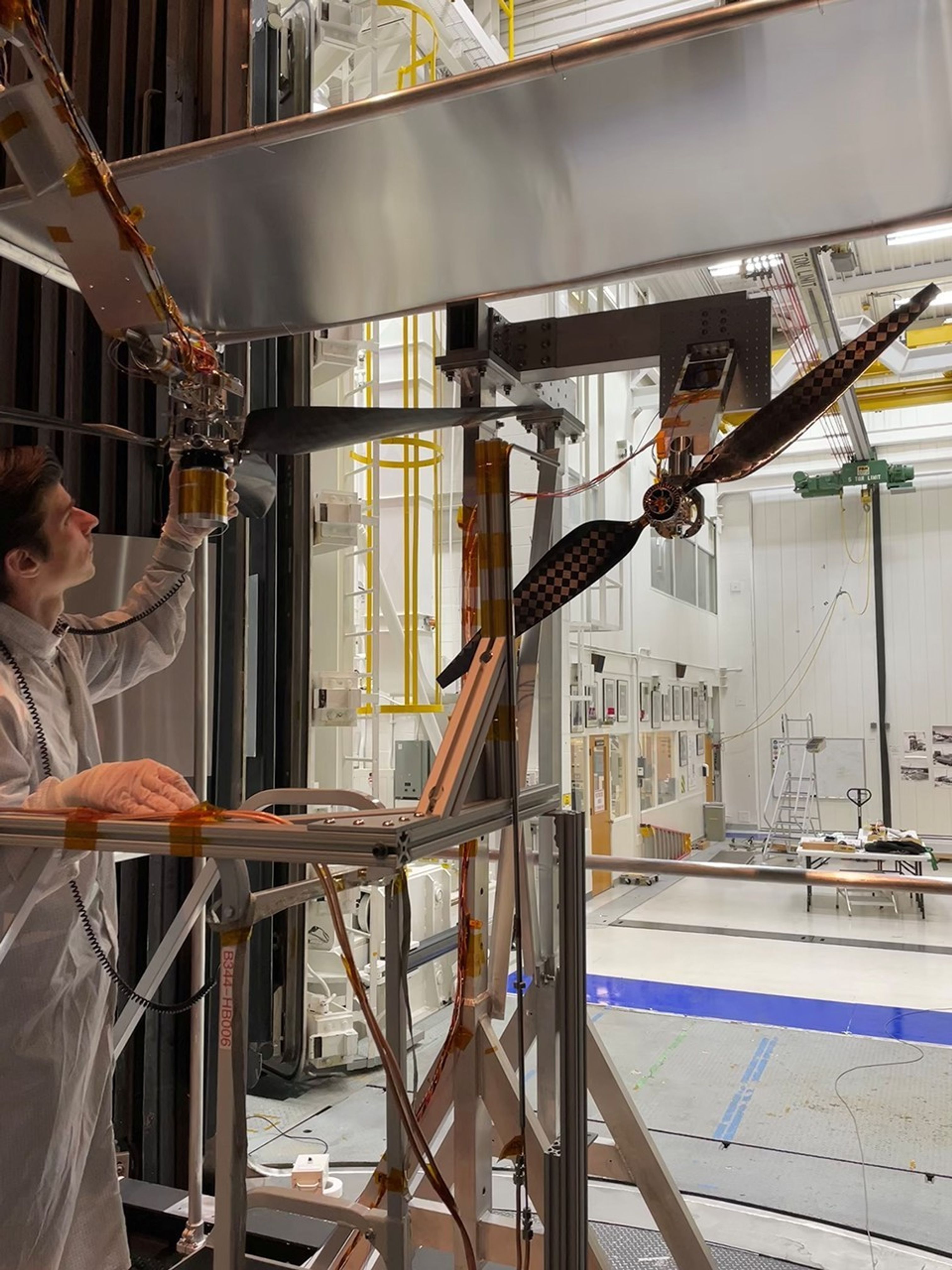
A man in a white clean room suit inspects a horizontal three-bladed rotor. To the right, a vertical two-bladed rotor with a checkered pattern is mounted. Both sit within a large, white industrial testing chamber filled with scaffolding and equipment.

PIA26648

Credits: NASA/JPL-Caltech

Engineer Jaakko Karras inspects a next-generation Mars helicopter rotor blade prior to supersonic speed testing in the 25-Foot Space Simulator at NASA’s Jet Propulsion Laboratory in Southern California in November 2025. The three-bladed rotor hanging horizontally in the foreground is the next-gen rotor being tested. The vertically aligned two-bladed rotor provided a “headwind,” enabling the tips of the three-bladed rotor to go beyond Mach 1. Data from the tests indicate that the next-gen rotor could surpass the sound barrier without breaking apart.

The agency’s Mars Exploration Program funded the test campaign in pursuit of maximizing the capability of future aircraft flying at the Red Planet. A division of Caltech in Pasadena, JPL manages the Mars Exploration Program for NASA’s Science Mission Directorate in Washington.

Keep Exploring

Discover More Topics From Photojournal