








BalNeO : Balloon Network for stratospheric aerosol Observations
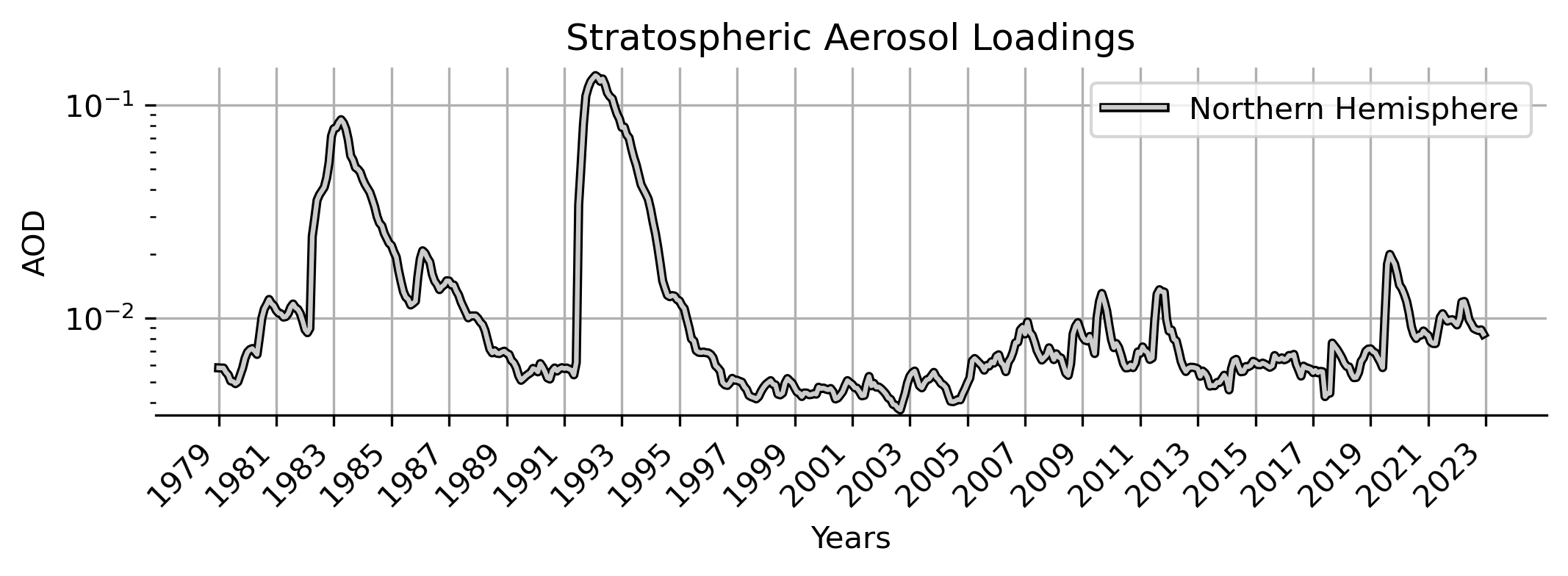
Figure 1. Stratospheric Aerosol Optical Depth (SAOD) from the Global Satellite-based Stratospheric Aerosol Climatology (GloSSAC)
The Stratospheric aerosol layer is a key component of the climate system with global implications on surface temperature and the hydrological cycle. Being highly variable, regular observations are needed to understand its different sources. Since the era of satellite observations in the late 70’s, major and moderate volcanic eruptions affected the total Stratospheric Aerosol Optical Depth by up to a factor of 100 (Fig.1) with subsequent cooling impacts on climate. In addition, recent extreme wildfires in Canada and Australia have impacted the stratosphere at levels never observed before like volcanoes. Finally, the Summer Asian Monsoon exports surface pollution into the stratosphere and represents another significant source.
Geoengineering the climate using artificial stratospheric injection of aerosols has been proposed as a temporary solution to reduce the impacts of climate change. Having a network of observations to detect any artificial injection and trace back its origin is critical.
While stratospheric optical properties have been monitored for more than 4 decades with satellite observations quasi-globally (Fig.1), they suffer of limited vertical, horizontal and temporal resolutions and requires several assumptions to derive aerosol concentrations. In situ measurements of aerosol concentration have focused mostly on the Northern Hemisphere with less coverage over the tropical region.
The Balloon Network for stratospheric aerosol Observations (BalNeO) aims to fill those gaps. BalNeo brings together research laboratories from USA (NASA Langley Research Center, The National Insitute of Aerospace), Brazil (IPMet – Centro de Meteorologia de Bauru, Instituto de Pesquisas Energéticas e Nucleares), France (Groupe de Spectroscopie Moléculaire et Atmosphérique-Université de Reims Champagne-Ardenne) and India (National Atmospheric Research Laboratory-Indian Space Organization, Tata Institute of Fundamental Research) in order to profile aerosol concentration from the ground to the stratosphere.
The first flight of BalNeO took place on 1 June 2024 from Bauru, Brazil. Results from this flight show some very interesting features. A stratospheric aerosol layer between 18-22 km was transported over Brazil after the Ruang volcanic eruption which took place at the end of April. 3 days later, another BalNeO flight took place from France where a feature between the troposphere and the stratosphere was observed which could have originated from wildfires or volcanic activities in the Northern Hemisphere.
Those unique observations provide insights on stratospheric aerosol variability and its impact on climate.
BalNeO is planning to extend its activity in India and US over the next few months and become a reference network for stratospheric aerosol observations.
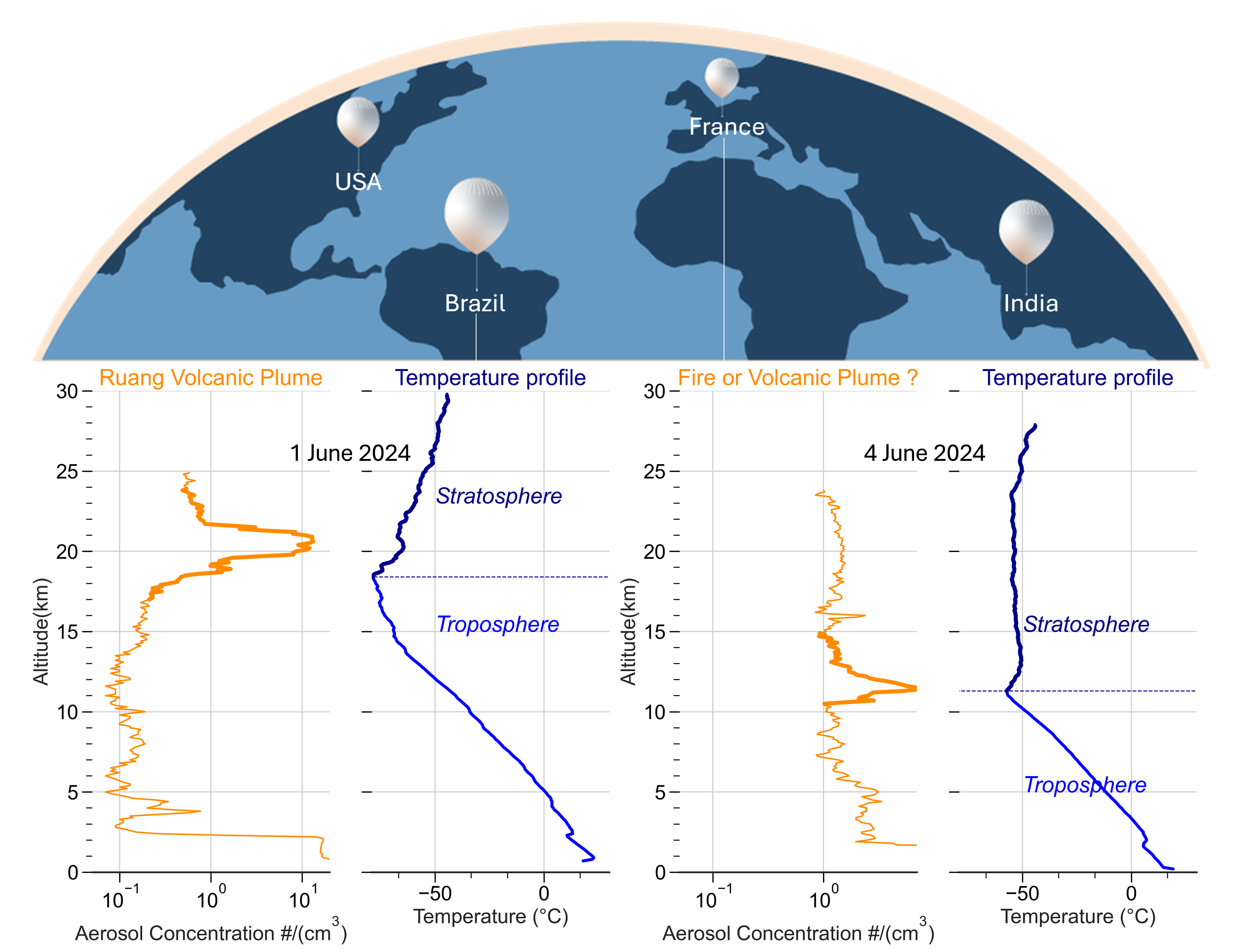
Figure 2. (left) aerosol concentration and temperature profiles obtained during the first BalNeO flight from Bauru/Brazil on 1 June 2024. (right) Another flight took place 3 days after from Reims/France.