









The MacBook Neo is Apple’s most important new notebook in almost two decades, largely because of its price. Starting at $599, the Neo costs almost half as much as the 13-inch 2026 MacBook Air and is now the lowest-priced new Apple notebook. It’s a big deal, any way you look at it.
What’s more, the Neo achieves this without making significant design and hardware concessions. On the hardware front, the Neo offers a sharp Liquid Retina display and the same high-powered Apple A18 Pro silicon that’s inside the iPhone 16 Pro and 16 Pro Max, paired with 8 GB of RAM. Software-wise, the notebook runs the same macOS platform with Apple Intelligence as any other Mac.
After a week of using the MacBook Neo as my sole computer, I can attest that Apple’s latest is the absolute best in its price range by a mile.

| Chip | Apple A18 Pro |
| Display | 13-inch Liquid Retina Display |
| Memory | 8 GB of RAM, 256/512 GB of storge |
| Connectivity | Wi-Fi 6E, Bluetooth 6, two USB-C ports |
| Other | Dual speaker system, Full HD FaceTime camers, optional Touch ID |
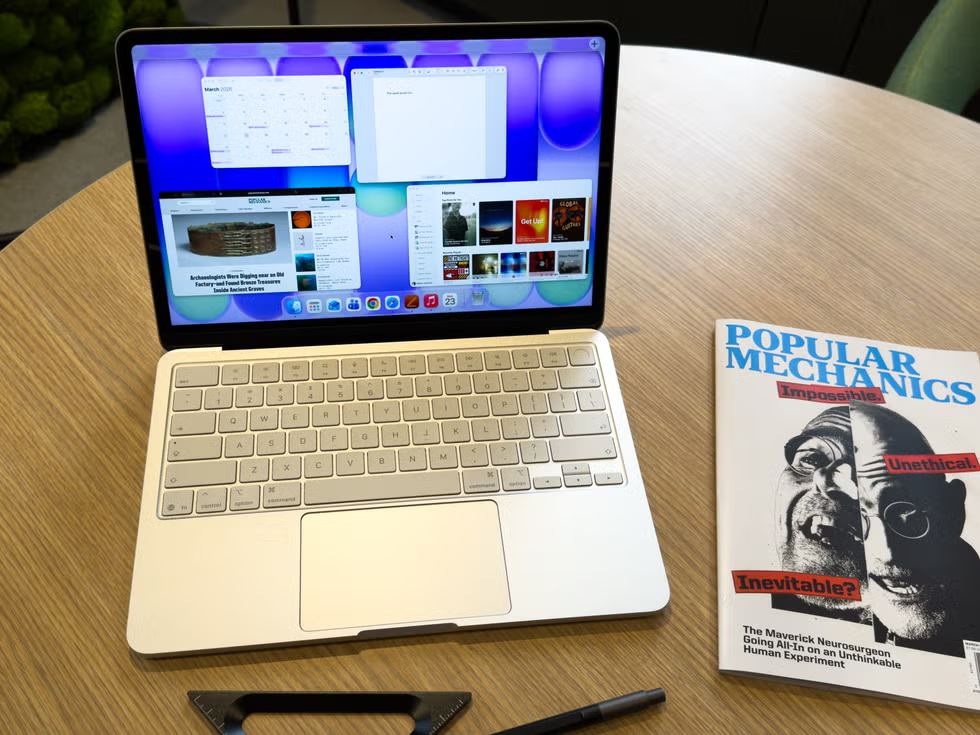
Available in four colors (blush, citrus, indigo, and silver), the notebook’s recycled aluminum body belies its price category and makes the competition look bulkier, more generic, and, crucially, cheaper by comparison.
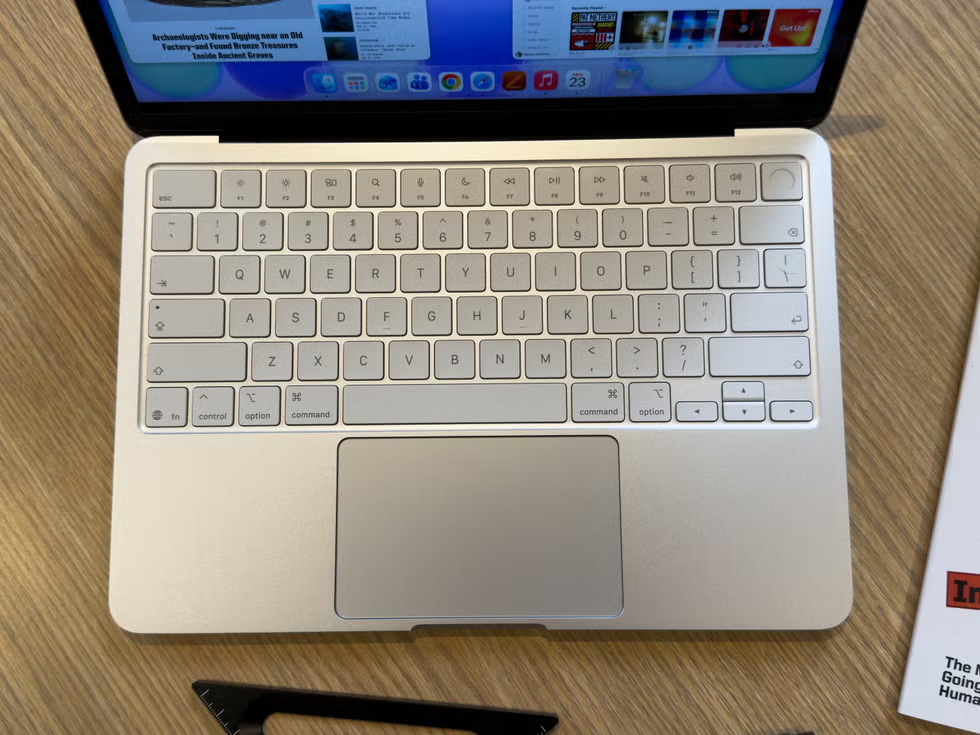
The Neo’s keyboard and trackpad, if not on par with those of pricier MacBooks, are miles ahead of those in similarly priced rivals’ setups. The Magic Keyboard keys’ satisfying tactility was a comfortable switch from a MacBook Pro. Save for the lack of backlighting—a minor shortcoming for an affordable laptop—I didn’t notice any difference while typing this review. The trackpad’s technology isn’t as high-end as that of other Apple notebooks, but it’s still precise and satisfying to click on.
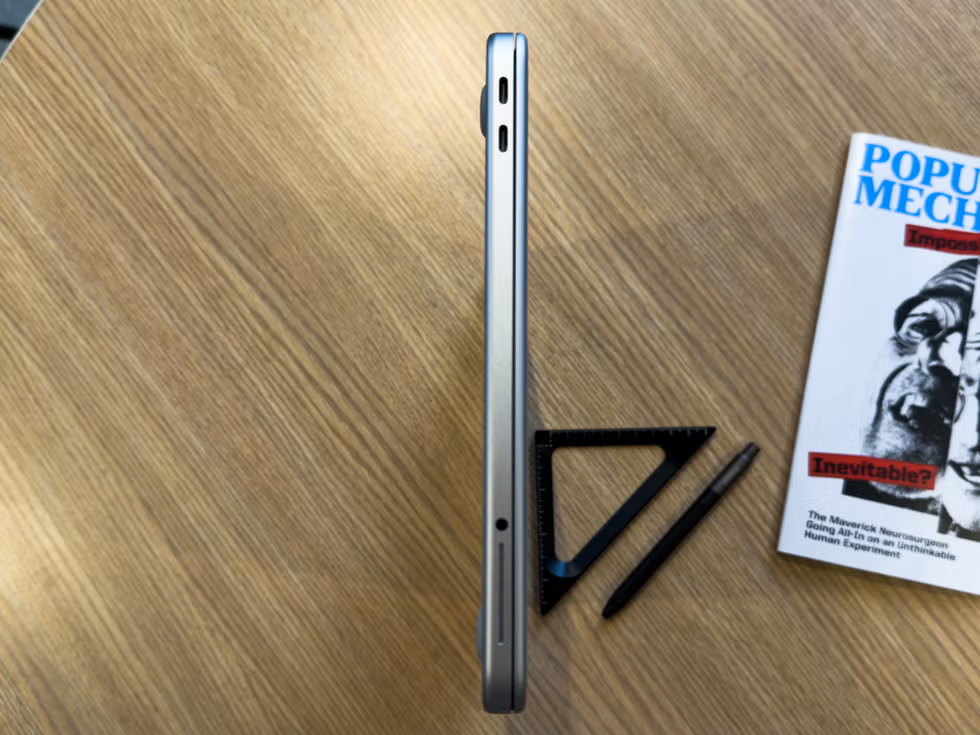
Featuring a 13-inch screen in a slim body that weighs under three pounds, the MacBook Neo easily fit into my backpack. Its characterful colors, modest weight, and compact design make it perfect for students and anyone else in need of a take-anywhere portable computer.
The Neo is the first MacBook to share a chip with an iPhone. Its A18 Pro silicon powered the iPhone 16 Pro, which, until the arrival of the iPhone 17 Pro, was the most powerful phone in its class.
The Neo made quick work of opening and switching between my go-to set of apps, which includes Google Chrome with multiple open tabs, Microsoft Outlook and Teams for email and communication with colleagues, Apple Pages for writing, and Apple Music for streaming audio.
Jumping from a MacBook Pro with 32 GB of RAM to the Neo, I felt the affordable Mac was a step behind in multitasking because it has less RAM. Switching between the selection of open apps mentioned above took an extra fraction of a second compared with the Pro. Still, the Neo is anything but sluggish.
Regarding battery life, I had no trouble getting a workday’s worth of screen time (about 8 to 9 hours of mixed use) from the MacBook Neo without needing to recharge. And, remarkably, juicing up the notebook on the go was easier than ever. Because it needs only 20 watts of power to recharge, I could easily extend its independence from a power outlet with a compact power bank rather than a larger, higher-priced one with greater capacity.
The Neo is an excellent laptop upgrade for students and anyone else in need of a reliable and affordable portable computer. I’d take it over any PC or Chromebook in its price range. Most are designed with plastic bits and offer lesser performance, shorter battery life, and pesky preinstalled bloatware. Some might offer more memory and horsepower, but I prefer to take a Neo out of my backpack in a café or a classroom because it looks cooler and lasts longer between charges.
My pick between the two MacBook Neo versions is the cheaper one for $599 before additional discounts. An extra $100 gets you double the storage and Touch ID, but no extra RAM. If you are eyeing it, be sure to check for MacBook Air deals before adding it to your cart. The 2025 version with Apple M4 silicon was frequently on sale for less than $800 before its replacement dropped.


Now 5% Off

Now 12% Off

Now 6% Off

Stefan is an award-winning consumer technology editor with over a decade of experience in reviewing gadgets, particularly smartphones, tablets, smartwatches, desktop and laptop computers across multiple form factors and platforms, as well as accessories for them. He also covers televisions and audio equipment, including headphones, earbuds, wireless speakers, and soundbars. Since joining Hearst in 2015, Stefan has contributed to BestProducts, Popular Mechanics, and numerous other publications. Prior to his current role, he served as the US Editor for GSMArena.com.

Rachel is the Deputy Editor of Reviews for Hearst's Enthusiast and Wellness Group where she supports Popular Mechanics, Runner's World, and Best Products. Her background is in service journalism and earlier in her career she worked as a daily newspaper reporter and book editor. She spent more than a decade as a staff editor and writer at TripAdvisor and Penguin Random House and her byline has appeared in Time Out New York, the New York Daily News, and New York Magazine. Outside of work, Rachel can be found planning her next trip, visiting museums and galleries, and walking her wirehaired dachshund in Central Park.
此内容由惯性聚合(RSS阅读器)自动聚合整理,仅供阅读参考。 原文来自 — 版权归原作者所有。