


They want spaces that reflect who they are and what they care about. Handcrafted pieces and curated, custom art play a major role in creating that emotional connection. For us, details like this are not the finishing touch; they are the story.
We approach our workplace projects the same way we approach a hospitality or residential space, where atmosphere and emotional tone carry as much currency as the architecture and furniture. The lessons we have learned across project types have shaped how we design workplaces today. The office must feel alive and expressed.
It should reflect the people, the culture and the ethos of the company and brand.
This level of design is not simple surface manipulation. Or styling. It is not filling shelves. It is about presence, memory, and identity. When we select artwork or artifacts for a client, we interpret their history and values and try to point to the future. We are translating culture into form.
We also do this work personally. A typical workplace is a space a person returns to on a regular basis. They develop a personal connection with the space, and we try to reveal what makes that relationship resonate. We shop for the pieces ourselves. We try things, light them, layer them, and swap them out until they feel right. That level of hands-on involvement means the results are always custom. Nothing is selected in bulk. We do not warehouse accessories. We do not purchase generic filler pieces. Every project has its own personality. Our role is to reveal it.
At The Beam on Farmer in Tempe, we used art to root a project in its local context. The client wanted a lobby that felt as accessible and walkable as nearby Mill Avenue, similar to the atmosphere of a neighborhood café or hotel lounge. They wanted a place where tenants could work casually, gather for events, or just sit with a coffee.
We layered comfortable furnishings with pieces that reflected the surrounding desert landscape. To deepen the sense of connection to place, we asked our longtime colleague, Doug Stelling, to sketch architectural landmarks from around Tempe. Doug has a background in environmental storytelling, and, in a world of AI-generated non-fungible tokens and digital renderings, his hand sketches added just the right personal, bespoke feel.
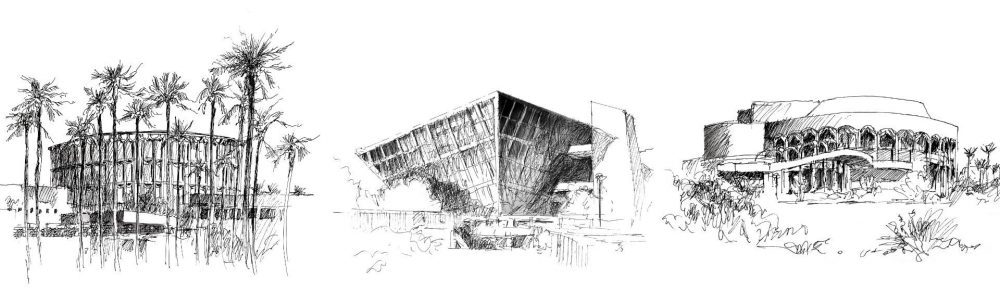
The lobby now feels relaxed and activated. Visitors step up to the sketches as they would at a local gallery, while they wait for their coffee. As a result, the lobby has become a social anchor for the building, blurring the line between what is a private and semi-public space, and establishing a welcoming opening gesture for the tenants. Most importantly, people actually use it. They hold events there. They linger and have informal, impromptu meetings at comfortable lounge chairs or at the dining tables. And that is exactly the buzz our client wanted.
True Food Kitchen was founded on a very real story about food, wellness, and place. The brand’s history traces back to farms, fishing communities, small kitchens, and makers who shaped the idea of nourishing food as a daily practice.
Our work here focuses on authenticity and local connection, values near and dear to the True Food Kitchen ethos. We curated artifacts that reference the origin of ingredients and the people who grow and prepare the food. Some pieces touch on the founder’s personal history. Others reference the very specific places that support the menu (the exact stretch of beach where the fishermen bring in the catch that ends up TFK tables, for example). The cumulative effect is visceral and perfectly aligned with True Food Kitchen’s mission and trajectory.
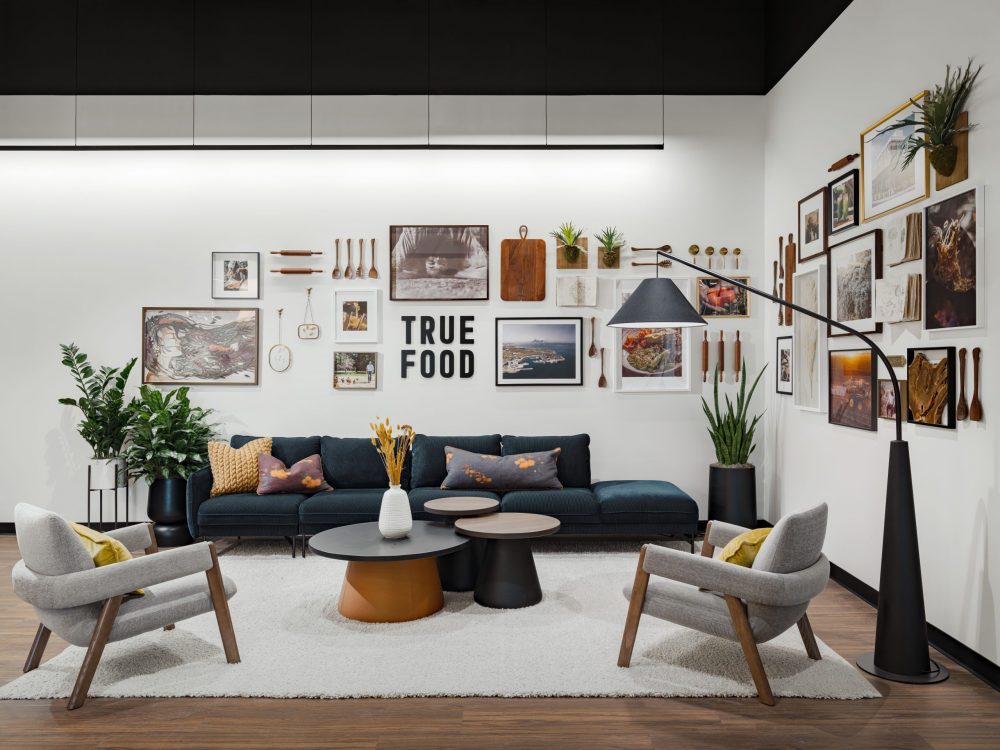
Every object has a reason for being there. Every piece has a person or place behind it. When someone walks in, they may not realize the entire story at first, but they feel it. That emotional resonance is the point.
Of course, this level of design goes beyond a basic aesthetic pursuit. Yes, the elements have to “work together” and look good as an exhibit or tableau, but getting to that point takes an element of curatorial research and storytelling. Some days we feel like historians or anthropologists trying to find the right element or theme. Then we script a narrative that brings context, interest and relevance.
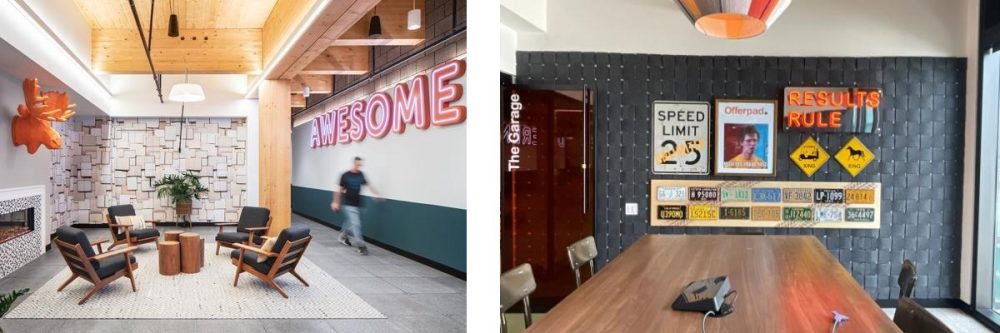
Offerpad’s headquarters remains one of the most personal examples of this level of design. This was a major move from their initial start-up warehouse headquarters, and they wanted it to feel expressive, warm, and slightly eccentric in a way that reflected their culture. As a tech-driven platform to buy and sell properties, they challenged us to create a space that embodied the non-traditional approach of an industry disruptor along with the seriousness of what, for many, is the largest financial transaction of their life: buying a home.
To tell the Offerpad story, we curated photography from their own archives. We scanned personal images and reworked them. We even thrifted objects, accessories, and small artifacts that felt like a collection amassed over a family’s lifetime, infused with their inside jokes and historical references. And, as a humorous play on the idea of home, we designed a meeting space with a wall of front doors, each with personal touches like playful hardware, street numbers and casings (a handshake, a tire, a dog).
A visit to the space is like stepping into someone’s home. There’s a bit of fun, memory, and curiosity in almost every corner.
These days it is hard to escape the hype around Artificial Intelligence and its impact on design and the workplace. AI can do a lot of things, but it cannot feel the pangs of memory or the pull of history. It cannot walk through a local market and recognize an object that holds just the right emotional tone or resonance. It cannot understand how a room should feel when someone enters it for the first time. That’s what designers do.
This is design on a small, personal scale, but it often makes a huge difference in today’s workspaces. It requires trust and presence. It is built on human relationships.
When clients invite an interior designer into this part of the process, they are asking us to help tell their story in a way that people can see and touch and feel. It is something we take seriously and joyfully.
此内容由惯性聚合(RSS阅读器)自动聚合整理,仅供阅读参考。 原文来自 — 版权归原作者所有。