





惯性聚合 高效追踪和阅读你感兴趣的博客、新闻、科技资讯
阅读原文 在惯性聚合中打开

推荐订阅源

Microsoft Azure Blog
有赞技术团队
有赞技术团队
IT之家
IT之家
博客园 - 聂微东
Jina AI
Jina AI
Hugging Face - Blog
Hugging Face - Blog
Last Week in AI
Last Week in AI
Apple Machine Learning Research
WordPress大学
WordPress大学
小众软件
小众软件
爱范儿
爱范儿
奇客Solidot–传递最新科技情报
奇客Solidot–传递最新科技情报
V
Visual Studio Blog
雷峰网
雷峰网
酷 壳 – CoolShell
酷 壳 – CoolShell
阮一峰的网络日志
阮一峰的网络日志
宝玉的分享
宝玉的分享
博客园 - 三生石上(FineUI控件)
大猫的无限游戏
大猫的无限游戏
博客园 - Franky
量子位
月光博客
月光博客
博客园 - 【当耐特】
博客园 - 叶小钗

Security & Identity

Cloud CISO Perspectives: How Google monitors AI threats and advances AI defenses | Google Cloud Blog Introducing new session management tools with native, granular controls | Google Cloud Blog Getting started with the Mantis harness to find and fix bugs | Google Cloud Blog How Blackline prevents data exfiltration with VPC Service Controls | Google Cloud Blog Cloud CISO Perspectives: Tips on securing the water sector in the AI era | Google Cloud Blog Introducing Google Cloud Fault Injection Testing (FIT) in preview | Google Cloud Blog Cloud CISO Perspectives: Sticking to security fundamentals in the AI era | Google Cloud Blog Announcing quantum-safe key import in Cloud KMS | Google Cloud Blog PQC in Plaintext: Google Cloud’s post-quantum cryptography roadmap | Google Cloud Blog How Google Cloud detects, contains, and protects against emerging threats | Google Cloud Blog Privacy-first medical AI with MedPerf and Google Cloud | Google Cloud Blog Cloud CISO Perspectives: Why AI Threat Defense is the new boardroom baseline | Google Cloud Blog AlloyDB adds group authentication to secure enterprise scale and AI agents | Google Cloud Blog Future-proofing data integrity: Quantum-safe digital signatures in Cloud KMS | Google Cloud Blog Best Buy scales secure AI access with Workforce Identity Federation | Google Cloud Blog Cyber Snapshot Report: Enterprise resilience key to toolchain success | Google Cloud Blog Now in preview: Find and fix software vulnerabilities with CodeMender | Google Cloud Blog Cloud CISO Perspectives: How AI leverages deep context as the defender’s advantage | Google Cloud Blog Introducing k8s-aibom on GKE for automated AI bills of materials | Google Cloud Blog Contributing to U.K. financial sector resilience as a critical third party | Google Cloud Blog Meet the 33 cybersecurity startups joining the Gemini Startup Forum | Google Cloud Blog Drive proactive security, prioritize risks with Google Threat Intelligence and Wiz ASM | Google Cloud Blog Shift into high gear with agents: Securing the software-defined vehicle | Google Cloud Blog New IDC study: How Mandiant transforms security into a competitive advantage | Google Cloud Blog Google Cloud confirmed to offer a safer choice for EU public sector organizations with Dutch DPIA approval | Google Cloud Blog Cloud CISO Perspectives: How Google Cloud Security uses AI internally | Google Cloud Blog Securing agentic AI: What's new in VPC Service Controls | Google Cloud Blog Verifiable trust in the AI era: What’s new in Confidential Computing | Google Cloud Blog Choice, compliance, and collaboration: Europe’s path to open digital sovereignty | Google Cloud Blog Driving the UK’s next chapter: From AI potential to agentic reality | Google Cloud Blog
State of AI infrastructure report agent governance and se...
Doug Ko · 2026-08-25 · via Security & Identity

AI agents are the ultimate insiders. We grant them permission to read emails, query databases, and trigger API calls. They don’t just retrieve information, they take action. 

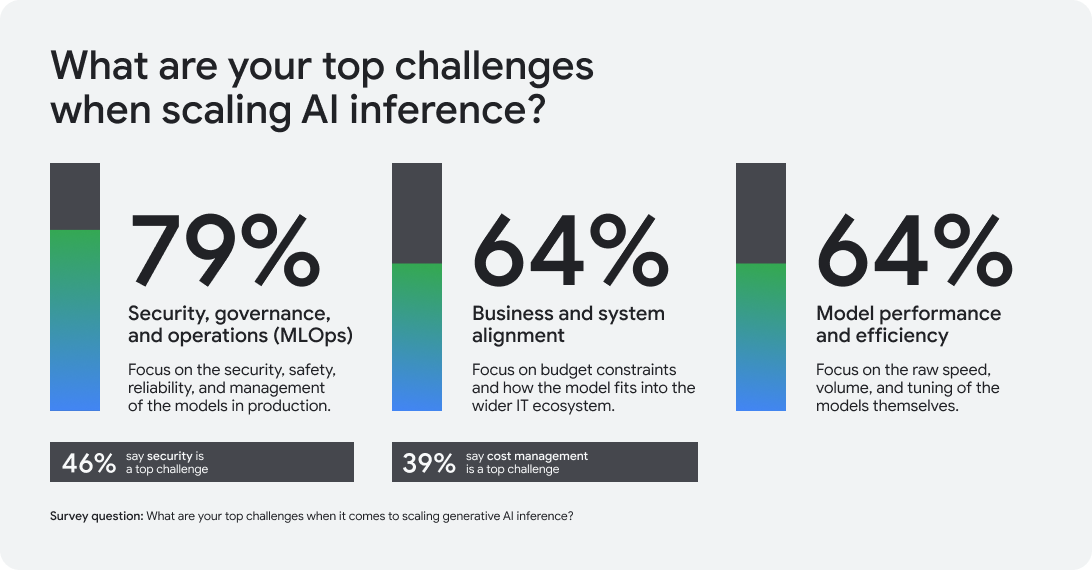
Agents offer incredible potential for increased productivity and better customer experiences, but they also come with new security concerns. In our new State of AI infrastructure report, 79% of tech leaders cite security, governance, or operations as their most significant challenge to scaling inference.

While there’s still a crucial role for traditional security tools, the threat model has fundamentally changed. Autonomous workflows have redefined enterprise risk, so it's crucial that we give agents the access they need without compromising security.
https://storage.googleapis.com/gweb-cloudblog-publish/images/Blog_4_Infographic_1.max-1100x1100.png
https://storage.googleapis.com/gweb-cloudblog-publish/images/Blog_4_Infographic_2.max-600x600.png

The agentic paradox

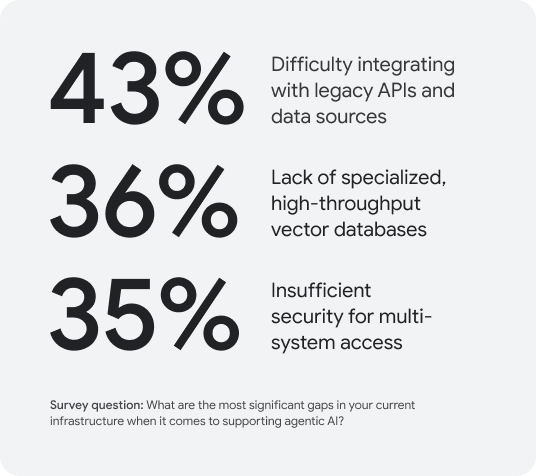
The path to success starts with viewing governance as a driver for innovation. To be useful and secure, an agent needs access — and also guardrails. Yet 35% of senior IT decision makers cite insufficient security for multi-system access as a primary issue preventing agentic deployment.

Agents expand the surface area that defenders need to protect, and can introduce new threats, including tool poisoning and indirect prompt injection, where an attacker can hijack an agent’s logic through the data it processes. Managing the dynamic permissions that agents need to succeed at their tasks can also be a significant challenge, particularly as legacy security wasn’t designed for today’s automated threats.
https://storage.googleapis.com/gweb-cloudblog-publish/images/Blog_4_Infographic_3.max-600x600.png

Securing the chain of thought

Along with securing more identity and access issues, it’s important for defenders to secure both the network layer and the model.

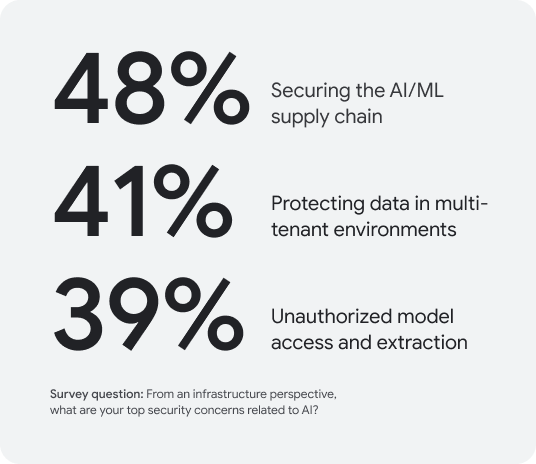
Security leaders are increasingly shifting their focus from preventing breaches to verifying provenance to guard against misuse, including indirect prompt injection.

From an infrastructure perspective, what are your top security concerns related to AI?

From blocking to managing

We’ve looked at the new security challenges posed by agentic AI. You can’t solve them by simply locking down the system, as that defeats the purpose of autonomous agents.

Many organizations are turning to integrated, full-stack cloud platforms to give them greater oversight. 69% of surveyed executives now rate a full-stack platform as a critical requirement, and 80% say data compliance is the primary factor dictating that choice.

By adopting frameworks like the Secure AI Framework (SAIF) and moving to a central control plane, purpose-built platforms such as Gemini Enterprise Agent Platform, organizations can manage risk in three main areas:

  • Secure-by-default design: Embedding security directly into the AI development process to proactively guard against threats including prompt injection.

  • Agent governance and oversight: Adopting purpose-built permission and identity management for agents — giving greater control over agent interactions, exposing blind spots and limiting risks tools.

  • Human-in-the-loop control: Enforcing clear rules that automatically flag when an agent requires human approval before moving forward with a critical action.

Governance will guide you to success

The true value of a modern security foundation is its ability to encourage innovation. By embedding robust governance directly into a unified foundation, organizations can deploy agents with confidence across their most sensitive, business-critical workloads. 

The leaders of the agentic era are re-architecting their stack to use security as a launchpad — empowering them to innovate securely and scale faster than their competition.

Find out more about how enterprise leaders are rethinking security for the agentic era in the State of AI infrastructure report.

Posted in