







What if a book could do more than just give you facts? What if it could shake up what you believe, challenge the powerful, and make you see everything differently? The best non-fiction books of 2025 do exactly that. They offer sharp clarity. From courtrooms and conflict zones to our own living rooms, these authors track the hidden systems of power, money, and nature. Most importantly, they lift up voices that are silenced. Get ready to have your perspective rewired.

Gods, Guns and Missionaries: The Making of the Modern Hindu Identity
By Manu S. Pillai
Allen Lane
Hinduism is not ancient and unchanging; it is a construct forged in the fire of colonial conflict. Tracing its evolution from the Jesuit missions at Akbar’s court to the rise of modern nationalism, Gods, Guns and Missionaries shows us how the muscular, “singular” Hindu identity we see today was actually a defensive response to European missionaries.
-
-
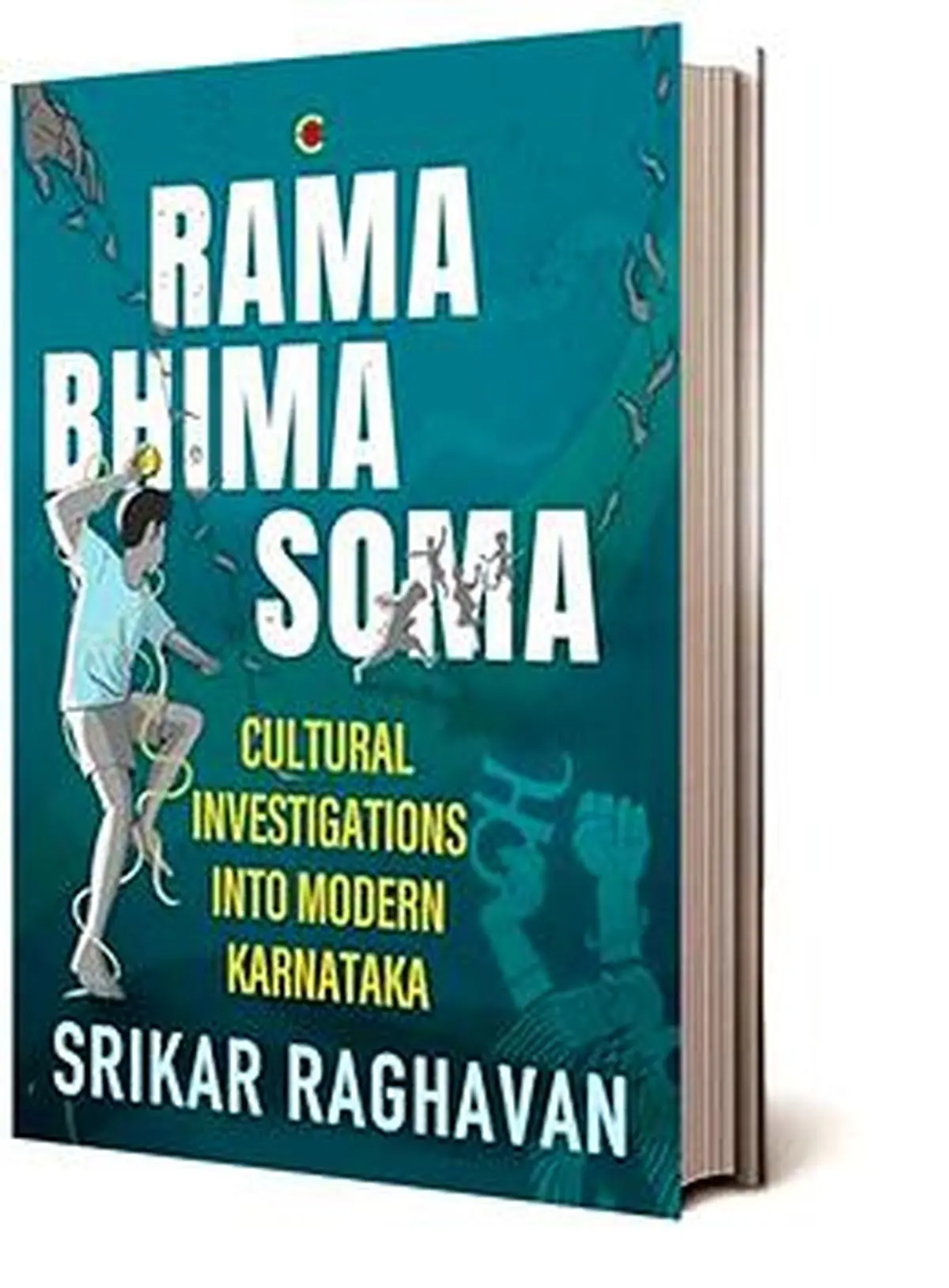
Rama, Bhima, Soma: Cultural Investigations into Modern Karnataka
By Srikar Raghavan
Westland
A genre-bending work of narrative non-fiction that interrogates the pluralist heart of Karnataka, moving beyond Bengaluru’s glitzy IT hubs to celebrate the State’s diverse scholarship, folk traditions, and revolutionary spirits.
-
-

Wild Fictions: Essays
By Amitav Ghosh
Fourth Estate
Here are 26 essays, written over 25 years, which map our “age of monsters”. Linking colonial greed and disaster capitalism to the climate crisis, Amitav Ghosh reveals that our very survival as a species will depend on reclaiming non-human sentience and confronting our shared, now shattered, ecological history.
-
-

Mother Mary Comes to Me
By Arundhati Roy
Hamish Hamilton
A brave, brutal exorcism of the ties that bind—and gag. In this memoir, which is more than a backstory of The God of Small Things, Arundhati Roy writes of her mother, Mary Roy, a feminist crusader who famously fought for inheritance rights for Syrian Christian women but also waged psychological war at home. It is a poetic reckoning with a “gangster” matriarch who was at once her daughter’s “shelter and storm”.
-
-

Careless People: A Cautionary Tale of Power, Greed, and Lost Idealism
By Sarah Wynn-Williams
Flatiron Books
An insider’s exposé of the rot within Facebook. Borrowing its title from The Great Gatsby, this account by a former Facebook director of public policy indicts Mark Zuckerberg and Sheryl Sandberg as “careless people” who routinely smashed global democratic norms and left others to clean up the mess.
-
-

Meet the Savarnas: Indian Millennials Whose Mediocrity Broke Everything
By Ravikant Kisana
Ebury Press
A long-overdue “reverse ethnography” that turns dominant-caste privilege into a specimen for scrutiny. Ravikant Kisana dismantles the myth of savarna “merit” to reveal how cultural sophistication often masks deep-seated caste blindness. This book is a discomfiting but necessary mirror for those who have spent a lifetime mistaking cultural capital for actual competence.
-
-

Birds, Sex and Beauty: The extraordinary implications of Charles Darwin’s strangest idea
By Matt Ridley
Harper
Science writer Matt Ridley moves beyond the Darwinian theory of evolution in this one. As he explores why male birds evolve cumbersome ornaments like the peacock’s tail, Ridley posits beauty as a powerful evolutionary force that has shaped the survival of the “hottest” rather than the fittest, and defined the poetry of the avian world and perhaps our own cultural history as well.
-
-

Dapaan: Tales from Kashmir’s Conflict
By Ipsita Chakravarty
Context
Dapaan (literally, “it is said” in Kashmiri) is a phrase used to share truths while maintaining a shield of safety. Ipsita Chakravarty documents how the “upside-down talk” of folk theatre, satire, and ghost stories have enabled generations of Kashmiris to survive conflict, resist censorship, preserve collective memory, and reclaim an identity that the state has sought to erase.
-
-

The Cell and the Soul: A Prison Memoir
By Anand Teltumbde
Bloomsbury
A profound prison diary and a blistering indictment of India’s decaying democracy. Anand Teltumbde, who was imprisoned without trial for 31 months in the Bhima Koregaon case, exposes a “Republic of Inversion” where the state treats its own citizens as enemies, where dissent is rebranded as sedition, and where constitutional justice is replaced with carceral cruelty.
-
-

Is a River Alive?: A Journey with Water
By Robert Macfarlane
Hamish Hamilton
If our rivers were living, legal persons, would we dump poison in them? Travelling from the cloud forests of Ecuador to the toxic waterways of Chennai, Robert Macfarlane documents a veritable “riverlution”. His impassioned plea to “imagine water otherwise” is also a caveat to recognise the aliveness of the natural world before it vanishes entirely.