



惯性聚合 高效追踪和阅读你感兴趣的博客、新闻、科技资讯
阅读原文 在惯性聚合中打开

推荐订阅源

C
Cisco Blogs
NISL@THU
NISL@THU
G
GRAHAM CLULEY
T
Threatpost
I
Intezer
D
Darknet – Hacking Tools, Hacker News & Cyber Security
P
Proofpoint News Feed
L
Lohrmann on Cybersecurity
Cisco Talos Blog
Cisco Talos Blog
P
Privacy & Cybersecurity Law Blog
Security Latest
Security Latest
P
Palo Alto Networks Blog
L
LINUX DO - 热门话题
Cyberwarzone
Cyberwarzone
AI
AI
Help Net Security
Help Net Security
Forbes - Security
Forbes - Security
T
The Exploit Database - CXSecurity.com
月光博客
月光博客
The GitHub Blog
The GitHub Blog
aimingoo的专栏
aimingoo的专栏
C
CERT Recently Published Vulnerability Notes
CTFtime.org: upcoming CTF events
N
News and Events Feed by Topic
Recent Commits to openclaw:main
Scott Helme
Scott Helme
A
About on SuperTechFans
N
Netflix TechBlog - Medium
TaoSecurity Blog
TaoSecurity Blog
V
V2EX
MongoDB | Blog
MongoDB | Blog
AWS News Blog
AWS News Blog
Google DeepMind News
Google Online Security Blog
O
OpenAI News
Y
Y Combinator Blog
S
Securelist
GbyAI
GbyAI
D
Docker
SecWiki News
SecWiki News
The Hacker News
The Hacker News
有赞技术团队
有赞技术团队
T
Tenable Blog
WordPress大学
WordPress大学
S
SegmentFault 最新的问题
P
Privacy International News Feed
S
Security Affairs
让小产品的独立变现更简单 - ezindie.com
Hacker News - Newest:
Hacker News - Newest: "LLM"
H
Hackread – Cybersecurity News, Data Breaches, AI and More

Explore Curated News Packages on Top Stories | Frontline

Operation Sindoor at One: Conflict, Politics, Fallout One Year After Pahalgam: Violence, State Response, and Kashmir Narrative The US–Iran Conflict: What to Know Now Remembering the Masters Who Rewrote Indian Cinema Colonial Conflicts, Climate Crisis, and Caste Privilege: 10 Essential Non-Fiction Books for 2025 Society Roundup 2025: An Annual Report on Being Human Fiction Picks of 2025 That You Shouldn’t Miss Reading India 2025: Elections, Power Shifts, and Democratic Resistance Ladakh Statehood Demands: Identity, Land, and Safeguards Pather Panchali at 70: Ray’s Enduring Legacy in Indian Cinema Independence Day 2025: Rethinking Freedom 79 Years On Frontline Explains: India’s mental health crisis 10 Years of Digital India: Hype vs. Reality Planet on Fire: Inside India’s Climate Emergency and the Justice Crisis Booming GDP, Broken Dreams: Is India’s Youth Staring at a Jobless Future? Will NEET Break More Students Than It Makes Doctors? Ambedkar Jayanti 2025: Rethinking Justice, Democracy, and the Nation Curated Articles on Delhi Assembly Election 2025: AAP Faces Tough Battle for Third Term as BJP, Congress Court Women Voters Israel-Hamas Ceasefire: Unpacking the Historic Gaza War Deal Frontline Wrapped: Top Ten Defining Economics Narratives of 2024 Israel-Palestine Conflict: Two Years After October 7 Attack | In-Depth Analysis Tribute | Sitaram Yechury Speaks: Interviews with Frontline India, Canada, and the Khalistan conundrum
Counting Caste: What the Cabinet’s Decision Means for India’s Political Future
TEAM FRONTLINE · 2025-05-01 · via Explore Curated News Packages on Top Stories | Frontline
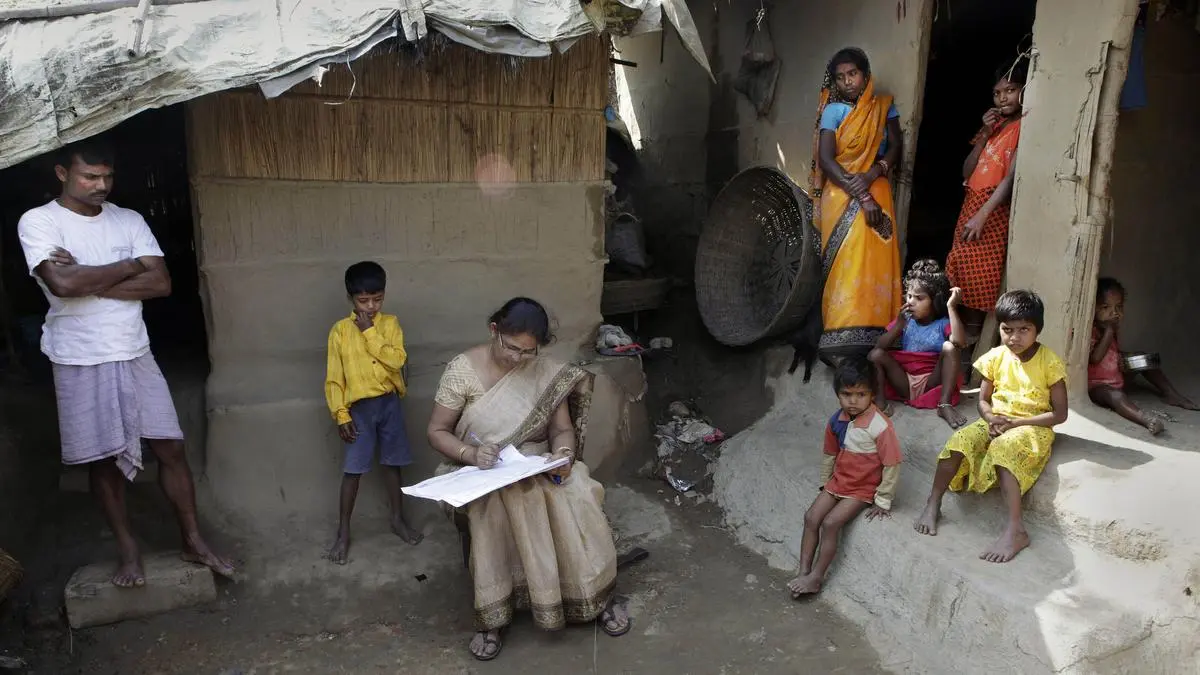
Mahesh Shah, left, stands as his family members look while census worker Rumima Das, writes the information on a paper on the first day of the national census at Ramsingh Chapori village, east of Gauhati, on April 1, 2010.

Mahesh Shah, left, stands as his family members look while census worker Rumima Das, writes the information on a paper on the first day of the national census at Ramsingh Chapori village, east of Gauhati, on April 1, 2010. | Photo Credit: Anupam Nath

In a move with far-reaching implications for the country’s socio-political landscape, the Union Cabinet announced on April 30 that the upcoming population survey will include a caste census. This decision follows years of growing demand, driven by the political assertion of historically marginalised communities, the precedent set by state-level surveys such as Bihar’s (joined this year by Karnataka and Telangana), and increasing dissatisfaction with outdated and incomplete data underpinning current models of affirmative action.

This Frontline package explores what this moment signifies—and what lies ahead. At its core is a crucial question: Who gets counted, and who gets left out?

In her article, “The Case for a Caste Census,” Divya Trivedi traces the historical and legal roots of the demand, arguing that updated caste data is essential for equitable public policy. Without such empirical grounding, debates on reservations, representation, and welfare remain speculative.

In an in-depth interview with Anand Mishra, former Rajya Sabha member Ali Anwar Ansari reflects on the political invisibility of Pasmanda Muslims and warns against reducing them to an electoral bloc. His insights underscore the need to understand caste as it intersects with religion, class, and region.

As the national conversation intensifies, states continue to confront the political and logistical challenges of caste enumeration. In Karnataka, reporter Vikhar Ahmed Sayeed finds the state entangled in political dilemmas, administrative inertia, and resistance from dominant communities. Meanwhile, Bihar’s 2023 caste survey—examined by Anand Mishra and Harish S. Wankhede—has revealed cracks in the BJP’s Hindutva unity project and reignited debates on social justice. In Andhra Pradesh and Telangana, Ayesha Minhaz illustrates how governments are linking caste data collection to promises of data-driven governance, while facing scrutiny over methodology and intent.

In a revealing interview, Samajwadi Party leader Akhilesh Yadav contends that reservations should reflect social hierarchies, not just economic disadvantage. This evolving narrative pits the language of social justice against that of majoritarian nationalism—a tension Frontline’s political newsletter Power Play highlights, particularly the ideological unease within the RSS-BJP combine over the caste question.

This package, rich with insight into the political, social, and moral dimensions of the issue, culminates in Vaishna Roy’s Editor’s Note, which poses a fundamental question: Can the diverse and oppressed ‘Davids’ of Indian society confront and transform the Goliath of caste-based inequality?

Read on to find out.